Ajvar: The Roasted Red Pepper Relish
Twelve kilos of peppers, one afternoon, and jars for the whole winter
Contents
↓ Jump to recipeThe first time I made ajvar I made about two hundred millilitres of it, which is roughly one good sandwich, and I felt very clever until a Serbian colleague looked at the jar with the expression you would give someone who had knitted a single sock. Ajvar happens by the season, in quantity. In the Balkans it happens in September, outdoors, over a wood fire or a gas ring dragged onto the balcony, in quantities measured by the crate. Whole families turn out for it. The peppers come from the market by the sack, forty or fifty kilos at a time, and by evening there are twenty jars on the table and everyone smells of smoke.
I have made my peace with a scaled-down version. Three kilos of peppers is enough to justify the effort, produces about 1.2 litres, and fits in a domestic oven across two trays. It also takes an afternoon, which is honest: there is no fast ajvar. Anything you can make in twenty minutes is a roasted pepper dip, and a roasted pepper dip is a fine thing, but it is a different thing.
Ajvar: The Roasted Red Pepper Relish
Ingredients
- 3 kg red romano or kapia peppers (about 24 peppers)
- 2 medium aubergines, about 600g total
- 6 garlic cloves, peeled
- 200ml sunflower oil
- 3 tbsp red wine vinegar
- 2 tsp fine sea salt, plus more to finish
- 1 tsp sweet smoked paprika
- 1/2 tsp caster sugar
Method
- Heat the oven to 240C fan, or light a charcoal grill and let it burn down to a solid bed of embers.
- Roast the peppers in a single layer for 25-30 minutes, turning once, until the skins are blackened in patches and collapsing. Roast the aubergines whole alongside for 35-40 minutes until they slump.
- Pile the hot peppers into a bowl and cover tightly with a plate or cling film. Leave for 20 minutes so the trapped steam loosens the skins.
- Peel the peppers, pulling out stems and seeds. Do not rinse them under the tap: you will wash away the roast. Split the aubergines and scoop the flesh from the skins.
- Tip the peeled peppers into a colander set over a bowl and leave to drain for at least 30 minutes. Discard the pink water that collects.
- Chop the peppers and aubergine flesh by hand into a coarse rubble, or pulse briefly in a food processor. Stop while there is still texture.
- Warm 100ml of the oil in a wide heavy pan over a medium-low heat. Add the garlic, crushed to a paste with 1 tsp of the salt, and cook for 90 seconds until fragrant.
- Add the pepper mixture, the smoked paprika, the sugar and the remaining 1 tsp salt. Cook uncovered over a low heat for 60-90 minutes, stirring every few minutes with a wooden spoon and scraping the base.
- Add the remaining 100ml oil in three additions over the cooking time, waiting each time until the previous addition has been absorbed.
- The ajvar is ready when a spoon dragged across the base leaves a channel that holds for two seconds and no water seeps into it.
- Stir in the vinegar, cook for 3 minutes more, then taste and adjust the salt.
- Ladle into sterilised jars while hot, pour a thin film of oil over the surface, seal, and invert for 10 minutes. Cool completely before storing.
What ajvar actually is
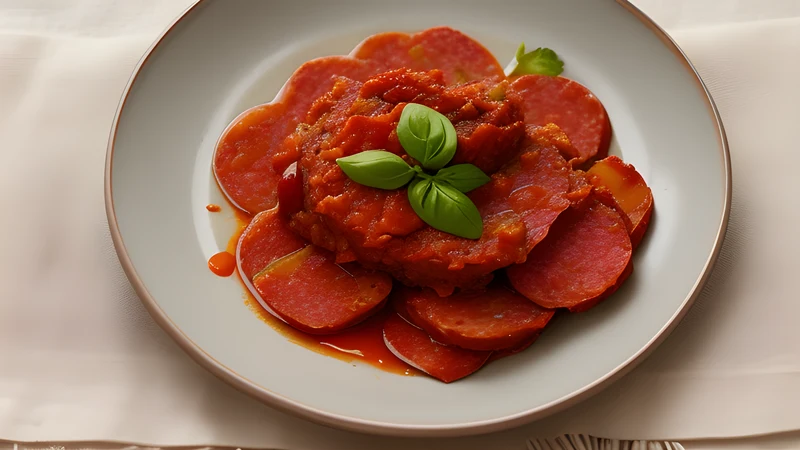
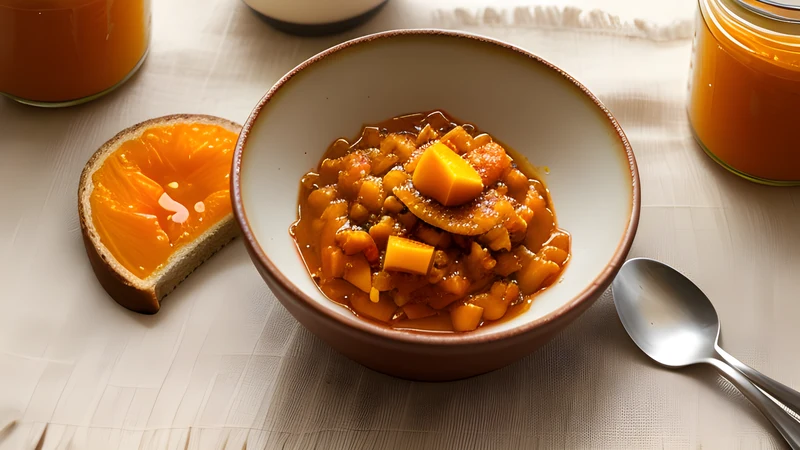
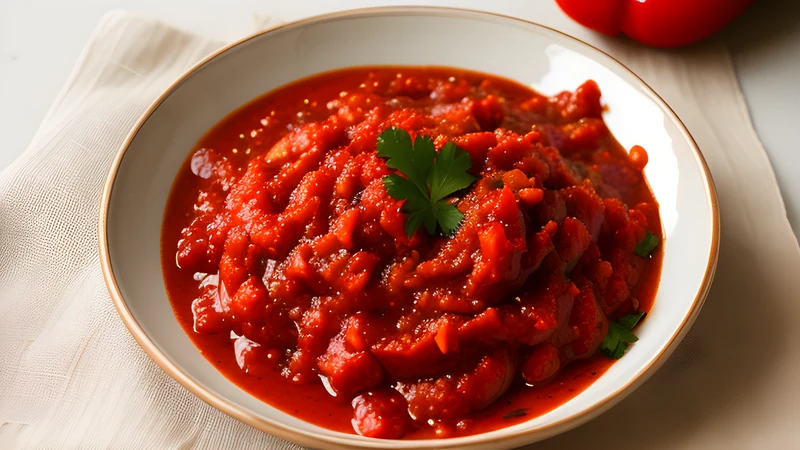
Ajvar is a relish of roasted red peppers, cooked down slowly in oil until the water has gone and the sugars have concentrated. That is the whole of it. Aubergine appears in most versions in a supporting role, contributing body and a slight bitterness that keeps the sweetness in check. Garlic goes in. Vinegar goes in near the end. Some households add chilli and call it ljuti ajvar; the mild version is blagi.
The name comes to Serbian and Macedonian by way of Ottoman Turkish havyar, the same root that gives English caviar. This has been read as a joke about a poor man’s caviar, and it may well be, though the more likely story is simply that a word for a salted, spooned, jarred delicacy got borrowed and reassigned to the thing people actually had crates of. The dish itself is younger than the name. Peppers arrived in the Balkans through Ottoman trade routes and became agriculturally serious in the nineteenth century; ajvar as a recognisable household preserve is largely a twentieth-century phenomenon, tied to the spread of the kapia pepper and to a domestic economy where a family needed a way to eat September in February.
That last point is the one that matters. Ajvar is a preservation strategy first. The long cook is there to drive off water so that the oil and the acid can do their job, and the reason it tastes the way it does is that concentration and Maillard browning happen to be delicious. Every shortcut you take is a shortcut against the storage life as much as the flavour.
The pepper to look for is the kapia: a long, thick-fleshed, dark red pepper that ripens fully sweet. Romano peppers are the common British substitute and work well. Standard bell peppers are the compromise version — thinner walls, higher water content, less sugar — and they will give you something perfectly edible that tastes about seventy per cent as good. If bells are all you have, add an extra 500g to the weight and expect a longer cook.
The twist: smoked paprika
Here is my one deviation from orthodoxy, and I will defend it. A teaspoon of sweet smoked paprika, stirred in at the start of the simmer.
The argument against is obvious: ajvar already has smoke, from the char, and adding pimentón is putting a wig on a man with hair. The argument for is that unless you are roasting over hardwood embers — which the September ajvar-makers are, and I am not, because I live in a flat — your oven char gives you bitterness and colour but very little actual smoke aroma. The paprika restores a note the domestic method loses. Used at a teaspoon per three kilos it stays under the threshold of recognition. Nobody tastes paprika. They taste a fire that was not there.
Keep it to a teaspoon. At two the relish starts tasting Spanish, which is a good thing to taste of when you are making romesco and a distraction here.
Roasting, peeling, draining
Three stages, and the middle one is where people go wrong.
Roasting. You want blistering and collapse. Incineration takes the flesh underneath with it. At 240C fan the peppers take 25-30 minutes and the skins go black in patches while the flesh underneath softens to the point of surrender. Give them a single layer with room around each one; peppers crowded onto one tray steam each other and you get pale, floppy, watery flesh with no browning at all. Two trays, swapped halfway, beats one tray every time.
Steaming and peeling. The hot peppers go straight into a bowl under a plate. Twenty minutes of trapped steam separates skin from flesh, and afterwards the skins come away in sheets with your thumbs. The temptation at this point is to rinse the peeled peppers under the tap to get rid of the last flecks of black. Do not. You will sluice off the roasted compounds you spent half an hour building, and the ajvar will taste flat in a way you will not be able to diagnose later. A few specks of char in the finished relish are a feature.
Draining. This is the step home cooks skip and it is the one that decides whether your ajvar takes an hour or three. Roasted peppers hold an astonishing volume of water — put the peeled flesh in a colander over a bowl and half an hour later you will have 200ml of pink liquid in the bowl. That is 200ml you would otherwise be boiling off one spoonful at a time over a low flame. Drain properly and the simmer is 60 minutes. Skip it and you are in for a long evening.
The simmer, and how to read it
The cook is low, wide and long. Use the widest heavy pan you own — surface area is evaporation. A stockpot is the wrong shape entirely; a shallow casserole or a big sauté pan is right.
The oil goes in staged rather than all at once. Adding 200ml to wet pepper pulp at the start just gives you a pan of pepper pulp with oil sitting on top; adding it in three tranches as the mixture tightens lets each addition emulsify into the pulp. By the end the ajvar should look glossy and slightly heavy, and the oil should have vanished into it rather than pooling at the edge.
Stir every few minutes and scrape the base. Pepper pulp is sugary and it will catch, and once it catches the whole batch tastes of burnt jam. If you see brown streaks forming on the bottom of the pan, the heat is too high; drop it and stir more.
The doneness test is the spoon channel. Drag a wooden spoon through the mixture and look at the trench it leaves. Early on it fills back in immediately and the trench weeps water. Done, it holds its shape for a couple of seconds with a clean dry base. That is the whole test. Time is a suggestion; the channel is the truth.
The vinegar goes in at the end because acid volatilises and because it is doing preservation work. Three tablespoons across 1.2 litres is a background note that you register as brightness rather than sourness.
The honest case against making it at all
Jarred ajvar is available in any decent Balkan or Turkish grocer for about three pounds, and some of it is genuinely good. The commercial stuff from North Macedonia in particular — where ajvar has protected status for the Leskovac and Tetovo styles — is made from proper kapia peppers roasted over gas flame at industrial scale, and industrial scale is one thing a domestic kitchen cannot beat. You will spend four hours and about fifteen pounds on peppers to produce something that is better than the jar by a margin you might reasonably call modest.
So the case for doing it yourself rests on three specific gains. You control the char, which means you can push the roast further than a factory dares, and depth of roast is the axis on which ajvar varies most. You control the oil, and can use good sunflower or even a mild olive oil rather than the cheapest refined thing in the tank. And you control the texture: commercial ajvar is smooth because smooth pumps through machinery, whereas the hand-chopped version keeps a coarse rubble that catches on bread properly. If none of those matter to you on a given September, buy the jar with a clear conscience.
The fire question
The traditional roast is over an open fire or a purpose-made pepper roaster — a perforated drum turned over gas jets, sold in every Balkan hardware shop in autumn. The drum is genuinely superior to an oven, because it chars the skin fast at very high temperature while the flesh underneath cooks less, which gives you smoke without cooking the pepper to mush. An oven at 240C does the opposite: gentler skin char, longer, more thorough softening of the flesh.
This is why the oven version needs the paprika and the drum version does not, and it is also why the oven version drains more water — the flesh has spent half an hour breaking down. If you have a charcoal barbecue, use it. Let the coals burn down to grey embers, lay the peppers straight on the bars, and turn them every three or four minutes until they are blistered all over. Fifteen minutes, no paprika needed, and the result is noticeably better than anything an oven produces.
Where it goes wrong
Watery ajvar that never thickens. You skipped the drain, or used bell peppers, or your pan is too narrow. Keep going; it will get there, it will just take another 45 minutes.
Bitter ajvar. Over-charred skins, or skin fragments left in. Blackened patches are correct. Uniformly carbonised skin turns the whole batch acrid.
Flat ajvar. Rinsed peppers. Nothing recovers this. Salt cannot fix an aroma problem.
Split ajvar with oil on top. Oil added too fast or heat too high. Take it off, let it cool ten minutes, and beat it back together with a wooden spoon.
Mouldy ajvar in November. Under-reduced, under-acidified, or jarred cold. Hot fill, oil seal on top, and if a jar looks suspect in three months, throw it out.
Storage and variations
Sealed properly, the jars keep six months in a cool dark cupboard. Once opened, top the surface with oil after each raid and use it within three weeks from the fridge. The colour darkens with age from bright red to brick, which is normal and mostly harmless to the flavour.
For ljuti ajvar, roast four or five red chillies alongside the peppers and chop them in. For a version closer to the Bulgarian style, push the aubergine up to a kilo and you are drifting towards lyutenitsa, which adds tomato and takes the whole thing somewhere sweeter and softer. A spoonful of walnuts blitzed in at the end is heretical and very good.
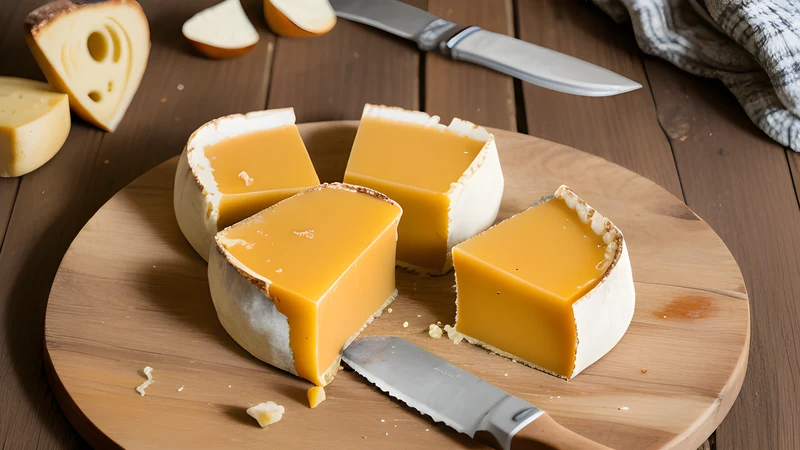
Eat it with bread. Eat it beside ćevapi or a pljeskavica, where it does the job that ketchup does elsewhere and does it better. Put it next to a spoonful of kajmak and let the two of them meet on the same piece of bread, which is the single best argument for the entire afternoon of work.
Related Content