Ajiaco: Bogotá's Three-Potato Chicken Soup
A guascas-scented chicken soup thickened by three kinds of potato
Contents
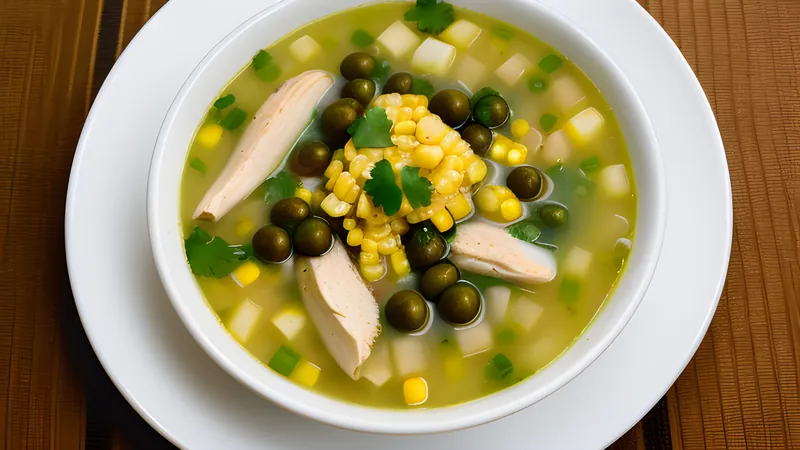
↓ Jump to recipeAjiaco is built on the idea that one potato isn’t enough to do the job properly: Bogotá’s signature soup uses three distinct varieties, a floury one that breaks down to thicken the broth, a waxy one that holds its shape, and small new potatoes for bite, all simmered with chicken and the herb that gives the dish its unmistakable scent, guascas. Cream, capers and avocado arrive at the table separately, so each bowl gets finished exactly to the diner’s own taste.
Ajiaco: Bogotá's Three-Potato Chicken Soup
Ingredients
- 4 bone-in, skin-on chicken thighs
- 1.5 litres chicken stock
- 1 onion, quartered
- 3 garlic cloves, crushed
- 2 spring onions, roughly chopped
- 400g floury potatoes (such as Russet), peeled and cut into chunks
- 400g waxy potatoes (such as Charlotte), peeled and cut into chunks
- 300g small new potatoes, halved
- 3 tbsp dried guascas (or 2 tbsp dried oregano mixed with 1 tsp ground cumin, as a substitute)
- 2 corn cobs, cut into thick rounds
- 100ml double cream
- 3 tbsp capers
- 1 avocado, sliced
- Salt and black pepper
Method
- Place the chicken thighs in a large pot with the stock, onion, garlic and spring onions. Bring to a simmer and cook for 30 minutes until the chicken is cooked through.
- Lift out the chicken, and once cool enough to handle, shred the meat, discarding the skin and bones. Set aside. Strain the stock and return it to the pot, discarding the solids.
- Add the floury potatoes to the strained stock and simmer for 15 minutes, stirring occasionally and mashing a few pieces against the side of the pot as they soften, to help thicken the soup.
- Add the waxy potatoes and the guascas, and simmer for a further 10 minutes.
- Add the new potatoes and corn, and simmer for 10-12 minutes more until all the potatoes are tender.
- Return the shredded chicken to the pot and warm through for 3-4 minutes.
- Season generously with salt and black pepper.
- Ladle into bowls, making sure each portion gets a piece of corn.
- Serve with the double cream, capers and avocado passed separately at the table, for each diner to add their own.
The story
Bogotá sits at over 2,600 metres above sea level on a high plateau, the Sabana de Bogotá, whose cool climate and rich volcanic soil have made it one of the world’s great potato-growing regions for as long as people have farmed there; the Muisca people, who lived on the plateau long before the Spanish arrived, cultivated dozens of native potato varieties and are the likely originators of the soup’s basic technique, using different potatoes for different textures in the same pot. Ajiaco as it’s cooked today layers that indigenous foundation with ingredients that arrived later, chicken from European settlers and cream and capers that reflect Bogotá’s more recent, cosmopolitan food culture.
Guascas, a wild herb related to the daisy family and native to the Andes, is the ingredient that makes ajiaco unmistakably itself; without it, the soup is a perfectly good chicken and potato broth, but it lacks the faintly bitter, herbal note that Bogotanos would recognise instantly as missing. The herb grows wild across the Bogotá savanna and doesn’t travel or dry as well as more common culinary herbs, which is why it can be hard to find outside Colombia and why Colombian expatriates often bring dried guascas back from visits home rather than relying on what’s stocked locally.
The soup holds a specific place in Bogotá’s civic identity, served at family Sunday lunches, in restaurants aimed squarely at tourists wanting an introduction to Colombian food, and at official government functions when the country wants to put its best culinary foot forward for visiting dignitaries. Locals are particular about the details: the potatoes must be the right three varieties, the corn must be served on the cob rather than stripped into kernels, and the cream, capers and avocado are added at the table by each individual diner rather than stirred into the pot by the cook, a small but strictly observed piece of etiquette.
Why three different potatoes earn their place
The three-potato structure isn’t decoration; each variety does a specific job that a single type of potato can’t replicate on its own. The floury variety, added first and given the longest cooking time, breaks down as it simmers, its starch dissolving into the broth and thickening it into something closer to a light purée than a clear stock. Mash a few pieces deliberately against the side of the pot as they soften to accelerate this, since floury potato left whole doesn’t release its starch quite as readily as one that’s been helped along.
The waxy potato, added second, holds its shape through the same simmering time and gives the soup real, distinct chunks to eat rather than everything dissolving into the same thickened broth. The small new potatoes, added last and cooked for the shortest time, contribute a firmer bite and a slightly different flavour again, rounding out the texture so a spoonful of ajiaco genuinely contains three different potato experiences rather than one potato cooked three ways. Skipping any one of the three changes the dish more than it might seem; a soup made from waxy potato alone stays thin and clear, while one made only from floury potato turns into more of a chowder than the specific texture ajiaco is known for.
Sourcing and substituting guascas
Dried guascas, sold in small packets by Colombian and Latin American grocers, keeps for a long time and is worth buying in bulk if you find a reliable source, since it’s genuinely difficult to substitute well. The closest approximation, a mix of dried oregano and a touch of ground cumin, captures some of the herbal, faintly bitter quality but misses guascas’ particular sharpness; treat it as a reasonable stand-in for an unfamiliar dish rather than an equivalent once you’ve tasted the real thing. Fresh guascas, where available, can be used in slightly larger quantity than the dried version and added a little later in the cooking, since fresh herbs lose potency faster over a long simmer.
If you’re building a wider Colombian spread, bandeja paisa makes a hearty counterpart from the same country, built as a tray of separate components rather than a single soup, and arepas are a natural bread accompaniment to serve alongside a bowl of ajiaco for scooping up the last of the broth.
Finishing at the table
The etiquette of finishing ajiaco is as much a part of the dish as any ingredient in the pot: the cook’s job ends with a well-seasoned soup, and each diner then adds their own cream, capers and avocado to taste, meaning no two bowls at the same table need look quite alike. A spoonful of cream swirled through cuts the broth’s richness with a cool, dairy note, capers add a salty, briny pop that plays against the mild potato base, and a few slices of avocado bring a buttery contrast that rounds the whole bowl out.
Bring all three garnishes to the table in small separate dishes rather than a single combined one, since some diners will want a generous helping of capers and barely any cream, and others the reverse; part of ajiaco’s appeal is this small ritual of personal customisation happening at the table rather than being decided by the cook in the kitchen.
Building a proper stock from the chicken
The chicken stock underpins everything else in the pot, so it’s worth taking the thirty minutes of poaching seriously rather than treating it as a step to rush through. Bone-in, skin-on thighs give a considerably richer, more gelatinous stock than boneless breast, since the bones and connective tissue release collagen over the simmering time that thickens the liquid slightly and gives it real body. Keep the pot at a gentle simmer rather than a rolling boil throughout; boiling chicken hard toughens the meat and can cloud the stock with released proteins, where a bare simmer keeps both the meat tender and the liquid reasonably clear.
Straining the stock before the potatoes go in removes the softened onion, garlic and spring onion solids, which have already given up their flavour and would otherwise turn to an unappealing mush by the time the soup is finished. Some cooks skip the straining step and leave the aromatics in, which isn’t wrong exactly, but the finished soup reads cleaner and more polished with them removed, closer to what you’d be served in a Bogotá restaurant that takes its ajiaco seriously.
Serving corn on the cob
The corn matters more than its modest role in the ingredient list might suggest. Served whole, cut into thick rounds rather than stripped into loose kernels, it turns each bowl into something you eat partly with your hands, picking up the piece of cob to gnaw the kernels off between spoonfuls of broth. This is traditional rather than an oversight, and swapping in loose kernels, while easier to eat with a spoon alone, changes the character of the meal from a rustic, hands-on soup into something closer to a tidy restaurant starter.
Cook the corn just long enough that the kernels turn tender and slightly sweet without turning starchy or dry; ten to twelve minutes at a simmer alongside the new potatoes is usually right, and corn left in too long past that point loses some of its fresh, sweet snap. If serving a table with young children or anyone who’d rather not gnaw on a cob, it’s entirely reasonable to strip the kernels for their portion while keeping the traditional rounds for everyone else.
Substitutions, storage and make-ahead
Russet or Maris Piper both work well as the floury variety, and Charlotte or a similar salad potato covers the waxy role without difficulty; small new potatoes, sometimes labelled baby potatoes, are widely available and need only halving. Bone-in chicken thighs give the richest stock, but a whole chicken jointed into pieces works just as well if that’s what you have, and leftover roast chicken can be stirred in near the end of cooking as a shortcut, skipping the initial poaching stage entirely.
Ajiaco keeps well in the fridge for up to three days, and like many potato-thickened soups, it often tastes even better the next day once the flavours have settled together overnight. It freezes reasonably, though the texture of the waxy and new potatoes softens slightly on thawing, so it’s worth adding a few fresh boiled potato chunks to a reheated batch if you want to restore some of the original bite. Add the cream, capers and avocado fresh at serving time regardless of whether the soup itself is fresh or reheated, since none of the three keep or reheat well once mixed into the pot.
Related Content