Aji no Nanbanzuke: Fried Fish in Sweet Vinegar
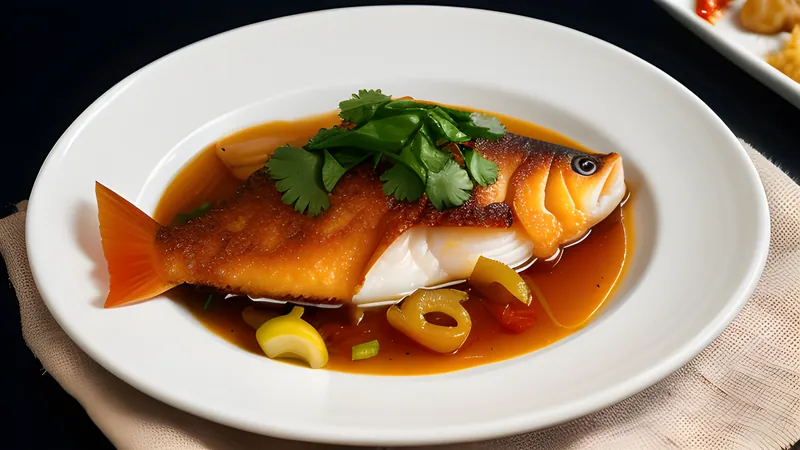
Fried horse mackerel steeped in a sweet-sour marinade until the bones soften and the vegetables pickle
Contents
↓ Jump to recipeAji no Nanbanzuke: Fried Fish in Sweet Vinegar
Ingredients
- 8 small horse mackerel (aji) or sardines, gutted, scaled and cleaned, heads left on if small
- salt and white pepper, for seasoning the fish
- 60g potato starch or cornflour, for dusting
- 500ml neutral oil, for shallow or deep frying
- 1 onion, thinly sliced
- 1 red pepper, thinly sliced
- 1 carrot, cut into fine matchsticks
- 2 dried red chillies, deseeded and sliced
- 150ml rice vinegar
- 80ml dashi (kombu and katsuobushi stock)
- 60ml soy sauce
- 40g sugar
- 1 tsp salt
- spring onion, finely sliced, to garnish
Method
- Pat the cleaned fish completely dry, then season lightly with salt and white pepper inside and out.
- Combine the rice vinegar, dashi, soy sauce, sugar and salt in a saucepan, bring to a simmer just until the sugar dissolves, then remove from the heat.
- Add the sliced onion, red pepper, carrot and dried chillies to the warm marinade so they soften slightly and start to pickle while the fish is being fried.
- Dust the fish thoroughly in potato starch, shaking off any excess, just before frying — do this in batches close to frying time so the coating doesn't turn gummy sitting on wet fish.
- Heat the oil to 170–175°C in a wide pan. Fry the fish in batches, 4–5 minutes per side, until deeply golden and, for small enough fish, crisp through to the bones.
- Drain the fried fish briefly on a rack, then transfer them, still hot, directly into the warm marinade with the vegetables.
- Press the vegetables and marinade over the fish so everything is submerged, or turn the fish once halfway through steeping.
- Leave to marinate at room temperature for at least 1 hour, or refrigerate for several hours to overnight for the fullest flavour and the softest bones.
- Serve chilled or at room temperature, scattered with spring onion, spooning some of the pickled vegetables and marinade over each portion.
Nanban: the flavour Portugal left behind
Nanbanzuke belongs to a small family of Japanese dishes carrying the word nanban, literally “southern barbarian,” a term Japanese cooks in the 16th and 17th centuries used for the Portuguese and Spanish traders who arrived through Nagasaki bringing chillies, a taste for deep-frying, and a vinegar-forward style of preserving fish that didn’t previously exist in Japanese cooking in quite that form. Escabeche, the Iberian technique of frying fish and then steeping it in a hot vinegar marinade with vegetables, is the clear ancestor here, adapted over four centuries into something that now reads as thoroughly Japanese — dashi in the marinade, rice vinegar rather than wine vinegar, a lighter hand with oil than most Iberian versions.
Aji, horse mackerel, is the fish most associated with the dish, small enough that a whole fish fries through properly and the smaller bones soften considerably during the marinating hours that follow, though sardines and other small oily fish work by the same logic and are a reasonable substitute wherever aji isn’t available. The oiliness of the fish matters: a very lean white fish tends to dry out under deep frying and then again during hours of marinating, while an oily fish like aji stays moist through both stages and its flavour holds its own against a marinade aggressive enough to soften bone.
A dish that spread well beyond Nagasaki
Once nanban techniques took hold in Nagasaki, they spread through Japanese home cooking far beyond fish — nanbanzuke-style vinegar treatments turn up applied to fried chicken (chicken nanban, now a Miyazaki speciality with its own devoted following and its own argument about whether tartar sauce belongs on top), to fried aubergine, and to various other fried vegetables and proteins, all sharing the same basic structure of a hot fried item steeped in a sweet vinegar marinade with sliced vegetables. Fish, and aji specifically, remained the dish most associated with the word in its plainest form, likely because oily small fish respond so well to both stages of the process — frying and then hours of acid — in a way drier proteins don’t always manage as gracefully.
The dish also reflects something practical about coastal Nagasaki life rather than just imported technique: small, oily fish like aji were abundant and cheap, and a preparation that both cooked them thoroughly and extended their edible life by a few days in a warm climate before reliable refrigeration solved a real problem rather than existing purely for flavour. That practical history is worth keeping in mind even now, since it explains why the dish is built to taste better a day later rather than rushed and eaten hot — the entire point, historically, was never speed.
Why frying comes before pickling, not instead of it
The order of operations here is the whole trick. Frying the fish first, hot enough and long enough to cook it through and crisp the exterior, does two things a raw pickle never could: it develops a genuinely fried, savoury crust through Maillard browning that survives being steeped in acid far better than raw fish would, and the heat of the frying oil, followed immediately by hot marinade, partially breaks down the smaller bones so that by the time the fish has sat for several hours you can eat straight through them without noticing, particularly with fish under about 15cm.
That bone-softening effect is temperature- and time-dependent rather than instant — a fish fried and eaten within minutes will still have firm bones, and it’s only after an hour or more in the acidic, warm marinade that the smaller rib bones genuinely give way. This is also why nanbanzuke is traditionally made ahead rather than served straight from the fryer; it’s one of the few fried dishes that’s better the next day than the moment it’s cooked, since the extra time does real structural work on the fish rather than just deepening the flavour.
The starch coating and the fry itself
Potato starch, rather than flour or a wetter batter, gives the thin, craggy, very crisp coating that this dish wants — it fries up lighter and crisper than wheat flour and, crucially, holds its crunch reasonably well even after being dunked in a wet marinade for hours, which a flour-based batter generally does not. Dust the fish only just before it goes into the oil; starch left sitting on wet fish for more than a few minutes absorbs surface moisture and turns pasty rather than staying a dry, even coat.
Fry at a genuine 170–175°C rather than guessing — too cool and the fish absorbs oil and turns greasy rather than crisp; too hot and the outside scorches before the inside, especially near the backbone, has properly cooked through. A thermometer clipped to the pan removes the guesswork entirely and is worth the few pounds it costs if you fry with any regularity, since so much of this dish’s success rides on getting that number right. Fry in small batches too — crowding the pan drops the oil temperature fast, and a fish added to oil that’s dipped below about 160°C will sit there absorbing grease rather than sealing and crisping, which shows up later as a heavier, oilier bite once the fish has also spent hours in a marinade.
Building a marinade that does two jobs
The nanban marinade has to season the fish and lightly pickle the vegetables at the same time, which is why it’s built sweeter and more assertive than a marinade meant only for fish — dashi gives it a savoury backbone that a straight vinegar-sugar mixture would lack, while the sugar and vinegar together do the pickling work on the onion, pepper and carrot, softening their raw edge within the same hour the fish needs to steep. Warm the marinade only enough to dissolve the sugar rather than boiling it hard, since a hard boil drives off some of the vinegar’s sharpness along with a good deal of aroma you want intact in the finished dish.
Dried chilli, sliced and added to the warm marinade rather than fried into the oil, contributes background heat without turning the dish properly spicy — it’s there for a gentle warmth that plays against the sweetness rather than for real fire, and it’s easy to reduce or remove entirely if you’d rather keep the dish mild.
Preparing the fish and choosing a substitute
If you’re cleaning whole aji yourself, take a moment to remove the small hard scutes running along the fish’s lateral line — a row of sharp, bony plates unique to horse mackerel that don’t soften in frying or marinating the way ordinary bones do, and that most fishmongers will strip off for you if asked. Beyond that, gutting, scaling and rinsing a small whole fish is quick work; leave the head on if you’re comfortable eating around it, since it fries up crisp and edible on a small enough fish and is traditionally left in place.
Where aji isn’t available, small sardines are the closest substitute in both size and oiliness and need no adjustment to the method. Slightly larger fish, such as small mackerel fillets rather than whole small fish, also work, though the bone-softening effect that whole small aji get from hours in warm marinade won’t apply in the same way to a fillet with its pin bones already removed — treat that version as a flavour-only nanbanzuke rather than one where you’re eating through softened bone.
Troubleshooting
A marinade that tastes flat rather than bright usually needs more vinegar rather than more sugar — taste it on its own before the fish goes in, and it should taste assertively sour-sweet, similar to the tare logic in a strongly seasoned dipping sauce, since the fish and vegetables will mellow it considerably as they sit. If the fried coating turns soft and slightly slimy within an hour rather than staying pleasantly yielding, the fish likely went into the marinade before it had cooled even slightly from the fryer, trapping excess steam under the crust — a minute or two resting on a rack before it goes into the marinade helps.
Bones that are still firm after an overnight marinade are most often a sign the fish were simply too large for the technique to fully work on within a reasonable timeframe — small aji under about 15cm soften reliably by the next day, but anything larger will need either longer marinating (two to three days, refrigerated) or should be treated as a boneless-fillet version instead.
Serving, storage and what to do with the leftovers
Nanbanzuke is traditionally served cold or at room temperature rather than hot, which sets it apart from most other fried Japanese fish dishes and is worth embracing rather than fighting — reheating it tends to soften the coating in a way chilling doesn’t, since the coating’s crispness was always secondary to how well it held up in the marinade rather than how it ate straight from the fryer. It keeps well for two to three days refrigerated in its marinade, and many cooks consider the second day’s flavour better than the first, once the vinegar and dashi have had longer to work into the fish.
Use any leftover marinade rather than discarding it — it’s picked up a genuine savoury depth from the fried fish sitting in it and makes a sharp, useful dressing for a simple green salad or a bowl of cold soba the next day. Bring it back up to the boil once if you’re reusing it to marinate a second batch of freshly fried fish, since it will have picked up raw fish juices during the first steep and shouldn’t be reused cold and unheated. If you’re building out a wider Japanese fish spread, my saba shioyaki takes a completely different, much simpler approach to a related oily fish, worth cooking alongside nanbanzuke if you want both a hot grilled dish and a cold pickled one on the same table, and tendon shares the same instinct for frying seafood hot and hard, even though the two dishes diverge completely from there. Serve nanbanzuke as one dish among several rather than the sole centre of the meal — a bowl of plain rice, a simple miso soup and one or two other small dishes is the more traditional way to eat it, in keeping with the general shape of a Japanese home meal built from several modest dishes rather than one large one.
Related Content