Aji de Gallina: Peru's Creamy Chicken
Shredded chicken in a golden, bread-thickened chilli sauce
Contents
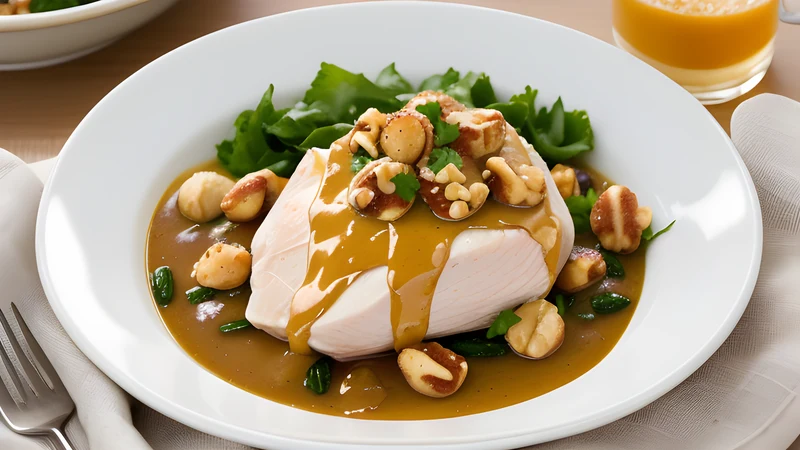
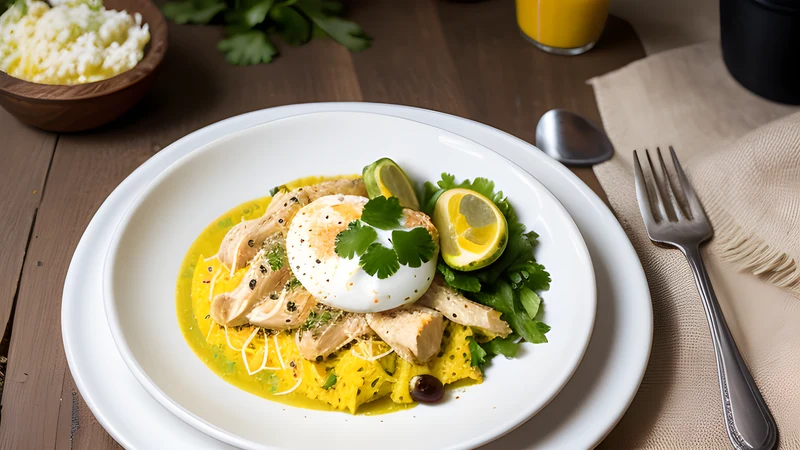
↓ Jump to recipeAji de gallina is one of the great comfort dishes of Peru, and one of the most quietly sophisticated. Shredded chicken bound in a sauce the colour of egg yolk, thickened with milk-soaked bread and ground walnuts, coloured and spiced with aji amarillo, the fruity yellow chilli that runs through Peruvian cooking, and enriched with parmesan. It is served over sliced boiled potato and rice, garnished with black olives and boiled egg. Rich, mild, golden and deeply savoury, it is Sunday-lunch food and set-menu-lunch food across the country.
The name translates as “hen chilli”, and the gallina — an older, tougher stewing hen — is the clue to its origins. This is a thrifty dish, built to make a small amount of poached bird stretch to feed a family by binding it in a generous, bread-thickened sauce. Today we use chicken breast for tenderness, but the spirit is the same: take something modest and turn it into something that tastes like a celebration.
Aji de Gallina: Peru's Creamy Chicken
Ingredients
- 4 chicken breasts, bone-in if possible (about 800g)
- 1 onion, halved, plus 1 large onion finely chopped
- 2 bay leaves
- 4 slices day-old white bread, crusts removed
- 250ml whole milk, plus more if needed
- 4 tbsp aji amarillo paste (Peruvian yellow chilli)
- 4 garlic cloves, finely chopped
- 50g walnuts
- 50g grated parmesan
- 3 tbsp neutral oil
- 1/2 tsp ground turmeric (optional, for colour)
- Salt and pepper to taste
- To serve: boiled waxy potatoes, halved boiled eggs, black olives, white rice
Method
- Poach the chicken with the halved onion, bay leaves and a good pinch of salt in water to cover, at a bare simmer, for 20 minutes until just cooked. Cool in the liquid, then shred the meat finely. Reserve 400ml of the poaching stock.
- Tear the bread into a bowl, pour over the milk and leave to soak for 10 minutes. Blend to a smooth paste with the walnuts and a splash of the stock.
- Heat the oil in a wide pan over medium. Fry the chopped onion with a pinch of salt for 8 minutes until soft. Add the garlic and aji amarillo paste and cook 4 to 5 minutes until the raw edge cooks off and it smells toasty.
- Stir in the bread-and-walnut paste and 250ml of the reserved stock. Simmer gently, stirring, for 5 minutes until thick and silky. Loosen with more stock or milk if it stiffens.
- Stir in the parmesan and turmeric, then fold through the shredded chicken. Warm through for 5 minutes. It should be thick enough to hold a spoon-trail but pourable. Season well with salt and pepper.
- Serve over slices of boiled potato and rice, garnished with halved boiled egg and black olives.
A dish with a Moorish accent
Aji de gallina belongs to the family of Peruvian dishes that trace back, through Spain, to the Moorish kitchens of medieval Al-Andalus. The technique of thickening a savoury sauce with bread and ground nuts is pure medieval Iberian cookery — the same logic that gives Spain its salsa romesco and its ajoblanco. Spanish colonists brought it to Peru, where it met the aji amarillo and became something entirely local.
There is almost certainly a link, too, to manjar blanco and the older European “blancmange” tradition — a medieval dish of pounded chicken, almonds and rice or bread that existed in sweet and savoury forms across Europe and the Islamic world. Aji de gallina is arguably the savoury descendant of that dish, carried across the Atlantic and reinvented with a South American chilli. Peruvian food is full of these layered histories: indigenous ingredients, Spanish technique, and later Chinese, Japanese and Italian waves, all folded together.
The name also carries a small culinary lesson. Gallina is a laying hen past its egg-producing prime, an older bird with tougher, tastier meat that needs long, slow poaching to turn tender. That poaching produced two things at once: soft, shreddable flesh and a concentrated stock, and a thrifty cook used both, the stock going straight into the sauce. When you swap in modern chicken breast you lose some of that depth, so it pays to poach it on the bone if you can and to guard the poaching liquid jealously, because a sauce built on water instead of stock tastes noticeably thinner. If you ever get hold of a genuine boiling fowl, or even a whole free-range bird jointed for the pot, this is the dish to cook it in; the longer, gentler simmer rewards you with a richer result than any breast alone can give.
The dish sits at the heart of Lima’s menú culture — the fixed-price working lunch served in thousands of small restaurants, where aji de gallina turns up week after week as a segundo, the main course after the soup. That everyday ubiquity is part of what makes it so beloved: it is not special-occasion food so much as the reliable, golden thing you are quietly glad to see on the board. It shares that comfort-food register with dishes like causa limena, another Lima staple built on the humble potato. You can taste the same fusion in lomo saltado, where a Chinese wok technique meets Peruvian ingredients.
Aji amarillo, the flavour of Peru
If one ingredient defines Peruvian cooking, it is the aji amarillo. Despite the name (amarillo means yellow), the fresh chilli is orange; it has a fruity, almost mango-like flavour and a moderate, warming heat rather than a fierce one. It gives aji de gallina its glowing colour and its character. Most people outside Peru will use the paste, sold in jars in Latin grocers and increasingly online — it is a genuine store-cupboard essential if you want to cook this food, and it also underpins the sauce for papa a la huancaina.
Frying the paste properly is a step worth respecting. Cook it with the softened onion and garlic for a good four or five minutes so the raw, slightly sour edge cooks off and it turns toasty and mellow. Skip this and the sauce tastes sharp and underdone. If you cannot find aji amarillo at all, a workable stand-in is a roasted yellow (bell) pepper blended with a little scotch bonnet or habanero for heat and a pinch of turmeric for colour — but the real paste is worth hunting down, because nothing else has quite its fruity perfume.
Colour, heat and the yellow question
Much of aji de gallina’s appeal is visual: that glowing yolk-yellow tells you the dish is rich before you taste it. The aji amarillo does most of the colouring, but many home cooks reinforce it with a pinch of ground turmeric, called palillo in Peru, which deepens the gold without adding flavour. Do not overdo it; a quarter-teaspoon is plenty, and too much turns the sauce muddy and faintly bitter. If you want more heat, that comes from the aji itself or from a little fresh yellow chilli blended into the paste, since the dish is traditionally mild and family-friendly. Peruvians tend to keep a jar of extra aji sauce on the table so each eater can dial up the heat to taste, which is the sensible way to please a mixed crowd. Season the finished sauce boldly, taste for the balance of savoury cheese, nutty walnut and gentle chilli, and only then judge whether it needs a touch more milk to loosen or a squeeze more salt to lift. The colour should read deep and appetising under the light, the texture should fall from the spoon in a slow ribbon, and the flavour should be mild yet unmistakably savoury.
The bread-and-nut thickening
The texture of aji de gallina is its signature, and it comes from soaked bread and blended walnuts rather than any dairy thickener. This is the clever bit and the part that goes wrong most often.
Use day-old white bread with the crusts off — fresh bread turns gluey, and crusts leave specks. Soak it in milk until completely soft, then blend it with the walnuts and a little stock to a smooth paste. When you stir this into the fried aji and onion base, it thickens the sauce into something silky and spoonable as it warms. Walnuts add richness and a faint bitterness that balances the parmesan; some cooks use pecans, some leave the nuts whole and add them as texture, but blended in they give the smoothest result.
The thing to watch is consistency. The sauce should be thick enough to coat the chicken and hold a spoon-trail for a second, but still pourable — it will thicken further as it sits and cools. Keep the reserved poaching stock and a little extra milk to hand, and loosen the sauce whenever it stiffens too far. A common mistake is letting it get claggy; a splash of stock brings it right back. Another is not blending the bread and walnuts smoothly enough, which leaves the sauce grainy; give the blender a full minute and add stock a little at a time until it turns velvety.
Serving it the traditional way
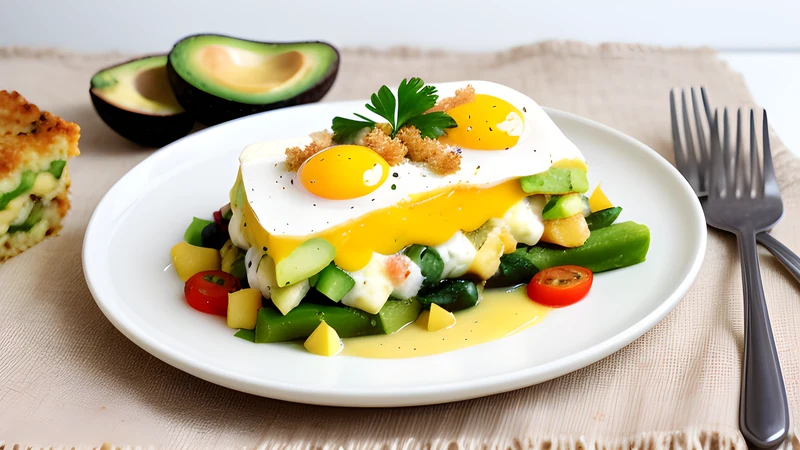
Aji de gallina is always served over sliced boiled potato — waxy potatoes that hold their shape — and usually with white rice alongside, because it is a rich sauce that wants a starch to carry it. The garnish is fixed and part of the identity: halved hard-boiled egg and a couple of black olives (ideally the purple-black botija olives of southern Peru), which cut the richness with their brine. A few walnut halves on top are a nice touch. Arrange it deliberately rather than heaping it up: a bed of potato and rice, the golden chicken ladled over, then the egg and olives set on top so each plate looks composed. The presentation is part of the dish’s identity and takes only a moment.
For a crowd, aji de gallina is generous and easy to scale, and because it holds well over a low heat it suits a buffet or a lunch where people arrive at different times. Keep a jug of warm stock beside the pan to loosen it as it thickens over the afternoon.
Season it more assertively than you think you need to. The bread, milk and nuts have a muting effect, and a well-made aji de gallina needs a firm hand with salt and a good grind of black pepper to keep it from tasting bland. Taste at the end and correct.
Make ahead and storage. Like most bound, shredded dishes, aji de gallina is better the next day, once the flavours have settled. Cook it fully, cool, and refrigerate for up to three days; reheat gently with a splash of milk or stock to bring the sauce back to a silky consistency, as it thickens considerably in the fridge. It freezes reasonably for a month, though the sauce can need extra loosening after thawing.
Swaps and variations. Turkey works beautifully and is closer to the original tough-bird spirit. For a lighter sauce, use half milk and half evaporated milk, which is the Peruvian shortcut. Vegetarians can make a fine version with shredded king oyster mushrooms and cooked chickpeas in place of the chicken, using vegetable stock; the aji amarillo, walnut and parmesan sauce is the real star and carries it easily.
Aji de gallina is a lesson in how a thrifty dish can taste luxurious. Poach the chicken gently, fry the aji until it is toasty, thicken the sauce with soaked bread and walnuts, and season it bravely — you end up with a bowl of golden, savoury comfort that explains why every Peruvian home cook has a version of it.
Related Content