Ajapsandali: The Georgian Ratatouille
Aubergine, peppers and tomato stewed soft, then loaded with coriander, garlic and blue fenugreek
Contents
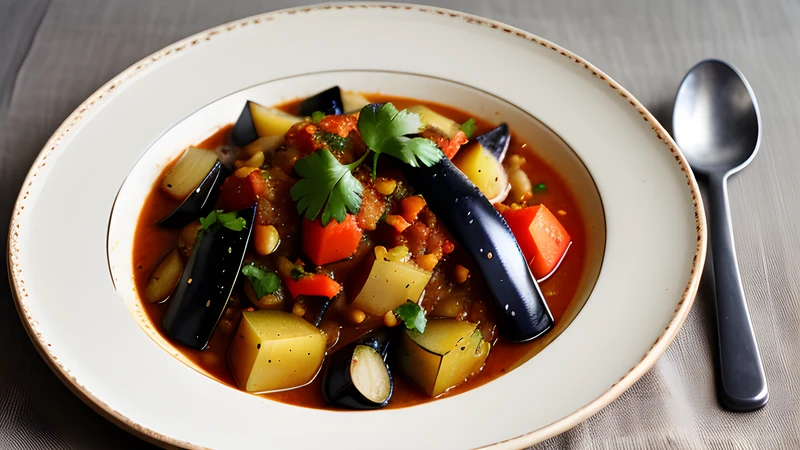
↓ Jump to recipeAjapsandali is Georgia’s answer to ratatouille, and like every good vegetable stew it is more than the sum of aubergine, pepper and tomato. What lifts it out of the general Mediterranean crowd is the finish: a fistful of fresh coriander, raw garlic, and the distinctive musk of blue fenugreek stirred in off the heat, so the pot tastes green and alive rather than merely soft and sweet. It is a dish built for the glut of late summer, eaten warm or at room temperature, and it improves overnight.
Ajapsandali: The Georgian Ratatouille
Ingredients
- 2 medium aubergines (about 600g), cut into 3cm chunks
- 2 red peppers, deseeded and cut into 3cm pieces
- 1 large onion, sliced
- 4 ripe tomatoes, roughly chopped (or 400g tin chopped tomatoes)
- 4 garlic cloves, finely chopped
- 1 fresh red chilli, finely chopped (optional)
- 6 tbsp sunflower oil
- 1 tsp ground coriander
- 1/2 tsp blue fenugreek (utskho suneli), or 1/4 tsp ground fenugreek
- 1/2 tsp dried marigold (imeretian saffron), optional
- 1 large bunch fresh coriander, leaves and stalks chopped
- Small handful fresh basil or parsley, chopped
- 1 tsp fine salt, plus more to taste
- 1 tbsp red wine vinegar, to finish
Method
- Salt the aubergine chunks in a colander and leave 20 minutes, then pat dry.
- Heat 4 tbsp oil in a wide, heavy pan over medium-high heat. Fry the aubergine in batches until deep golden on several sides, then set aside.
- Add the remaining 2 tbsp oil, lower the heat to medium, and soften the onion for 8 minutes until translucent and sweet.
- Add the peppers and cook 5 minutes until they begin to slump. Stir in the garlic, chilli, ground coriander, blue fenugreek and marigold and cook 1 minute until fragrant.
- Add the tomatoes and 1 tsp salt. Simmer 10 minutes until saucy.
- Return the aubergine to the pan, cover, and stew gently for 15 minutes until everything is meltingly soft, stirring once or twice.
- Take off the heat. Stir through most of the fresh coriander and basil, the vinegar, and adjust salt.
- Rest 10 minutes. Serve warm or at room temperature, scattered with the remaining herbs.
A stew that crossed the Caucasus
The name ajapsandali is not originally Georgian. It travels through the region under close variations, and the word is usually traced to a Persian or Turkic root meaning something like a jumble or a medley, which is exactly what the dish is: a mixture of whatever high-summer vegetables are ripe at once. You will find near-relatives across the South Caucasus and into Iran and Turkey, each with a slightly different balance and a different herb bias. The Georgian version is defined by its spicing and its heavy hand with coriander.
Aubergine is the anchor. Georgia grows and eats a great deal of it, most famously in the walnut-stuffed nigvziani badrijani rolls, and the vegetable’s meaty, oil-loving flesh gives ajapsandali its body. Peppers and tomatoes arrived comparatively late, as they did everywhere, carried from the Americas through the Ottoman world, and were absorbed into an older tradition of vegetable stews. What stayed constant was the seasoning: the Georgian spice cupboard, with its blue fenugreek, dried marigold and coriander both fresh and ground.
The dish sits in the large Georgian category of dishes eaten cool. A Georgian table, the supra, is built from many small plates set out at once, a good number of them at room temperature, and ajapsandali belongs with the pkhali and the bean lobio as something you make ahead and bring out cool, letting the flavours settle rather than serving everything piping hot. That makes it useful. You can cook it in the morning and forget about it, and it is arguably better for the wait.
One dish, several borders
It is worth knowing the neighbours, because they tell you what is negotiable. In Azerbaijan the same idea appears as ajabsandal, often layered and baked rather than fried, sometimes built in a sealed pot so the vegetables steam in their own juices with almost no added oil. Armenian cooks make a close cousin they call ajapsandal or simply summer khoravats vegetables, leaning on grilled aubergine and green pepper for a smoky edge. Push south and west and you arrive at the Turkish türlü and the Levantine baked vegetable dishes, all cousins to the same idea of a late-summer vegetable braise. What marks the Georgian bowl out is the coriander-and-fenugreek finish and the sour lift of vinegar or, in season, sour green plums. Treat the recipe below as the Tbilisi house style and adjust the herbs if you want to lean towards one of its relatives.
There is a seasonal logic worth respecting too. Ajapsandali is a high-summer dish, built for the fortnight when aubergines, peppers and tomatoes are all cheap and ripe at once, and it tastes flat if you make it from watery winter vegetables. If you are cooking it out of season, lean on a good tin of tomatoes for the sauce and roast the peppers first to coax out the sweetness the sun would otherwise have given them. The dish also scales cleanly: it is one of those pots that is barely more work for eight than for four, and since it keeps and deepens over a couple of days, a large batch is never wasted. Georgian cooks rarely measure any of this precisely. They taste, adjust the salt and the sour, add another handful of coriander, and trust the vegetables to tell them when the balance is right, which is a habit worth borrowing for any vegetable stew you make.
The two spices that make it Georgian
If you make this with nothing but coriander and garlic it will be a good stew. Two Georgian ingredients turn it into ajapsandali proper.
Blue fenugreek, utskho suneli in Georgian, is the ground seed of a fenugreek relative native to the Caucasus mountains. It is milder and rounder than the fenugreek you know from Indian cooking, with a savoury, almost maple-and-hay aroma and none of the bitterness. It is the backbone of Georgian spice blends and the defining note in the all-purpose blend khmeli suneli, and it is worth seeking out from an Eastern European or Caucasian grocer or online. If you genuinely cannot find it, use a quarter-teaspoon of ordinary ground fenugreek, but go carefully, because standard fenugreek is more assertive and turns bitter if overused or scorched.
Dried marigold, sold as Imeretian saffron, is the ground petals of a marigold and lends a gentle earthy warmth and a golden colour. It is optional and the dish survives without it, but a pinch adds depth. Both spices go in with the garlic and get a brief hit of heat to bloom their oils, then the wet ingredients follow before they can catch and turn bitter.
Frying the aubergine properly
The single decision that makes or breaks ajapsandali is how you treat the aubergine. It should be soft and silky, browned in places, never grey and spongy or swimming in oil. Two things get you there.
First, salt the chunks and let them sit in a colander for twenty minutes. This draws out moisture and collapses some of the air pockets in the flesh, so the aubergine drinks less oil and browns instead of steaming. Pat the pieces properly dry before they hit the pan; wet aubergine will not colour. If your aubergines are very fresh and small, the modern varieties are rarely bitter, so the salting is really about texture and oil control rather than removing bitterness.
Second, fry in batches over a decent heat. Crowd the pan and the temperature drops, the aubergine stews in its own steam, and you get that pale, greasy result nobody wants. Give the pieces room, let them take deep gold on several faces, and lift them out before they go to mush; they will finish cooking in the stew. Aubergine is a sponge for oil, so keep a little back and add it only as the pan needs it rather than drowning everything at the start. If you would rather use less oil altogether, toss the salted, dried chunks in a couple of spoonfuls of oil and roast them at 220C for twenty-five minutes until collapsing and bronzed, then fold them in at the stewing stage.
Building the stew
With the aubergine set aside, the base builds in the same pan so none of that browned flavour is lost. Soften the onion slowly and properly, a full eight minutes, until it is translucent and sweet; a rushed, sharp onion tells in the finished pot. The peppers go in next and cook until they slump, then the garlic and dry spices get their brief bloom.
The tomatoes bring the acidity and the sauce. Ripe fresh tomatoes in season are best, skins and all, chopped and simmered until they break down; out of season, a tin of good chopped tomatoes is more reliable than pale winter fruit. Let the sauce cook down for ten minutes to concentrate before the aubergine returns, then cover and stew everything gently together so the flavours marry and the aubergine goes fully silky. Resist stirring too often at this stage; you want the pieces to hold some shape rather than break down into a purée.
Take the pan off the heat before the final seasoning, because the herbs and garrison of fresh flavour should stay bright. Stir through most of the chopped coriander and basil, a slug of red wine vinegar to sharpen the whole pot, and check the salt. The vinegar matters: Georgian food leans sour, and that acidity is what stops a soft vegetable stew turning cloying. If you can get them, a few chopped fresh sour green plums or a spoon of tkemali plum sauce do the souring job even better than vinegar.
Serving, storing and variations
Rest ajapsandali for at least ten minutes before serving, and honestly it is better after an hour, or the next day, once the coriander and garlic have permeated everything. Serve it warm or at cool room temperature, scattered with the reserved herbs, with plenty of bread to mop the juices. Georgian cornbread, mchadi, is traditional; a good sourdough or a wedge of khachapuri Imeruli does the same job. A crumble of feta or the fresh Georgian cheese over the top turns it into a fuller meal, and a bowl of it alongside a lemony chikhirtma makes a properly Georgian lunch.
It keeps in the fridge for up to four days and the flavour deepens, so it is a strong candidate for batch cooking. It does not freeze as well; the aubergine turns watery on thawing. Serve it cold from the fridge in high summer, as part of a spread, and it is one of the best things you can put on a table. As a side it partners grilled meats and fish, and a spoonful folded through plain rice or piled onto toast with an egg on top makes an easy solo lunch.
For variations, some cooks add cubed potato, frying it alongside the aubergine, which turns the stew into a heartier one-pot; others fold in a handful of chopped walnuts at the end for a richer, more distinctly Georgian note. A spoonful of the sour plum sauce tkemali alongside is traditional and excellent, its tartness playing off the sweet peppers. Keep the coriander generous whatever you do. In this dish the herb carries the flavour as much as the vegetables do, and a mean hand with it leaves the pot tasting flat. Buy a big bunch and use all of it, stalks included, chopped fine and stirred through while the stew is still warm enough to release its scent.
Related Content