Agedashi Tofu: Crisp Fried Tofu in Dashi
A shattering starch shell over tofu that stays soft inside
Contents
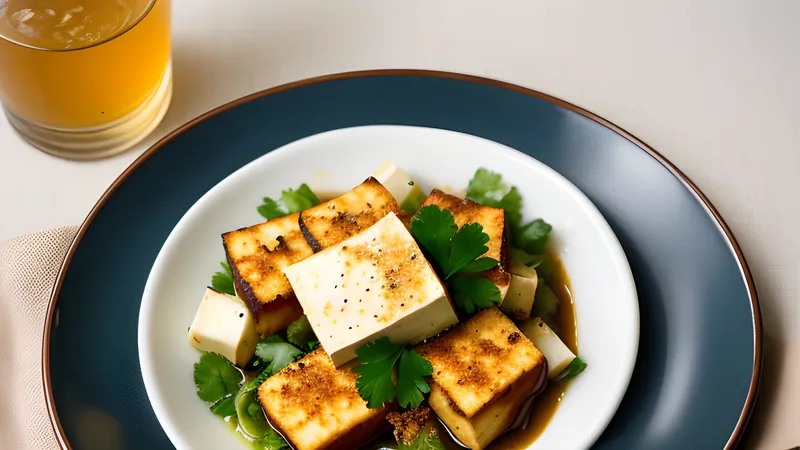
↓ Jump to recipeAgedashi tofu is built on a contrast that only lasts a few minutes: a shell of fried starch, genuinely crisp, sitting over tofu that’s still soft and faintly custardy inside, the whole thing set in a warm, savoury dashi that is actively working to soften that shell the moment it touches it. Get the timing right and you get both textures in the same bite. Get it wrong — leave the tofu sitting in the broth too long before it reaches the table — and you just have soft tofu in soup, which is a perfectly fine dish but not this one.
Agedashi Tofu: Crisp Fried Tofu in Dashi
Ingredients
- 1 block (about 350g) silken or medium-firm tofu
- 60g potato starch (katakuriko) or cornflour
- Neutral oil, for deep-frying
- 250ml dashi
- 1.5 tbsp soy sauce
- 1.5 tbsp mirin
- 1/2 tsp salt
- 4 tbsp grated daikon, lightly squeezed
- 1 tsp grated ginger
- 2 spring onions, finely sliced
- 2 tbsp katsuobushi (bonito flakes)
Method
- Wrap the tofu block in a few layers of paper towel or a clean tea towel, set it on a plate, and rest a light weight (a small plate or can) on top. Press for 20-30 minutes to draw out excess water.
- Cut the pressed tofu into large cubes, roughly 4cm across. Pat each piece dry again — any surface moisture will make the starch coating clump instead of coating evenly.
- Warm the dashi in a small saucepan with soy sauce, mirin and salt. Keep it warm but not boiling while you fry the tofu.
- Heat oil in a heavy pot or wok to 170-180C.
- Dust each tofu cube thoroughly in potato starch, coating all sides and tapping off the excess. Work in small batches so the coating doesn't sit and go gummy before frying.
- Fry the tofu in batches of 4-5 pieces, without crowding the pot, for 3-4 minutes, turning once, until the coating is golden and audibly crisp when tapped.
- Drain briefly on a rack or paper towel.
- Arrange the fried tofu in shallow bowls, ladle the warm seasoned dashi around (not over) the pieces so the tops stay crisp, and top with grated daikon, ginger, spring onion and a generous scattering of katsuobushi.
- Serve immediately — agedashi tofu is a race against the broth softening the shell.
An izakaya dish built for drinking, not for filling up
Agedashi tofu belongs to the category of Japanese food built around the izakaya, the after-work drinking den where small, shareable plates are ordered in waves across an evening rather than as a single meal. It’s a light dish by design — nobody wants a heavy, filling course between rounds of beer or sake — but it’s not a simple one, because the contrast between the crisp shell and the soft interior demands real attention at the frying stage. Tofu itself arrived in Japan from China over a thousand years ago via Buddhist monasteries, initially as a protein source suited to a vegetarian diet, and it took centuries to become the everyday, cheap staple it is now; frying it in a starch coating rather than eating it plain or in a simple broth is a comparatively recent refinement, closely tied to the wider development of deep-frying techniques in Japanese cooking after their introduction by Portuguese traders in the sixteenth century.
Double-frying, briefly, for a more resilient shell
Restaurants that serve agedashi tofu at any volume often fry the coated tofu twice — a shorter first fry at a slightly lower temperature to set the coating and drive off surface moisture, followed by a rest, then a second, hotter, brief fry just before serving to finish the crisping and colour. This isn’t strictly necessary at home for a single batch cooked to order, but it’s worth knowing about if you’re frying tofu ahead for a dinner party and don’t want to be at the stove for the final course — the first fry can happen up to an hour ahead, with the second, faster fry done just before the broth and toppings go on.
Pressing the tofu is not optional
Tofu, straight from its packaging, carries a significant amount of water, and that water is the enemy of a crisp coating. Frying wet tofu means the starch coating has to fight through a layer of moisture before it can crisp, and the result is a soggy, uneven crust that never quite shatters the way it should. Wrap the block in paper towel, weight it lightly, and let it sit for a genuine 20 to 30 minutes — you’ll see the paper towel visibly damp by the end, which is exactly the water you don’t want fighting your frying oil. Silken tofu presses less firmly than firmer varieties and needs gentler handling once it’s pressed, since it’s more prone to breaking apart when it’s dusted and moved around; medium-firm tofu is more forgiving for a first attempt and still gives the soft, custardy interior the dish is after.
Oil choice and afterward
A neutral, high-smoke-point oil — rapeseed, sunflower or a plain vegetable oil — is the right choice for agedashi tofu; a strongly flavoured oil like sesame competes with the dashi rather than supporting it, and sesame oil’s lower smoke point makes it a poor choice for deep-frying at 170-180C in any case. Strain and reuse the frying oil once it’s cooled, provided it hasn’t scorched or picked up strong flavours from anything else fried in it recently; agedashi tofu’s mild starch coating leaves the oil relatively clean afterward compared with something like katsu breadcrumbs, so it’s worth the small effort of straining it through a fine sieve or muslin cloth rather than discarding it after a single use.
Starch, not flour, and why it matters
Potato starch (katakuriko) gives agedashi tofu its particular shattering, almost glassy crispness, distinct from the denser crunch a wheat-flour or breadcrumb coating would produce. Cornflour is the closest widely available substitute if katakuriko isn’t stocked nearby. Whichever you use, coat generously and evenly, tapping off any excess clumps before the tofu goes into the oil — a patchy coating fries unevenly, crisp in some spots and pale, under-coated in others.
Frying temperature and timing
170-180C is the working range for agedashi tofu, hot enough to crisp the starch coating quickly before the tofu inside has time to dry out or the coating has time to absorb oil rather than crisping against it. Too cool an oil and the coating soaks up oil slowly over a longer fry, turning greasy rather than crisp; too hot and the outside can scorch before the coating has fully set. A cube of bread dropped into properly heated oil should turn golden in around 15 seconds — a reasonably reliable check if you don’t have a thermometer.
Silken versus firm: the real trade-off
The choice between silken and firmer tofu for agedashi isn’t just about ease of handling — it changes what the dish actually delivers. Silken tofu, properly pressed and fried, gives an interior almost like a savoury custard, barely holding its shape once the shell is cracked, which is the effect most izakaya versions are chasing. Firmer tofu holds a cleaner cube shape through frying and serving, which matters if you’re plating for guests and want the pieces to look neat rather than slightly collapsed, but the interior stays closer to tofu’s usual texture rather than softening further under the heat of frying. Neither is more correct; it’s a genuine choice between visual tidiness and the more dramatic textural contrast the dish is named for.
Building the dashi specifically for this dish
The seasoned dashi for agedashi tofu is deliberately lighter than the broth in a dish like oden, both in salt and in overall reduction, because it’s meant to pool around a fried, already well-seasoned piece of tofu rather than carry the entire flavour of the dish on its own. Keep the ratio of soy sauce and mirin modest relative to the dashi — oversalting this broth is a common mistake, since cooks used to a heartier soup base tend to season it as though it needs to stand alone. Warm it gently in its own small pan rather than the same pot you’re frying in, and have it ready before the tofu goes into the oil, since agedashi tofu is a dish where every element needs to be at the right temperature at the same moment for the timing to work.
What can go wrong
Soggy coating almost always traces back to one of two causes: insufficiently pressed tofu, or tofu that sat coated in starch for too long before frying, letting ambient moisture turn the starch gummy. Coat tofu in small batches, right before it goes into the oil, rather than dusting the whole batch in advance.
A broth that’s too hot, poured directly over the fried tofu rather than around it, softens the crisp shell within seconds. Ladle the dashi into the bowl first, or pour it carefully around the sides of the tofu rather than over the top, and serve the moment the toppings are on.
Overcrowding the frying pot drops the oil temperature sharply and produces pale, oil-logged tofu rather than crisp pieces — fry in small batches and let the oil recover its temperature between them, even if it means the whole process takes a bit longer.
The daikon and ginger aren’t garnish
Grated daikon and ginger sit on top of agedashi tofu looking decorative, but they’re doing genuine work against the fried coating’s richness. Daikon carries a mild enzyme that helps cut through fried food’s heaviness, and its clean, faintly peppery bite against the starch shell is part of what keeps the dish feeling light rather than greasy despite being deep-fried. Squeeze the grated daikon lightly before serving — not bone dry, but enough that it isn’t watering down the broth the moment it lands in the bowl. Ginger, grated fresh rather than from a jar, adds a sharper top note that cuts differently than the daikon’s cooling effect; the two together are doing more balancing work than their small quantities suggest.
Katsuobushi’s second job
Bonito flakes scattered over the top of a finished bowl aren’t just for show either — beyond the immediate savoury, faintly smoky flavour they contribute, the thin flakes visibly curl and move in the rising heat off the hot tofu and broth, which is a small piece of tableside theatre Japanese cooking uses often (the same effect shows up on takoyaki and okonomiyaki). If your katsuobushi flakes aren’t moving when scattered over the dish, the broth and tofu likely haven’t been served hot enough, which is also a sign the crisp shell may already be starting to soften.
Substitutions, storage and variations
Firm or extra-firm tofu can substitute for silken if that’s what’s available, giving a slightly denser interior that some people prefer for a starter dish; press it slightly less aggressively since it holds together better to begin with. A gluten-free version is straightforward, since potato starch is naturally gluten-free — just check the soy sauce.
Agedashi tofu doesn’t keep. A gluten-free soy sauce swap costs nothing in flavour if that’s a requirement in your kitchen, since the rest of the dish carries no wheat at all once that one substitution is made.
It’s genuinely a make-and-eat-immediately dish — even a short wait between plating and eating is enough for the broth’s heat to start softening the coating, which is why good izakayas fry to order rather than holding a batch., and there’s no good way to store or reheat it without losing the entire point of the contrast between crisp and soft. If you have leftover fried tofu that’s already gone soft, the honest move is to treat it as soup garnish rather than trying to recrisp it.
For another dish built on the same crisp-shell, soft-interior logic but with egg instead of tofu, chawanmushi approaches softness from the opposite direction, with no crisp element at all. If you want a starter with a similar dashi-forward, izakaya character, oden shares agedashi’s reliance on a well-made, well-seasoned base broth doing most of the actual work.
Related Content