Æbleskiver: Danish Spherical Pancakes
A cast iron pan with seven holes, a knitting needle, and December
Contents
↓ Jump to recipeThere is a specialised pan for these, it does nothing else, and I would still buy one again. The æbleskivepande is a cast iron slab with seven hemispherical dimples in it, it weighs about two kilos, and once a year it comes out of the cupboard and earns its shelf space in a single afternoon.
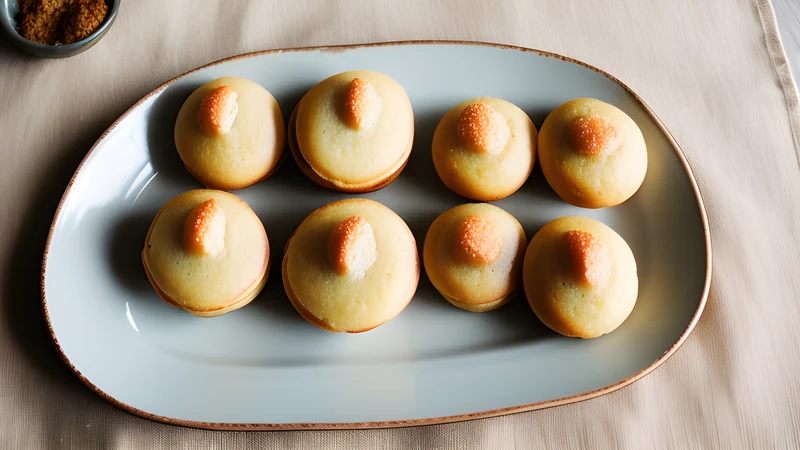
Æbleskiver are spheres of pancake batter, cooked in butter in those dimples and turned repeatedly with a skewer until they close up into balls. They are eaten hot, buried in icing sugar, dipped in jam, and drunk with mulled wine. They belong to December in Denmark the way mince pies belong to December in Britain, and every Danish family has an opinion about the turning technique.
Æbleskiver: Danish Spherical Pancakes
Ingredients
- 250 g plain flour
- 1.5 tsp baking powder
- 0.5 tsp bicarbonate of soda
- 2 tbsp (25 g) caster sugar
- 0.5 tsp fine sea salt
- 1 tsp ground cardamom, freshly ground from about 12 pods if possible
- Finely grated zest of 1 lemon
- 3 large eggs, separated
- 300 ml buttermilk
- 100 ml whole milk
- 50 g unsalted butter, melted and cooled, plus about 60 g more for the pan
- Icing sugar and raspberry or strawberry jam, to serve
Method
- Whisk the flour, baking powder, bicarbonate of soda, sugar, salt, cardamom and lemon zest together in a large bowl.
- In a jug, whisk the egg yolks with the buttermilk, milk and 50 g melted butter.
- Pour the wet into the dry and whisk just until combined. A few lumps are fine; overmixing develops gluten and gives you rubber balls. Rest the batter for 20 minutes.
- Whisk the egg whites in a clean bowl to soft peaks — the peak should flop over when the whisk is lifted. Stiff peaks will not fold in without breaking.
- Fold a third of the whites into the batter to loosen it, then fold in the rest in two additions with a spatula, stopping while a few streaks of white remain.
- Heat the æbleskiver pan over a medium-low heat for 3–4 minutes until a drop of water dances. Put about 0.5 tsp of butter in each hole and let it foam.
- Fill each hole with batter to just below the rim — about 1.5 tbsp. Do not overfill; the batter will rise.
- Cook for 60–90 seconds until the edges are set and dry and the centre is still wet.
- Slide a wooden skewer or knitting needle down the inside edge of one hole, hook under the set crust, and rotate the ball a quarter turn. The uncooked batter will run down into the hole. Cook for 45 seconds.
- Rotate another quarter turn, then continue turning every 30–45 seconds, 5 or 6 turns in total, until the ball is closed, round, deep gold all over and springs back when pressed. Total 5–6 minutes per batch.
- Lift onto a warm plate. Wipe the pan, add fresh butter, and repeat with the remaining batter.
- Serve hot, dusted heavily with icing sugar, with a bowl of jam for dipping.
The apple that is not there
Æbleskiver translates to “apple slices”, and there is no apple in the recipe above. This causes reasonable confusion.
The original almost certainly had one. The oldest Danish descriptions, and the practice that survives in some families, put a small piece of apple or a spoon of apple compote in the centre of each ball as it cooks. The fruit sweetened a fairly plain batter and added moisture. As sugar got cheaper and the batter got richer — eggs, buttermilk, butter, cardamom — the apple became unnecessary and quietly disappeared, leaving the name behind as a fossil, in exactly the way grød survives in rødgrød med fløde with no porridge in sight.
The pan itself is older than the recipe. Dimpled iron griddles turn up across northern Europe and there are Danish examples from the seventeenth century; the same tool makes Dutch poffertjes, Swedish munkar, and Thai khanom krok. What differs is what goes in it and how far you take the turning. Poffertjes are cooked on one side and flipped once, staying as flattened discs. The Danes commit to the sphere, and the sphere is the whole engineering problem.
Cardamom, and why it tastes Scandinavian
The teaspoon of cardamom is what makes these taste Danish rather than merely sweet. Scandinavia’s cardamom habit is a genuine historical oddity — the region consumes it at rates many times the European average, and the usual explanation involves Viking-era trade routes through Constantinople, though the more boring and more likely answer is the Danish and Swedish East India companies in the seventeenth and eighteenth centuries bringing it home cheaply and it never leaving.
Grind it yourself if you possibly can. Pre-ground cardamom loses its volatile oils within weeks and tastes of dust and soap; twelve pods crushed in a mortar, husks discarded, seeds ground, takes four minutes and is a different spice entirely. It is the same argument that makes cardamom buns worth the trouble.
Whipped whites, and the structure question
The separated eggs are the difference between an æbleskive and a golf ball.
Baking powder and bicarbonate give chemical lift, which is fast and coarse — carbon dioxide generated in the first minute in the pan. That gets you a rise. What it does not get you is the fine, even, slightly custardy crumb that makes a good æbleskive. The whipped whites do that: they carry thousands of small stable air cells into the batter, and those cells expand with heat and set as the protein coagulates, giving you an interior more like a soufflé than a pancake.
Whip to soft peaks and stop there. Stiff whites will not fold into a batter this thick without you beating the air straight back out of them; soft whites, which flop over when the whisk lifts, incorporate in three or four passes with a spatula. Stop folding while you can still see white streaks. Those streaks disappear in the pan and a fully homogenised batter is a deflated one.
Use the batter within thirty minutes. The whites start weeping and the bicarbonate has largely spent itself by then, and batch four out of a bowl that has sat for an hour will be noticeably heavier than batch one.
The turning
This is the skill, and it takes one batch of failures to acquire.
The tool is a wooden skewer, a knitting needle, or the pointed end of a chopstick. A fork tears the crust. The little curved æbleskiver forks sold alongside some pans are worse than a plain stick, because the tines catch and lift rather than pivot.
The timing is the thing. Wait until the edges are set and dry and the centre is still visibly liquid — 60 to 90 seconds. Slide the skewer down the inside wall of the hole, hook under the set rim, and rotate the ball a quarter turn. Liquid batter runs out of the top and down into the hot buttered hole, where it sets and becomes the next quarter of the sphere. That is the entire mechanism: you are building a ball out of five or six successive pours, each one welding onto the last.
Turn too early and the crust is not strong enough — it tears and you have scrambled batter. Turn too late and the centre has set flat, so nothing runs out and you get a hemisphere with a lid. Five or six quarter turns in total, at 30 to 45 second intervals, gets you a closed sphere in about five minutes.
Do not fill the holes to the brim. Just under the rim, about a tablespoon and a half, leaves room for the rise and, more importantly, leaves a clean lip for the skewer to work against.
The pan, and heat
Medium-low, and give the pan a full three or four minutes to come up. Cast iron is slow and it is unforgiving of impatience: a pan that is hot in the middle and cool at the edges gives you two burnt æbleskiver and five pale ones, and the only fix is time on the hob before you start.
Too hot is the standard failure. The outside sets and browns in forty seconds, before the middle has risen or the crust is strong enough to turn, and you end up with dark leathery balls that are raw inside. If your first batch browns fast and turns badly, drop the heat and wait two minutes before the second.
Butter goes in fresh for every batch — half a teaspoon per hole, allowed to foam before the batter arrives. Wipe the pan between batches with kitchen paper on tongs, because the residue from the last round will burn on the next. Seasoned cast iron does not need much butter for release; it needs it for flavour and for the fried edge.
Buying and seasoning the pan
Cast iron, seven holes, roughly 24 cm across, and around 2 kg. Non-stick aluminium versions exist and they cook badly — the thin metal cannot hold heat when cold batter arrives, so the balls steam rather than fry, and the crust never gets strong enough to turn cleanly. Copper ones exist, cost a fortune, and are a joy if someone gives you one.
New cast iron needs seasoning before it will release. Wipe a thin film of a neutral high-smoke-point oil into every hole with kitchen paper — thin enough that it looks dry — and put the pan upside down in a 220°C oven for an hour with a tray underneath. Two rounds of that and the surface polymerises into something slick. After each use, wipe it out hot with kitchen paper, and keep it away from soap and the dishwasher.
The first batch out of any æbleskiver pan, seasoned or not, is a sacrifice. Every Danish kitchen accepts this. The pan is finding its temperature and you are finding your timing, and both of those settle by ball number eight.
Serving, storage and variations
Hot, immediately, with icing sugar snowed over them through a sieve and a bowl of sharp jam. Raspberry is standard; anything with acid works and anything sweet makes them cloying. In Denmark they arrive with gløgg, and the pairing of hot spiced wine and hot cardamom dough in a cold December room is the whole reason the tradition survived.
They do not keep well — the exterior softens within twenty minutes. A batch will hold for ten minutes on a warm plate in a low oven, uncovered, and that is genuinely the limit. If you have leftovers, they refresh surprisingly well for five minutes at 180°C in a hot oven the next morning.
For variations: the historical apple, a 1 cm cube pushed into the centre after the first turn, is worth doing once. A cube of marzipan does the same job and is better. A teaspoon of jam pushed in after the first turn gives you a filled ball, though it will leak and it will burn on the pan, and you will spend the rest of the evening scrubbing. If you have leftover berry compote in the fridge, spoon it over instead of jam — thinner, sharper, and it soaks in.
Batter can be made to the point before the whites go in, covered and refrigerated overnight; whip and fold the whites the next day and it behaves perfectly.
Related Content