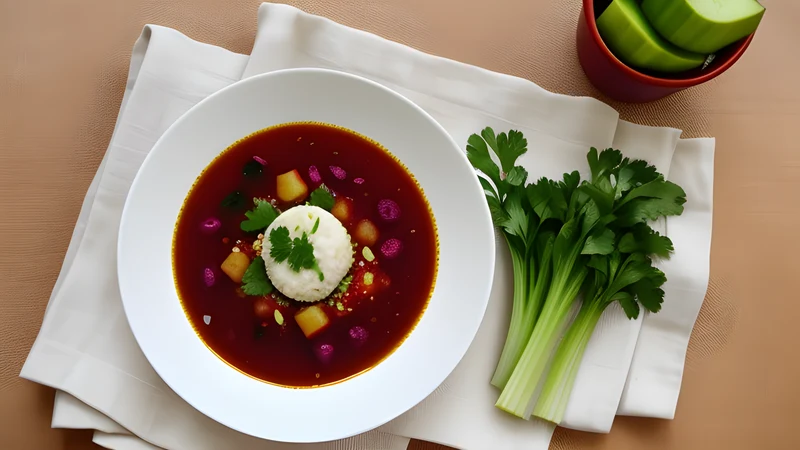
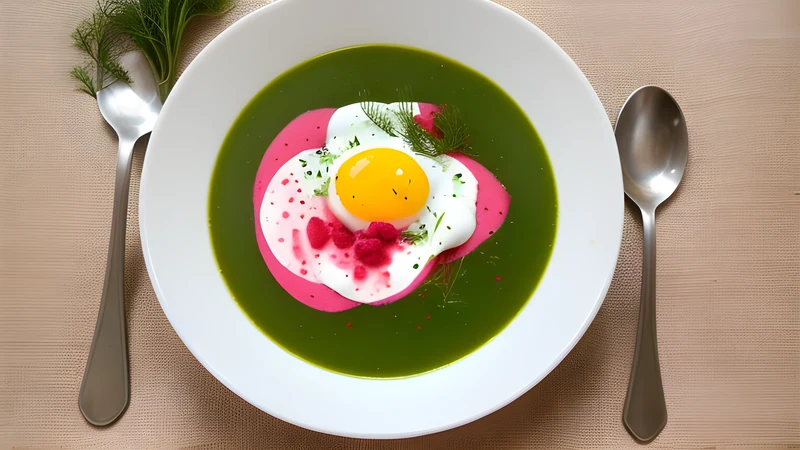
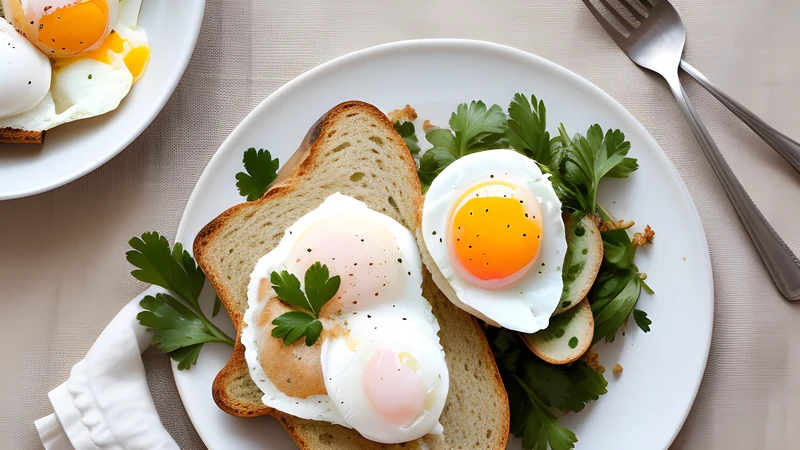
Açorda Alentejana: Bread, Coriander and a Poached Egg
The poorest soup in Portugal and one of the best
Contents
↓ Jump to recipeThe Alentejo is the great flat wheat plain that fills the bottom third of Portugal, cork oaks standing in yellow grass, and it is a place where poverty was structural for a very long time. Latifundia — vast estates worked by day labourers who owned nothing — shaped the region until the land occupations of 1975. The food that came out of that arrangement is the food of people who had bread, oil, garlic, herbs and, on a good day, an egg.
Açorda is what they made. The word comes from the Arabic ath-thurda, a bread sop, which puts it in the same family as Spain’s sopa de ajo and a hundred other Mediterranean dishes built on the fact that bread goes stale and nobody throws bread away. The Moorish presence in the Alentejo lasted from the eighth century to the mid-thirteenth, and the vocabulary survived the reconquest.
What separates açorda alentejana from the rest of that family is coriander. Portugal is the one country in western Europe that uses fresh coriander with real enthusiasm, and the Alentejo uses it hardest — bunches of it, chopped or pounded, in a quantity that alarms people who think of it as a garnish. Spain gave coriander up almost entirely after the Moors left. Portugal kept it. Nobody has a satisfying explanation for the divergence, which is one of the more interesting unanswered questions in Iberian food history.
Açorda Alentejana: Bread, Coriander and a Poached Egg
Ingredients
- 300g stale country bread, crusts on, torn into 4cm pieces
- 6 fat garlic cloves, peeled
- 1 tsp coarse sea salt, plus more to taste
- 40g fresh coriander, leaves and thin stalks, roughly 2 large bunches
- 1 tsp coriander seed
- 100ml extra virgin olive oil, plus more to finish
- 1.2 litres water or light chicken stock
- 4 large eggs, very fresh
- 1 tbsp white wine vinegar, for the poaching water
- Freshly ground black pepper
Method
- Toast the coriander seed in a dry pan over a medium heat for 90 seconds, until it smells like orange peel and cracks under a spoon. Tip out and crush to a coarse powder in a mortar.
- Add the garlic cloves and 1 tsp coarse salt to the same mortar and pound to a smooth paste, 2-3 minutes. The salt is the abrasive; do not skip it.
- Strip the coriander leaves and thin stalks from the tough stems. Add half to the mortar and pound until you have a rough green paste. Reserve the rest for the top.
- Work 100ml olive oil into the paste a splash at a time, stirring rather than pounding, until it is loose and glossy. Divide between four warmed bowls.
- Tear the stale bread into the bowls, dividing it evenly. Leave the pieces large.
- Bring the water or stock to a boil, season it until it tastes like a good broth — around 1 tsp fine salt per litre — then pour it over the bread and paste. Do not stir. Leave to sit for 3 minutes while you poach the eggs.
- Bring a wide pan of water to a bare simmer, add the vinegar. Crack each egg into a cup, slide it in, and poach for 3 minutes for a liquid yolk and a just-set white.
- Lift each egg out with a slotted spoon, drain on kitchen paper, and set one on each bowl.
- Scatter over the reserved coriander, grind on black pepper, and finish each bowl with a hard glug of olive oil. Eat immediately, breaking the yolk into the bread.
Four ingredients and no hiding place
There is no stock cube in this. There is no onion softening for twenty minutes to build a base. You have bread, garlic, coriander and oil, and every one of them is doing visible work. This means the shopping matters more than the cooking.
Bread. A proper country loaf, two to four days old, with a chewy crumb and a real crust. In the Alentejo it would be pão alentejano, a big slow-fermented wheat loaf. What you need is bread that has structure to lose. Sliced sandwich bread turns to wallpaper paste in about eight seconds. If you have the tail end of a sourdough, this is its best possible fate — the same logic that makes panzanella work.
Oil. You will taste it neat, essentially. Use something you would put on a salad. Portuguese oil from the Alentejo is peppery and grassy and costs less than the Tuscan equivalent.
Garlic. Six cloves for four people. Raw. This is not a typo. The hot water knocks the top off the harshness and what remains is sweet and enormous.
Coriander. Forty grams is two large supermarket bunches. Use the thin stalks — they carry more of the citrus note than the leaves do.
The mortar is the recipe
You can blitz the paste in a food processor and you will get something edible and slightly wrong. A blade chops; a pestle crushes. Crushing ruptures more cells and releases more of the allicin in the garlic and the aldehydes in the coriander, and it does it without whipping air through the mixture. The paste from a mortar is denser, greener and more pungent, and it emulsifies with the oil instead of splitting.
Salt first, then garlic, then herb. The coarse salt is an abrasive — it gives the pestle something to grind against and shreds the garlic’s cell walls. Two or three minutes of unhurried work gets you a paste with no visible fragments.
The toasted seed
The small change I make: a teaspoon of coriander seed, toasted and crushed, added to the mortar before the garlic. Seed and leaf are the same plant and taste almost nothing alike — the leaf is citrus and soap and metal, the toasted seed is warm orange peel and a faint sweetness. Putting both in gives the bowl a low register it otherwise lacks, and it stops the fresh coriander reading as one loud note. Ninety seconds in a dry pan, until it cracks. Any longer and it goes bitter.
Assembly, which is the hard bit
The order matters and it is counterintuitive. Paste in the warm bowl. Bread on top. Boiling liquid over. Do not stir.
Stirring is what turns açorda into gruel. Left alone for three minutes, the bread on the bottom drinks and softens while the pieces at the top stay chewy at the edges, and you get a bowl with two textures. Stirred, everything becomes one uniform sludge and the dish loses its argument.
Season the water properly before it goes in. About a teaspoon of fine salt per litre — it should taste like a broth you would happily drink. Bread absorbs salt and mutes it; under-seasoned liquid makes a bowl that tastes of damp nothing, which is the single most common failure here.
Warm the bowls. The liquid drops temperature fast against cold ceramic and cold bread, and this is a dish that must arrive hot.
The egg
Three minutes at a bare simmer, with a splash of vinegar to help the white set before it drifts. The yolk is a sauce — you break it into the bread and it enriches everything. If you find free-poaching stressful, the Turkish çılbır method of poaching in a whirlpool works fine here too.
Some Alentejo households poach the eggs directly in the seasoned water and then pour that same water over the bread, which cloudies the liquid a little and thickens it. It is traditional and it is good. I keep them separate because I like the broth clear enough to see the oil beading on the surface.
What the dish is actually doing
It helps to understand why four cheap things add up to more than they should. Raw garlic pounded into a paste releases allicin, which is formed only when the cell walls rupture and two compounds that live in separate compartments finally meet. Allicin is aggressive and volatile, and it starts breaking down almost immediately into a family of gentler sulphur compounds. The boiling water hitting the paste accelerates that conversion — which is exactly why six raw cloves in a bowl of hot broth taste rounded rather than violent, and why the same six cloves eaten raw would ruin your afternoon.
The olive oil is doing the other half. Most of what makes coriander and garlic taste of anything is fat-soluble, and without a real quantity of oil those compounds have nowhere to dissolve and nothing to carry them across your tongue. This is why a low-fat açorda is a bowl of wet bread, and why the hundred millilitres are load-bearing rather than indulgent.
The three-minute window
The gap between the liquid going in and the bowl reaching the table is the whole dish, and it is short. Bread keeps drinking. At three minutes you have distinct pieces in a hot broth. At eight you have porridge. At fifteen it is a solid mass and you have missed it.
So poach the eggs while the bread sits, and have everything else already done — the paste made, the bowls warmed, the coriander for the top chopped, the pepper mill on the table. Açorda punishes anybody who tries to do the prep after the water has gone in. It is a ten-minute dish with fifteen minutes of setup, and the setup has to be finished first.
What can go wrong
It tastes of nothing. The liquid was under-salted. Bread is a sponge and it dilutes everything; season the water until it tastes like a broth you would drink from a mug before it goes near the bowl.
It is a uniform sludge. You stirred. Pour and walk away.
It is bitter. Old olive oil, or coriander stalks that included the thick woody bases. Strip the leaves and thin stalks from anything the diameter of a pencil.
The garlic is harsh. The liquid was not hot enough. It must be at a rolling boil when it hits the bowl.
Bread choice, in detail
I keep saying stale, and stale needs defining. You want bread that has dried, which is a different thing from bread that has gone mouldy or bread that has been kept in a bag and gone leathery. Leave the loaf out on a board, cut side up, for two to four days. What happens is starch retrogradation — the gelatinised starch in the crumb recrystallises and pushes water out — and the result is a crumb that has structure but has lost its own moisture and is desperate to absorb yours.
Fresh bread does the opposite. It is already saturated, so it does not drink the broth so much as disintegrate in it, and you lose the two-texture effect entirely. If all you have is a fresh loaf, tear it and dry the pieces in a 140C oven for twelve minutes, until they are firm at the edges and still pale. It is a decent approximation.
On the coriander divide
It is worth being direct about this: a chunk of the population tastes coriander leaf as soap, and that is genetics rather than fussiness. A variant near the OR6A2 olfactory receptor gene makes some people unusually sensitive to the aldehydes in the leaf, which are chemically related to those in certain soaps. The proportion varies by population and runs somewhere between 4% and 20%.
If you are cooking for one of those people there is no diplomatic version of açorda alentejana, because the coriander is the dish. What does work is swapping to flat-leaf parsley and doubling the toasted coriander seed — the seed contains none of the offending aldehydes and it is chemically a different proposition entirely. The result belongs somewhere well outside the Alentejo, and it is still a very good bowl of garlic bread soup that nobody will leave hungry from.
Cost, and why that matters
The whole thing, for four people, comes to the price of two coffees. Stale bread you already had, six cloves of garlic, two bunches of coriander, four eggs, and oil. That is the point of the dish and it is why it survived in a region where surviving was the main activity.
I find that worth saying because açorda has quietly become a restaurant dish in Lisbon, dressed up with prawns and served in a hollowed bread bowl at a price that would have astonished the people who invented it. The tarted-up version is fine. The plain one, made properly with good oil and enough salt, is better, and it is the one that tells you why anyone bothered.
Variations and what to do with leftovers
Açorda de marisco is the same idea with prawn stock and picked prawns folded in, a cousin of arroz de marisco that trades rice for bread. Açorda de bacalhau uses salt cod poaching water and flaked cod, and is the version that turns up on Fridays.
There are no real leftovers — the bread carries on swelling and by the next morning you have a pudding. If you must, treat what remains as a stuffing base for roast chicken. It is very good in that job.
Purists in Évora will tell you the pennyroyal version, açorda com poejos, is the older one, and they are probably right. Pennyroyal is hard to find, mildly toxic in quantity, and tastes of aggressive mint. Coriander is what the modern dish means, and it is the version that has travelled.
Related Content