Whoop vs a £40 Band: Does Subscription Fitness Earn It?
One costs a monthly fee forever with no screen. The other costs £40 once and shows you the time. What the difference actually buys.
Contents
Whoop sells a wearable with no screen, no buttons, and no way to check the time without opening an app — and it costs a recurring membership fee for as long as you wear it, rather than a single upfront price. A Xiaomi Smart Band or Amazfit equivalent costs around £40, has a screen, tells the time, tracks steps and sleep, and never asks for another payment again. On paper this looks like an easy decision. It isn’t, because the two devices are not really trying to do the same job, and the honest answer depends entirely on which job you actually want done.
What Whoop is actually selling
Whoop’s entire pitch rests on removing the screen deliberately, as a design philosophy: the idea that a fitness wearable’s job is to collect data continuously and hand you a considered daily briefing, rather than let you glance at a number mid-workout and make a snap judgement about it. It is a deliberate design choice, not a cost-cutting one. The band itself is essentially a sensor housing — PPG heart-rate array, skin temperature sensor, and (on the newer Whoop 5.0 and Whoop MG) a slimmer battery pack rated for roughly two weeks between charges, notably longer than most screened smartwatches manage. There is no in-app purchase for the hardware in the traditional sense; the device itself is bundled into the membership, which starts at roughly £199 a year for the base tier, with a medical-grade tier (Whoop MG) priced higher for blood-pressure-adjacent and other health-focused features.
The three numbers Whoop is built around — Strain, Recovery and Sleep — are proprietary scores derived from heart-rate variability, resting heart rate, respiratory rate and sleep-stage data, run through an algorithm Whoop has iterated on for several hardware generations and a large subscriber base. The Recovery score in particular has developed a loyal following among endurance athletes and shift workers precisely because it changes daily behaviour: a red Recovery score genuinely does change how many users approach that day’s training, in a way a simple step count never did.
What a £40 band is actually selling
The Xiaomi Smart Band and Amazfit Band lines occupy the opposite end of the same sensor technology: PPG heart-rate, accelerometer-based step and sleep tracking, and in recent generations, SpO2 estimation of the same broadly unreliable variety found across the entire budget category. The screen is small — often under two inches diagonal on a rectangular AMOLED panel — but it does something Whoop deliberately doesn’t: it tells the time, shows notifications, and gives an at-a-glance heart rate reading without opening a phone. Battery life is typically claimed at two to three weeks, and because there is no membership, no app subscription and no recurring cost, the total lifetime cost of ownership is fixed at purchase.
The trade-off is depth. A £40 band’s sleep-stage and recovery scoring is a simpler, less-validated version of what Whoop offers — built on the same PPG sensor category but with far less algorithmic refinement behind the number, and with a company that has not built anything close to Whoop’s specific athlete-facing feature set (menstrual cycle-adjusted strain targets, VO2 max estimation validated against lab testing, or coach-style daily recommendations).
The materials difference: screen versus none
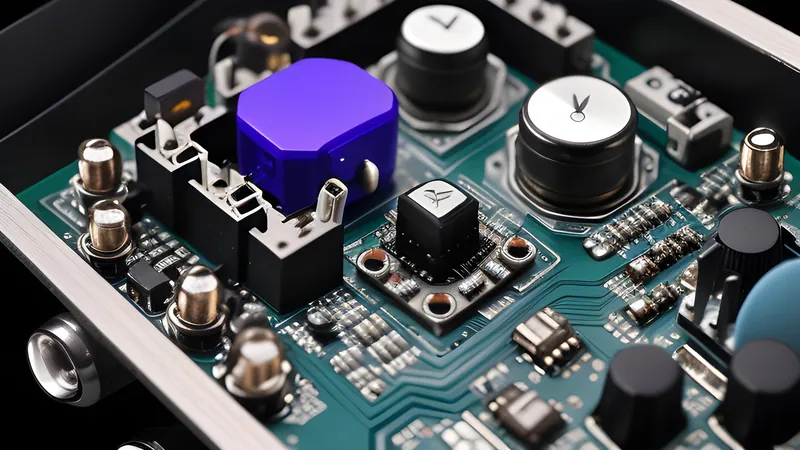
Cracking open both devices shows the design philosophies made physical. A budget band’s case is dominated by the display module — the single most expensive and fragile component in the assembly, and the main reason these bands are rated to a lower drop-resistance than Whoop’s sealed puck design. Whoop’s band, having no screen, no buttons and no user-facing ports (charging is via a battery pack that slides over the sensor pod rather than a cable connecting to the device, a deliberately over-engineered solution to the problem of keeping a screenless device continuously worn and continuously charged), is a genuinely more robust piece of hardware for its size — there is simply less to break. It is a real engineering advantage, not just a marketing angle, and one of the few places Whoop’s design earns its unusual approach on its own physical merits rather than the subscription model around it.
Does the subscription earn its keep?
The honest case for Whoop is narrow but real: for someone who trains seriously enough that a daily Recovery score genuinely changes decisions — whether to push a hard session or back off — and who values not having a screen to check compulsively mid-effort, the membership is buying a considered daily readiness briefing that a £40 band’s simpler algorithm hasn’t earned the same trust for, at least according to the volume of published athlete case studies and Whoop’s own longer field-validation history. That is a real product, and the subscribers who describe changing training behaviour because of a Recovery score are describing something a step-counting band was never built to deliver.
The honest case against Whoop is that the membership never ends. Cancel and the sensor data stops being useful entirely — there is no “keep using the last version” option the way a purchased smartwatch continues functioning after its subscription-optional cloud features lapse. Over three years, the base Whoop membership costs roughly £600, more than several genuinely capable Garmin or Amazfit smartwatches combined, for a device that still can’t show the time on its own case. For most casual fitness trackers — the person who wants to know they slept badly and hit their step count — that ongoing cost buys refinement they are unlikely to use to the depth that justifies the price.
The lock-in problem, made concrete
Whoop’s membership model has a real, documented downside beyond the recurring cost: when Whoop introduced its 5.0 and MG hardware in 2025, existing members on active annual contracts found themselves facing a paid upgrade path to access the new hardware generation rather than a free rolling upgrade, which triggered a genuine and widely reported subscriber backlash. The episode is a useful illustration of the structural risk in any subscription-hardware model — the company controls both the software roadmap and the terms on which the physical device itself gets refreshed, and a member who has paid for two or three years of access has no ownership claim on the hardware the way a band or smartwatch buyer does. It doesn’t make Whoop a bad product; it makes the membership model a genuine trade-off buyers should weigh with open eyes, not just a pricing quirk.
Data portability compounds this. A budget band’s data typically lives in an app like Zepp or Mi Fitness that exports to Apple Health or Google Fit reasonably openly, meaning the underlying step and sleep history outlives the device itself. Whoop’s Strain, Recovery and Sleep scores are proprietary metrics that do not translate cleanly to another platform if a membership lapses — cancel, and the years of accumulated trend data become far less useful to look back on, since the scoring model that made it meaningful is no longer being applied to new data for comparison.
Sleep tracking: the feature both actually do well
Sleep is the one category where both devices earn genuine credit, for different reasons. Whoop’s sleep-stage breakdown — time in light, deep and REM sleep, plus a sleep-performance percentage against a calculated need — is built from years of accumulated overnight HRV and respiratory-rate data and is frequently cited by sleep researchers and reviewers as among the more consistent consumer sleep-stage estimates available, a claim distinct from claiming clinical-grade accuracy against a polysomnography reference, which no consumer wearable in this category has achieved. A £40 band’s sleep tracking uses the same underlying accelerometer-and-heart-rate approach but with a shallower stage-detection algorithm; it will reliably tell you roughly when you fell asleep and woke up, and roughly how restless the night was, without the same granularity in staging.
For someone whose only real interest is “did I sleep OK, and when should I go to bed tonight,” the budget band’s simpler answer is entirely sufficient. For someone managing a genuine sleep disorder investigation, chronic fatigue, or serious training-recovery tracking, Whoop’s deeper staging data has real, repeatedly demonstrated value — though even there, a formal sleep study remains the only clinically valid diagnostic tool, and Whoop should be read as a trend-tracking aid rather than a diagnosis.
Strain scoring versus a step goal
Whoop’s Strain metric — a daily 0-to-21 cardiovascular load score built from heart rate across the whole day, not just tracked workouts — is genuinely more sophisticated than a step count, because it captures a hard hike, a stressful physical day at work, or a high-intensity interval session as comparable load in a way raw steps never could; a busy warehouse shift and a gentle walk can produce similar step totals while representing very different physical demand, and Strain is built specifically to tell those apart. A £40 band’s daily goal is almost always a step target inherited from the pedometer era, which is a blunt but genuinely useful habit-forming tool for someone who just needs a reason to get up from the desk, without pretending to model cardiovascular load with any precision.
Neither approach is wrong for its intended audience. Strain scoring rewards someone already training with structure and wanting to avoid overreaching; a step goal rewards someone building a basic movement habit from a sedentary baseline. Buying Whoop for the latter purpose is buying a lot of unused sophistication; buying a step-counting band for the former is under-serving a genuine training need.
The verdict
Wait, and be honest about which category you’re actually in. Whoop earns its subscription for a specific, serious training audience: athletes and heavily structured trainers who will actually act on a daily Recovery number and who value the screenless, always-worn design enough to pay for it indefinitely. For that narrow group, Whoop’s price reflects an ongoing service rather than a one-off gadget purchase, and should be judged on that basis.
For nearly everyone else — casual exercisers, people who want to glance at their wrist for the time and a step count, anyone unwilling to commit to an indefinite recurring cost — a £40 band delivers most of the daily-life value at a fraction of the three-year cost, and the gap in scoring sophistication is not one most casual users will ever notice or act on differently. Buy Whoop only if you can articulate, specifically, what decision the Recovery score will change for you next week; buy the £40 band if the honest answer is “I just want to know how I slept.”
Readers weighing whether either device’s numbers are trustworthy in the first place should read blood-oxygen and stress metrics: which wearable numbers mean anything, and anyone drawn to Whoop’s screenless philosophy specifically for sleep tracking should compare it against Oura Ring Gen 4: the sleep promise after three months, which takes the same screenless idea and shrinks it onto a finger instead of a wrist.
Related Content