The Best Running Watch Under £200: GPS That Holds a Lock
Below £200, the difference between watches is almost entirely how well the GPS actually behaves
Contents
The running watch market under £200 is crowded enough that spec sheets stop being useful on their own. Nearly everything at this price has a heart-rate sensor, GPS, a claimed multi-day battery, and some version of training-load feedback. What actually separates a good running watch from a mediocre one at this price is something manufacturers rarely put front and centre: how reliably the GPS holds a satellite lock once a run starts, particularly somewhere imperfect — under tree cover, between tall buildings, on a route with a tunnel or underpass. A watch that drifts half a kilometre off-route on a trail run is a watch that has failed at its one job, no matter how nice its sleep-stage graph looks afterwards.
Why GPS accuracy varies this much at a similar price
GPS accuracy is a function of three things: the chipset, the antenna design, and how much the firmware corrects for reflected or weak signal rather than trusting it outright. Single-band GPS, standard through most of this price tier a few years ago, picks up satellite signal on one frequency and is vulnerable to multipath error — signal bouncing off a building or dense canopy before reaching the antenna, read as if it came from a different direction than it actually did. Dual-band (also called multi-band or L1+L5) GPS cross-references two frequencies and can reject a large share of that reflected-signal error, and it has become the single biggest accuracy differentiator among watches under £200 over the past couple of watch generations, more consequential to route accuracy than any heart-rate sensor upgrade.
Antenna placement matters almost as much and is rarely discussed. A watch with its GPS antenna routed through the bezel rather than buried under the display module generally gets a cleaner signal path, which is part of why some visually similar watches in the same price bracket post noticeably different lock times and drift rates in independent testing from dedicated GPS-watch reviewers who run controlled side-by-side comparisons on the same routes.
The picks
Best overall: Garmin Forerunner 165 (around £220, occasionally under £200 in sales). Garmin’s first Forerunner to bring an AMOLED display down to this tier, and — more importantly for this guide’s actual criterion — dual-band GPS support inherited from Garmin’s higher-end Forerunners. Independent GPS-accuracy comparisons run across multiple routes by dedicated running-watch reviewers have consistently placed it among the more reliable trackers in its price class, with battery life rated at around eleven days in smartwatch mode and roughly nineteen hours with GPS running continuously.
Best battery-to-GPS-accuracy ratio: Coros Pace 3 (around £200). Coros built its reputation among serious runners with a leaner interface and a battery that Coros rates at up to twenty-four hours of GPS-on tracking in its most accurate mode, longer than most rivals at this price when GPS is left running continuously. Dedicated ultrarunning reviewers who push watches through multi-hour trail efforts have repeatedly favoured the Pace 3’s GPS stability on technical, tree-covered trail routes specifically, which is the hardest real-world test for any budget dual-band implementation.
Best value if AMOLED and smart features matter more than pure accuracy: Amazfit Active 2 (around £120–150). Amazfit’s dual-band GPS implementation, present since the Balance and now trickling into cheaper models, gets it into serious contention at a price undercutting both Garmin and Coros. Independent comparisons have found its accuracy close to, though not quite matching, Garmin’s implementation on the most difficult routes — a real but modest gap that most runners outside dedicated trail ultrarunning will never notice.
Best for someone who wants Garmin’s ecosystem without the AMOLED premium: Garmin Instinct 2 (around £180). A transflective display rather than AMOLED trades screen vibrancy for genuinely excellent outdoor visibility in direct sunlight and a battery Garmin rates in weeks rather than days in its standard mode, plus a Solar version that extends that further. Worth choosing over the 165 specifically for anyone doing long ultramarathon-adjacent efforts where battery anxiety outweighs screen quality.
What “holds a lock” actually looks like in practice
A watch with a good GPS implementation acquires a satellite fix within roughly ten to twenty seconds under open sky, cold-start, and holds that lock through brief signal interruption — a tunnel, dense tree cover, running past a tall building — without needing to re-acquire from scratch each time. A poor implementation either takes noticeably longer to get an initial fix, or worse, loses lock mid-run and then “snaps” the recorded route to a straight line once signal returns, producing a visibly wrong track on the post-run map. This second failure mode is the one worth testing for specifically before trusting a watch on a genuinely important run: load a previous test run’s GPX track from an owner review or independent GPS-accuracy comparison site and look for straight-line artefacts through known tree cover or urban canyon sections of the route, rather than trusting a battery-life or lock-time spec alone.
Materials: the antenna and battery trade-off
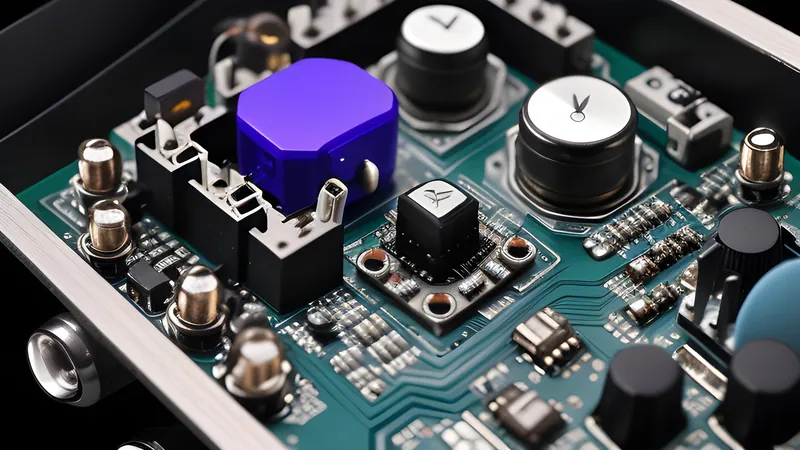
Every watch in this guide packs its GPS antenna, battery cell and sensor board into a case under 45mm across, and the engineering trade-off is consistent across the category: a bigger battery cell means either a thicker case or a smaller antenna loop, and manufacturers make different calls about which to prioritise. Garmin’s rugged Instinct line accepts a thicker, less refined case profile in exchange for battery capacity and a fibre-reinforced polymer body that shrugs off trail abuse; Amazfit and Coros generally prioritise a slimmer, more conventional watch silhouette, which means a marginally smaller battery cell for a given case thickness. Neither approach is wrong; it is a genuine design trade-off between all-day wearability and outdoor endurance capacity, and worth matching to how the watch will actually be used rather than assumed away.
How to test GPS accuracy before trusting a watch for a race
Before relying on any of these watches for a genuinely important effort — a race with a course-record ambition, a training block being tracked against a coach’s pace targets — it is worth running a personal validation test rather than trusting the spec sheet or even this guide alone. Run a familiar route with a known, measured distance (a certified parkrun course, an athletics track, a route already mapped precisely on Google Maps) and compare the watch’s recorded distance and pace against the known reference. A dual-band watch performing well should land within one or two percent of true distance on an open-sky route; a wider gap than that on a genuinely open course, with no tunnels or heavy tree cover, is a sign of a firmware or antenna issue worth investigating or returning the unit over, rather than something to simply accept as normal GPS noise.
It is also worth testing the specific conditions that matter to your actual running life rather than a generic benchmark. A road runner training on open streets has different accuracy needs to a trail runner under dense forest canopy, and a watch that performs excellently on the former can struggle more on the latter — the Coros Pace 3’s trail-specific reputation, for instance, comes from testing on genuinely difficult canopy routes, which may be irrelevant if your running is entirely on open pavement.
Software: Garmin Connect, Coros and Zepp compared
The app each watch reports into matters as much as the hardware for anyone tracking training progress over months rather than single runs. Garmin Connect has the deepest structured-training-plan support of the three, with free training plans for common race distances, workout builder tools, and the broadest third-party integration with platforms like Strava, TrainingPeaks and Final Surge. Coros’s app is leaner and more running-and-trail focused, with a training-load model (the Training Hub) that has earned a strong following among serious trail and ultrarunners specifically for how clearly it visualises fatigue accumulation across a training block. Zepp, Amazfit’s app, has closed much of the general usability gap in recent years but still lags both rivals in third-party coaching-platform integration, which matters if a training plan comes from an external coach or app rather than being built inside the watch’s own ecosystem.
None of the three is a wrong choice for a casual runner tracking pace and distance without a structured plan behind it. The gap becomes meaningful specifically once a runner is following an external, structured programme and needs that plan to load onto the watch and record compliance automatically — check that compatibility before buying, since it varies by both the watch and the specific coaching platform or app a given training plan comes from.
Heart-rate accuracy during actual running effort
Wrist-based heart-rate accuracy during running deserves its own caveat, separate from the GPS discussion. PPG sensors read pulse less reliably during high-intensity effort and arm-swing-heavy activity than at rest, because cadence-matched motion artefact can be mistaken for pulse signal by a poorly tuned algorithm — a well-documented limitation across the entire wrist-PPG category, not specific to any one brand. All four watches in this guide perform reasonably at steady aerobic pace but can lag or spike during sprint intervals or hard hill efforts; anyone doing genuinely interval-heavy training where heart-rate zones drive the workout should budget for a chest-strap heart-rate monitor (most of these watches pair with one over Bluetooth or ANT+) rather than trusting wrist-based PPG alone for that specific use case.
Water resistance and swim tracking
All four watches in this guide carry a 5 ATM rating, sufficient for swim tracking, and Garmin and Coros both offer dedicated pool and open-water swim modes that track stroke count and pace using the accelerometer rather than GPS underwater, since GPS signal doesn’t penetrate water. Open-water GPS tracking works by taking a fix each time the wrist breaks the surface during a stroke, which produces a noticeably rougher track than a run does — worth knowing before expecting the same route precision from a swim as from a road run, since the sport itself, not the watch, is the limiting factor there.
The honest case against buying a dedicated running watch at all
If the actual running habit is a handful of 5Ks a month rather than structured training, a smartwatch that already sits on your wrist for other reasons — an Apple Watch, a mid-range Android smartwatch — almost certainly has GPS accuracy good enough for casual pace tracking, and buying a dedicated running watch on top is solving a precision problem casual runners rarely notice in practice. The GPS accuracy differences this guide covers become meaningful specifically for structured training, trail navigation, or racing where pace precision and route accuracy under difficult signal conditions genuinely change training decisions — not for someone jogging the same familiar loop around the block. It’s also worth weighing against the running-watch-adjacent smartwatch tier covered in Amazfit vs Garmin — several of those watches share the same GPS chipsets discussed here, just wrapped in a more lifestyle-oriented case, and for plenty of runners that’s the better single device to own rather than a dedicated sports watch worn alongside a separate everyday smartwatch.
For a broader comparison of whether a Garmin at any price actually earns its premium over cheaper smartwatch alternatives, see Amazfit vs Garmin: how much watch do you actually need?, and for the sensor-reliability question underneath all of these watches’ health metrics, blood-oxygen and stress metrics: which wearable numbers mean anything is the deeper read.
Related Content