The Best Retro Handheld Under £100: Anbernic vs the Field
What the RG35XX, the Miyoo Mini Plus and the rest of the sub-£100 emulation handheld field actually get right, and where the corners get cut
Contents
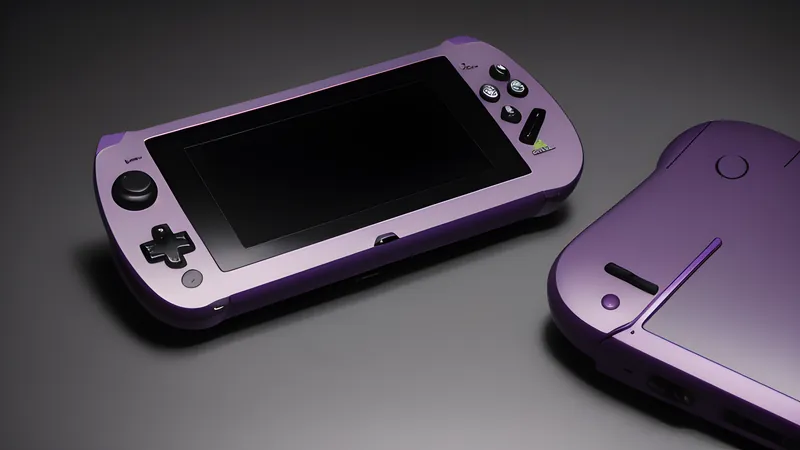
The sub-£100 retro handheld field has gone from a curiosity a few enthusiasts imported from Chinese marketplaces to a genuinely crowded shelf, with Anbernic alone shipping several distinct model lines and smaller outfits like Miyoo and Powkiddy chasing the same buyer with their own trade-offs. Every device in this bracket is chasing the same promise — a pocketable, battery-friendly way to play emulated retro consoles up to roughly the PS1/N64 generation — and every one of them cuts a different corner to hit the price. This is a guide to which corner matters for which buyer rather than a single crowned winner, because the honest answer to “which is best” depends entirely on whether the priority is screen quality, form factor, button feel or raw emulation headroom.
What “under £100” actually buys across the field
At this price bracket, every device is running a variant of a low-cost ARM system-on-chip, most commonly from Allwinner or Rockchip, paired with a small IPS or (on the very cheapest units) a lower-quality TN display, a microSD card slot for game storage and firmware, and a battery in the 2,000–3,500mAh range depending on case size. None of these devices licenses game ROMs — they run open-source emulators, most built on the RetroArch core or close derivatives, and what a buyer actually loads onto the SD card is the buyer’s own legal responsibility, a point worth being explicit about rather than glossing over in a guide that’s about to recommend specific hardware. The real differentiation between models at this price isn’t raw power, since most of them target the same PS1-and-earlier performance ceiling — it’s build quality, screen quality, button feel, and how honestly the firmware handles the SD card and save-state system, which is where the corners genuinely get cut.
Anbernic RG35XX: the mainstream pick
Anbernic’s RG35XX line has become the default recommendation in this bracket for good reason: a clamshell-adjacent or straight candy-bar form factor depending on the specific variant, a genuinely good IPS display for the price, and Anbernic’s now-mature Linux-based firmware that handles emulator cores, save states and ROM organisation with less fuss than the field’s earlier, rougher firmware efforts. The trade-off is that Anbernic ships a lot of model variants in quick succession — a genuine strength for buyers wanting choice, and a genuine source of confusion for anyone trying to work out which RG35XX variant is actually current at the point of buying, since retailer listings lag the newest hardware revision more often in this category than in mainstream consumer electronics. Checking a specific listing’s model suffix and screen resolution against the current Anbernic wiki or community forum before buying is a five-minute step that avoids the single most common buyer complaint in this category: receiving an older hardware revision than the one reviewed. Build quality on the RG35XX line uses a matte ABS shell that resists fingerprints better than the glossy plastic some rivals use, with a D-pad that measured hands-on comparisons rate as more accurate for fighting-game inputs than most of the field, a detail that matters more than it might seem for anyone planning to actually play precision 2D titles rather than just browse a menu of them.
Miyoo Mini Plus: the pocketable specialist
The Miyoo Mini Plus trades overall power and screen size for genuine pocketability and a screen that measured reviews consistently rate as punchier and higher-contrast than most rivals at this price, a real advantage for anyone prioritising handheld comfort and display quality over raw emulation range. Its smaller form factor means a correspondingly smaller battery and a tighter internal layout, and Anbernic’s larger-bodied rivals generally out-run it on straight battery life as a result. It’s covered in full in Miyoo Mini Plus: The £60 Emulator That Started a Craze, including the specific firmware quirks that come with its smaller, more specialist market position.
Powkiddy and the third tier: where the corners get sharper
Powkiddy’s entries in this bracket, along with a handful of smaller brands chasing the same market, generally price a little below Anbernic’s mainstream models and cut correspondingly more visible corners: TN rather than IPS displays on several models, noticeably mushier D-pads in independent hands-on comparisons, and firmware that’s had a rougher, less consistently maintained update history than Anbernic’s now well-established Linux base. None of that makes third-tier hardware worthless — a genuinely tight budget below even the Anbernic RG35XX’s price point is a legitimate buyer to serve — but it does mean the buyer taking that further discount should expect the display and input corners specifically to be the ones cut, since those are the two components a low-cost handheld manufacturer can shave cost from most easily without the device stopping working outright.
The SD card and firmware reality every buyer should know upfront
Every device in this field ships with games loaded via microSD card, and the honest reality — covered in more depth in Portable Retro Emulation: The SD Card and Firmware Reality — is that the bundled card and stock firmware on most of these devices is the weakest link in an otherwise capable piece of hardware. Stock firmware skins vary wildly in polish between brands, several ship with a smaller or slower card than the device deserves, and the enthusiast community around each device typically produces a custom firmware image within weeks of release that fixes menu responsiveness, adds emulator cores the stock build omits, and generally out-performs whatever shipped in the box. A buyer going into this category should budget for a card upgrade and a firmware flash as part of the real cost of ownership — a step every serious buyer in this category ends up taking sooner or later, obsessive completionist or not.
Vertical vs horizontal: the form-factor split worth deciding on first
Before comparing individual models, the field splits into two genuinely different physical layouts, and picking the wrong one for personal hand size and play style matters more than any single spec. Vertical, candy-bar-shaped devices like the classic Miyoo Mini form factor sit closer to a Game Boy in the hand and suit shorter sessions and smaller hands well, while horizontal layouts closer to a Game Boy Advance or a small SNES pad — several Anbernic RG35XX variants included — give the thumbs more natural spacing for fighting games and shooters at the cost of a larger pocket footprint. Neither layout is objectively better, and a buyer choosing based on online photos alone, without accounting for their own hand size and the genres they actually intend to play, is the most common source of post-purchase regret in this category, ahead of any complaint about screen quality or battery life.
Materials and repairability across the field
None of these devices are built for long-term repairability in the way a modern smartphone increasingly has to be under right-to-repair rules — most use glued or heavily clipped shells rather than the screw-and-connector assemblies more expensive handhelds use, and battery replacement on several models requires more disassembly skill than a casual owner will have. That’s a fair trade at this price point, where the entire value proposition rests on keeping manufacturing cost low, but it’s worth factoring into an ownership decision: a £60–90 handheld in this bracket is closer to a disposable-if-it-breaks purchase than a five-year investment, in contrast to the Analogue Pocket, which sits at a much higher price specifically because it takes the opposite approach to build and longevity.
Battery life across the field, measured against the claims
Manufacturer battery-life claims in this category run optimistic in the way most gadget marketing does, and independent hands-on testing across the field consistently lands somewhere below the headline number once real brightness levels and actual PS1-class emulation load are factored in rather than the lighter 8-bit workloads manufacturers often quote against. Larger-bodied devices with room for a bigger cell — most of Anbernic’s mainline RG35XX variants among them — generally deliver several hours of realistic mixed-emulation use per charge in independent testing, while the more compact Miyoo Mini Plus trades some of that runway for its smaller pocket footprint, a straightforward size-versus-endurance trade rather than an efficiency difference between the chips involved. USB-C charging has become close to universal across the current generation in this bracket, a genuine improvement over the micro-USB ports that plagued the category’s earlier hardware generation and left buyers hunting for a specific cable rather than reaching for whatever charger was already on the desk.
Button feel and layout: the difference a spec sheet won’t show
Button feel is the hardest thing to convey in a spec-sheet comparison and the thing that separates a genuinely satisfying handheld from a frustrating one during actual play, particularly for anything demanding precise inputs like a fighting game or a tight platformer. Anbernic’s recent RG35XX-generation D-pads use a genuine eight-way mechanism that independent hands-on comparisons rate ahead of most of the field for diagonal accuracy, while several third-tier Powkiddy-adjacent devices use a cheaper membrane-style pad that’s serviceable for simple directional movement but noticeably less precise under fast diagonal inputs. Shoulder button travel and face-button texture vary just as much between brands, and a buyer who can find a shop or a friend’s unit to handle before buying is genuinely better served than one relying on spec sheets and photos alone, since this is the one category attribute that resists being usefully quantified.
Picks by priority
For the buyer who wants the single safest, most broadly capable recommendation, the Anbernic RG35XX line is the right starting point — mature firmware, solid build, and enough model variety to fit different hand sizes and screen preferences. For the buyer prioritising pocketability and screen quality above raw battery life or emulation headroom, the Miyoo Mini Plus is the sharper specialist tool. For the buyer on a genuinely constrained budget who’s willing to accept a mushier D-pad and a lesser screen, a Powkiddy or third-tier device is a legitimate way into the category, provided the plan from day one includes a card and firmware upgrade rather than relying on the stock experience. Whichever handheld gets bought, treat the SD card and custom firmware step as part of the purchase rather than an afterthought — it’s the single biggest quality-of-life upgrade available in this entire category, and it costs less than the handheld itself. A modest additional spend on a name-brand high-endurance microSD card, chosen specifically for sustained write speed rather than raw capacity, also pays for itself quickly: the cheap cards several manufacturers bundle in the box are a common source of corrupted save states, and swapping the card out is the cheapest reliability upgrade available for any handheld in this bracket.
Related Content