Sony WH-1000XM5 vs WH-1000XM4: Is the Upgrade Worth Losing Foldability?
The one change nobody asked for, and whether the rest of the redesign earns it
Contents
The WH-1000XM4 folds flat. Fold the ear cups in, the headband collapses, and the whole thing drops into a case not much bigger than a paperback. The WH-1000XM5 does not fold flat. It has a rotating hinge for the ear cups, but the headband stays rigid, and the case that comes with it is noticeably larger for the privilege. For a headphone whose whole design brief across three generations had been “the thing you actually carry every day,” that is a genuinely significant change. It is the one decision on this upgrade that nobody who used an XM4 asked Sony to make, and it is the right place to start, because everything else about the XM5 has to earn back the ground it gives up here.
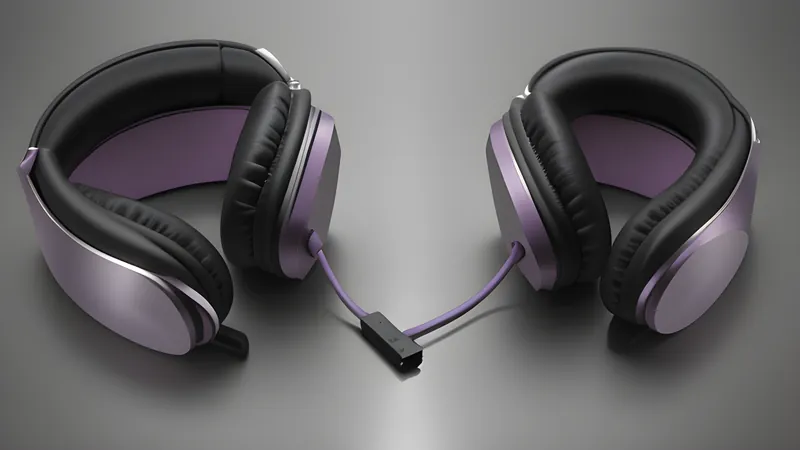
Sony’s answer to “why” is a new industrial design built around a single continuous headband arc, which the company says improves weight distribution and lets the ear cups sit flatter against the head. It is a real design change built on a new pressed-aluminium headband frame rather than the plastic-and-steel construction of the XM4, and the resulting unit weighs 250g against the XM4’s 254g, close enough that neither wins the comfort argument on weight alone. The case swap matters more in practice than the headphone itself: the XM4’s folding case slips into a bag pocket the XM5’s semi-rigid clamshell won’t, and that is the trade-off a buyer needs to know before they buy, ideally well before the first commute.
What actually changed under the shell
The processing side is where Sony spent the redesign budget, and it is the strongest argument for upgrading regardless of price. The XM4 ran its noise cancellation off a single QN1 processor. The XM5 pairs a new Integrated Processor V1 with the QN1, splitting the workload between the two chips, and backs it with eight microphones instead of the XM4’s four — four dedicated to noise-cancellation pickup, four to voice calls. Sony’s own marketing claims sit alongside independent teardown and review coverage that broadly agrees the extra microphone count measurably improves call clarity in wind and street noise, which was a genuine XM4 weak point; the XM4’s call quality was serviceable indoors and mediocre outside, and reviewers who’ve put both through comparable outdoor calls report the XM5 closing that gap rather than just marketing it.
Noise cancellation itself moved less dramatically than the microphone count suggests. Measured reviews (RTings and SoundGuys both ran comparable isolation charts across both models) put the XM5 ahead in low-frequency rumble — engine noise, HVAC hum — but roughly level with the XM4 on mid-range chatter and speech, which is the harder problem ANC has never fully solved on any headphone. If your commute is a train engine, the XM5 measurably wins. If it’s an open-plan office full of talking, the gap closes to something you’d struggle to pick out blind.
The driver changed too: a new 30mm dynamic driver with a carbon-fibre composite dome, up from the XM4’s 40mm driver. Smaller diameter, different material — Sony’s argument is that the lighter dome tracks transients faster and extends high-frequency response, and that broadly tracks with what independent frequency-response measurements show: a slightly more extended, marginally more controlled treble on the XM5, with bass output close enough between the two that most listeners in blind tests couldn’t reliably tell them apart. LDAC support carries over on both, so the ceiling for lossy hi-res Bluetooth audio is identical; this is a refinement of an already-good sound signature rather than a wholesale rework of it.
The features Sony didn’t put on the spec sheet
Multipoint — pairing to two devices simultaneously and switching between them — arrived on the XM5 later than it should have, missing at launch and added via firmware update, while the XM4 got the same firmware-added feature around the same window. Anyone buying today gets multipoint on both, so it’s a wash rather than a differentiator, but it’s worth knowing the XM5 launched behind its predecessor on a feature buyers now expect as standard.
Battery life is identical on paper: both are rated 30 hours with ANC on, and both support quick charge (3 minutes for roughly 3 hours of playback). Neither model has meaningfully degraded that claim in the two-plus years the XM4 has now been in daily use among reviewers who track long-term battery health, which is a reasonable proxy for what an XM5 buyer can expect from its own cell over a similar span.
Touch controls are functionally the same swipe-and-tap surface on both ear cups, and the app — Sony’s Headphones Connect — treats both models nearly identically, with adaptive sound control, speak-to-chat, and EQ presets shared across the range. If you already know the XM4’s app quirks (speak-to-chat triggering on a cough, adaptive sound control occasionally lagging a scene change), the XM5 inherits the same software, warts included.
Materials and where the money went
Pulling the XM5 apart — as several repair and teardown outlets have done — shows a genuine shift in build philosophy, well beyond a cosmetic refresh. The XM4’s headband was a steel core wrapped in plastic cladding; the XM5’s is a single pressed-aluminium arc, which is stiffer for the same weight and the reason Sony can claim improved pressure distribution without adding cushioning bulk. The ear cup housings on both are still primarily polycarbonate, but the XM5’s hinge mechanism — the part that lets the cups rotate flat against a surface without folding into the headband — is a more complex, more failure-prone assembly than the simple pivot the XM4 uses, according to repairability write-ups that flagged it as the component most likely to develop play or rattle after heavy folding-cycle use. That is the real cost of the redesign: Sony traded a mechanically simpler folding joint most owners never broke for a case-size reduction that mechanically can’t fold, and added a rotation hinge whose long-term durability the XM4’s equivalent joint had three years of real-world use to prove out. The XM5’s hasn’t had that runway yet.
Ear cushions on both use a protein-leather-style synthetic pleather over memory foam; the XM5’s are slightly deeper to accommodate the new driver housing, and third-party replacement pads exist for both models at reasonable prices should the foam compress over years of use, which is the eventual fate of every over-ear headphone regardless of price tier. Neither model uses a fabric or mesh headband cushion the way some rivals do to cut weight, and both retain a metal-reinforced yoke where the ear cup meets the headband arm — the part most likely to crack on a headphone that gets thrown in a bag rather than a case, and the part that survived the XM4’s three years in the field without becoming a widely reported failure point.
How long Sony actually supports these
Firmware cadence is the quiet variable in any “should I skip a generation” decision, and it’s one buyers rarely factor in against the spec sheet. The XM3, the generation before the XM4, stopped receiving meaningful feature firmware within about two years of the XM5’s launch, while still working perfectly well as a headphone — Sony’s pattern is to keep older models functional but stop adding the new capabilities (multipoint, speak-to-chat refinements, adaptive sound control tuning) that get pushed to the current and immediately preceding generation. On that pattern, an XM4 bought today can reasonably be expected to keep receiving feature updates for a while yet, since it sits one generation behind rather than two. An XM5 buyer gets the newest hardware and, by the same logic, the longest runway before Sony’s attention moves to the XM6 and beyond. It’s not a reason to avoid the XM4 — it still works, and will for years — but it is a reason the resale and long-term-value maths favours whichever model is currently one step from the front of the queue rather than two.
Clamping force and long-session comfort is the other variable measured reviews consistently flag, and it doesn’t split cleanly along generation lines. Independent long-wear testing (SoundGuys and RTings both track this with pressure sensors across sessions) finds the XM5’s slightly wider headband arc reduces hot-spot pressure on the crown of the head marginally versus the XM4, but the difference is small enough that head-shape variance between individual owners matters more than the generational change. Anyone coming from a tighter-clamping rival — a gaming headset, say, or an older Bose — will find either Sony a relief; anyone already comfortable in an XM4 for four-hour sessions won’t notice a meaningful gain moving to the XM5.
Price history and where the gap actually sits
The XM4 launched at roughly £350 and has spent most of its life since the XM5’s arrival sitting anywhere from £220 to £280 depending on the sale calendar, occasionally dipping lower around November. The XM5 launched at around £380 and has settled, more than a year into its cycle, into a similar discount pattern — regularly seen at £260–£300 outside its RRP window. That means the real-world price gap between the two, once you’re shopping sales rather than launch-day pricing, is often under £40. At that gap, the XM5’s call-quality and low-frequency ANC gains are easy to justify. The calculation only gets uncomfortable if you catch the XM5 at full RRP while the XM4 is simultaneously on a deep clearance push, which does happen around major shopping events — worth a price-tracker check before either purchase, the same discipline that matters for the best wireless earbuds under £100, where street price and RRP diverge just as sharply.
The case against upgrading
If you own a well-kept XM4, the case for moving to the XM5 is thin. The sound signature refinement is real but marginal for most listening material outside quiet, critical sessions; the ANC gain is concentrated in low-frequency rumble rather than the speech-and-chatter noise most commuters actually fight; and you would be giving up a case that fits a jacket pocket for one that doesn’t, in exchange for call quality you may rarely notice unless you take a lot of calls outdoors. The XM4, discounted well below its original RRP now that it’s the outgoing model, remains one of the strongest value propositions in the category specifically because the XM5’s actual gains are narrower than the redesign implies.
If you’re buying new with no XM4 already in a drawer, the calculus flips. The XM5’s call quality improvement is the kind of thing you’ll notice on every video call you take outside, the low-frequency ANC gain genuinely helps on trains and planes, and the folding-case loss is a one-time adjustment rather than a recurring cost. It’s worth reading how a budget alternative handles the same trade-offs in our Anker Soundcore Space One Pro review if the XM5’s price is the sticking point rather than the feature set — Anker’s version of this exact ANC-and-call-quality argument lands at less than half the outlay.
The verdict
Wait if you already own an XM4 in good condition — the gains are real but concentrated in scenarios (outdoor calls, low-frequency rumble) that won’t matter to every owner, and the case-size loss is permanent. Buy if you’re purchasing fresh and don’t have a folding-case habit to break; the microphone array and driver refinement are worth the XM5’s typical street price, which sits meaningfully below its launch RRP a year-plus into its cycle. The price verdict: worth it once street price drops below roughly £300, and worth chasing a genuine gap over the XM4’s own current discount level, since paying full RRP for marginal-over-XM4 gains is the one way to make this upgrade feel expensive rather than sensible. It’s for the frequent flier and outdoor-caller who’ll use the eight-microphone array every week; it’s not for the XM4 owner who mostly listens at a desk and liked being able to fold the thing flat.
Related Content