Smart Rings Teardown: Sensors, Battery and the Size Compromise
Cramming a sensor array, a battery and a wireless charging coil into a ring is a genuinely harder engineering problem than a watch ever was
Contents
A smart ring has to fit every one of its components — sensor array, battery, processor, wireless charging contacts, and a structural shell strong enough to survive being knocked against door frames all day — into a volume smaller than a watch’s case by an order of magnitude, curved to the profile of a finger rather than flat, and sized precisely enough that a ring that fits in the morning doesn’t pinch by evening. It is one of the more genuinely difficult miniaturisation problems in consumer wearables, and the category’s well-known limitations — short-ish battery life, fixed sizing, a narrower feature set than a watch — are mostly the direct consequence of that geometry rather than corner-cutting by any particular manufacturer.
The sensor stack
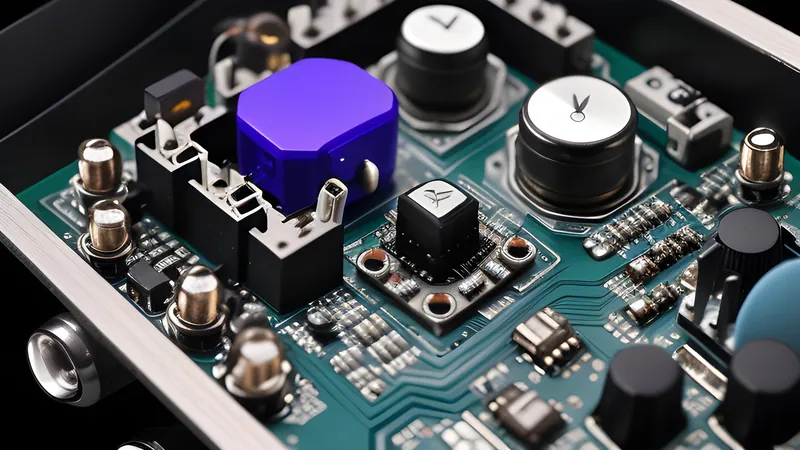
Nearly every smart ring on the market — Oura, Samsung’s Galaxy Ring, Ultrahuman’s Ring Air, RingConn — uses a variation of the same core sensor combination: a PPG array (green and infrared LEDs paired with photodiodes) for heart rate and blood-oxygen estimation, an accelerometer for movement and sleep-position detection, and in most current models a continuous skin-temperature sensor. This is a smaller version of the same sensor category found in smartwatches, but the placement changes what it’s good at. A finger sits closer to a major artery than a wrist does, giving the PPG sensor a stronger, cleaner signal with less motion interference from wrist rotation — a genuine physiological advantage for overnight heart-rate and temperature sensing specifically, which is why every ring maker leans hardest on sleep and recovery features rather than daytime activity tracking, where a ring has no placement advantage and, if anything, picks up more incidental hand-movement noise than a wrist does.
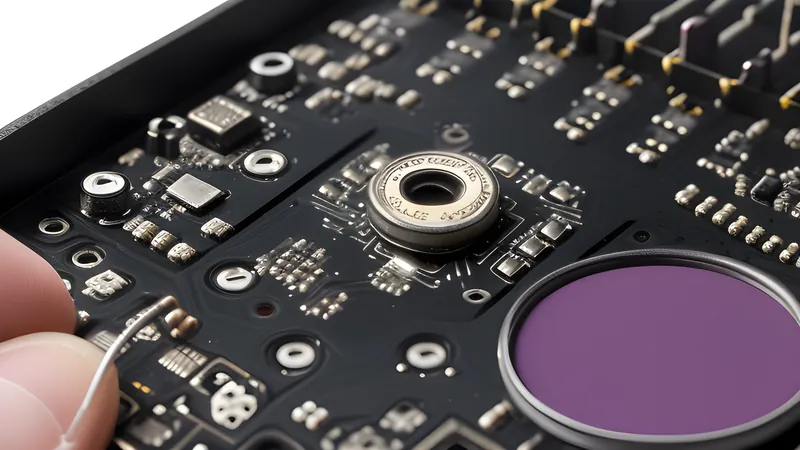
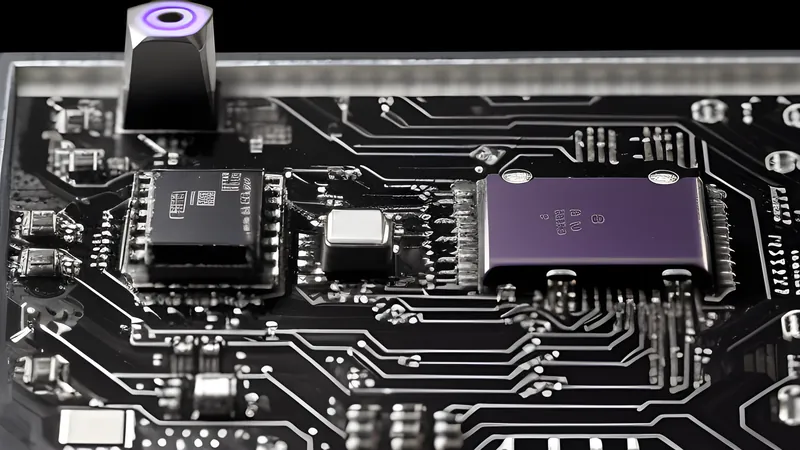
The PCB carrying this sensor array and the ring’s processor is typically a flexible circuit bent to follow the ring’s internal curve, rather than the rigid flat board a watch uses — a manufacturing step that adds cost and complexity specifically because of the ring form factor, and one of the clearer examples in this category of the size constraint driving a harder (and more expensive) engineering solution than the equivalent watch component.
The battery: the hardest compromise in the category
Ring battery cells are curved, segment-shaped lithium cells shaped to follow roughly a third to half of the ring’s internal circumference, rather than the flat rectangular or coin cells watches use. This geometry is significantly harder to manufacture at a given capacity than a flat cell, and it is the single biggest reason ring battery life — typically four to seven days across the category, depending on ring size, since a larger ring size physically fits a larger cell — lags watch battery life despite a ring’s total power draw being far lower than a screened watch’s. There is no display to power, no speaker, minimal haptic feedback; the entire battery budget goes to sensor sampling and Bluetooth radio use, and it still can’t match a watch’s runtime, because the physical cell is simply so much smaller.
This is also why ring size affects battery life directly in a way it doesn’t for watches: a size 6 ring has meaningfully less internal volume for a battery cell than a size 12, and manufacturers across the category have quietly acknowledged that smaller ring sizes trade some battery life for the same features larger sizes get — a genuine, physics-driven trade-off rather than a deliberately hidden defect, though one that is not always made clear enough at the point of sale.
Charging: the dock and the contact problem
Because a ring has no room for a charging port without compromising its water resistance and structural integrity, every ring in the category charges via a small external dock that the ring sits or clips into, using either pogo-pin contacts or (less commonly) a fully sealed inductive coil. Pogo-pin contact charging is more common because it is more power-efficient and faster, but it requires the ring to be seated precisely in the dock, and misalignment is one of the most common real-world complaints in the category — a ring reporting a full charge overnight that then turns out to have not charged at all, almost always traced to a contact alignment issue rather than a battery fault. Inductive charging, which some manufacturers have begun offering, avoids the contact-alignment problem entirely at the cost of charging speed and, generally, needing the ring to sit in a specific dock orientation regardless.
Structural materials: titanium’s real advantage
Titanium has become close to the default material for premium smart-ring shells, and the reasoning holds up under scrutiny: it is significantly more scratch-resistant than the aluminium or ceramic-coated alternatives some cheaper rings use, resists the corrosive effect of everyday contact with sweat, hand soap and skincare products better than plated alternatives, and is light enough not to feel obviously different from a conventional ring once worn. The trade-off is repairability and cost: a titanium shell bonded around a sensor and battery assembly is not designed to be opened and repaired, and independent teardown and repair-community assessments of the category have generally rated smart rings as close to unrepairable once past the warranty period — a battery that degrades in year two or three means replacing the entire ring, not a battery swap, a genuine repairability weakness the category shares almost universally regardless of price tier.
Sizing: the one-time decision that can’t be undone
Unlike a watch strap, a ring’s size is fixed at manufacture, and getting it wrong has consequences no firmware update can fix. Every major ring maker now ships a sizing kit — a set of inert plastic rings matching the real product’s dimensions — specifically because early smart-ring generations across the category suffered high return rates from buyers guessing their size incorrectly from a generic ring-size chart. Finger size also genuinely fluctuates through a day with temperature and hydration, which is why sizing kit instructions universally recommend wearing the test ring for several hours, including overnight, rather than trying it on for thirty seconds in a shop. A ring sized too tight is a real health consideration, not just comfort — sustained pressure on finger tissue overnight is a legitimate concern flagged in general medical guidance on ring-wearing, separate from anything specific to smart rings.
Four rings, four different trade-off choices
The major players have made visibly different calls within the same physical constraints. Oura’s Gen 4 prioritises sensor and algorithm depth over raw battery life, rating four to six days and leaning on years of accumulated readiness-algorithm refinement as its differentiator. Samsung’s Galaxy Ring took a similar battery-life approach (roughly four to seven days depending on size) but ties its data most usefully into Samsung’s own Health ecosystem, and notably charges via a small case that itself stores extra charge, similar to true wireless earbuds — a genuinely clever piece of industrial design borrowed from a different product category entirely. Ultrahuman’s Ring Air pushed harder on battery, rating up to six days and shipping without any required subscription, at the cost of a shallower long-term research and validation history behind its scoring algorithms than Oura’s. RingConn’s Gen 2 leans hardest into no-subscription value pricing, undercutting the others on price while using a broadly comparable sensor stack, with a case-based charging solution similar to Samsung’s.
None of these choices is objectively correct; each is a different bet about which trade-off ring buyers value most — algorithm maturity, subscription-free ownership, ecosystem integration, or price — made within the same tight sensor-battery-size envelope every ring in the category is fighting.
Bluetooth radio design and the power budget
The Bluetooth Low Energy radio inside a smart ring has to balance a genuinely awkward trade-off: sync frequently enough that the app’s data feels current, without draining a battery that has no room for a larger cell to compensate. Most rings solve this by batching sensor data internally throughout the day or night and syncing in one larger burst when the phone is nearby and the app is opened, rather than streaming continuously the way some smartwatches do — a sensible power-saving design choice, but one that means a ring’s data can lag real-time by longer than a watch’s typically does, occasionally surprising new owners who expect a live heart-rate reading on demand the way a watch’s screen provides and get a “last synced” timestamp instead, a direct consequence of the ring having no display to justify keeping the radio active constantly.
Water resistance and the sealed-shell trade-off
Most smart rings rate for 100 metres of water resistance or more, which sounds like overkill for a device that will rarely go deep swimming, but the rating exists mostly as a side effect of the manufacturing approach rather than a deliberately engineered swim feature: a fully bonded, seamless titanium shell with no serviceable opening is inherently very water resistant, because there is no seam, gasket or port to fail. This is the flip side of the repairability problem from the section above — the same design choice that makes a ring effectively unrepairable also makes it excellent at resisting water and sweat ingress, since manufacturers aren’t compromising the seal to leave a service point open. It’s a case where a durability spec that reads as a premium feature on the box is really a by-product of a manufacturing decision made for entirely different reasons.
Firmware updates and the sealed-shell constraint
Because a ring’s shell is sealed and effectively unrepairable, every meaningful improvement after purchase has to come through firmware and app updates rather than any hardware change, and manufacturers across the category have leaned hard on this: Oura in particular has shipped algorithm refinements to existing Gen 3 and Gen 4 rings well after launch, meaningfully improving readiness-score accuracy on hardware customers already owned. This is a genuine advantage of the category’s simplicity — there’s no removable battery or swappable sensor to worry about, so the entire post-purchase improvement path runs through software, and manufacturers have generally supported that path well across the category so far.
What this means for buyers
The category’s constraints — four-to-seven-day battery life, no display, fixed sizing, poor long-term repairability — are largely consequences of the same underlying geometry problem: fitting a sensor array and power source into a curved volume the size of a fingertip. None of it is a sign any particular manufacturer cut corners relative to rivals; it’s closer to a shared physics ceiling the entire category is pushing against, and progress (dual-frequency sensors, longer battery life in newer generations, better sizing kits) has been real but incremental rather than a solved problem.
Anyone deciding between this category and the wrist-worn alternative should read Oura Ring Gen 4: the sleep promise after three months for how these trade-offs feel in genuine daily use, and blood-oxygen and stress metrics: which wearable numbers mean anything for how much to trust the sensor readings this entire hardware category is built to produce.
Related Content