Robot Vacuums Under £300: Which Corners Do They Actually Cut?
The features that quietly disappear once you drop below flagship pricing
Contents
A flagship robot vacuum with a self-emptying dock, mopping, obstacle avoidance and LiDAR mapping runs £700-£1,000. A perfectly capable budget model runs under £300. That’s not a small gap, and it doesn’t vanish through marketing alone — every sub-£300 robot vacuum is cutting something specific to hit that price, and the honest question is which cuts cost you actual cleaning performance and which ones just remove a feature you weren’t going to use anyway.
Navigation: the cut that matters most
The single biggest performance difference between a £150 robot and a £600 one is how it finds its way around a room, and this is where the real corner-cutting happens. Flagship models use LiDAR (a spinning laser turret, visible as a raised bump on top of the unit) to build an accurate room map in a single pass, remembering furniture layout and no-go zones between cleans. Budget models under roughly £200 typically use gyroscope-and-bump navigation — a random-ish pattern that relies on physically bumping into obstacles and dead-reckoning its position, with no persistent map. The practical difference is coverage consistency: a LiDAR unit reliably covers 95%+ of a room in a methodical pattern; a bump-nav budget unit’s coverage varies run to run, sometimes missing corners entirely on one pass and over-cleaning open floor on another, because it has no memory of where it’s already been within that session in some cheaper implementations.
The genuinely good news for this price band is that camera-based or simplified LiDAR navigation has trickled down to the £200-£300 range over the past two product cycles. Roborock’s Q-series and Eufy’s X-series both offer LiDAR mapping under £300, which is the single feature most worth prioritising over any other spec in this budget tier — a robot that knows the room layout cleans more predictably than one guessing, even before comparing suction power or brush design.
Suction and brush design: a smaller cut than marketed
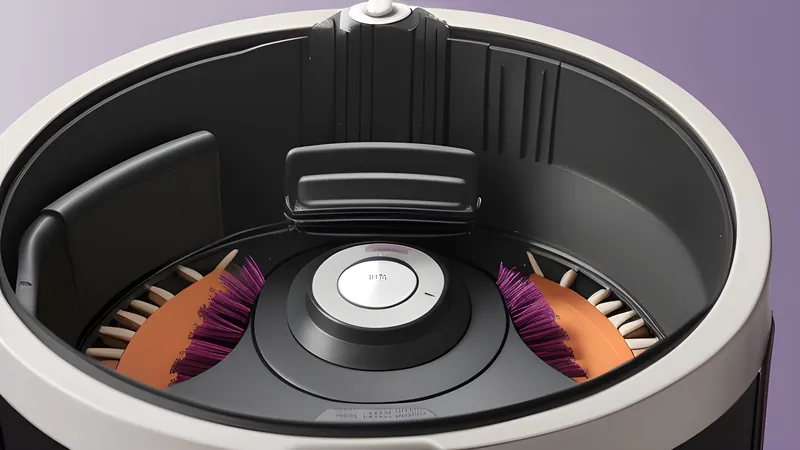
Suction power gets the loudest marketing number (measured in Pascals, “Pa”), and budget models do genuinely trail flagships here — a sub-£300 unit typically runs 2,500-4,000Pa against a flagship’s 6,000-10,000Pa+. In practice this matters less than the number suggests for normal hard-floor and low-pile carpet cleaning; the bigger real-world difference is brush design, not raw suction. Flagship models increasingly use anti-tangle brush geometry (Roborock’s and Dreame’s comb-style bristle arrangements) specifically engineered to shed pet hair rather than wind it tight around the roller. Budget models mostly still use a standard bristle brush, which tangles noticeably faster in a pet-owning household — the actual maintenance burden that shows up as “the robot needs weekly brush surgery” complaints in budget-model reviews, more than a suction-power shortfall does.
The dock: the cut most buyers don’t realise they’re making
This is the corner-cut with the biggest quality-of-life impact and the least visibility on a spec sheet. Flagship robots increasingly ship with a self-emptying dock — the robot empties its own dustbin into a larger bag inside the dock after each run, meaning genuinely weeks between manual bin-emptying. Almost nothing under £300 includes this; budget docks are simple charging stations, and the dustbin gets emptied by hand after every clean or every few cleans. For a small flat this is a minor chore. For a larger house or a multi-pet household running the robot daily, manually emptying a small onboard bin (typically 300-500ml) every single day is the actual recurring cost of the budget tier, and it’s worth being honest with yourself about whether that’s a chore you’ll actually keep up with — an abandoned robot vacuum sitting in a cupboard because emptying it became a nuisance is a common failure mode this desk hears about far more than a robot that broke.
Mopping: present but meaningfully weaker
Most budget robots now include some mopping function, but it’s almost always a passive drag-mop — a damp pad dragged behind the robot with no active scrubbing motion and no separate clean-water reservoir, meaning it’s smearing the same slightly dirty water across the floor rather than genuinely lifting grime. Flagship docks increasingly wash and dry the mop pad automatically between sections and use vibrating or rotating pad mechanisms for actual scrubbing pressure. A budget robot’s mop function is realistically a light maintenance pass for dust and light marks between proper mopping, not a replacement for it — worth having as a bonus, not worth buying the robot specifically for.
Obstacle avoidance: the cut that causes the most forum complaints
Flagship models increasingly use a small camera plus AI object recognition to identify and steer around pet mess, charging cables and shoes left on the floor. Budget models rely on basic infrared or mechanical bump sensors, which detect that something is there but can’t distinguish a sock from a phone charger from something worse — meaning the single most-repeated complaint in budget robot vacuum reviews across retailer sites is the robot dragging something unpleasant across a carpet rather than avoiding it. This is worth planning around rather than fixing with a feature: a quick floor-clearing pass before a budget robot’s scheduled run does the job a £150 camera module would otherwise do.
Battery, runtime and the multi-floor question
Battery capacity is a cut that mostly doesn’t matter, because it’s rarely the actual limiting factor for a normal home. Budget models typically carry 3,200-5,200mAh batteries rated for 90-150 minutes of runtime, against a flagship’s 5,200-6,400mAh and up to 180+ minutes — but a typical UK flat or house is well within the budget tier’s range on a single charge, and every robot on the market, budget or flagship, can auto-return to dock, recharge and resume a cleaning run rather than needing to finish in one battery cycle. Where runtime genuinely matters is a large multi-room house being cleaned in a single scheduled pass; for that use case a shorter budget battery just means more dock-and-resume cycles, adding time to the total clean rather than leaving rooms uncleaned. Multi-floor mapping — remembering separate maps for upstairs and downstairs — has also trickled down further than expected: most current LiDAR budget models store 3-4 saved maps, enough for a typical semi-detached house, though carrying the robot between floors manually (since it can’t climb stairs) remains true at every price point on the market.
Noise levels and the chassis materials underneath
Sound output is one of the least-marketed specs and one of the more noticeable differences living with a budget unit day to day. Flagship robots increasingly use brushless motors with acoustic dampening in the chassis design, running in the 55-65dB range on standard suction and only climbing toward 70dB on max/turbo mode. Budget units, particularly ones still using older brushed-motor designs, commonly run 65-72dB even on standard mode, which is a genuinely noticeable difference in an open-plan living space — loud enough that scheduling a budget robot to run while on a video call in the same room is a bad idea in a way it wouldn’t be with a quieter flagship unit.
The chassis itself reflects the same cost pressure as everywhere else in the budget tier. Flagship shells increasingly use a soft-touch matte finish over a rigid internal frame, with a metal-reinforced bumper strip absorbing repeated furniture contact without cracking. Budget units are almost universally straightforward ABS plastic, glossier and prone to visible scuffing along the bumper edge within a few months of daily use bumping into skirting boards and furniture legs — cosmetic rather than functional, but a fair thing to expect at this price rather than a defect, and one more reason not to expect flagship fit-and-finish from a flagship’s price cut in half.
App features that survive the price cut, and the ones that don’t
Room-based scheduling, no-go zones, and basic cleaning-history logs have become standard even in the budget tier, largely because they’re implemented in software rather than requiring extra hardware — once a robot has LiDAR mapping at all, drawing a no-go zone on the app’s floor plan costs the manufacturer nothing extra to ship. What doesn’t survive the cut is the more computationally demanding software: real-time obstacle-avoidance AI (which needs an onboard camera and enough processing power to run inference locally), voice-command integration beyond basic “start cleaning” commands, and granular per-room suction/mop settings that flagship apps offer and budget apps flatten into a single global setting. None of these missing features are dealbreakers for a household mainly wanting scheduled, mapped cleaning — they’re the layer of convenience that separates “good enough” from “genuinely delightful,” and it’s fair to decide that gap isn’t worth £400.
Filtration and where the dust actually goes
Every robot vacuum in this price band uses some form of HEPA-rated onboard filter, but “HEPA-style” marketing language is worth reading carefully — a genuinely certified HEPA filter (H13 or above) traps 99.95% of particles down to 0.3 microns, and several budget models use a “HEPA-style” filter that approximates the mesh density without the independent certification, a distinction covered in more depth for standalone air purifiers in the HEPA marketing guide. For a robot vacuum specifically, the bigger practical variable is where the filtered dust ends up: a budget unit’s small onboard bin means the trapped dust and any allergens sit in a bag-less compartment until manually emptied, at which point emptying it stirs the dust straight back into the room air — a self-emptying dock, again, is the feature that actually solves this rather than the filter rating itself.
Connectivity and the Matter gap worth knowing about
Nearly every current robot vacuum, budget or flagship, connects over 2.4GHz Wi-Fi to a manufacturer app, and this is one area where the industry-wide unification story hasn’t caught up yet — as the two-years-on Matter review covers, Matter’s robot vacuum category support remains limited to basic start/stop/dock commands even on models that advertise Matter compatibility, with the actual mapping, scheduling and no-go-zone features still locked to each manufacturer’s own proprietary app. Budget models in this guide are no worse off than flagships on this point specifically — it’s a gap affecting the whole category equally — so it’s worth setting expectations accordingly: a sub-£300 robot still needs its own manufacturer app for the features that matter, not Matter or Home Assistant, at least for now.
Picks
Eufy X10 Pro Omni (~£280-£300, when discounted below its usual line pricing) and the Roborock Q-series are the strongest LiDAR-equipped picks that regularly dip into this band during sales, combining accurate mapping with app-based room selection and no-go zones — the single most valuable inherited-from-flagship feature at this price. Neither includes a self-emptying dock at this price point; that remains the feature reserved for the £400+ tier.
For a smaller flat with hard floors and no pets, a bump-navigation budget unit under £150 (several from Eufy’s and Anker’s lower lines) genuinely does the job adequately — the LiDAR advantage matters most in larger, more furniture-dense spaces where a random cleaning pattern actually misses real square footage. For anything larger than a one-bedroom flat, or any household with pets shedding hair the brush will need to fight, spending up to the £250-£300 LiDAR tier is the single upgrade worth prioritising over every other spec on the box.
The corner not worth paying to avoid, for most households, is the self-emptying dock — it’s a genuine convenience upgrade, not a cleaning-performance one, and the £300-400 premium it commands is worth paying only if daily manual bin-emptying is a chore you know from experience you won’t keep up with.
Related Content