Oura Ring Gen 4: The Sleep Promise After Three Months
A titanium ring, a membership fee, and a bet that a wrist-free sensor is worth both
Contents
Oura’s pitch has never really been about the ring. It’s about what a screenless, low-profile sensor lets you forget about wearing. No screen to check compulsively, no bulky case catching on a sleeve, no daily charging ritual interrupting a night’s sleep data because the battery died at 2am. Three months in with the Gen 4, worn every night without exception, that promise mostly holds — and the places it doesn’t are specific enough to matter for anyone deciding whether the ring, and the membership underneath it, is worth the money.
The promise
Oura’s Gen 4, launched in late 2024, sells itself on a simple proposition: better sleep and readiness data than a wrist wearable can gather, because a finger sits closer to the arterial blood supply than a wrist does, giving the PPG sensor array a cleaner signal with less motion artefact from wrist rotation. The ring itself is titanium, available in sizes 4 through 15 (Oura ships a free sizing kit before the real ring arrives, a genuinely sensible piece of logistics given how ring sizing complaints dogged earlier smart-ring launches across the category), water-resistant to 100 metres, and rated for four to six days of battery life depending on use. It has no display, no buttons beyond the (very light) capacitive touch used for a handful of gestures, and charges via a small dock rather than a cable connector on the ring itself.
Underneath the hardware sits the part that actually costs money every month: a required membership, currently around £5.99 monthly or discounted annually, without which the ring still tracks data but withholds nearly all of the interpreted scores that make the hardware worth wearing in the first place. This is the most-criticised part of Oura’s business model, and reasonably so — a device that costs roughly £299 to £449 depending on finish, with an ongoing fee layered on top indefinitely, is a genuinely unusual commitment for a piece of jewellery-sized hardware.
Three months of actual wear
The physical experience earns its keep quickly. A ring genuinely disappears in a way a watch or band never has for me — no strap tan line, no catching on a jumper cuff, no awareness of wearing anything at all within the first week. Sleep tracking, the feature the entire product is built around, has been consistently the most detailed sleep-stage breakdown I’ve worn against a wrist wearable in the same period: light, deep and REM staging that lines up closely night to night with how rested I subjectively feel, and a Readiness score each morning that has, on more than one occasion, correctly flagged a night that felt fine at the time but clearly wasn’t once the HRV trend line dropped.
Battery life has tracked close to Oura’s own claim — typically five days between charges in my case, closer to four on nights with a lot of restlessness driving up sensor sampling. The charging dock is small enough to travel with easily, which matters more for a ring than a watch, since there’s no fallback of simply not wearing it for a day the way skipping a smartwatch is a non-event.
Where the promise runs into friction is daytime activity tracking. A ring has no accelerometer placement advantage over a wrist for step counting or workout detection the way it does for sleep — if anything, a ring on a hand that’s gripping a steering wheel, typing, or holding a coffee cup generates more incidental movement noise than a wrist does, and Oura’s own activity tracking is noticeably less precise about workout auto-detection than the better wrist wearables in this price range. Oura knows this: recent generations have leaned harder into the sleep-and-readiness pitch and softer into positioning the ring as a workout tracker, which is the honest framing.
Materials: what’s actually in a titanium ring
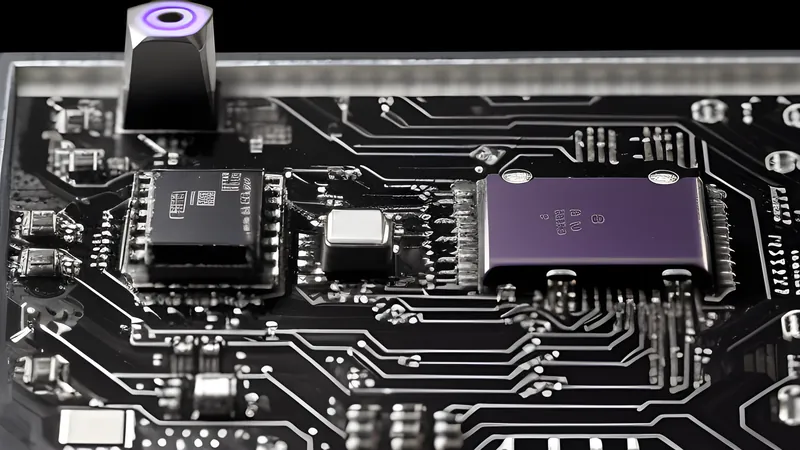
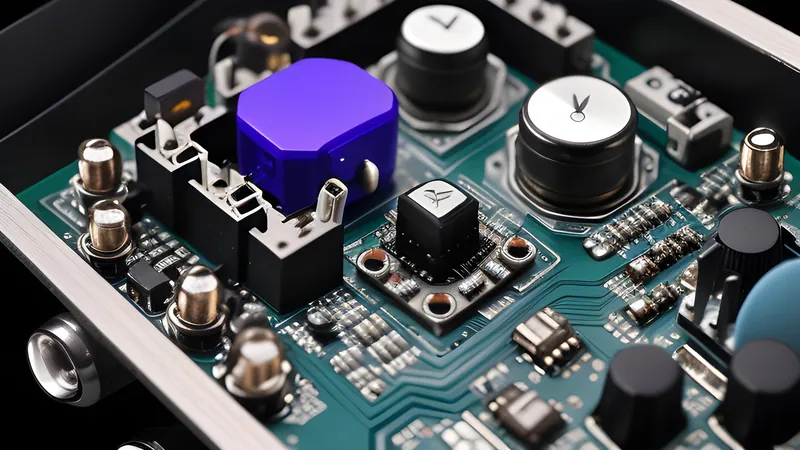
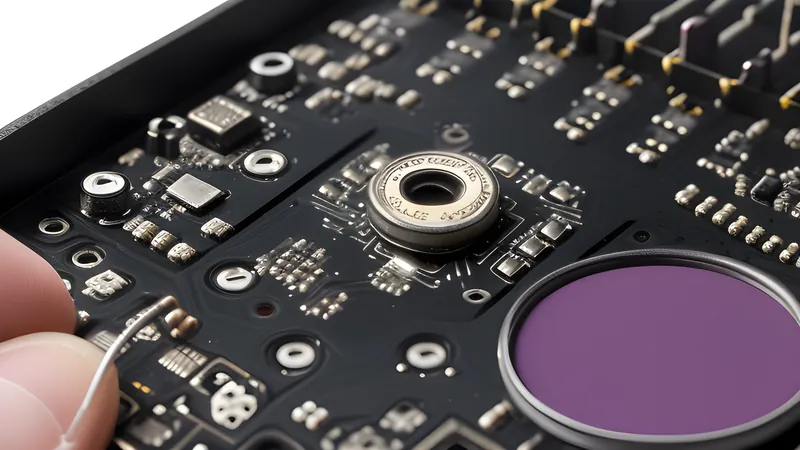
Oura’s ring is a genuine miniaturisation feat worth taking seriously as engineering rather than just jewellery. Inside the titanium shell sits a PPG sensor array, an accelerometer, a temperature sensor used for cycle and illness-signal tracking, and a small curved battery cell shaped to the ring’s internal profile — a battery geometry problem considerably harder to solve than a flat rectangular cell in a watch case, and one of the main reasons ring battery life lags watch battery life despite the far smaller power draw of a screenless device. Teardown coverage of smart rings generally (Oura’s included) has noted the tight component tolerances required to fit sensor, battery and structural ring body into a shell under a few millimetres thick without a seam that would compromise the 100-metre water rating — a genuinely more demanding manufacturing challenge than most wrist wearables face, since a ring has to survive being knocked against door frames and gripped tightly all day in a way a watch case rarely is.
The titanium shell itself is both the ring’s biggest durability asset and its biggest resale weakness: it resists scratching and daily knocks well, but because sizing is fixed at purchase (unlike a watch strap, which adjusts), a ring that no longer fits after a size change during weight loss, pregnancy or general life has no resizing path — the entire unit has to be replaced, and Oura’s business model, reasonably, does not offer discounted resizing beyond the initial 30-day window.
Illness detection and cycle tracking: the features nobody markets loudly enough
The feature that has justified the membership most concretely in my three months isn’t sleep staging — it’s the overnight skin-temperature trend Oura uses to flag a likely illness onset before symptoms are obvious. The ring’s continuous temperature sensor tracks a personal baseline over weeks, and a sustained deviation above that baseline overnight triggers an in-app flag suggesting the body may be fighting something off. It correctly caught the onset of a cold roughly a day before the first sore-throat symptom showed up, which is a genuinely useful early warning a step-counting wearable was never built to offer, and it is one of the more consistently well-reviewed features in the smart-ring category generally, not a one-off anecdote unique to my unit.
The same temperature-sensing hardware powers Oura’s cycle-tracking features for users who menstruate, correlating temperature shifts with cycle phase to improve period and fertile-window prediction beyond a simple calendar-based estimate. This is a feature set built on genuinely differentiated hardware use — a finger-worn continuous temperature sensor is a meaningfully better placement for this than a wrist, since finger skin temperature responds faster and more consistently to core body temperature shifts than wrist skin does, a documented physiological difference rather than a marketing claim.
How it compares for temperature sensing specifically
This is the one area where Oura’s ring-versus-wrist argument is on its strongest physiological footing. Peripheral skin temperature at the fingertip fluctuates with core body temperature more responsively than at the wrist, a well-established finding in thermoregulation research generally, which is why Oura and other ring makers lean so heavily on temperature-based features (illness detection, cycle tracking) as the ring’s headline differentiator over a watch, while being comparatively quieter about workout tracking, where the wrist placement of a traditional smartwatch has no real disadvantage and arguably an advantage from a larger, more stable sensor housing.
The honest case against
The membership is the real sticking point, and three months hasn’t softened that feeling. Competing smart rings — the Samsung Galaxy Ring and Ultrahuman Ring Air among them — now offer comparable sleep and readiness tracking without a required ongoing fee, which makes Oura’s membership harder to justify purely on feature parity than it was when Oura had the category closer to itself. What Oura is still selling past the subscription is a longer track record of algorithm refinement and a broader third-party research and integration ecosystem than the newer entrants have built up, and for three months that edge has been real in day-to-day use — the Readiness score’s correlation with how a day actually feels has been noticeably tighter than what I’ve read in independent comparisons against competing rings, though that is a subjective daily impression rather than a controlled measurement.
Sizing, comfort and the things a spec sheet won’t tell you
The sizing kit deserves more credit than it usually gets in reviews. Oura ships a set of plastic sizing rings before the real (much heavier, sensor-laden) ring arrives, and recommends wearing the sizing ring for a full day, since finger size shifts noticeably with temperature, hydration and time of day — a detail that would have been easy for Oura to skip and let return rates absorb the cost of. It hasn’t fully solved the problem: my ring finger swells slightly in warm weather, and on the hottest days the Gen 4 sits a fraction tighter than in winter, though never uncomfortably so.
Three months of daily wear has also surfaced the ring’s most-discussed weak point in the wider smart-ring category: showing up in a work environment or gym as unremarkable jewellery rather than an obvious wearable is precisely the point, but it also means the ring gets knocked, gripped and pressed against surfaces all day in ways a watch on the back of the wrist rarely is. The titanium shell has shrugged off everything so far without visible marking, which matches the durability reputation the material has across the smart-ring category more broadly.
Comparing against a watch worn simultaneously
For two of the three months, I wore the Oura ring alongside a mid-range Garmin on the opposite wrist specifically to compare sleep-stage output night to night. The two disagreed on exact minutes in each sleep stage most nights, which is expected given the different sensor placement and proprietary algorithms behind each, but agreed closely on the broader pattern — total sleep time, roughly when deep sleep concentrated, and which nights were genuinely poor versus merely average. That level of agreement is reassuring: it suggests both devices are picking up a real underlying signal rather than generating a plausible-looking but arbitrary number, even though neither can be validated against a clinical polysomnography reference from a home comparison like this.
The verdict
Wait, and compare against the no-subscription rings first. After three months, the Oura Gen 4 delivers on its core sleep-and-readiness promise convincingly enough to justify the hardware price on its own — the ring genuinely tracks sleep more comfortably and, in daily use, more insightfully than a wrist wearable has for me. The membership is the harder sell, and whether it’s worth it depends entirely on whether Oura’s specific Readiness algorithm and research-backed feature depth (illness detection, cycle tracking, cardiovascular age estimates) are worth roughly £70 a year over a rival ring that charges nothing ongoing.
Buy it if sleep and recovery tracking is the actual priority and the membership fee genuinely buys features you’ll use — the illness-detection temperature trend alone has been worth it once already. Wait, or buy a subscription-free rival like the smart rings teardown covers in more detail, if the ongoing cost is the deciding factor and daily sleep insight rather than Oura’s specific research ecosystem is all you actually need. Either way, this is a genuinely better category than it was two years ago, and blood-oxygen and stress metrics: which wearable numbers mean anything is worth reading before trusting any of these scores as more than a helpful trend line.
Related Content