Miyoo Mini Plus: The £60 Emulator That Started a Craze
How a small vertical handheld with a punchy screen and mediocre firmware became the device the whole sub-£100 retro category measures itself against
Contents
Before Anbernic’s RG35XX line became the mainstream default recommendation in the sub-£100 retro handheld category, it was the Miyoo Mini Plus that pulled the whole segment out of niche-forum obscurity and into general tech-press awareness. A vertical, Game Boy-proportioned body, a screen that punched well above its price bracket in independent hands-on comparisons, and a launch price around £60 combined into the device that convinced a much wider audience the category was worth taking seriously, rather than a curiosity reserved for people already comfortable flashing custom firmware onto obscure Chinese hardware.
The screen: still the reason to care
The single component that made the original Miyoo Mini and its Plus successor stand out was the display, and it remains the strongest argument for the device years into the category’s maturation. Independent side-by-side comparisons consistently rate its small IPS panel as punchier and higher-contrast than most same-price rivals, with viewing angles that hold up well off-axis — a genuinely disproportionate result for a component this size and this cheap, and the reason so much of the original enthusiast buzz around the device centred on the screen specifically rather than the hardware as a whole. Colour reproduction in particular draws consistent praise: saturated, accurate tones that make 16-bit era sprite art and PS1-era pre-rendered backgrounds look genuinely vivid rather than washed out, the specific quality difference a casual buyer notices within seconds of turning the device on for the first time. Sunlight legibility, a common failure point for cheaper LCD-style handheld screens of the same era, was another area independent reviewers praised, with the panel remaining readable outdoors far better than most contemporaries at launch, a genuinely practical win for a device meant to be carried and played anywhere rather than only indoors. Text and sprite art from PS1-era and earlier titles render with a clarity that larger, cheaper TN panels in rival devices simply can’t match, a direct payoff of Miyoo’s choice to prioritise panel quality within a fixed, tight cost budget rather than spread the same budget more thinly across a bigger screen.
The shell: small enough to actually forget in a pocket
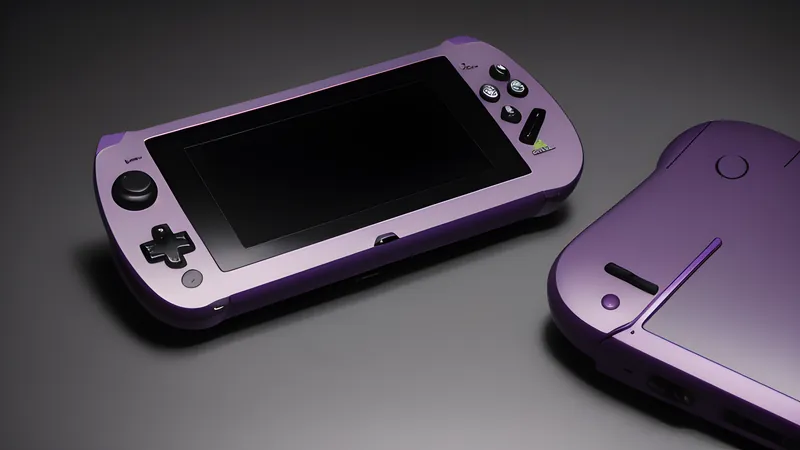
The Mini Plus earns its name honestly — its vertical, rounded shell is genuinely smaller than most of the horizontal, GBA-styled rivals that have since crowded into the category, and that size is a real usability win for anyone wanting a device that lives in a jacket pocket rather than a bag. The trade-off is a smaller internal volume for battery and components, and independent battery testing generally places it behind larger-bodied rivals like Anbernic’s RG35XX line on straight runtime per charge, a straightforward consequence of the smaller cell that fits inside a smaller case rather than any inefficiency in the chip itself. The plastic shell uses a matte finish that resists fingerprints reasonably well, though the D-pad and face buttons sit slightly recessed in a way some hands find fiddly compared with the more pronounced button profile Anbernic settled on for its later hardware.
Materials and internals: a genuinely tight budget build
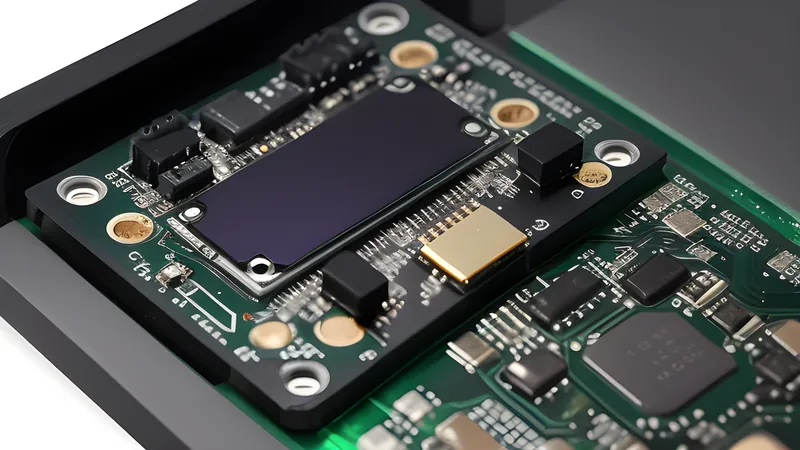
Opening the Mini Plus reveals exactly the kind of tightly cost-optimised internal layout the category’s entire price bracket depends on: a single small PCB carrying the Allwinner-family system-on-chip, a modest amount of RAM, and a battery cell sized to the shell’s available internal volume rather than to any particular runtime target. Component-level teardown reports from the enthusiast community — the group most invested in understanding exactly what £60 buys — describe soldering and assembly quality that’s solid for the price without pretending to premium-device tolerances, consistent with a device built to a hard cost ceiling rather than one cutting corners carelessly. Repair difficulty is a fair criticism levelled at the device by the same community: the shell relies more on clips and adhesive than screws, and swapping the battery or the shoulder-button flex cable requires more disassembly patience than a casual owner will have, a familiar trade-off across this entire price bracket rather than a Miyoo-specific shortcut. The microSD slot, the sole storage expansion path since the device ships with only a small amount of onboard storage, sits in a position that’s reasonably robust to repeated card swaps, a small but appreciated detail for a category where the SD card gets pulled and reinserted often during the firmware-flashing process most owners go through in the first week.
Firmware: the honest weak point
If the screen is the Mini Plus’s strongest argument, the stock firmware is its most consistent criticism across independent reviews and community discussion. The out-of-box software is functional but noticeably rougher than what the enthusiast community’s custom firmware builds have since produced — slower menu navigation, a less complete set of emulator cores, and save-state handling that community firmware images have measurably improved on. This is a pattern across nearly the entire sub-£100 category rather than a Miyoo-specific failing, covered in full in Portable Retro Emulation: The SD Card and Firmware Reality, but it’s worth stating plainly here: buying a Mini Plus and never flashing a community firmware image means using a meaningfully worse version of the device than the one this review and most others are actually praising.
Emulation range: honest about the ceiling
The Mini Plus’s chip comfortably handles the 8-bit and 16-bit generations — NES, SNES, Game Boy and its Color and Advance successors, Sega Genesis — with headroom to spare, and handles PS1-era titles adequately for most games, consistent with the chip-class ceiling shared across most of this price bracket. It struggles noticeably with N64 emulation, where more demanding titles show frame-rate drops that independent testing across the category attributes to the shared chip architecture’s limits rather than anything Miyoo-specific, and it isn’t the right choice for anyone specifically wanting reliable Nintendo 64 or later-generation emulation — that buyer needs a more powerful, generally pricier device outside this review’s scope. PS1 performance itself is good rather than flawless — the more demanding, 3D-heavy titles late in that console’s library show occasional slowdown in independent testing, while 2D-heavy PS1 games and everything from earlier generations run convincingly close to full speed throughout.
Battery life and charging in practice
Independent runtime testing on the Mini Plus generally lands in the low-to-mid single-digit hours per charge under realistic mixed-emulation use with the screen at a normal indoor brightness, a genuinely shorter figure than the larger-bodied Anbernic rivals that followed it into the category, and a direct consequence of the smaller cell the compact shell has room for. USB-C charging is standard on the Plus revision, a welcome upgrade over the original Mini’s micro-USB port that left early adopters hunting for an increasingly rare cable, and charge time from empty is reasonably brisk given the modest battery capacity involved. For anyone doing long travel sessions — a train journey, a long flight — the shorter runtime relative to larger rivals is worth planning around with a power bank, rather than assuming this small a device delivers the same all-day stamina as its bulkier competition.
The button and D-pad debate, settled honestly
Community opinion on the Mini Plus’s control layout has never fully settled, and it’s worth representing both sides rather than picking one. Its recessed, tightly spaced buttons suit smaller hands well and keep the overall shell small enough for the pocketability that’s the device’s whole reason for existing, but larger-handed users and anyone coming from a modern console controller report a genuine adjustment period, and some never fully warm to it. The D-pad itself is accurate enough for standard directional movement in platformers and RPGs but sits a notch behind Anbernic’s later, more deliberately fighting-game-tuned pads in independent side-by-side testing for diagonal precision — a real if secondary trade-off against the size the whole device is built around.
How it compares to what came after
The category the Mini Plus helped create has since produced devices — Anbernic’s RG35XX line chief among them — with better battery life, more conventional button layouts and, in some cases, comparable or better screens, all covered directly against it in The Best Retro Handheld Under £100: Anbernic vs the Field. That competition has pushed the Mini Plus into a specific niche within the category rather than rendering it obsolete: the buyer who prioritises pocketability and screen punch above all else, including battery runtime and a more generous button layout, still has good reason to pick it over newer, larger rivals. Anyone drawn to the category’s higher, preservation-focused end rather than its budget floor should also read Analogue Pocket: Preservation Done Right, or Collector Bait? for the opposite end of the same hobby’s price and philosophy spectrum.
The verdict
Buy — at its current price, the Mini Plus remains one of the strongest screen-per-pound arguments in the entire retro handheld category, and its size genuinely delivers on the promise of a device forgettable in a pocket until it’s wanted. It’s worth its money specifically for the buyer prioritising display quality and portability over battery runtime and button feel, and worth pairing on day one with a community custom firmware flash, since the stock software undersells hardware that’s otherwise punching well above its price. Wait or look elsewhere if all-day battery life or a larger, more forgiving button layout matters more than pocketability — Anbernic’s RG35XX line answers that specific brief better. Skip it if reliable N64-era emulation is the actual goal; this chip class was never built for that generation, and no firmware flash changes the underlying silicon.
Related Content