Kids' Smartwatches: Safety Feature or Surveillance Toy?
What a GPS watch for a seven-year-old actually tracks, and who else can see it
Contents
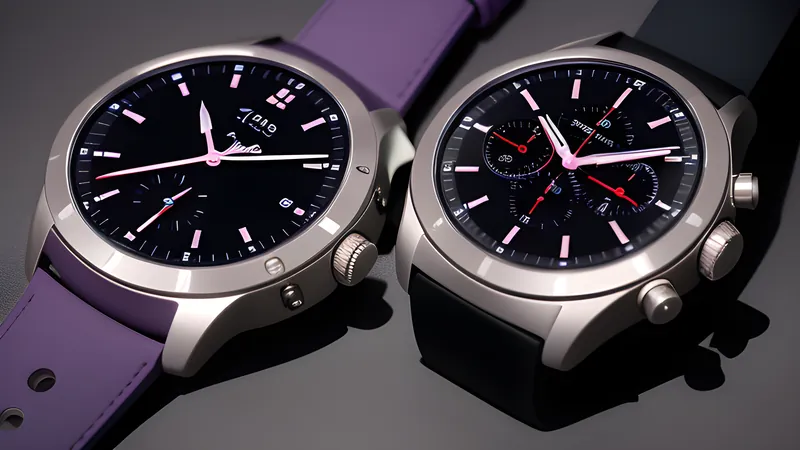
The pitch on the box is always some version of the same sentence: know where your child is, let them call you, and skip giving a seven-year-old a smartphone. The Xplora XGO3 is the current flagship example of the category in the UK — a chunky, rubber-strapped watch with a SIM slot, a GPS chip and a single physical SOS button — and it delivers exactly that promise on the spec sheet. What the box doesn’t say as loudly is that the watch is also a location-tracking radio a company other than the parent has some access to, running on infrastructure that a Norwegian consumer body found seriously wanting the last time it looked closely at the category.
What’s actually in the case
The XGO3 runs 4G LTE with GPS, GLONASS and Galileo satellite positioning, a combination chosen for faster, more reliable location locks in built-up areas than GPS alone — genuinely useful for a device whose entire premise is “where is my kid right now.” It has no app store, no web browser and no third-party messaging: contacts and calling are configured entirely through the parent’s companion app, which is the correct design choice for the category and one that distinguishes a purpose-built kids’ watch from cutting down an old Android phone. A 0.3-megapixel camera sits above the screen, low resolution enough to make blurry class photos rather than anything resembling a real camera, and the watch carries an IP68 rating that Xplora states covers swimming and rain rather than sustained submersion.
The catch that every review of this category has to state plainly: none of it works without an active SIM. Xplora sells its own data plan, in partnership with Vodafone UK, at roughly £8–10 a month, and the watch is inert without it — no GPS reporting, no calling, no geofencing. That recurring cost rarely appears in the headline price comparisons against a budget fitness band’s one-off purchase, and it’s worth totalling before buying: a watch bought for £130 costs closer to £230 in year one once the SIM is included, and the ongoing figure never goes away as long as the tracking feature is wanted.
Inside the case: the build a teardown would find
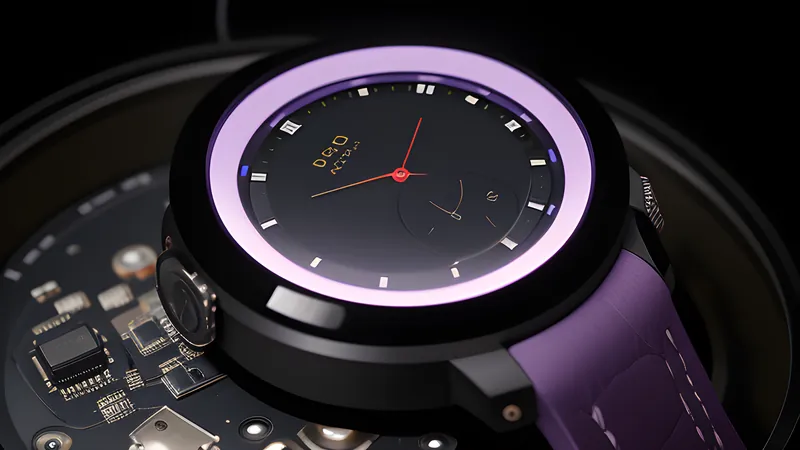
A kids’ smartwatch is built around one constraint that shapes everything else: it has to survive being worn by someone who has no concept of treating it carefully, while staying sealed enough to justify an IP68 badge. That’s why the SIM tray on the XGO3 and its category peers sits under a screwed or glued back panel rather than a pop-out tray like a phone’s — every seam is a potential water path, so the fewer openings the better, and swapping the SIM is deliberately a job for a parent with a small screwdriver rather than a five-second task for the child. The same logic drives the charging solution: there’s no USB port on the watch body at all, only exposed pogo-pin contacts that mate with a proprietary dock, because a USB-C port is one more seal to fail and one more socket a child can jam with sand or a coin.
The rechargeable lithium-polymer cell inside is not designed to be user-replaceable — it’s bonded into the chassis to keep the case slim enough for a small wrist, the same trade-off every sealed wearable makes. That matters for the honest ownership cost the marketing doesn’t mention: after two or three years of daily charge cycles, a degraded battery generally means the whole watch gets replaced rather than repaired, since prising the case open risks the waterproof seal even where a repair is technically possible. The silicone strap is the component most likely to fail first in practice — the buckle and pin mechanism takes the daily wear a screen or a chipset doesn’t, and replacement straps are sold separately by Xplora and third parties specifically because it’s the expected wear item. None of this is a defect in the design; it’s the honest shape of a sealed, child-proof wearable, and it’s worth knowing before assuming a swollen battery or a snapped strap means the watch itself has failed.
The privacy record that actually matters here
The reason this category earns more scrutiny than a fitness band is a 2017 report from the Norwegian Consumer Council (Forbrukerrådet), titled “#WatchOut,” which tested several children’s GPS smartwatches sold across Europe — including an earlier Xplora model — and found serious security failures: unencrypted communication between watch and server in some units, and in the worst cases the ability for a stranger to intercept a child’s location or make the watch call an unauthorised number. Xplora’s own product was among those flagged, and the company subsequently patched the specific vulnerabilities the report identified and has published security updates since. The report itself was damning enough that Norway’s consumer ombudsman formally recommended several of the tested watches be pulled from sale.
That’s not ancient history irrelevant to the current XGO3 — it’s the reason a category built entirely on “trust us with your child’s live location” deserves a materials-and-teardown eye rather than a features checklist. A GPS watch for a child is, structurally, a tracking device with a cloud backend the family doesn’t control and generally can’t audit, and the honest comparison isn’t to a phone (which a child can be taught to use carefully) but to a beacon that reports position to a third-party server on a schedule the parent doesn’t set. Xplora has improved materially since 2017 — current models use encrypted connections and the company has no public vulnerability disclosure on the scale of the original WatchOut findings — but the category’s baseline trust level starts lower than a fitness tracker’s for a structural reason: a compromised step counter is an inconvenience, a compromised child-location feed is not.
Geofencing and the calling feature in daily use
The parts of the promise that do land cleanly are the geofencing and SOS features. Geofencing lets a parent draw a boundary — school, home, a grandparent’s house — and get a push notification the moment the watch crosses it, which is a genuinely different kind of reassurance than checking a location dot manually, and works reliably on 4G coverage in areas with a decent signal. The SOS button, held for three seconds, immediately calls a pre-set priority contact and starts continuous location reporting, a sensible fallback for a child too young to navigate a phone’s emergency dial pad under stress. Both features work as advertised on the current hardware, and neither depends on anything beyond the basic cellular and GPS radios already in the watch.
Where the promise gets thinner is the calling feature as a phone replacement. Because there’s no app store and no messaging beyond the contacts list the parent configures, the watch can’t be used the way an actual phone would be for a child old enough to want independent contact with friends — it’s calling on a whitelist, which is exactly the constraint that makes it appropriate for a seven-year-old and exactly the limitation that makes it something a child will outgrow within a year or two, at which point the SIM subscription and the £130 hardware cost need re-justifying against a hand-me-down phone instead.
What the alternatives look like
The SIM-and-subscription model isn’t the only shape this category takes. Bluetooth-tethered trackers that piggyback on a parent’s own phone for connectivity avoid the recurring SIM cost and the independent cloud backend entirely, at the price of a much shorter range — once the child is outside Bluetooth distance from the paired phone, the tracking stops, which rules the format out for a walk to school alone. A standard adult budget smartwatch paired with a locked-down phone plan and parental controls is the other real alternative for an older child, trading the purpose-built simplicity of a kids’ watch for an ecosystem the family may already understand and can audit more directly through settings they control rather than a third-party app. Neither alternative removes the trust question entirely — any connected device handling a child’s location involves trusting somebody’s server — but both shift where that trust sits, which is worth weighing against the specific report above rather than assuming the dedicated kids’ watch is automatically the safer shape simply because it was designed for the purpose.
The case against
The strongest argument against the category is what continuous location tracking normalises, over and above any data-security worry. A watch a child wears from age six or seven, reporting position on a schedule to an app the parent checks, sets an expectation of monitoring that a phone handed over at eleven or twelve, with location sharing as an opt-in feature rather than the entire premise, doesn’t set in the same way. That’s a values question rather than a spec-sheet one, and reasonable parents land differently on it, but it deserves stating directly rather than folding into “safety feature” framing on the box: this is a surveillance tool that happens to be marketed at, and genuinely useful for, child safety. Both things are true.
The UK’s regulatory backdrop is also thinner than it should be for a product category built entirely on children’s location data. The Information Commissioner’s Office’s Children’s Code (in force since 2021) sets data-protection expectations for online services likely to be used by children, but a GPS watch’s data flows — to Xplora’s servers, via Vodafone’s network — sit in a less clearly audited space than, say, a social media app the Code was more obviously written for. Xplora publishes a privacy policy stating location data is retained only as long as needed for the service and not sold to third parties, and there’s no public evidence contradicting that claim — but “no public evidence” is a lower bar than the independent verification a WatchOut-style audit would provide, and no comparable third-party security audit of the current XGO3 hardware has been published since the 2017 findings.
The verdict
Wait — the individual features on the XGO3 work as described, and the case against it is about the record behind it: the category’s last independent security audit is eight years old and found real problems, and no comparably rigorous public re-test of current hardware has followed since. The confidence that today’s watches are secure by design rather than secure until the next audit is thinner than the price tag implies.
Price verdict: the £130–150 hardware cost is fair for the build and the GPS/4G hardware inside it, but the real cost is the £8–10 monthly SIM that never goes away — budget roughly £230 for year one, and don’t compare the headline price against a subscription-free fitness band without adding that back in.
Who it’s for: parents of a child aged roughly six to ten who want a bounded, whitelist-only way to reach them and a geofence alert, and who are comfortable with a third party holding that location data on an ongoing basis. Skip it for a child old enough to want unsupervised contact with friends — that’s a phone conversation, not a watch one — and skip it if the absence of a fresh independent security audit on current hardware is a dealbreaker rather than an acceptable risk.
Related Content