Foldables Now: Has the Crease Stopped Being a Dealbreaker?
Four generations in, the fold finally feels like a phone rather than a demo
Contents
Five years ago the promise of a folding phone was simple and slightly absurd: a pocketable slab that unfolds into a small tablet, no compromise required. The first wave delivered a crease you could feel with a fingernail, a hinge that gathered dust and died, and a screen protector layer soft enough to scratch under a fingernail too. I’ve used a current-generation book-style foldable — the class the Galaxy Z Fold and Pixel Fold-style devices occupy — as a main phone for two months to answer one question: has the engineering actually caught up to the pitch, or has the marketing just gotten better at photographing the crease from a flattering angle?
The promise versus the spec sheet
The current generation’s headline number is the fold radius: the display now folds to a genuinely tighter radius than the first three generations managed, which is the single biggest driver of crease visibility — a tighter fold means less material stretch at the bend point, and less stretch means a shallower, less permanent crease. Panel specs have moved too: current folding OLEDs run at up to 120Hz on the inner display with meaningfully higher peak brightness than the 2021-era panels, and the cover-screen aspect ratio has widened toward something you can actually type on one-handed rather than a cramped strip down the middle of the closed phone. IP48 water resistance is now standard across the category — still no formal dust rating, because a folding mechanism with a moving hinge genuinely cannot be dust-sealed to the same standard as a solid slab, and no manufacturer has solved that yet.
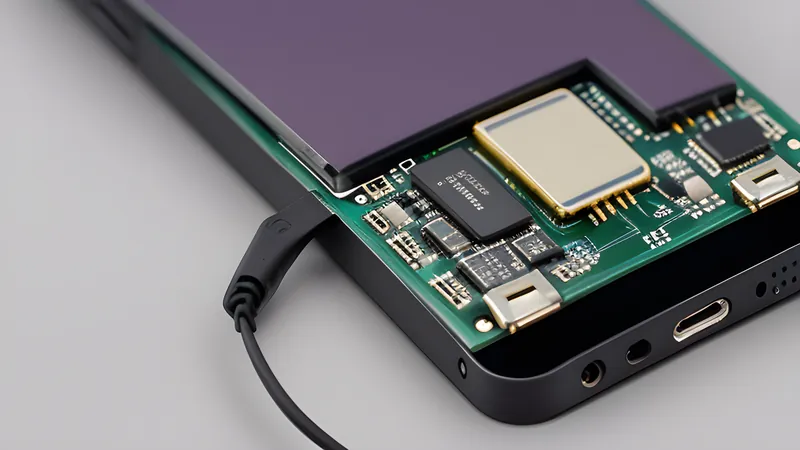
Battery capacity sits around 4,400–4,800mAh depending on model, split across two cells either side of the hinge to keep the fold thin, and that split-cell layout is itself a materials compromise: two smaller cells manage heat and thickness better than one large one would, at some cost to total capacity density versus a same-size conventional phone battery.
Materials and the hinge itself
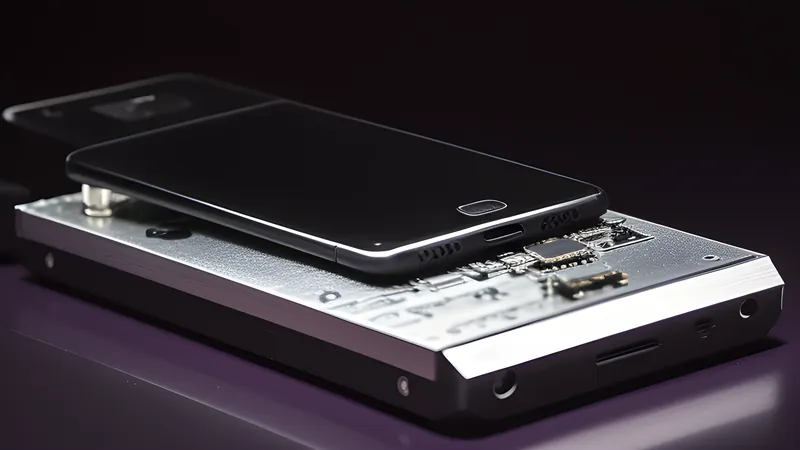
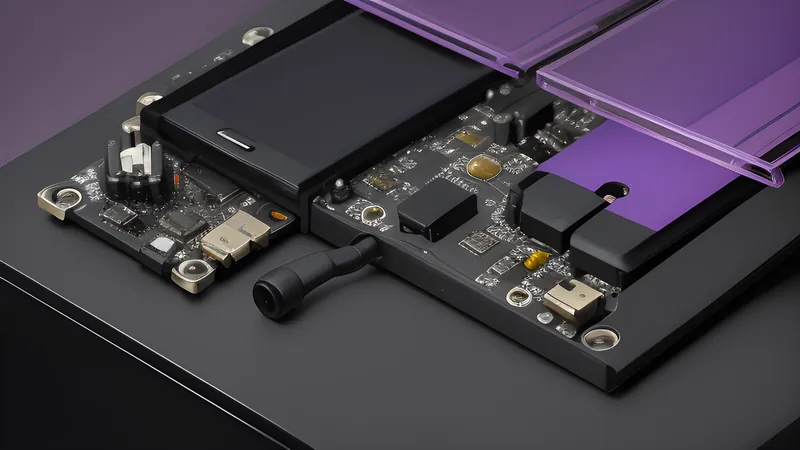
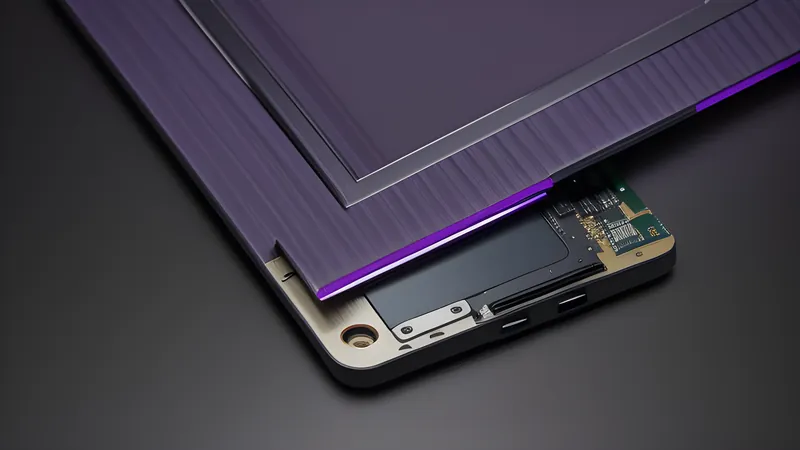
Crack the hinge assembly open — as several teardown outlets have done on current-generation models — and the mechanism is a multi-bar hinge running on a titanium or titanium-alloy frame in the most recent designs, a genuine materials upgrade from the aluminium hinges of the first two generations. Titanium’s higher strength-to-weight ratio lets the hinge barrel run thinner without sacrificing the clamping force that holds the display flat when open, which is the actual engineering problem a folding phone has to solve: staying convincingly flat for the 99% of the time you spend using it unfolded, long after the novelty of the fold itself has worn off.
The display stack itself is where the crease genuinely lives, and it’s worth being precise about why. The folding OLED panel sits under an ultra-thin glass (UTG) layer rather than the plastic-only cover of the earliest folders — UTG is real glass, thinned to fold, laminated to a plastic layer for flex tolerance. That composite is more scratch-resistant than the original plastic-only covers, which scored a shockingly low 2H-3H pencil-hardness rating that let a fingernail or grit under a finger permanently scar the display. Current UTG stacks test closer to 4H-5H — better, genuinely, but still softer than the 6H+ glass on a normal phone’s front, because glass thin enough to fold repeatedly can’t be tempered the same way flat glass is. That’s not a solved problem; it’s a better-managed one, and teardown reports consistently flag the fold-line stress point as the part most likely to show wear first under a magnifying glass, even when it’s invisible in normal use.
What repair actually costs
The hinge and the folding display are also the two most expensive things that can go wrong, and that cost structure is worth understanding before buying rather than after a first crack. An out-of-warranty screen replacement on a current-generation foldable typically runs £400-500 through manufacturer repair channels — roughly double a conventional flagship’s already-expensive screen repair, because the part is a laminated UTG-and-OLED composite rather than a single glass-and-panel sandwich, and because far fewer independent repair shops stock the part or the jig needed to reseal the hinge afterwards. Manufacturer extended-care plans specifically covering the fold mechanism have become a near-standard upsell at point of sale for exactly this reason, and given the repair cost, taking one is close to a rational default rather than an upsell to dismiss — a first for a phone category, since conventional flagships rarely justify the premium on the maths alone.
Screen protectors are a genuinely different product category on a foldable rather than an accessory afterthought: the inner display ships with a factory-applied protective layer that is explicitly not meant to be removed, unlike a normal phone’s screen protector, because it’s laminated as part of the fold-tolerant stack rather than sitting on top of unprotected glass. Removing it exposes the softer UTG surface directly and voids the folding warranty on most models — a detail that catches new owners used to peeling the plastic off a normal phone on day one.
Living with it day to day
The crease is visible if you look for it, under the right raking light, at the right angle — I can find mine in about three seconds if I go looking. Using the phone normally, reading, scrolling, actually looking at the display rather than hunting for the seam, it stops registering within about a day of ownership, the same way a phone case’s seams stop registering. That’s a genuinely different experience from the first-generation folders, where the crease created a visible ripple in white UI backgrounds that no amount of getting-used-to-it made disappear.
Software is where the promise is only half-kept. Android’s core UI adapts well to the unfolded aspect ratio now — multi-window and split-screen work reliably rather than as a demo feature — but the long tail of third-party apps still treats the unfolded state as a stretched phone screen rather than a small tablet, with UI elements pinned to one edge or text reflowing at the wrong width. That’s an app-ecosystem problem rather than a hardware one, and it’s the same gap that took Android tablets themselves years to close, covered in more depth in the cheap Android tablet guide — foldables inherit tablet-mode Android’s unfinished edges along with its potential.
Weight and thickness remain the honest trade-off nobody’s engineered away: folded, these phones run noticeably thicker than a compact flagship survivor and weigh 15-20% more than a same-generation conventional flagship, because you’re carrying two display layers and a titanium hinge mechanism instead of one glass slab. Battery life across a full day of mixed use lands behind a conventional flagship with a similar-capacity single cell, a direct consequence of the thermal and thickness constraints the split-cell layout has to work within.
The cover screen is where the day-to-day case for the format is actually won or lost, and it’s the part least discussed in launch reviews. A widened outer display genuinely replaces a conventional phone for texting, maps and quick email triage without ever unfolding — I went whole mornings without opening the hinge at all, reserving the inner screen for the tasks that actually benefit from the extra width: reading long documents, comparing two chat threads side by side, or reviewing photos in a genuinely larger frame. That selective-unfolding pattern, rather than living permanently in the unfolded state, is what current-generation software and hinge engineering have actually enabled that the first generation couldn’t: the earliest folders’ outer screens were cramped strips that forced you to unfold for nearly everything, defeating the pocketability the fold was meant to preserve.
How the two dominant hinge designs compare
Not every manufacturer solved the hinge the same way, and the differences are visible in a teardown rather than a spec sheet. The multi-bar “waterdrop” hinge design — where the display folds into a teardrop shape rather than a tight crease when closed, leaving a small air gap along the spine — reduces mechanical stress on the fold point at the cost of a slightly thicker closed profile. The tighter “zero-gap” designs that fold flush closed put more stress directly on the display’s fold line to achieve that flush look, which is part of why some tighter-folding models show a more pronounced crease under raking light than their waterdrop-hinge rivals despite newer materials. Neither approach is simply better; they’re different trade-offs between closed-profile thinness and long-term crease visibility, and it’s worth checking which philosophy a specific model uses before assuming “current generation” means “solved the same way.”
The honest case against it
The case against a current foldable isn’t the crease anymore — it’s the price and the ecosystem drag. These phones sit £400-600 above an equivalent-spec conventional flagship, a premium that buys genuinely better hinge engineering and display materials than the category managed five years ago, but still asks you to pay flagship-plus money for a device that’s thicker, heavier and shorter-lived on battery than the phone it’s replacing. The long-term durability question also isn’t fully answered yet: current-generation hinges are two to three years old in the field at most, not the five-plus years needed to know whether titanium and improved UTG actually solve the wear-point problem or just delay it. Anyone buying today is still, in a real sense, buying into a bet that the improved materials hold up over years rather than the eighteen-month review cycle most coverage judges them on.
Camera hardware is the other quiet compromise. Splitting the internal budget between a hinge mechanism, two battery cells and a folding display stack leaves less headroom for camera silicon than a conventional flagship at the same price gets to spend, and it shows: current foldables typically ship a main sensor a generation or two behind the same manufacturer’s conventional flagship, with noticeably weaker low-light and zoom performance in independent camera comparisons. That’s an honest engineering trade-off rather than a marketing failure, but it means the “no compromise” pitch from five years ago is still, quietly, a compromise — just a better-hidden and better-engineered one than the crease itself ever was.
The verdict
Wait — unless the folding form factor solves a problem you genuinely have (reading, note-taking, or split-screen work on a pocketable device), rather than one you’re buying into because the hinge finally looks solved in photographs.
Price verdict: not worth the £400-600 premium over a conventional flagship purely for the novelty at current RRP; worth considering once a generation-old model discounts by 30% or more, which puts the premium over a same-tier conventional flagship into “genuinely justified by the extra screen” territory rather than “paying to be an early adopter” territory.
Who it’s for: people who’ll actually use the unfolded screen daily — readers, spreadsheet-on-the-go workers, anyone replacing a small tablet and a phone with one device. Skip it if you want the best camera or longest battery life per pound spent; a conventional flagship or the value-focused Pixel 8a will out-perform a foldable on both for meaningfully less money, crease-free by design rather than by improved engineering.
Related Content