Fairphone 5: Does Repairability Survive Daily Use?
A year with the phone that promises you'll never need to bin it
Contents
The pitch for the Fairphone 5 is the best one in the entire phone industry: buy this, and you will still be using it in eight years, because every part that normally dies first — battery, screen, camera module, USB-C port — unclips with a single screwdriver and a five-minute YouTube video. Fairphone backs that pitch with an actual number: eight years of software support, longer than any other Android maker commits to, and longer than most people keep a phone anyway. I bought one in November last year specifically to find out whether the promise survives contact with a normal life, rather than a careful lab bench. A year of pocket lint, one dropped-on-tile cracked corner and a battery that’s now done roughly 340 cycles later, the honest answer is: mostly yes, with one real asterisk.
The promise versus the spec sheet
Fairphone doesn’t hide behind flagship numbers, and that’s part of the honesty of the thing. The 5 runs a Qualcomm QCM6490 — an industrial/IoT-grade chipset rather than a phone flagship part, chosen because Qualcomm guarantees long-term software and security support for it, which is the entire point of an eight-year promise. It’s paired with 8GB of RAM, a 4,200mAh battery, a 6.46-inch 90Hz OLED, and a 50MP main camera with a genuinely useful macro mode. None of that reads as exciting on a spec sheet next to a same-price Pixel or Galaxy A-series, and it isn’t meant to. The QCM6490 benchmarks in the mid-range pack, comfortably behind the Snapdragon silicon in the mid-range £400 phones that compete on raw speed. What you’re buying instead is a chipset with a support horizon measured in years most manufacturers won’t commit to in writing.
The IP55 rating is the other quiet flex: dust-and-splash resistant in a phone designed to be opened by the owner, which is the harder engineering problem than sealing a phone shut and calling it done. Fairphone’s own repairability documentation is unusually candid about which seals need replacing after an open (the back cover gasket, mainly) and sells those gaskets separately for pennies rather than bundling the cost invisibly into a service fee.
The eight-year figure isn’t a first attempt either — it’s a track record. The Fairphone 2, launched in 2015, ended up receiving software updates for roughly six years against an original three-year promise, and the Fairphone 3 is still getting security patches years past what any same-era rival offered. That history matters more than the marketing line on its own: a company’s next long-support promise is only as credible as whether it kept the last one, and Fairphone’s is the rare case in this industry where the receipts exist.
Materials and the modular build
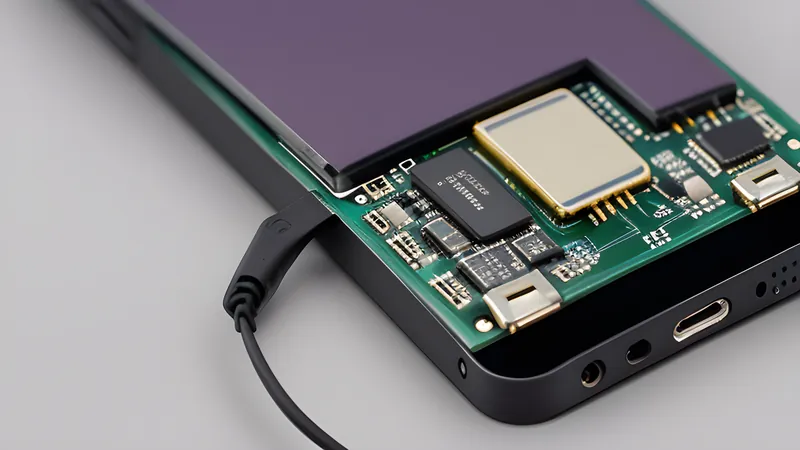
Take the back cover off — no tools, just a fingernail catch — and the battery sits in a tray with two Phillips screws and a pull-tab, exactly like a laptop battery from a decade ago. Underneath that, the mid-frame is held by eight standard Phillips-head screws, and every major component — the USB-C port module, the loudspeaker, the selfie camera, the main camera, even the screen assembly — is its own discrete, individually numbered part with its own iFixit repair guide and its own spare-parts listing on Fairphone’s site. iFixit’s own teardown gave the 5 a 10/10 repairability score, the same as the previous three generations, and that consistency matters more than the score itself: Fairphone hasn’t quietly de-modularised the design to chase thinness the way some sustainability-marketed products do after the first generation gets the good press.
Pricing the parts bin tells its own story about where the honesty actually lives. The genuine replacement battery runs around £30. The USB-C port module — the single most common failure point on any phone, since it’s the part physically abused every single day — is about £15 and swaps in under ten minutes. The bottom-firing speaker module is around £20. The full screen assembly, glass, digitiser and frame together as one part, is roughly £75. None of these are loss-leader prices subsidised by a subscription; they’re simply what the part costs to manufacture and ship, because the entire design exists to make that number small.
The trade-off is honest and visible rather than hidden: the phone is 8.7mm thick and 212g, noticeably chunkier than a same-price slab built as one sealed unit, because every seam that opens needs a gasket and a screw boss rather than glue. The back is a textured, grippy polymer rather than glass — a material choice that’s partly cost, partly the fact that glass backs are a repair nightmare to make removable. It feels less premium in the hand than a glass-backed rival, and it is, by design, more honest about being a machine you’re meant to open rather than admire.
A year of actual use
The battery is where the promise gets tested hardest, because a modular design only matters once a part has actually degraded. After roughly a year and 340-odd charge cycles of daily use, the phone’s own battery-health reporting (Fairphone exposes this natively, another quiet win over rivals that bury the figure or hide it entirely) puts state of health in the high-80s percent — a normal amount of degradation for that many cycles on any phone. The difference is what happens next: a genuine Fairphone-branded replacement battery costs around £30, ships in two days, and swaps in under five minutes with a coin, no adhesive to fight and no risk of puncturing a swollen cell with a plastic pry tool. On a sealed rival, that same 15% capacity loss just becomes something you live with — charging twice a day instead of once — until the whole phone feels sluggish enough that you replace it rather than fix it.
The corner crack happened exactly the way most screen damage happens — face-down on a tiled kitchen floor from counter height — and cracked the top-left corner of the display glass without killing the digitiser underneath. A replacement screen module runs about £75 including the display, digitiser and frame together as one part, and the swap is a genuine 20-minute job with the supplied screwdriver, not a heat-gun-and-prayer YouTube special performed over a cracked-open chassis you might not get sealed properly again. Compare that to a same-generation Galaxy or Pixel, where an authorised screen repair through the manufacturer typically runs £150–200 and takes the phone out of your hands for several days while it ships to a repair centre.
Performance day-to-day is where the mid-range chipset shows: app launches and camera-to-shot time lag noticeably behind a Pixel 8a on the same tasks, and gaming is not this phone’s purpose — anything demanding drops frames well before a flagship-silicon rival would notice the strain. 90Hz scrolling still feels smooth for everything that isn’t gaming, and the software — near-stock Android with Fairphone’s own longevity-focused update cadence — has taken two major OS version bumps in the year without incident, arriving within weeks of Google’s own reference timeline rather than months behind it the way budget Android often runs.
Where the ecosystem still lags
Repairability solves the hardware side of longevity, but a phone lives inside an ecosystem, and that ecosystem hasn’t caught up to an eight-year ownership horizon. Case and accessory choice is thin next to a Pixel or a Galaxy — a handful of third-party silicone shells and one official Fairphone case, versus dozens of options for a mainstream flagship — because the sales volume simply isn’t there to attract accessory makers. Trade-in value is the other quiet cost: resale platforms price a used Fairphone lower relative to its original RRP than a same-age Pixel, because the resale market still prices phones on brand recognition and camera reputation rather than remaining service life, which is precisely the metric this phone wins on. That’s a genuine market failure rather than a flaw in the phone, but it’s real money left on the table if you do eventually sell rather than repair-and-keep. Carrier availability in the UK is also narrower — direct-from-Fairphone and a small number of ethical-focused retailers, rather than every high-street network store — so buying one is a deliberate errand rather than a walk-in impulse, which arguably suits the kind of buyer this phone is built for anyway.
The honest case against it
The case against the 5 isn’t really about repairability at all — it’s about whether you’re the kind of owner who’ll ever use it. If you’re someone who upgrades every two years regardless of condition, or who’d rather pay a shop £40 to fix a cracked screen than order a part and do it yourself, the eight-year software runway and the modular parts bin are a promise you’re paying for and never redeeming. The camera, while genuinely good for macro work thanks to a dedicated close-focus lens rivals skip entirely, trails a Pixel 8a’s computational photography meaningfully in low light — this is a phone built by a company whose engineering budget goes toward supply-chain ethics and spare-parts logistics, not camera ISP tuning, and it shows in exactly the way you’d expect from that allocation of resources.
The Nothing Phone 2a teardown covers a phone chasing a completely different promise at a similar price, and the contrast is instructive: Nothing sells a lighting gimmick wrapped around mid-tier internals, Fairphone sells a genuine parts bin wrapped around mid-tier internals, and which of those is worth your money depends entirely on what you actually want a phone to do for you over the years you own it, rather than the first month.
Fairtrade cobalt sourcing and the Fairphone Easy leasing programme are part of the pitch too, and they’re real — verified through the company’s own published supply-chain audits — but they’re not why anyone should buy this phone on gadget merits alone. The phone itself, judged purely as a phone, is a solidly mid-pack Android experience wrapped around genuinely class-leading serviceability, and conflating the ethics story with the hardware review does neither one justice.
The verdict
Buy — but only if you’ll actually use the thing you’re paying for. The eight-year software promise and the true component-level repairability aren’t marketing dressing on this device; a year of real cracks and real battery cycles backs them up with parts that exist, ship fast, and cost a fraction of an authorised repair elsewhere.
Price verdict: at its current £499 RRP it’s a fair trade for the repair-cost savings alone if you keep phones for four-plus years — the maths stops working if you’re a two-year upgrader who’ll never crack the case open. Watch for the periodic £50 discounts Fairphone runs directly through its own store; at £449 it’s an easy recommendation rather than purely a values-driven one.
Who it’s for: anyone tired of a cracked screen meaning a new phone, anyone who wants their hardware to outlast their patience for it, and anyone comfortable with mid-range performance in exchange for a phone that gets cheaper to keep the longer you own it. Skip it if raw camera and gaming performance matter more to you than a five-minute battery swap — the mid-range phones under £400 will out-benchmark it for less money, they just won’t outlast it the way this one is built to.
Related Content