With Full Force: East Germany's Extreme-Metal Institution
How a 2,500-strong gig in Saxony became eastern Germany's trendsetting scene festival
Contents
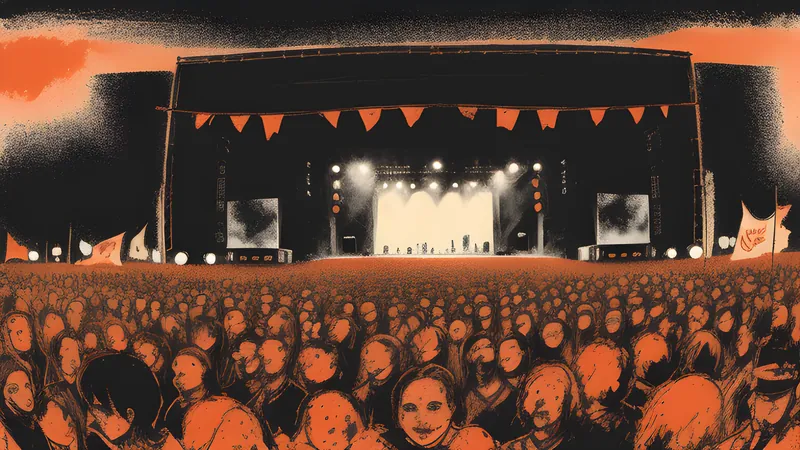
Some festivals sell themselves on their headliners. Full Force sold itself, for three decades, on being the place eastern Germany’s extreme-metal and hardcore scene came to find itself. Running annually since 1994, it grew from a couple of thousand people in a Saxon town park into one of the most important scene festivals in the German-speaking world — a trendsetter that shaped what a heavy German festival could be, staged in some genuinely strange locations along the way.
Born in the east, in 1994
The founding date matters more than it looks. Full Force — originally With Full Force — started in 1994, which places its birth just a few years after German reunification, in the former East. It was launched by a group of metal enthusiasts based around Zwickau in Saxony, and the first edition ran on 4 June 1994 at the Stadtpark in nearby Werdau, pulling around 2,500 people from the local scene. This was a festival built by and for the heavy-music community of a region that, only a few years earlier, had been a separate country with very limited access to Western extreme music.
That context gives Full Force its particular flavour. It became, in short order, the biggest scene festival in eastern Germany and a genuine trendsetter for the whole genre in the country — the event that helped define the German template for a festival dedicated to the harder, faster, more extreme end of things. Where the mega-festivals hedged their bills with radio rock, Full Force stayed pointed at metal and hardcore punk, and the scene rewarded it with fierce loyalty.
The festival’s geography over the decades is a small tour of eastern Germany’s odder venues. From 1999 to 2016 it settled at the Roitzschjora glider airfield in Löbnitz, Saxony — a spacious open field with the rustic, camping-friendly, slightly ramshackle atmosphere that a certain kind of metalhead loves, with attendance settling around 25,000 to 30,000. An airfield is a fitting home for a festival like this: flat, functional, unglamorous, and enormous, a blank field that fills for a weekend with the region’s loud-music faithful.
The move to Ferropolis, the city of iron
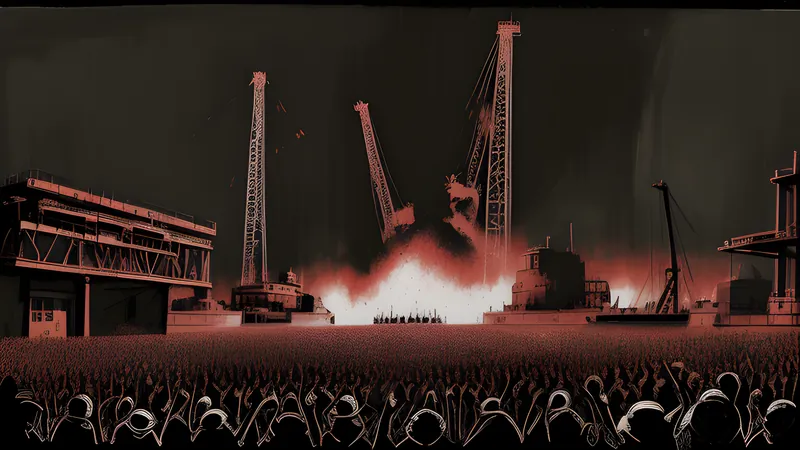
In 2017 Full Force made one of the most cinematic venue moves in European festival history. It relocated to Ferropolis, an open-air industrial museum near Gräfenhainichen in Saxony-Anhalt, roughly 100 kilometres from Berlin. Ferropolis — the name means city of iron — is a decommissioned open-cast lignite mine that has been preserved as a monument to industrial heritage, and it is dominated by a set of colossal disused bucket-wheel excavators, some of the largest land vehicles ever built, standing like rusting mechanical dinosaurs around an amphitheatre by a lake.
As a backdrop for extreme metal, it is almost too perfect. Bands play beneath these vast rusting machines, the industrial past of the region looming physically over a music built on volume and weight. It is one of the great festival sites in Europe precisely because it means something specific — this is the scarred, post-industrial east German landscape made into a stage, and the music sounds like it belongs there. The move from a glider field to a city of iron was Full Force doubling down on its identity as a festival rooted in a particular place and a particular history.
That rootedness is what the best festivals have and the worst lack. In an industry where events increasingly converge on the same interchangeable formula — a gripe I have aired at length in why every festival now feels the same — Full Force at Ferropolis is emphatically somewhere. You cannot mistake those excavators for any other festival on earth, and that unrepeatable sense of place is worth more than any headliner.
A scene festival, in the truest sense
The phrase “scene festival” is the key to understanding Full Force, and it is worth unpacking. This is not a broad-appeal event trying to be a summer holiday with some bands attached. It is an event by and for a specific music community — the extreme-metal and hardcore-punk underground of central and eastern Europe — and its bills, its crowd and its culture all reflect that. The lineups pull from thrash, death, black, metalcore and hardcore, the crowd is fluent in the physical rituals of heavy shows, and the whole thing runs on the shared identity of people who have found their tribe.
That focus produces a festival with a strong internal culture and a loyal returning audience, the same virtuous circle that drives the healthiest heavy events. It puts Full Force in the company of Germany’s other great metal institution, Wacken, though the two are very different animals: Wacken is the enormous, world-famous village-in-a-field that draws 85,000 from everywhere, while Full Force is the tighter, more scene-specific eastern event with a fraction of the size and a sharper genre focus. Together they map the breadth of German metal festival culture, from global spectacle to regional institution.
Full Force’s heaviness-first booking philosophy also links it to the wider network of European festivals that have thrived by refusing to dilute — the Belgian prison-metal fortress I have written up in Alcatraz chief among them. These events share a bet: that the committed metal and hardcore audience is large and loyal enough to sustain a serious festival, and that trying to broaden the bill for a general crowd would cost more in identity than it gained in ticket sales.
Reading the east German scene through a festival
Full Force is a useful lens on a bigger story: what happened to heavy music in the former East after 1990. Under the old regime, access to Western extreme metal and hardcore was heavily restricted, the records smuggled and copied, the scene forced underground. Reunification opened the floodgates, and a pent-up appetite for the music met a sudden freedom to organise around it. A festival launched in Saxony in 1994, only four years after the country reunified, is a direct product of that release — a scene that had been suppressed building its own institutions the moment it could.
That history gives the festival a weight beyond its size. Wacken and the western German mega-festivals grew out of a scene that had enjoyed decades of free access to the music; Full Force grew out of one that had been denied it and was making up for lost time. The intensity of the loyalty around eastern German scene festivals makes more sense in that light. For the people who built and attend Full Force, a dedicated extreme-metal festival on home ground is not a given to be taken for granted — it is something their region only recently won the freedom to have.
The Ferropolis setting closes the circle in a way that borders on poetic. Those giant excavators once tore lignite out of the East German ground to feed a planned economy’s power stations; now they stand over a festival that could only exist because that economy fell. The music built on volume and defiance plays beneath the rusting machinery of the world that once suppressed it. Few festival sites carry that much history in their bones, and Full Force earned the right to it by staying rooted in the east through thirty years of change.
That regional identity also connects Full Force to the wider Nordic and central European heavy circuit, the same web of scene festivals and export bands that turned small countries into loud-music powerhouses — a phenomenon I have traced from the Danish end in the little country, loud export. Heavy music has always travelled best through exactly these kinds of fiercely local institutions, each rooted in its own patch of ground and its own history.
Why it matters, and what it faces
Full Force’s thirty-year run is not without turbulence — the festival has had to weather the same brutal economics that squeeze every mid-sized independent event, with rising costs and the constant challenge of staying viable in a crowded market. Being a focused scene festival rather than a broad-appeal giant is a proud position and a financially exposed one, because you are betting everything on a specific audience rather than spreading your risk across the mainstream. That is the tightrope every genre-specific festival walks.
What has carried it this far is exactly that refusal to compromise. For three decades Full Force has been the eastern German heavy scene’s home fixture, the trendsetter that helped define what a German extreme-metal festival is, staged in venues — a glider airfield, a city of rusting iron giants — that could belong to no other event. It is a festival with a genuine sense of history and place, born in the newly reunified east, grown into an institution, and still pointed squarely at the music that made it.
Full Force is for the person who wants their metal and hardcore served without apology, beneath machines the size of buildings, surrounded by a scene that has been coming back for thirty years. It is one of the truest scene festivals Europe has, and the city of iron is exactly where it belongs.
Related Content