Why the Crowd Sings the Guitar Solo
On the strange, joyful moment when ten thousand people become the lead guitarist
Contents
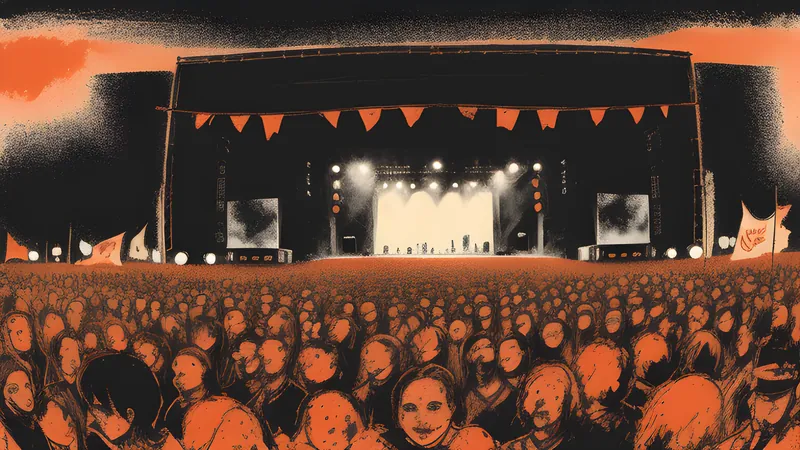
There is a moment at a certain kind of show when the words run out and the crowd keeps singing anyway. The verse is done, the chorus has been screamed twice, and now the guitarist steps forward to play the instrumental break — and ten thousand people sing that too. No lyrics. Just the notes. “Da-da-da, da-da-da-DAAA.” A field full of adults doing a passable choral impression of a distorted Gibson through a Marshall stack, and grinning while they do it.
I have watched this happen at Roskilde and at Copenhell and in the sweatier rooms around Copenhagen, and it never stops being funny and slightly moving at once. The most famous example is the riff from “Seven Nation Army” by The White Stripes — seven ascending notes that have escaped music entirely and colonised football terraces across Europe. But it happens with proper solos too. The lead line from a Metallica bridge. The twin-guitar melody in an Iron Maiden gallop. The mournful bend at the centre of a power ballad. The band could play it fine on their own. The crowd insists on doing it with them.
The riff is easier to remember than the words
Start with the boring, true explanation: a melody is easier to hold in your head than a lyric. Words are specific. You either know the second verse of a song or you don’t, and most people don’t — they know the chorus and they fake the rest, mumbling through the bits between the hooks they actually learned. I have done the mumble. Everyone at a festival has done the mumble.
A melodic hook asks less of you. It has no grammar to get wrong, no place-names to trip over, no line you half-remember from a different song. A really good riff is designed by the songwriter to lodge in memory on first contact — that is the entire job of a riff. So when the singer goes quiet and the guitar takes the lead, the crowd is suddenly handed a part of the song that is both memorable and unclaimed. Nobody is singing words over it. There is a gap. And a crowd abhors a gap.
The seven-note “Seven Nation Army” figure is the perfect case study. Jack White wrote it in 2003 for a song about paranoia and gossip, and within a few years it had been adopted by Belgian football fans, then Italian ones at the 2006 World Cup, then everyone. Most of the people chanting it on a terrace could not name the band. The riff outran the song. It became a folk object, the way a nursery rhyme is a folk object — a melody with no fixed owner that any large group can produce from memory on cue. That is the extreme version of the same instinct that makes a festival crowd sing a solo.
A crowd wants a part, and the solo hands them one
There is a deeper thing going on, and I think it is about participation. A concert is a strange transaction. You have paid to watch other people work. For most of the night your job is to receive — to stand and take in the sound, applaud, maybe move a bit. The band gives, you get. But that is not really why people go to shows, and any good frontman knows it. What a crowd actually wants is a job. A part to play. A moment where the wall between the stage and the floor thins out and you stop being an audience and start being a participant.
The singalong chorus is the sanctioned version of this. The band writes a big open chorus specifically so the room can shout it back; the singer holds the mic out and goes quiet and lets the crowd carry a line, which is one of the oldest and best tricks in live music. It works every time because it hands the audience a job and then rewards them for doing it well.
The solo singalong is the crowd inventing its own job. Nobody wrote “please sing this instrumental melody” into the song. The audience decided, collectively and without discussion, that the guitar line was theirs to sing, and then several thousand strangers arrived at the same decision within about a second of each other. That coordination without a conductor is one of the eeriest and most cheerful things you will ever be part of. You open your mouth to sing the riff and discover everyone around you already is. You were not told to. You all just knew.
I have written before about what the mosh pit is actually for, and the solo singalong is the pit’s gentle cousin. Both are the crowd refusing to stay a passive audience. One does it with elbows; the other does it with a wordless choir. They come from the same appetite — the need to do the show rather than merely watch it.
Collective memory, humming in unison
Watch which songs get the treatment and you learn something about a crowd’s shared memory. A solo only gets sung if enough people in the field carry the same recording in their heads, note for note, well enough to reproduce it out loud. That means old songs, mostly. Songs people grew up with. Songs that were on in the car, at parties, on the radio for years until the melody wore a groove.
This is why the phenomenon clusters around catalogue acts and heritage festivals. When a legacy band plays their signature song, they are not really performing it to the crowd — they are conducting a piece the crowd already knows by heart, releasing a melody that thousands of people have been privately carrying for twenty years. The band plays the first notes and the field completes the phrase before the guitarist gets there, because everyone already knows what comes next. That is collective memory made audible. It is the closest a stadium gets to a village remembering the same hymn.
There is a poignancy to it if you let yourself feel it. A guitar solo is usually the most individual moment in a song — one player, showing off, expressing something personal and technical that took years to be able to play. And here is a crowd taking that intensely individual statement and turning it into the least individual thing imaginable: a mass unison hum. The soloist’s private virtuosity becomes public property. The band member most associated with ego — the lead guitarist, the guitar hero — has written the part the crowd loves most communally. I find that lovely. The show-off note becomes the campfire song.
Why it lives in loud music especially
You will hear the odd solo singalong at a pop show, but it belongs most naturally to rock and metal, and there are good reasons. Loud guitar music is built around the riff as its central unit — the melodic or rhythmic figure that defines a song is usually a guitar line, not a vocal one. Metal in particular treats the guitar as a second voice, the twin-lead harmony being practically a genre requirement. When the guitars are the melody, the crowd has been trained all night to listen to them as the tune, so of course they sing them.
There is also the matter of the audience. A loud-music crowd is a knowledgeable, repeat-attending, catalogue-deep crowd. These are people who have listened to the record enough times to have the solo memorised, which is a real bar to clear. Denmark’s own scene, which I have banged on about in the country’s outsized metal export story, produces exactly this kind of devoted, detail-obsessed listener — the sort who can hum the second harmony line, not only the melody. Give a crowd like that an instrumental break and they will not stand there politely. They will sing it back to you in two-part harmony and mean it.
And metal shows lean hard into ritual and participation anyway — the horns, the wall of death, the call-and-response, the pit. The whole culture is built on the idea that the crowd is part of the performance and has duties. Singing the solo is just one more of those duties, self-assigned. It fits a music where the audience never really agreed to only watch.
The moment the wall comes down
What I keep coming back to is how democratic it is. A guitar solo is the one part of a song that most listeners assume they could never play. The words, you can sing. The rhythm, you can clap. But the solo is the specialist’s preserve, the bit that requires a lifetime of scales and calluses and a good amp. It is meant to be beyond you.
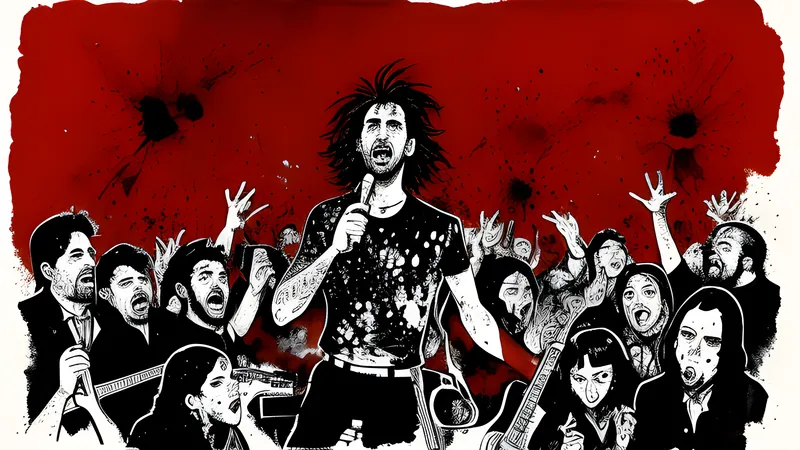
So there is something quietly defiant about a crowd deciding to sing it anyway. We cannot play it, the field says, but we can carry it. We know it as well as you do, note for note — we just can’t do it with our hands. And for the length of that instrumental break the guitarist stops being a virtuoso performing at the crowd and becomes a section leader in a choir that stretches back to the sound desk. He plays the notes on the fretboard; the crowd plays them in the air. Same melody, two instruments, one of them made of ten thousand throats.
Then the verse comes back, the words return, and everyone goes back to mumbling the bits they don’t know. But for those few bars, nobody was watching a show. They were all in it, humming the one part they were never supposed to be able to play, and getting it right.
Related Content