Why Every Festival Now Feels the Same
The vertically-integrated machine, the headliner carousel, and the wristband that watches you
Contents
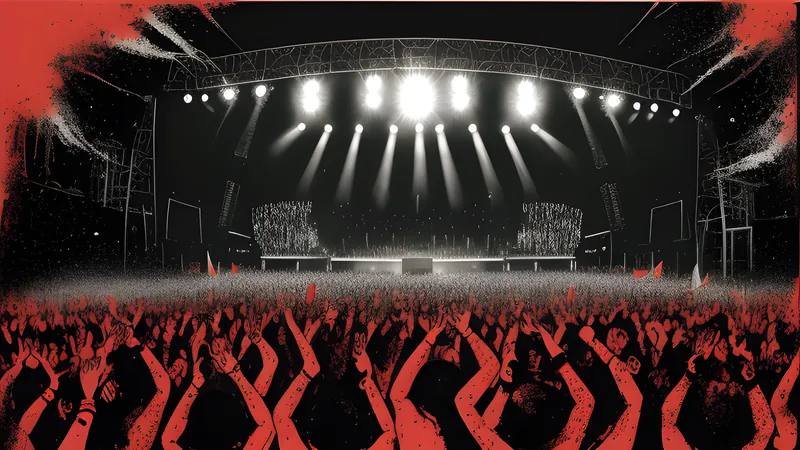
Stand in the middle of a mid-sized European festival with your eyes shut and try to work out which country you’re in. Go on. The main stage is a black scaffold cliff with two enormous side-screens. The beer costs the equivalent of a small meal and comes in a returnable plastic cup with a deposit you’ll forget to reclaim. There’s a “silent disco” tent, a street-food avenue selling the same loaded fries under three different flags, a sponsor-branded ferris wheel, and a photo wall in the colours of a phone network. The headliner tonight is a band you saw headline a festival eight hundred kilometres away last summer. You open your eyes. Could be Germany. Could be Spain. Could be a car park in Ohio. The wristband on your arm knows exactly where you are, even if you don’t.
This is the thing nobody quite says out loud at the bar: the festivals have converged. They look the same, they’re priced the same, they book the same acts in roughly the same order, and they run on the same invisible plumbing. That isn’t an accident or a failure of imagination. It’s the predictable output of a machine that has spent fifteen years buying up the whole supply chain. Let me walk you through how the sausage gets made, because once you can see the mechanism you can never un-see it — and because there are a handful of places that have refused to feed it, and they’re worth defending.
The machine that owns the whole chain
Start with the ownership. In 2010 the world’s biggest concert promoter, Live Nation, merged with the world’s biggest ticketing company, Ticketmaster. That single deal created a company that promotes tours, owns or operates venues, manages a stable of artists, and sells the tickets — all under one roof. Its main rival, AEG, is smaller but plays the same game with its own venues and its own festivals. When one company controls the promotion, the room, the artist’s management, and the checkout, it doesn’t have to compete on any single one of those things. It just has to make sure you can’t easily choose a competitor at any point in the chain.
That’s the argument the US Department of Justice made when it sued Live Nation and Ticketmaster in May 2024, joined by dozens of states. The government’s case, in plain English, is that the company uses its grip on each part of the business as leverage over the others: play ball on ticketing or lose the tour; give us the exclusive or the venue goes dark. You don’t need to wait for a courtroom verdict to feel the consequences as a punter. Vertical integration is why the experience has flattened. A company optimising a whole pipeline builds one efficient template and stamps it out everywhere, because bespoke is expensive and a template scales.
The clearest fingerprint of that template is the radius clause. When a big festival books a marquee act, the contract routinely forbids that act from playing any competing show within a certain distance and a certain window — sometimes months either side, sometimes across an entire region. On paper it protects the festival’s investment. In practice, when the same small pool of promoters is booking most of the big festivals, radius clauses become a cartel-shaped fence: they carve the map into territories and starve any independent event that can’t afford to fight over the same headliners. The mid-sized festival down the road that used to nab a rising band on a cheap early date now finds that band contractually invisible for the summer. So it books whoever’s left. So do all its neighbours. So you get the same names.
The headliner carousel
Which brings us to the carousel. Look at the poster art for a dozen European festivals in a given year and play spot-the-difference. You’ll find the same eight or ten “tent-pole” acts rotating through the top line like a lazy Susan — a heritage rock band on its umpteenth farewell lap, a pop act mid-cycle, a metal institution, a legacy hip-hop name, and a couple of reliable mid-40s indie draws. There are only so many artists on Earth who can guarantee sixty or eighty thousand paying bodies, and they are booked years ahead by the same promoters into the same tier of festival. The supply is genuinely scarce. The booking power to hoover it up is genuinely concentrated. Put those two facts together and homogeneity is arithmetic.
I don’t blame the bookers, exactly. If your festival has forty thousand tickets to sell and a bank covenant to service, you cannot gamble the top of the bill on a band nobody’s heard of. You reach for the sure thing, and the sure thing is the same sure thing everyone else is reaching for. The tragedy is structural. The safe booking is individually rational and collectively deadening, and the machine rewards exactly that timidity because it profits from the tour whichever festival lands it.
Dynamic pricing and the platinum trick
Now the money, which is where the mood actually curdles. For most of festival history the deal was simple: a face-value ticket, printed, one price. That’s gone. Two innovations killed it.
The first is dynamic pricing — the same surge-pricing logic that makes a taxi cost triple in the rain. Prices float with demand in real time, so a ticket that lists at one number can leap the instant the on-sale gets busy. When the Oasis reunion went on sale in 2024, UK fans queued for hours only to watch standing tickets balloon in price as they reached the front, and the resulting outcry drew a formal look from the Competition and Markets Authority. When Bruce Springsteen’s 2022 US tour used dynamic pricing, some seats hit four figures and the internet caught fire. The industry’s defence is that the money “should” go to the artist rather than a scalper, which contains a grain of truth and a mountain of convenient self-interest.
The second is the platinum ticket: officially-sanctioned premium pricing dressed up as a product. No better seat, no extra perk in many cases — just the same ticket with a higher number attached because an algorithm reckons you’ll pay it. The genius, from the seller’s side, is that platinum pricing launders the surge. It normalises a top-line number three or four times the old face value and makes the merely-expensive standard ticket feel like a bargain by comparison. Do this across every festival and every tour for a few years and you’ve quietly reset the entire market’s sense of what live music costs. That’s why the ticket hurts more than it used to, and why it hurts the same everywhere: it’s the same pricing engine.
The wristband that watches you
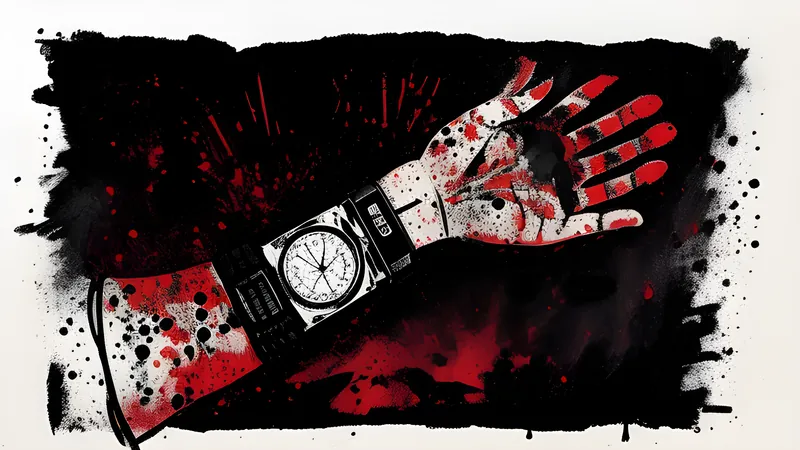
Here’s the part that gets least attention and deserves the most. That RFID wristband they snap on at the gate — the one you tap to get in, tap to pay, tap to enter the VIP pen — is the most efficient data-harvesting device the live industry has ever deployed, and you volunteer for it.
Cashless was sold to punters as convenience, and honestly it is convenient; no queue at a cash machine, no fumbling for coins. But study the operators’ own sales pitches to festivals and the real product comes into focus. Cashless spending runs measurably higher than cash — event operators cite lifts of anywhere from fifteen to thirty per cent — for the oldest reason in retail: you don’t feel a tap the way you feel handing over a note. The wristband makes the pain of paying disappear, and disappeared pain means a fuller till.
Then there’s the tracking. An RFID system doesn’t just process a payment; it logs where and when. Every tap is a timestamped location. Some systems ping the reader network every few seconds to build live crowd heat-maps. The organiser ends up with a minute-by-minute map of who went where, what they bought, how long they queued, which stage they abandoned and which bar they returned to four times. That data is gold: it tells the sponsor exactly where to put the branded activation next year, tells the bar where to price up, tells the site designer where the choke points are. It is also, in the language of European data law, personal data, and the honest festivals disclose it and anonymise it. The rest bury it in a terms-and-conditions scroll you accepted to buy the ticket. The wristband that watches you is why the site design itself has homogenised: once every festival optimises its layout against the same behavioural telemetry, they all arrive at the same funnel — gate, sponsor gauntlet, food avenue, merch, main stage — because the data all says the same thing.
What actually resists
So is it hopeless? No — and the counter-examples are instructive precisely because they break one link in the chain each.
The strongest is ownership that isn’t trying to extract from you. Roskilde is run by a non-profit and gives its surplus away to charity and culture every single year. That one structural fact changes everything downstream: when the mission isn’t quarterly profit, the festival can take booking risks, price with a conscience, and treat the punter as a participant rather than a yield to be optimised. It still uses wristbands and it still books big names — it isn’t a monastery — but the incentive at the top of the pyramid points somewhere other than your wallet, and you can feel it on the ground.
The other model kills the passivity itself. The Borderland, Denmark’s participatory burn, runs on a flat rule: no spectators, no vendors, no headliners. There is nothing to buy on site and nobody performing at you; every camp, bar and stage is built and run by the people attending. You cannot homogenise an event that has no product to template and no telemetry to harvest, because the attendees are the programme. It’s the photographic negative of the machine, and it proves the flattening isn’t a law of physics. It’s a business choice.
Between those poles sit a hundred small festivals fighting the radius clauses with stubbornness and curiosity — booking the band the algorithm hasn’t noticed yet, printing an actual face value, taking cash at the bar out of sheer bloody-mindedness. They are where next year’s headliners are actually playing this year, if you can be bothered to look.
The convergence is real and the mechanisms are named: consolidated ownership, contractual exclusivity, surge and platinum pricing, and a wristband built to measure and monetise your body’s path across a field. None of it is inevitable. It’s what happens when a chain optimises itself end to end and we keep tapping to pay. My argument, and I’ll own it as opinion: the festival you’ll remember in ten years is almost certainly the one that gave something up — the extra spend, the top-line name, the data — to give you something back. The others will blur into one long black scaffold cliff and one endless silent disco, and the wristband won’t even have to tell them apart. The festivals that keep a face — a village that shuts down to host eighty-five thousand metalheads at Wacken, a non-profit that hands the money back at Roskilde — are the ones fighting the flattening on purpose. Back the ones that give something up. They’re the only ones you’ll remember.
Related Content