Wardruna: The Nordic Folk Phenomenon
How a former black-metal drummer built the sound of the reconstructed Viking age
Contents
Every so often a musical project arrives that seems to answer a question nobody had quite thought to ask. Wardruna answered one about the deep past. What would the pre-Christian Nordic world have actually sounded like, and could that sound be reconstructed, seriously and beautifully, rather than played for cheap fantasy atmosphere? The answer turned out to be one of the most quietly remarkable success stories in modern European music — a project built on bowed lyres, goat horns and Old Norse rune-poems that has filled concert halls across the world and reshaped what a mass audience thinks “Viking music” means.
I have watched the Wardruna phenomenon grow with a mixture of admiration and mild disbelief. This is austere, patient, largely acoustic music sung in Old Norse and Norwegian, with no obvious commercial hooks, and it has become genuinely popular — the kind of thing people who own no other folk records travel across countries to see. Understanding how that happened tells you something real about a hunger the modern world has for depth, ritual and the pre-industrial past.
Einar Selvik and the black-metal roots
Wardruna was founded in 2003 by Einar Selvik, and here is the detail that surprises newcomers: Selvik came out of black metal. He drummed, under the name Kvitrafn, in the notorious Norwegian band Gorgoroth, and moved in exactly the extreme-music circles you would expect. Wardruna grew directly out of that world — the same fascination with the pre-Christian Nordic past that ran through so much Norwegian black metal, stripped of the distortion and blast beats and rebuilt from the ground up with the actual instruments and traditions of the period.
That lineage is not unusual in the Nordic underground; a striking number of the musicians now working in folk and ritual music served time in the extreme-metal scene first, and the two worlds share a preoccupation with the pre-Christian north that runs deeper than surface aesthetics. It matters here because it explains the seriousness of the project. Selvik did not stumble into Norse folk as a marketing angle. He came to it through a subculture that had been obsessed with this heritage for years, and he brought to it a rigour that most “folk revival” acts lack. Wardruna is the sound of someone who had already spent a decade thinking about the old gods deciding to do it properly.
Reconstructing a lost sound
The heart of Wardruna is the instruments, and the research behind them. Selvik plays and builds reconstructions of historical Nordic instruments — the kravik lyre, the tagelharpe (a bowed lyre strung with horsehair), goat and bronze horns, various flutes, deer-hide frame drums. These are attempts to recover what the Iron Age and Viking Age north actually had to make music with, based on archaeological finds and scholarship.
Onto those sounds Selvik layers texts drawn from the Norse runic tradition. The project’s central work, the Runaljod trilogy — Gap Var Ginnunga in 2009, Yggdrasil in 2013 and Ragnarok in 2016 — is built around the runes of the Elder Futhark, each song an exploration of a rune’s meaning and associations. It is a conceptual scheme of real ambition, treating the runic alphabet as a spiritual and poetic system rather than a font. The music that results is slow, layered, deeply atmospheric, built on drones and chant and the natural resonance of those old instruments, and it sounds genuinely unlike anything in the pop landscape around it.
The Skald and Kvitravn expansions
After the Runaljod trilogy closed, Selvik could have simply repeated the formula, and the audience would have followed. Instead he widened the project. Skald, released in 2018, stripped everything back to a single voice and a lyre — Selvik alone performing skaldic and Eddic material, closer to how a wandering poet-musician might actually have worked than the layered studio productions of the trilogy. It is Wardruna at its most naked and, for some listeners, its most affecting. Then Kvitravn in 2021 opened the sound back out, folding in choral arrangements and a richer palette while keeping the same rootedness in Norse tradition and animist thinking. The two records together showed a project with somewhere to go beyond its founding concept, which is exactly what separates a phenomenon with staying power from a novelty that burns bright and fades.
Selvik has also worked well outside Wardruna, collaborating with the members of Enslaved on the historically themed Skuggsjá project and lending his voice and instruments to numerous screen and stage productions. That openness has helped Nordic folk grow from a single act into a recognisable field, with Wardruna as its most visible standard-bearer.
Vikings, and the leap to a mass audience
The moment Wardruna crossed from underground respect to global reach came through television. Selvik contributed music to the History Channel series Vikings, and the exposure introduced the project to an enormous audience who had never heard anything like it. That could have been a curse — the fast route to being typecast as background music for a TV show — but Wardruna’s substance carried it through. People who came in through the series stayed for the depth, and the live audiences grew and grew.
What they grew into is striking. Wardruna now headline serious concert halls and major festivals, drawing crowds that cut clean across the usual tribal lines — metalheads, folk enthusiasts, the spiritually curious, people with a general hunger for something older and slower than the culture usually offers. The Nordic folk revival that Wardruna did so much to seed has become a genuine live-music sector, and the appetite behind it shows no sign of fading.
The instruments as characters
Spend time with Wardruna’s records and the instruments start to feel like characters in their own right. The tagelharpe, bowed and droning, carries much of the emotional weight — a keening, wind-like sound that seems to come from the landscape itself. The lyres provide the harmonic bed, plucked in slow, hypnotic patterns. Horns and lurs punctuate, primal and brass-bright. And the frame drums, hide stretched over wood, supply a heartbeat pulse that anchors even the most abstract passages. Selvik treats natural sound as an instrument too, weaving in field recordings of water, wind, fire and birds, so that the music seems continuous with the environment it evokes. The whole approach is a rejection of the modern studio’s polish; nothing here is designed to sound clean or contemporary, and the deliberate roughness is what gives it its uncanny sense of age. You are hearing wood, horsehair, breath and skin, which is very close to hearing the materials of the world the songs are about.
The live ritual
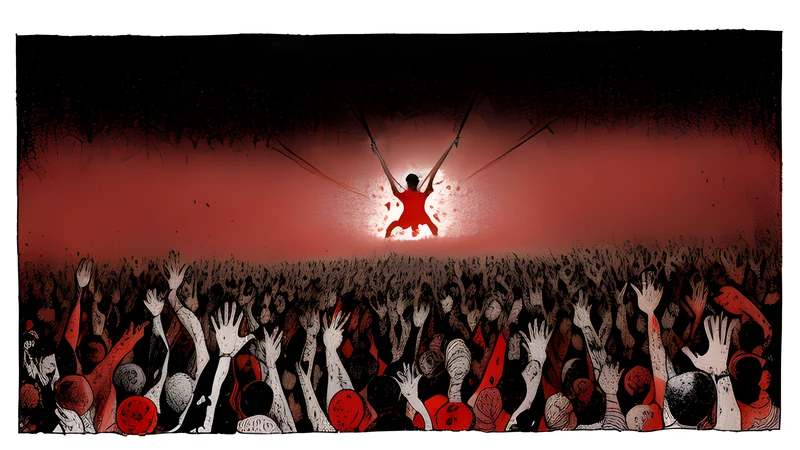
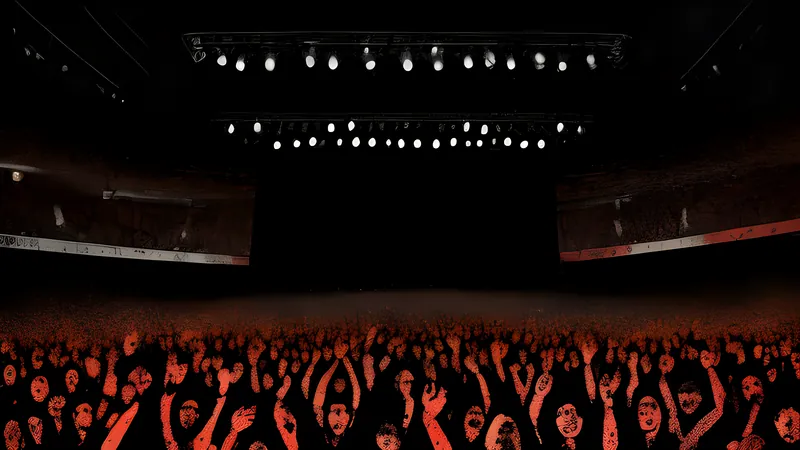
Live, Wardruna are closer to a ceremony than a concert. The staging is austere and elemental — natural materials, warm low light, the musicians arranged like celebrants rather than a rock band. Selvik has a commanding, unhurried presence, and the music’s slow build works powerfully in a room, the drones and chants accumulating into something genuinely transporting. There is no spectacle in the pyrotechnic sense; the effect comes entirely from sound, texture and a kind of collective attention that most gigs never achieve.
I find these shows fascinating precisely because they run against everything modern live culture optimises for. No big screens, no hits, no sing-along choruses, no rush. Instead a large audience sits in near silence and lets slow, ancient-sounding music work on them for two hours, and comes out visibly moved. It is a reminder that the appetite for ritual and depth did not disappear with the modern world; it just went looking for somewhere to land.
The scholarship underneath
One reason Wardruna commands more respect than the average “ancient music” project is that Selvik does the homework and shows it. He has lectured on Norse music and runology, worked with academics, and been consistently transparent about the limits of what can be known — there is no surviving notation for Viking-age music, so any reconstruction is partly educated guesswork about scales, techniques and the likely function of the instruments in ritual and daily life. Rather than paper over that uncertainty with fantasy, Selvik foregrounds it, treating the gaps as space for informed imagination rather than pretending to a false authenticity. The result is music that satisfies both the casual listener chasing atmosphere and the more demanding one who wants to know the reconstruction rests on something real. That double appeal — accessible surface, serious foundation — is rare, and it is a big part of why Wardruna has lasted where flimsier “Viking music” acts have not.
The timing helped, too. Wardruna’s rise coincided with a broad cultural moment of interest in the Viking age — prestige television, video games, a wave of popular history — that primed a global audience to be curious about Norse heritage. Where a lot of that pop-culture Viking material is shallow spectacle, Wardruna offered the real thing underneath the fascination, and listeners who came for the aesthetic stayed for the substance. The project rode a wave of interest it had partly helped create, and it filled the space that shallower entertainments left empty: people who wanted more than costume drama found, in Wardruna, a serious artistic engagement with the past that rewarded the deeper curiosity the wider trend had awakened.
Why it resonates
The deeper question is why Wardruna has struck such a nerve, and I think the answer is about what the project offers that ordinary life does not. It provides a connection — real or imagined, and Selvik is honest that reconstruction always involves imagination — to a pre-industrial past, to landscape and season and the old cycles, to a spirituality that predates the modern religions. For a large and growing number of people, that connection answers a genuine longing, and Wardruna deliver it with enough craft and integrity that it never feels like fantasy cosplay.
Selvik himself is careful about this. He does not claim to have recovered “authentic” Viking music, which is impossible; he presents Wardruna as an informed, respectful reconstruction and interpretation, grounded in scholarship but honest about its creative choices. That intellectual honesty is a large part of why the project earns its seriousness. He is also plain that Wardruna is a modern band making art for modern listeners, whatever its ancient materials, and that clarity keeps the project on the right side of a line a lot of heritage music stumbles over. It also connects Wardruna to the broader Nordic culture of engaging with the old ways — the folk gatherings and reconstructed Viking markets that keep the pre-Christian past alive as living practice rather than museum display.
Two decades on, a former black-metal drummer has built one of the most distinctive musical projects in Europe out of horsehair-strung lyres and thousand-year-old poems, and filled the largest rooms in the world with it. That is a genuine phenomenon, and it says as much about what modern audiences are missing as about the old world Wardruna so patiently reconstruct.
Related Content