Walpurgis Night: How the North Burns Winter on the Last of April
Bonfires, student choirs and a borrowed English saint — the Nordic evening that shoves winter off the calendar and sings the spring in
Contents
The last night of April is when the North collectively decides it has had enough of winter and lights a fire about it. From Copenhagen you can practically hear it happening across the Sound — Sweden going up in bonfires, choirs bellowing the spring in, a whole student class deciding that thirty hours without sleep is a reasonable price for the end of the dark. This is Valborg, Walpurgis Night, and it is the loud cousin of the quiet Danish midsummer I grew up with. I want to tell you where it comes from, because the answer involves an English saint who never set foot up here and almost certainly never wanted a bonfire named after her.
A note on my seat at this one: as a Dane, Valborg isn’t strictly mine. Denmark keeps its big communal bonfire for Sankt Hans at midsummer and lets the last of April pass fairly quietly. But Copenhagen is a short bridge from Malmö and a train from Lund, the Sound is porous, and anyone who has spent a working life around Nordic fire nights knows the family resemblance on sight. So this is a local’s read on a neighbour’s festival — affectionate, from the record and from standing near enough to feel the heat.
The saint who lent her name and nothing else
Start with the name, because it is a genuine historical accident and a good one. Walpurgis Night is named for Saint Walburga, an eighth-century English missionary — a Devon-born nun, by tradition — who travelled to the Frankish Empire, in what is now Germany, to help Christianise it, and died there around 777 or 779. Her feast day sits on 25 February in the calendar, the anniversary of her death, but the date that stuck to her name is the one tied to her canonisation and the moving of her relics, which fell around the first of May.
So the eve of that day — the night of 30 April — became Walpurgisnacht, Walburga’s Eve. And here is the accident: the saint’s night landed exactly on top of a much older pagan hinge in the year, the seam between winter and summer that the Celts called Beltane and the Germanic north marked with fire. A quiet English nun’s name got welded onto the wildest fire-and-fertility night on the calendar, purely because the dates collided. She is the patron of the evening in name only. The evening itself is far older and far less pious than she was.
Witches on the Brocken, bonfires in the fields
In the German telling, Walpurgisnacht is the witches’ sabbath. The old folklore has witches flying to the Brocken — the highest peak of the Harz mountains — to meet the Devil and revel through the last night before May drove them off. Goethe put the scene into Faust, which fixed it in the European imagination for good, and the Harz towns still lean hard into the witch imagery every 30 April. The fires there began partly as a way to frighten those spirits off: light the dark, and whatever the dark was hiding has to go.
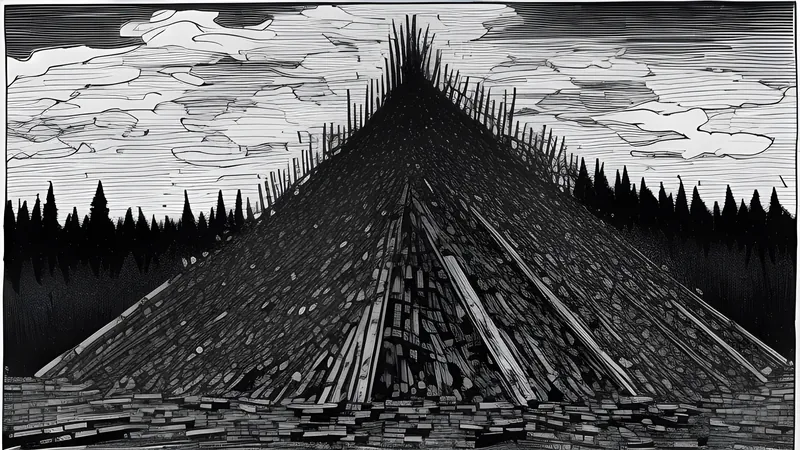
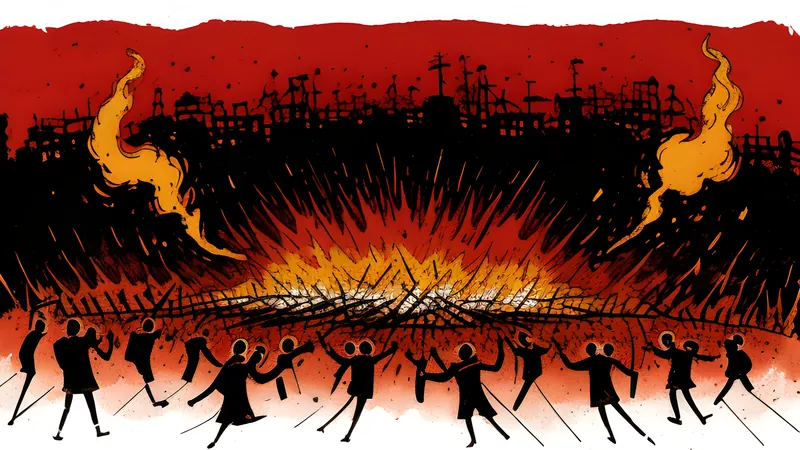
The Nordic version kept the fire and quietly let most of the witches go. In Sweden the bonfire tradition is younger than people assume — the custom of lighting big fires on Valborgsmässoafton spread through the country in the late nineteenth century, carried in part by German immigrants in the province of Uppland, layered on top of older spring practices of burning off the dead grass and scaring predators away from the newly grazing livestock. Practical fire and festive fire, braided together, until nobody bothered separating the strands. Now the majbrasa — the May-fire — is the fixed centre of the evening across Sweden, with parts of Finland and the wider region keeping their own versions.
Uppsala and Lund: the student engine
If you want to see Valborg at full volume, you go to the university towns, and this is where the festival becomes something I recognise in my bones — a scene, run by the people inside it, at a scale that shouldn’t be possible on volunteer energy alone.
Uppsala does the biggest version. Valborg there is a full-day siege that starts before dawn — the river-rafting stunts, the champagne breakfasts, the ceremonial donning of the white student caps at the exact moment spring is declared, and by afternoon something like a hundred and twenty thousand people packed into the Ekonomikum park. It is one of the largest single gatherings in Sweden, run essentially by and for students, and it has the same self-organising ferocity as any great festival crowd I’ve ever stood in. Lund runs its own huge version, with tens of thousands gathering in the Stadsparken for the bonfire, the spring speeches and the choirs. These are the two poles, and the whole country tilts toward them on the day.
The sound of it: every choir in the country, at once
Here is the detail that wins me over completely, as someone whose entire beat is what happens when a lot of people make noise in the same place at the same time. On Valborg, virtually every choir in Sweden is working. Male-voice choirs, student choirs, community choirs — they gather at the fires at dusk and sing the spring songs, the old repertoire of hymns to the returning light and the budding green and the brighter year ahead. There is a specific canon of these songs and everyone of a certain background knows them cold.
Think about what that means acoustically. On one evening, across an entire country, thousands of separate fires each have a choir standing in front of them singing more or less the same songs into the dark, and the smoke and the harmony go up together. It is the gentlest possible version of the thing I chase at Copenhell — a crowd converted into one instrument — and it is arguably more impressive, because nobody sold a ticket and there is no stage. Just a field, a fire, and everyone who can hold a tune deciding that winter is over and singing until it agrees.
There is a tradition too of the majstång and the greenery, of birch branches cut and brought indoors, of the young going out to gather the first spring foliage — the older fertility layer under the fire, the same impulse that puts a Green Man at the centre of the Scottish rite. In some places the evening rolls straight into the First of May, the labour holiday, so that the fire night and the workers’ morning sit back to back: burn the winter at dusk, march for the future at dawn. It gives the whole turn of the calendar a two-part rhythm, the wild release followed by the clear-eyed morning after, and I find something very Nordic in that pairing — the licensed chaos and the sober reckoning kept deliberately close together.
Fire at the seam of the year
What Valborg is doing, under the saint’s borrowed name and the student chaos and the choral harmony, is the oldest communal move there is: standing at the exact hinge between the dark half of the year and the light half, and marking it with fire so your body can’t miss the turn. The bonfire clears the winter — literally, the dead grass and the old wood, and symbolically, the long cold and whatever it was hiding. The songs call the summer in. The crowd underwrites the whole transaction together.
It is the same fire lit on the same night on Calton Hill in Edinburgh for Beltane, where a May Queen and a Green Man drum the summer up a floodlit hill. It is a cousin of what Valencia does to its giant sculptures in March, burning a year of work to clear the road to spring. And for me it is the April rehearsal for the real Danish event two months on, when Denmark finally lights its own fires at Sankt Hans and midsummer proper arrives. The North has two great fire nights, one at each end of the light, and Valborg is the one that opens the account.
The neighbour’s fire
I’ll be honest about the pull of it. There is a specific envy a Dane can feel toward the Swedish Valborg — we get the beautiful, melancholic Sankt Hans, the straw witch and the slow midsummer dusk, but they get this reckless, singing, all-day explosion of relief at the far more desperate end of the year, when the winter has actually been long enough to make its ending feel earned. Late April in the North still has cold in it. That is the point. You don’t celebrate the end of winter in comfortable weather; you celebrate it while you can still remember why you were afraid, and Valborg keeps that memory close.
So if you find yourself anywhere near a Swedish university town on the last night of April, go stand near a fire. Let a choir you can’t understand sing the spring in over your head. It is the North doing the most human thing it knows how to do — refusing to let the turn of the year pass unmarked, and burning a fire big enough that even winter has to admit it’s beaten. The saint gets her name on it. The fire is all ours.
Related Content