Wacken: How a Village of 1,800 Hosts 85,000 Metalheads
A farming hamlet in Schleswig-Holstein becomes the loudest town in Germany for one week a year
Contents
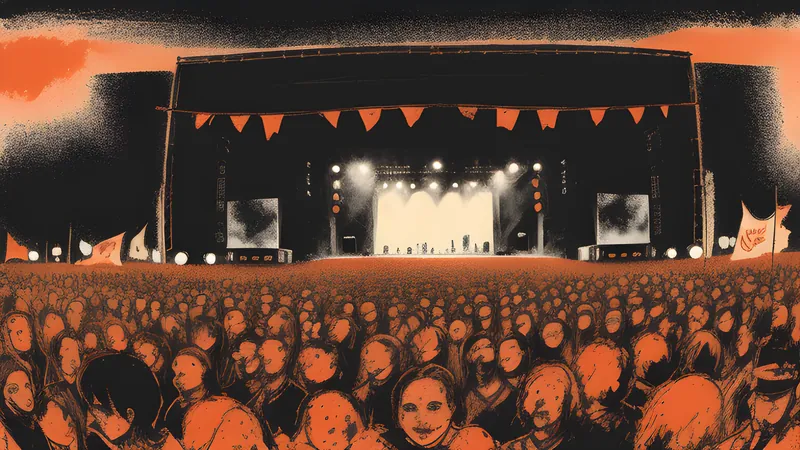
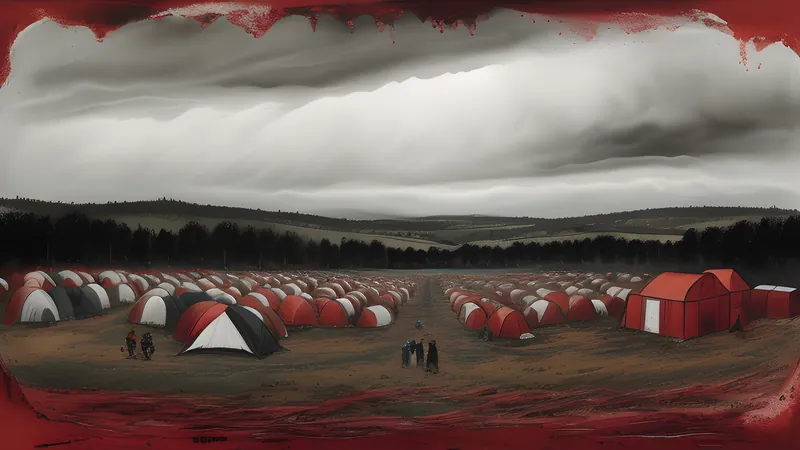
Look at Wacken on a map and you would drive straight past it. It sits in the flat, wind-scoured farmland of Schleswig-Holstein, up near the Danish border where the land goes green and empty and the horizon is broken only by wind turbines and the occasional church spire. Roughly 1,800 people live there. There is a church, a fire station, a couple of farms, the kind of place where the biggest weekly event is the tractor going past. For fifty-one weeks of the year it is one of the quietest addresses in Germany. Then, on the first weekend of August, around 85,000 people wearing black turn up, and Wacken briefly becomes one of the largest settlements in the state — a city of denim, leather and enormous amplifiers that assembles itself in a cow pasture and then vanishes again ten days later, leaving the fields to recover.
I have made the pilgrimage north from Copenhagen for it, and I will tell you now that the thing everyone repeats about Wacken is true: it is less a festival than a temporary nation, one with its own weather system, its own economy, and — famously, gloriously — its own mud.
The site is a farm, and that matters
Most big festivals happen on purpose-built or semi-permanent grounds. Wacken happens on working farmland, and the whole event is bent around that fact. The festival footprint has swollen over the years to more than 240 hectares, stitched together with something like forty-five kilometres of fencing, and a large chunk of that is land that grows crops and grazes cattle the rest of the year. Local farmers lease their fields to the festival, and a good number of them have become part of the machinery of the thing — driving tractors that haul bogged-down cars out of the campsites, letting the infrastructure creep across their property, generally turning the annual invasion into a source of income rather than a nuisance.
That relationship is the quiet miracle underneath the whole spectacle. A village of 1,800 does not, on its own, have the sewage, water, power or road capacity to service a population that momentarily rivals a mid-sized town. So the festival builds a city every summer: kilometres of temporary water and power lines, a small army of portable toilets, field kitchens, medical tents, its own internal bus and shuttle system, and a road-management operation that turns the surrounding lanes into one-way arteries feeding traffic in and out. It is genuinely one of the more impressive logistical undertakings in European live music, and almost none of it is visible from the stage. You are watching a band; you are also standing on top of a temporary utility grid laid over a beet field.
The land being farmland is also why the site drains the way it does — which is to say, slowly, and into your boots. The soil up there is heavy and holds water. Give it a wet August and the campgrounds and walkways turn to the thick, sucking clay-brown mud that has become part of the festival’s identity. The 2023 edition was a proper example: relentless rain waterlogged the grounds so badly that organisers had to restrict fresh arrivals while thousands of cars sat stuck, and the whole place turned into the churned brown swamp that veterans half-expect and, in some perverse way, half-want. Wacken mud is public-record lore at this point. There are people who own dedicated Wacken wellingtons.
The model: two mates, a gravel pit, and thirty-odd years
The origin story is almost absurdly humble. Two locals-adjacent metal fans, Thomas Jensen and Holger Hübner, cooked up the idea in 1989, reportedly over drinks in Wacken itself, and put on the first festival on 24 and 25 August 1990 in a gravel pit on the edge of the village. Roughly 800 people came. Six bands, most of them regional, played to a field of friends. The whole point was to throw a party with mates and the music they loved, and for a while it stayed exactly that scruffy and local.
What happened next is the story of a hobby metastasising into an institution. Year by year the crowd grew, the site expanded off the gravel pit and into the surrounding fields, and the booking got more ambitious until Wacken was pulling the genre’s heaviest names and selling out reliably. The founders set up a promotions company in 1990 to run it, later restructured as International Concert Service, and around it grew a small metal empire — a record label, a mail-order shop, the lot. The two of them are still the faces of the festival, which is a rare and reassuring thing at this scale.
The scale, though, has drawn the money in. In 2019 ICS took investment from Superstruct Entertainment, a festival-buying group assembled with private-equity backing, which folded Wacken into a portfolio alongside a stack of other big European events. The founders kept running the day-to-day, and to the average punter in the field nothing obvious changed. But it is worth being clear-eyed about the arc: a party thrown by two blokes in a gravel pit is now a valuable asset in an investment portfolio, and the wider trend of private capital hoovering up European festivals is real and continuing. Wacken has kept its soul better than most — the branding still leans hard on horns-up authenticity, and the crowd would smell a sell-out instantly — but the ownership sits a long way from the beer tent now.
The crowd is the point
Here is what surprises first-timers: Wacken is one of the friendliest places you will ever stand in a crowd of 85,000. Metal’s outward costume — the studs, the grimly illustrated t-shirts, the corpse-paint, the sheer volume — reads as menacing to outsiders and is close to the opposite in practice. The tribe that assembles here comes from more than eighty countries, skews heavily toward the polite-and-delighted end of humanity, and treats the whole thing as a family reunion for people who happen to like their music at brain-rattling volume.
You see it in the small stuff. Strangers hauling each other’s cars out of the mud. Circle pits that open, do their violent business, and then stop dead so everyone can pick up whoever fell. Middle-aged Germans who have come every year since the nineties camped next to Brazilians and Japanese fans who saved for two years to make the trip. The village itself has largely made peace with the arrangement — for a lot of Wacken’s residents the festival is a fixture, a source of local pride and local income, and you will see locals wandering the periphery having a look. There is a running gag, rooted in truth, that the festival occasionally partners with the village on daft ceremonial nonsense, and it lands because the affection between hamlet and horde is basically genuine.
The devotion is the other thing. Wacken sells out its tens of thousands of tickets astonishingly fast — recent years have gone in a matter of hours, with the 2023 allocation cleared in around five — and a huge share of those buyers commit before a single band is announced. They are not buying a lineup. They are buying the return trip. That is a level of brand loyalty most festivals would trade a headliner for, and it is why Wacken can afford to be a little less panicked about chasing the year’s hottest booking than its rivals.
Surviving it
Do not underestimate the endurance sport wrapped around the music. Getting there means flying into Hamburg and grinding north, or driving, and then queuing — the traffic operation is smooth by the standards of moving a small city onto farmland, which still means patience. You camp, essentially always; the accommodation for miles around is booked out and the campsites are the festival’s true living quarters, a sprawling tent-and-caravan metropolis with its own culture, its own micro-neighbourhoods, and its own weather-dependent misery index.
Pack for all four seasons because you will get them. Bring boots you are prepared to sacrifice to the mud. Budget properly: the ticket is the cheap part once you have added travel, camping kit, festival-priced food and the inevitable emergency poncho. The food has improved from the old sausage-and-chips monoculture into a decent street-food spread, though you are still paying festival tax on all of it. And accept that sleep is theoretical — the campsites do not really go quiet, and part of the Wacken bargain is surrendering to a week of being permanently slightly wrecked in the entirely legal sense.
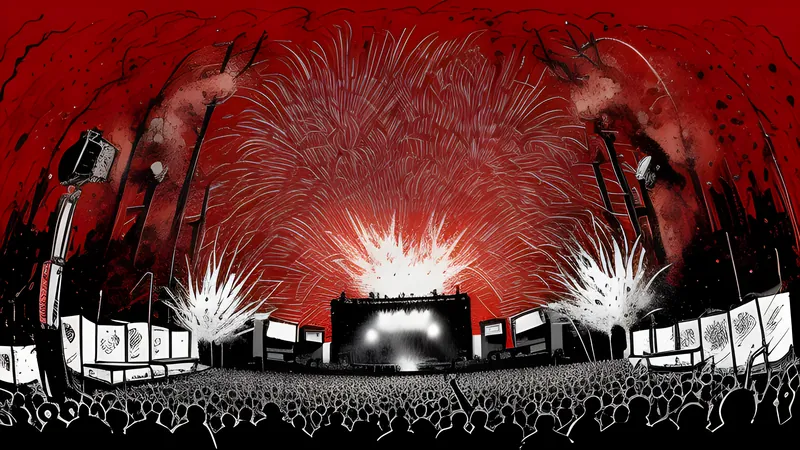
The reward is a main-stage experience that few places on earth can match: two enormous stages running back to back so the music barely stops, a couple of hundred bands across the days, and the peculiar euphoria of a genuinely vast crowd that has travelled from everywhere to be exactly here. When the big pyro-heavy headliners hit at night, with the flat Schleswig-Holstein sky going dark behind the stage and 85,000 people roaring back, it is one of the great sights in live music.
Who it’s for, and when to skip it
Wacken is transcendent if you are a metal fan who wants the definitive version of the thing — the biggest, oldest, most devoted gathering of the tribe, on the ground where the whole modern festival culture of the genre was more or less invented. Go once in your life minimum. If you want to trace the family tree of Europe’s big summer festivals, it sits near the head of the table alongside Copenhell, the harbourside metal blowout over in Copenhagen that shares Wacken’s tribe and much of its temper. And it is worth measuring against Roskilde, the giant Danish non-profit down the road: a very different beast in its music and its charity model, but the other pole of what a mega-festival on farmland can be.
Skip it, or at least think twice, if mud and mass camping and days of no sleep sound like punishment rather than adventure — Wacken is a physical event, and it does not pretend otherwise. Skip it if you need a curated boutique experience with short queues and a soft bed; that is not the deal, and the people who love it love it partly because it is hard. And skip a given year with clear eyes if the forecast is grim, unless you have made your peace with the wellingtons.
But if you can take the farmland, the weather and the endurance, there is nothing else quite like standing in a cow pasture in the far north of Germany while a village of 1,800 hosts the loudest town in the country, and everyone around you — from eighty different countries, in the same battered black t-shirts — is exactly where they most want to be.
Related Content