Vanguard Festival: The Danish Hardcore Weekend
A small-room gathering that treats hardcore as a community rather than a genre
Contents
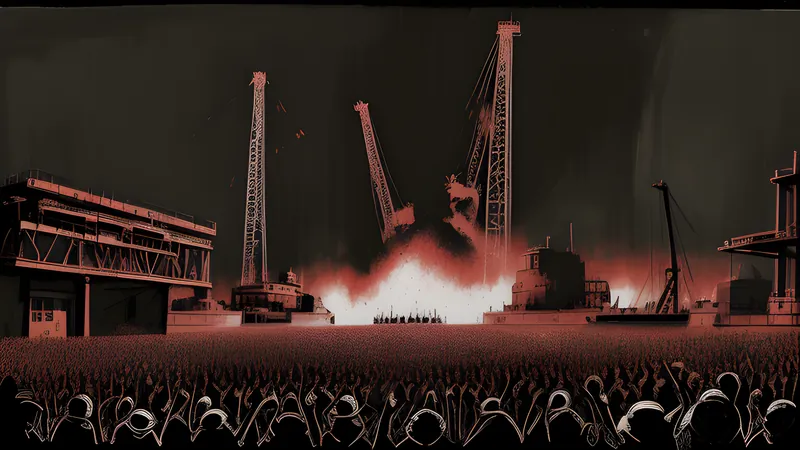
The best measurement of a hardcore show is the distance between the singer and the floor, and at a proper Danish hardcore weekend that distance is roughly zero. There is no barrier, no photo pit, no security cordon holding the front row back a polite two metres. The stage, if there is one, is a foot high, and the microphone spends as much time in the crowd’s hands as in the vocalist’s. This is the physics that Vanguard Festival is built around, and understanding it is the whole point.
Vanguard is Denmark’s hardcore weekend, a gathering that concentrates the year’s worth of scattered basement shows into a single intense stretch. It exists in the tradition of the community-run genre festival, the kind of event that a scene organises for itself because no promoter with a spreadsheet would ever green-light it. Hardcore has always worked this way, from its American roots through its European mutations, and Copenhagen’s version carries the same DNA: booked by insiders, priced for the actually-broke, and staffed by the same people who play in half the bands.
What hardcore actually is here
Outsiders flatten hardcore into “fast angry punk,” and that misses almost everything that matters. Hardcore is a set of values wearing music as a uniform. It came out of early-1980s American punk as a stripped, accelerated, working-class response, and over four decades it splintered into a family of subgenres, metallic hardcore, beatdown, youth crew, powerviolence, screamo, each with its own rules of dress, dance and allegiance. What holds the family together is a shared insistence that the crowd and the band are the same thing, that the show is a participatory ritual rather than a performance you watch.
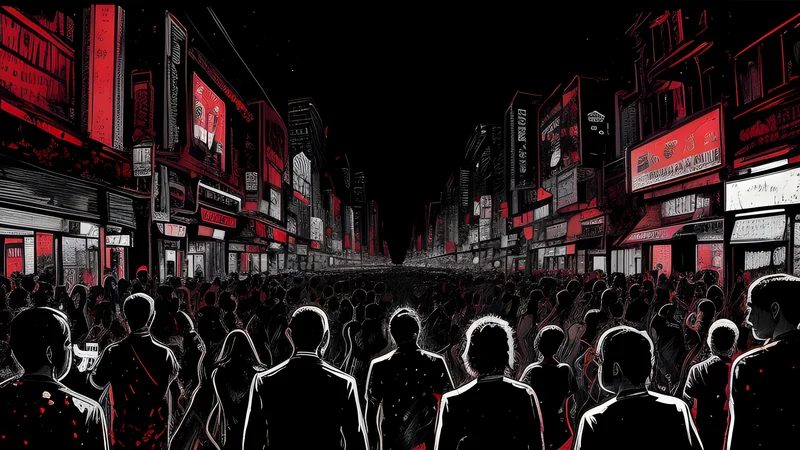
That is why the small room is hardcore’s ideal habitat rather than a compromise. A stadium kills the form because it reintroduces the distance the music exists to abolish. Copenhagen’s hardcore has grown up in exactly the right-sized rooms, the back spaces of Loppen in Christiania and the sweat-slick floor of Stengade in Nørrebro, venues where a hundred and fifty committed people feels like a riot and where the band can look every single face in the eye. Vanguard takes that home-turf intimacy and stretches it across a full weekend.
A lineage worth knowing
Copenhagen did not invent hardcore, and it did contribute a chapter that people in the know still cite. The early-2000s wave of Danish hardcore punk produced bands whose reputation travelled far past the country’s borders. Amdi Petersens Armé became a genuine international reference point for a raw, fast, politically charged strain of the form, the sort of band that American and European crews name-checked as proof that Scandinavia was producing something vital. Around them ran a whole ecosystem, groups like No Hope for the Kids and Gorilla Angreb, a Copenhagen scene that briefly became one of the most respected in Europe for this specific, uncompromising sound.
That history matters because a festival like Vanguard inherits it. A weekend of Danish hardcore in the 2020s is not starting from nothing; it stands on twenty years of the city taking this music seriously, of records that circulated worldwide and bands that toured hard enough to put Copenhagen on the map for a generation of overseas fans. The teenagers in the pit may not know those names, and the older heads running the distro tables absolutely do, and that continuity is what separates a real scene from a passing trend.
The Danish scene it draws from
Denmark punches hard for its size, and the hardcore and extreme-music ecosystem here is deep enough to sustain a festival without importing its entire bill. The country’s flag-bearers cross easily between hardcore and metal: Hexis, Copenhagen’s blackened-hardcore export, have spent years touring Europe relentlessly and building the kind of international respect that draws foreign eyes back to the Danish scene. On the death-metal end, a band like Baest shows the same work ethic, the sense that a small country produces bands who tour like their lives depend on it because, financially, they more or less do.
That touring-machine ethic is the secret ingredient. Danish extreme bands cannot rely on a big domestic market, so they build their futures on the road, and a festival like Vanguard becomes a home fixture in a calendar otherwise spent in vans crossing Germany. When those bands play a Copenhagen hardcore weekend they are playing for the people who saw them in a basement three years earlier, and that shared history charges the room in a way a neutral festival crowd never can. The weekend functions as a reunion as much as a gig, a moment when a scattered, van-dwelling community lands in the same city at the same time.
The rules of the room
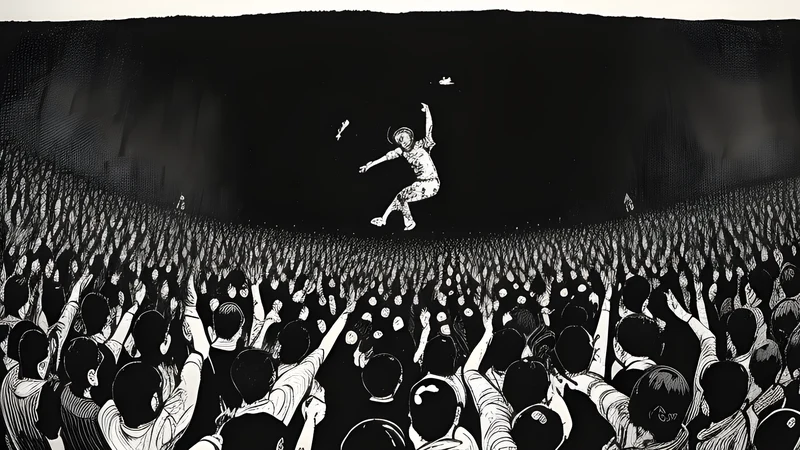
Hardcore has an etiquette, and it is stricter than the chaos suggests. The pit is violent and it is also governed, and the ungoverned violence gets shut down fast by the regulars. Someone goes down, the pit stops and picks them up. A crowd-killer throwing wild fists at people who did not sign up gets a word, then a shove, then an ejection. The stage dives look like anarchy and run on a tight social contract, that you launch yourself trusting the crowd will catch you and that you will catch the next person in turn. I have written before about how the mosh pit actually works, and hardcore is where those unwritten rules are enforced most seriously, because the room is small enough that everyone can see who is breaking them.
Mic grabs are the clearest expression of the form’s values. The vocalist holds the microphone out over the front row and the crowd takes over the chorus, dozens of voices shouting the words back, and for a few seconds the distinction between band and audience simply dissolves. It looks shambolic and it is precisely the intended outcome, the physical proof that this music belongs to everyone in the room equally. A hardcore band that guards its microphone has missed the entire point.
The character of the booking
A hardcore festival lives or dies on how it curates. Get it wrong and you have a random assortment of loud bands; get it right and each night tells a story, moving from the youth-crew openers through the metallic-hardcore middle to the crushing beatdown headliners, with the tempo and the tension building across the evening. The best of these weekends are booked by people with encyclopaedic taste and zero commercial pressure, which lets them slot a divisive powerviolence band next to a melodic act and trust the crowd to keep up.
The international guests matter here too. A Danish hardcore weekend will typically pull in bands from Germany, Sweden, the Low Countries and further, the touring circuit that binds European hardcore into one big extended family. Those visiting bands raise the local bar and take the Copenhagen scene’s reputation home with them, and the exchange runs both ways year after year. It is a closed economy of mutual respect, and a festival is where the accounts get settled in person.
Why the weekend format matters
A single hardcore show is a great night. A weekend of them is a different thing, because it lets a scene take stock of itself. Across two or three days you get the veterans and the brand-new bands on the same bills, the fifteen-year-olds at their first show standing next to people who have been going since the 1990s, the international guests measuring themselves against the local heavyweights. That cross-generational mixing is how a scene reproduces itself, how the values get handed down, how a teenager learns that you pick people up in the pit because they watched someone do it for them.
It also does the unglamorous work of sustaining the infrastructure. Hardcore runs on volunteer labour, cheap door prices and mutual favours, and a festival concentrates enough energy and enough bodies to fund the distro tables, pay the touring bands something approaching petrol money, and remind everyone that the effort is worth it. The economics are brutal, the margins invisible, and the whole thing survives because the people running it treat it as a duty rather than a business. Vanguard is the Danish scene’s annual demonstration that it can still pull this off.
For the wider Copenhagen picture, hardcore sits alongside the city’s other loud subcultures as one node in a network, feeding the same venues and often the same crowds as the Danish death-metal standard-bearers and the electronic sprawl I keep bumping into at Strøm. The scenes overlap more than their tribal uniforms suggest, and the people who care about live music in this city tend to care across the whole map.
Should you go
If you have never been inside real hardcore, a weekend like this is the deep end and the best possible introduction, provided you arrive with the right posture. Respect the room. Learn the etiquette by watching before you throw yourself in. Pick people up. Buy a record from the band you liked, because that ten-euro note is the difference between them making the next tour and not. And leave the spectator’s mindset at the door, because hardcore gives nothing to people who stand at the back with their arms folded.
What you get in return is the most honest transaction in live music, a room full of people who organised this themselves, for themselves, at no profit, purely because the music matters to them. That sincerity is rare and getting rarer as everything else about live music gets swallowed by corporate scale. Vanguard is proof that the small, self-run, values-first model still works, and that Copenhagen still has a scene willing to do the unglamorous work of keeping it alive.
Related Content