Tuska: Helsinki's Midsummer Metal Ritual
How the most metal nation on earth throws a party in a former power plant
Contents
Finland has more metal bands per head of population than any country on earth, a statistic that has become a national in-joke and a genuine cultural fact. In a country of five and a half million people, heavy metal is not a subculture skulking at the edges; it is mainstream enough that a monster band won the Eurovision Song Contest for Finland and the president has been photographed at metal shows. Tuska is where that saturated national obsession gathers once a year, in the concrete yard of a decommissioned power plant in the middle of Helsinki, and its name is Finnish for pain.
I have never been to Tuska, and the reason is the calendar. It falls in late June, which is Roskilde weekend for me, and Roskilde is a fixture I do not break. But Finland’s metal culture is the one every Nordic music writer has to reckon with, because it is the strangest and most complete example of a whole country deciding that heavy music is simply its music. This is a read from the record — where Tuska came from, why the site suits it so perfectly, and what makes the Finnish scene the anomaly it is.
A festival called pain
Tuska began in 1998, a modest Helsinki metal gathering that grew steadily every year as the Finnish scene exploded around it. The name is a piece of dry Finnish humour — tuska means pain or agony, which tells you the crowd is not taking itself entirely seriously even while it takes the music very seriously indeed. That combination of grim aesthetic and self-aware wit is a very Finnish thing, and it runs all the way through the festival’s character.
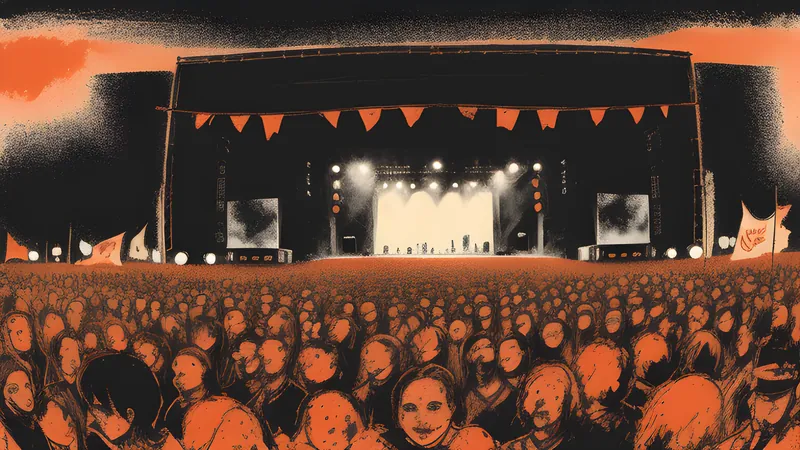
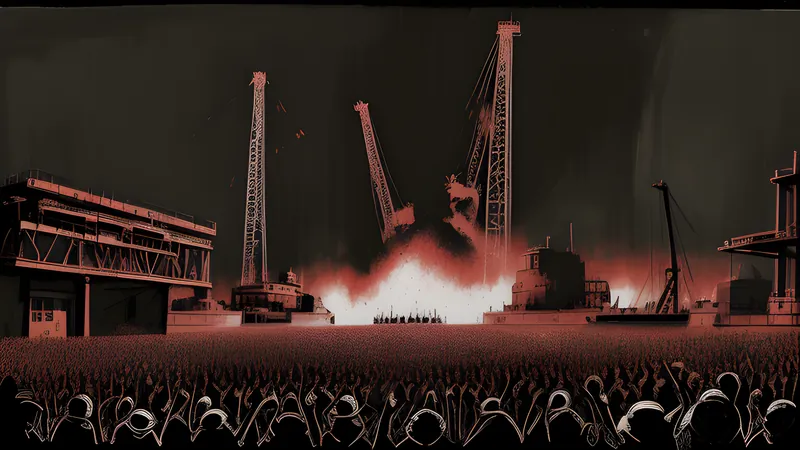
The event has moved around the city. From 2001 to 2010 it lived in Kaisaniemi park, a green space in the centre of Helsinki, which gave it an unusual urban-park intimacy. Since 2011 it has been held at Suvilahti, a former industrial power plant site in the Kalasatama area of the Sörnäinen district, and that move defined the modern festival. The raw concrete, the old industrial buildings, the gasometers and the hard urban surfaces suit metal in a way a grassy field never could. The venue looks like the music sounds.
Tuska has grown into one of the largest metal festivals in the Nordic region. Recent editions have drawn crowds in the region of 60,000 across three days, with the 2023 festival selling out at a record combined attendance of around 63,000. For an urban festival on a compact industrial site in a country of Finland’s size, those are remarkable numbers, and they reflect just how deep metal runs in the culture that surrounds it.
The most metal country on earth
To understand Tuska you have to understand the scene it grew out of, because Finland’s relationship with metal is genuinely without parallel. The country produced Nightwish, the symphonic-metal juggernaut that became one of the biggest metal bands in the world; Children of Bodom, the melodic-death-metal band whose late guitarist Alexi Laiho was a national guitar hero before his death in 2020; Amorphis, Stratovarius, Apocalyptica — the cello-metal quartet who started by playing Metallica covers on classical instruments — and HIM, whose “love metal” broke internationally. And in 2006, the monster-costumed hard-rock band Lordi won the Eurovision Song Contest for Finland, a result that turned a novelty act into a moment of national pride.
That density is not an accident. Finland has a state-supported music-education system, long dark winters that keep people indoors and practising, and a cultural comfort with melancholy that maps neatly onto metal’s emotional register. The melancholic streak in Finnish metal — the minor keys, the folk melodies, the sense of vast cold landscapes — is a real inheritance from the national temperament. Metal in Finland is not rebellion against the mainstream; it substantially is the mainstream.
Tuska is where all of that concentrates. It is the annual summit of a national obsession, and its bills lean heavily on the home scene alongside the international headliners, giving Finnish bands a hometown crowd that treats them as the stars they are within their borders.
Urban festival, Nordic model
What makes Tuska interesting from Copenhagen is that it is an urban festival, and that puts it in a small and specific category. Most of the great metal festivals are rural — a village, a field, a racetrack, a site you have to travel to and camp at. Tuska sits inside a capital city, walkable from the centre, reachable by tram, with people going home to their own beds at night. That changes the whole texture. There is no camping ordeal, no mud, no sense of a temporary city rising in a field. It is a metropolitan weekend, urban and civilised, and the crowd behaves accordingly.
That model has a Nordic cousin in the way Copenhell works back home — an industrial harbour site inside Copenhagen, reachable by metro, leaning on the same aesthetic of concrete and cranes and post-industrial grit. The Nordic capitals have worked out that you can put a serious metal festival on a decommissioned industrial site in the middle of the city and it will feel more authentic, not less. Suvilahti and Refshaleøen are two versions of the same good idea.
The difference is that Denmark and Finland have very different scenes underneath their festivals. Where Finland’s metal is symphonic, melodic and melancholic, the Danish loud scene runs harder and more punk at the edges — the difference I keep coming back to when I write about Denmark’s outsized metal export record. Two small Nordic countries, two festivals on old industrial ground, two quite different national sounds.
The long light and the short queues
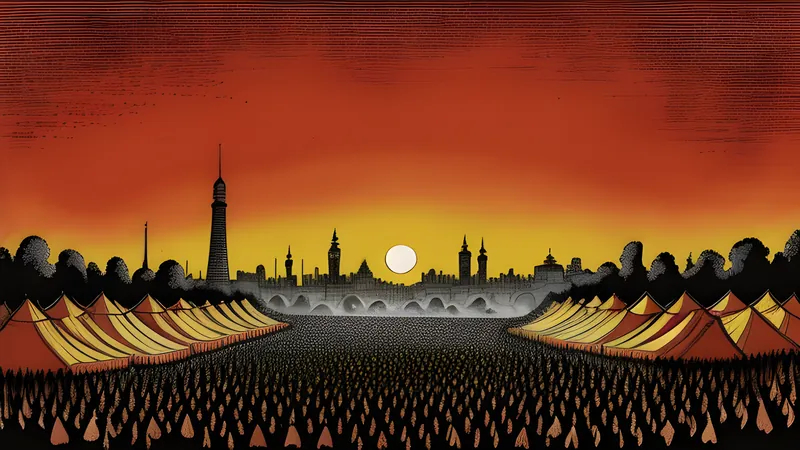
There is a practical charm to Tuska that is easy to overlook, and it comes from the Finnish summer itself. Late June in Helsinki means the white nights — the sun barely sets, the sky stays a pale luminous blue past midnight, and a festival held under that endless northern light has a strange, dreamlike quality that a festival in the dark never gets. You watch a band at eleven at night in what feels like late afternoon. The light does something to the experience, softening the industrial harshness of the site into something almost gentle.
Being an urban festival also solves problems the rural giants never escape. There is no camping to organise, no shuttle-bus misery, no long trek from a distant car park. You take the tram, you watch the bands, you walk to a bar in the city afterwards or go home to a real bed, and you come back the next day rested. For anyone who has done the full mud-and-tent ordeal of the big field festivals, the civilised metropolitan rhythm of Tuska is a revelation. It is proof that a serious metal festival does not have to punish you to feel authentic.
The compact site keeps the social density high, much like the harbour ground back home. Suvilahti is not vast, so the crowd stays concentrated, the stages are close, and the sense of a whole city’s metal population gathered in one industrial yard is intense. Finnish crowds have a reputation for being reserved until the music starts and then completely committed once it does — a quiet intensity that matches both the melancholic music and the national character. It is a very Nordic way to be at a festival, and I recognise it instantly from home.
The one I keep missing
Late June is the cruellest slot on my calendar. It is when Roskilde happens, and Roskilde is the festival I grew up with, so Tuska has stayed a place I know entirely through friends’ photographs and other people’s reviews. The Baltic is not a long hop — Helsinki is a cheap flight or an overnight ferry from Copenhagen — and every year I think about the version of the summer where I skip Roskilde, cross the sea, and finally stand in the concrete yard at Suvilahti while a Finnish crowd sings along to a band nobody outside the Nordics has heard of.
That overlap, again, is the structural truth of the European metal summer, and it is the thing behind my long grumble about why every festival now feels the same. The great festivals cluster in the same few weekends, so you commit to your region and let the others become rumours. Tuska’s defence against sameness is its country. No other festival sits inside a culture this saturated with metal, in a city this comfortable with it, on a site this perfectly suited to it.
The Finnish scene keeps renewing itself, too, which means Tuska never runs short of home-grown talent to platform. The state music schools keep producing technically formidable players, the long winters keep producing bands, and the culture keeps treating metal as a legitimate career rather than an adolescent phase. A festival sitting on top of a pipeline that healthy has an inbuilt advantage no amount of corporate booking can buy. One late June I will pay the price of missing Roskilde to see it, and I suspect I will understand Finland a great deal better afterwards.
Related Content