Turnstile: Hardcore's Crossover Moment
How a Baltimore hardcore band ended up nominated for three Grammys
Contents
Six months ago a hardcore band from Baltimore picked up three Grammy nominations in one sitting — Best Rock Performance, Best Rock Song and Best Metal Performance, all for songs off the same record. Hardcore does not get invited to that room. Turnstile got invited, showed up in bucket hats and trainers rather than suits, and by every account since have kept doing exactly what they were doing before anyone in Los Angeles noticed. That combination — mainstream recognition arriving without a corresponding change in the band — is the actual story.
A hardcore band that never sounded like hardcore was supposed to
Turnstile formed in Baltimore in 2010, out of the same East Coast hardcore circuit that produced a lot of tightly wound, aggressive, monochrome bands with a fairly fixed sonic rulebook: shouted vocals, breakdowns, songs under two minutes, riffs built for a room full of people throwing themselves at each other. Turnstile came up through that circuit and absorbed its physicality completely, but from early on they were writing songs that didn’t stay inside the rulebook. Grooves borrowed from funk and soul, melodic vocal hooks sung rather than shouted, synths and samples where a hardcore band traditionally leaves silence or noise. Their third album, Glow On, released in 2021, is where all of that finally cohered into something that critics outside the hardcore world could not ignore — it landed in the top thirty of the Billboard 200 and made several major outlets’ best-of-year lists, a genuinely unusual result for a band whose roots are entirely in a subculture most of the mainstream music press had never bothered covering.
Glow On is worth describing in some detail, because the record does something structurally clever rather than just softening the aggression. The heavy sections are still genuinely heavy — riffs and breakdowns that would work in any hardcore set, full-throated and physical. What changes is what surrounds them: a song can lurch out of a pit-ready breakdown into a shimmering, almost dream-pop chorus, then back again, with guest vocalists like Blood Orange turning up on a spacey ballad without the transition feeling like a stunt. The palette is wider than hardcore’s traditional black-and-white; the aggression is not diluted by the additions, it’s given more rooms to walk through.
The Grammy nominations, and what they actually mean
The three nominations, announced at the end of last year for the ceremony this past February, went to “Holiday” for Best Rock Performance and “Blackout” for both Best Rock Song and Best Metal Performance — the last of those categories notable because it put a hardcore-rooted band up against death metal and thrash acts using a completely different sonic vocabulary, and Turnstile’s own members have pointed out publicly how arbitrary the genre boxes are once you actually listen across them. None of the three nominations converted into a win, and that is beside the point. The nomination itself was the news: an awards body that has historically ignored hardcore entirely put a Baltimore DIY band’s name on the same ballot as Ozzy Osbourne and Ghost, in a year when Turnstile were still touring venues that would have been familiar to them a decade earlier.
What makes the recognition land differently than it might for another band is that Turnstile spent over a decade grinding through the unglamorous hardcore circuit before any of this happened — small rooms, shared bills, the touring-van economics familiar to every unsigned band on that scene. The Grammy nominations arrived after the slow way, not instead of it, and the band’s public reaction leaned toward bemused rather than triumphant, treating the whole thing as a strange honour rather than a validation they needed.
Arenas without losing the pit
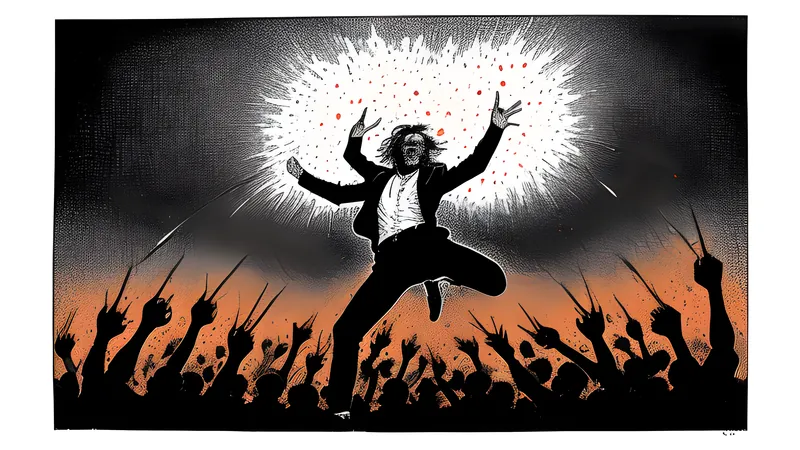
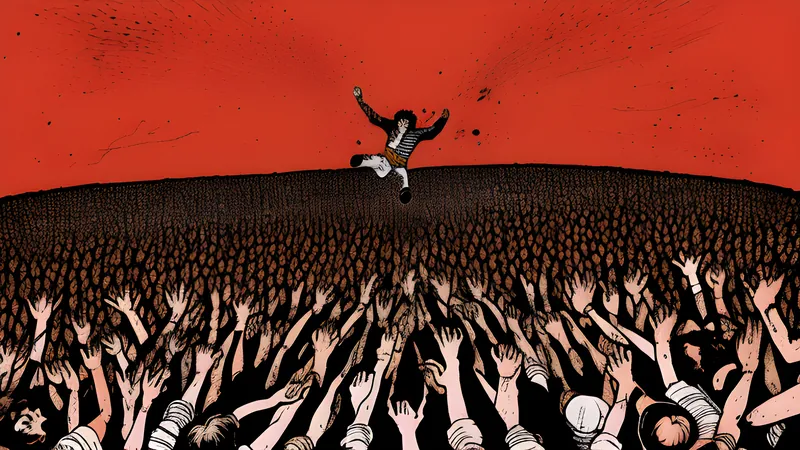
The clearest sign of how far Turnstile’s reach has extended is who they have shared stages with over the past couple of years: support slots on arena tours alongside pop-punk giants like Blink-182, playing to crowds many times the size of anything the hardcore circuit offers, without noticeably changing the show to suit the room. Frontman Brendan Yates still leads the same physical, stage-diving, crowd-surfing chaos in front of ten thousand people that the band built in basements, and by all accounts the newer, larger audiences have taken to the invitation to move rather than just watch. That’s the part worth paying attention to: Turnstile didn’t tone the show down to fit the bigger stage, they brought the smaller room’s energy up to arena scale and trusted it would translate. It has.
That expansion runs alongside genuine grumbling from parts of the hardcore scene that built the band in the first place — the familiar argument that mainstream approval always seems to cost a subculture something, that a band embraced by Grammy voters and Coachella bookers can’t still belong to the kids in the pit at a four-band bill in a converted warehouse. It’s a fair worry to raise and not one to wave away. But the evidence so far points the other direction: Turnstile’s live show remains built around the same collision of bodies that defines any good hardcore set, whether the room holds two hundred people or twenty thousand, and the band has kept turning up for smaller hardcore bills between the bigger tours rather than abandoning the circuit that made them.
Why hardcore, and why now
Hardcore has had crossover moments before without ever quite breaking through to this degree. Refused made a record in 1998, The Shape of Punk to Come, that critics now treat as one of the most influential albums in the genre’s history, and it barely sold at the time — the band split up before anyone noticed, and the influence arrived a decade late, secondhand, through other bands who’d absorbed the ideas. Converge built a defining discography across three decades of total critical respect within heavy music without ever crossing into Grammy territory or arena support slots. Turnstile are the first band from this lineage to get both things at once — the critical respect and the mainstream machinery actually turning up to notice — inside a normal touring cycle rather than a decade-late rediscovery.
Part of the explanation is timing: streaming and short-form video have genuinely widened what gets discovered outside a genre’s usual channels, the same mechanism pulling other unlikely heavy acts into wider view over the past couple of years. But timing alone doesn’t write songs this melodically generous while keeping the breakdowns this heavy. Turnstile did the harder work first, spending a decade inside hardcore’s actual discipline before anyone outside was watching, and the current moment is what happens when a band that patient finally gets a wider hearing.
A mainstage that used to be unthinkable
The clearest single image of how far this has travelled is Turnstile playing Coachella in 2022, a festival built for pop headliners and streaming-era stars, on a mainstage slot that hardcore bands simply do not get offered. It wasn’t a novelty booking either — by most accounts it was one of the better-reviewed sets of that weekend, stage-divers and all, in front of a crowd that had mostly never been near a hardcore show in its life. Coachella has flirted with heavier bookings before without much follow-through; Turnstile’s slot felt different because the band treated it as just another gig rather than a chance to soften anything for the unfamiliar crowd.
Part of what makes that translation work is visual. Hardcore has traditionally dressed itself in black and grey, band logos kept deliberately plain, album covers built around straight-faced toughness. Turnstile’s branding runs the other way — bright, almost playful colour schemes, artwork that looks more like a skate label than a hardcore imprint, merch that reads as fashion rather than uniform. That choice matters more than it might seem: it signals, before a note plays, that the band isn’t interested in guarding the genre’s old aesthetic rules any more than its musical ones, and it gives newer, younger fans an entry point that doesn’t require already knowing the codes.
The scene keeps the receipt
None of this required Turnstile to leave hardcore behind, and that’s the detail worth holding onto once the Grammy headlines fade. The band still plays the small rooms, still credits the scene that built them, still throws itself into the crowd rather than performing at a safe distance from it. Crossover stories in heavy music usually end with the audience feeling like something was traded away to get the wider attention, the scene’s original crowd left holding a receipt for a band that moved on without them.
Turnstile’s version, so far, reads the other way. Baltimore’s hardcore scene, a smaller and less celebrated node than Washington DC’s storied history a few miles down the road, gets to point at a band that grew up entirely inside it and made the biggest jump of the past decade without pretending the small rooms never happened. That’s a rarer outcome than the headlines about Grammy nominations and arena support slots suggest, and it’s the reason the story is worth more than one news cycle.
Related Content