Trädgår'n, Gothenburg: Rock in the Garden
A 19th-century pleasure garden that hosted ABBA's first gig and still books metal on a Tuesday
Contents
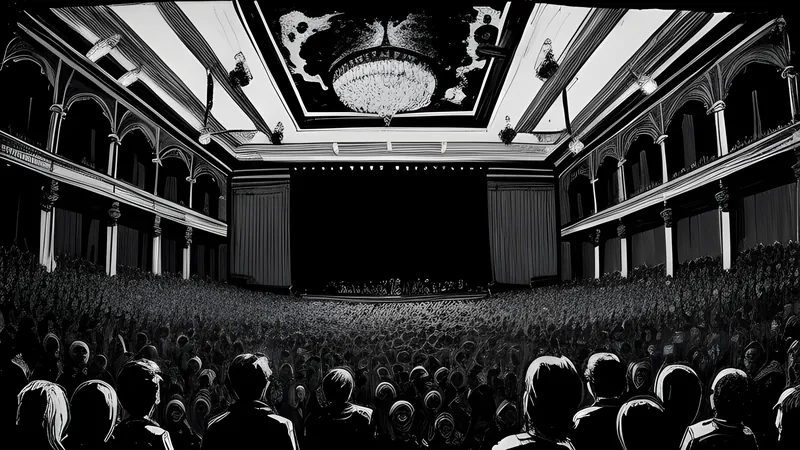
Gothenburg is a three-and-a-half-hour train ride up from Copenhagen, which by the standards of touring bands and travelling punters alike makes it practically a suburb. I go up often enough that I’ve stopped thinking of it as a trip abroad, and one address keeps recurring on the ticket stubs: Trädgår’n, a name that translates plainly as “the garden,” tucked into Kungsparken in the middle of the city. It is, on paper, an odd place to see a metal band. It is a restaurant. It is a nightclub. It does banqueting and corporate Christmas parties. It has been doing all of that, in one form or another, since 1858. And it also, on the right night, puts twelve hundred people in front of a touring rock act and turns the chandeliered old hall into something considerably louder than its interior decorating suggests.
The park it sits in
Kungsparken is Gothenburg’s oldest public park, a strip of green running along the old moat line that once marked the edge of the fortified city, and Trädgår’n occupies a genuinely handsome position within it — a proper stand-alone building rather than a room carved out of a converted warehouse or a repurposed cinema, which is the more usual origin story for a European rock venue. Walking up from Gothenburg Central takes about fifteen minutes on foot, past the canal and the tram lines, and the building announces itself the way 19th-century entertainment architecture always does: too much stucco, too many columns, a general air of having been built for people in evening dress rather than people in band T-shirts. That contrast — the building’s manners against the crowd’s — is half the fun of turning up for a gig there.
A pleasure garden older than the country’s rock scene
Trädgår’n opened in the spring of 1858 as a punch café and music garden — the Swedish 19th-century institution of an outdoor pleasure ground where the city’s better-off residents came to drink, promenade and listen to a band, the same tradition that gave Copenhagen its Tivoli and Stockholm its Djurgården pleasure grounds. A proper concert hall was added in 1887, cementing it as Gothenburg’s main venue for orchestral and popular music alike, the kind of civic entertainment palace every reasonably prosperous European city built one version of in that period.
The building’s luck ran out, briefly, in 1965, when a serious fire tore through it. Gothenburg rebuilt rather than demolished, and the timing turned out to matter more than anyone could have planned: the restored hall reopened just in time to host, in 1970, a young Swedish pop group performing what is generally reckoned to be their first-ever live show as a band — a group that would go on to call itself ABBA. It’s a detail I like precisely because it has nothing to do with the reason I go there. Nobody books a room hoping it will one day host the debut gig of the best-selling pop act to come out of the country; you just get lucky, and then you get to put it on the plaque.
What it actually is
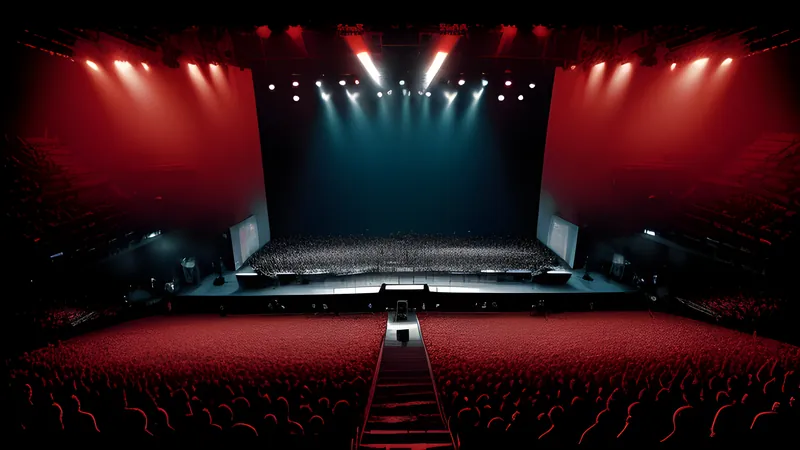
Calling Trädgår’n a “venue” undersells the operation. It’s better understood as an entertainment complex that happens to include a stage large enough for touring acts: a full restaurant, several nightclub rooms, and function suites that host everything from wedding receptions to corporate away-days, all under one roof in the middle of Kungsparken. The concert hall itself scales from a seated banquet configuration for a few hundred up to a standing capacity of around 1,200 for a full show, with the nightclub layout pushing slightly higher again on party nights. It is, in other words, built for flexibility rather than for any one genre, and that shows in the booking — one week a seated jazz evening, the next a metal band with a smoke machine and a wall of guitar cabinets, the week after that a corporate Christmas do with the same chandeliers looking down on an entirely different crowd.
That flexibility is exactly why it works as a mid-size rock stop. Gothenburg is Sweden’s second city and the birthplace of an entire sub-genre — the melodic death metal sound built by In Flames, At the Gates and Dark Tranquillity in the early 1990s, a scene I’ve written about at length in The Gothenburg Sound — but the city’s dedicated rock rooms have never quite matched the size of its metal reputation. Trädgår’n fills the gap for anything too big for a 500-cap club and not quite arena scale: a proper mid-tier stop between the small rooms and Scandinavium down the road, and for a touring act it’s often the only room in the city that makes financial sense for a thousand-ticket crowd.
Getting in and where to stand
The room is a converted ballroom, not a purpose-built rock hall, and it shows in the sightlines: there’s a raised gallery area that gives a decent elevated view if you arrive early enough to claim a rail spot, and a flat floor below that fills from the front and gets predictably tighter the later you leave it. Because the building runs restaurant and nightclub operations on the same nights as concerts, doors and bag policy can be stricter than a dedicated club, and cloakroom queues can eat into your set time if you cut it fine — worth checking the specific show’s entry rules rather than assuming standard festival-style ease of access, and worth turning up earlier than the room’s reputation as a laid-back Swedish night out might suggest.
Acoustically, a converted 19th-century entertainment hall is never going to sound like a room engineered from scratch for a modern PA rig, and Trädgår’n has the slightly boomy, chandelier-and-plasterwork character you’d expect from a space built for a string quartet and a dance floor, not a wall of Marshall stacks. It is not the room to chase a pristine mix in. It is the room to enjoy for what it is: a genuinely handsome, genuinely old space that has hosted popular music continuously since before recorded sound existed, still doing the job a century and a half later, chandeliers and all.
The bar, the food, and the other rooms
Because the building is fundamentally a hospitality operation with a concert hall attached, rather than the other way round, the food and drink options run well ahead of what you’d get at a standard rock club — a proper restaurant kitchen on site rather than a hatch selling reheated hot dogs, and a nightclub’s worth of bar stations rather than two harried staff pulling pints from a single tap. It’s an odd luxury to have at a metal show, being able to get an actual sit-down meal in the same building an hour before doors, and it’s part of why Trädgår’n tends to draw a slightly older, slightly more settled crowd than a dedicated punk or hardcore room would — people who want a proper night out around the gig, not just the gig itself.
Getting there from Copenhagen is straightforward enough that it barely counts as touring: the X2000 and regional services run up the coast in around three and a half hours, no border faff since both countries sit inside the Schengen area, and a day return is entirely realistic if you don’t mind a late one back. That ease of access is part of why Gothenburg shows keep turning up on my calendar rather than staying a once-a-decade novelty — it’s genuinely closer, door to door, than some Copenhagen suburbs are to central Copenhagen on a bad metro night.
The Gothenburg circuit, briefly
If you’re making the trip up from Copenhagen or down from Stockholm specifically for a gig, it’s worth knowing Trädgår’n sits in a small constellation of Swedish rooms worth comparing notes on. Slaktkyrkan in Stockholm is the newer, rawer industrial counterpart a few hours further north, a converted slaughterhouse hall with none of Trädgår’n’s chandeliers and all of the same commitment to putting bands in front of a Swedish crowd that takes its live music seriously. Between the two you get a decent read on how differently Sweden’s cities have solved the same problem: one preserved a Victorian pleasure garden and hung a PA in it, the other gutted an abattoir. Both work. That’s the thing about Swedish venue culture that took me a few trips to properly appreciate — there’s remarkably little orthodoxy about what a “correct” rock room should look like, so long as the sound comes out the front loud enough to matter.
For Gothenburg specifically, Trädgår’n’s real trick is that it never had to choose a lane. A restaurant, a nightclub and a rock venue coexisting under the same 1858 roof shouldn’t work as well as it does, but the city clearly decided a long time ago that entertainment is entertainment, and the room has simply kept adapting to whatever that word meant in a given decade — punch café, then orchestral hall, then ABBA’s launchpad, then whatever’s on this week. For a room with that much history, it wears it lightly. Most nights you’d never guess you were standing somewhere with a 160-year head start on the band on stage, right up until you notice the plasterwork over the bar and do the arithmetic.
Related Content