Tool at Royal Arena: Patience, Geometry, and 10,000 Held Breaths
The most demanding band in mainstream rock brought Fear Inoculum to Copenhagen — phones down, eyes up, and a drummer doing arithmetic at the speed of light
Contents
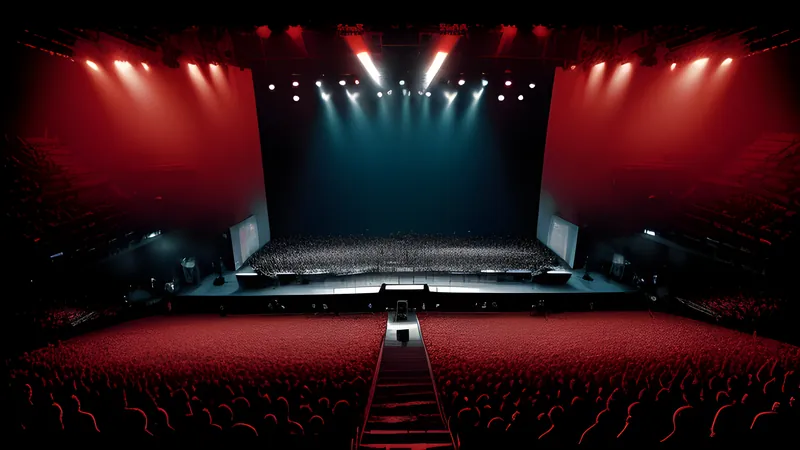
Most rock shows want you loud, moving and phone-in-hand from the first note. A Tool show wants the opposite: it asks you to put the phone away, stand relatively still, and concentrate, because the band is about to spend two hours doing something closer to architecture than entertainment. On 23 April 2022 the Fear Inoculum tour reached Copenhagen’s Royal Arena, and for one of the few times in that big modern room the dominant sound between songs was a kind of collective, focused hush where you would expect a roar. This is a piece about the strangest major band in rock, and about why an audience of ten thousand people willingly held its breath.
Thirteen years, then a monolith
To understand the weight the 2022 tour carried, you have to understand the wait behind it. Tool formed in Los Angeles in 1990 and built a reputation as the most patient, least prolific band at their level of fame — a group whose albums arrived years apart and whose fans learned to treat each one as an event. 10,000 Days came out in 2006. The follow-up, Fear Inoculum, did not arrive until 2019 — thirteen years, a gap so long it became a running joke and then a genuine cultural anticipation. When it finally landed it debuted at number one in America, displacing a pop juggernaut, which for a band of hour-long odd-metre epics is a genuinely absurd achievement.
The four men who make this music are specialists to the point of obsession. Maynard James Keenan sings, though “sings” undersells a voice that moves from a whisper to a controlled howl and back, and he stages himself deliberately at the rear of the platform, often in silhouette, refusing the frontman’s usual spot in the light. Adam Jones plays guitar and, crucially, designs the band’s entire visual world — the stop-motion videos, the stage projections, the imagery that has always been half the point. Justin Chancellor’s bass carries far more melodic weight than a metal bass usually does. And Danny Carey, behind an enormous kit hung with gongs and electronics, is one of the most technically formidable drummers alive, a man who plays polyrhythms and shifting time signatures as casually as most people breathe.
A band that makes you do arithmetic
Tool’s music is difficult on purpose, and the difficulty is the pleasure. Their songs move through unusual and shifting metres — the famous “Schism” alternates between counts in a way that makes the floor seem to tilt under you, and much of Lateralus is threaded with the Fibonacci sequence, the syllables of the title track literally following the number pattern. Live, this means you cannot simply nod along on autopilot. The pulse keeps reorganising itself, and your body has to keep recalculating where the beat is. It is one of the very few forms of loud music that engages the counting part of the brain as much as the moving part.
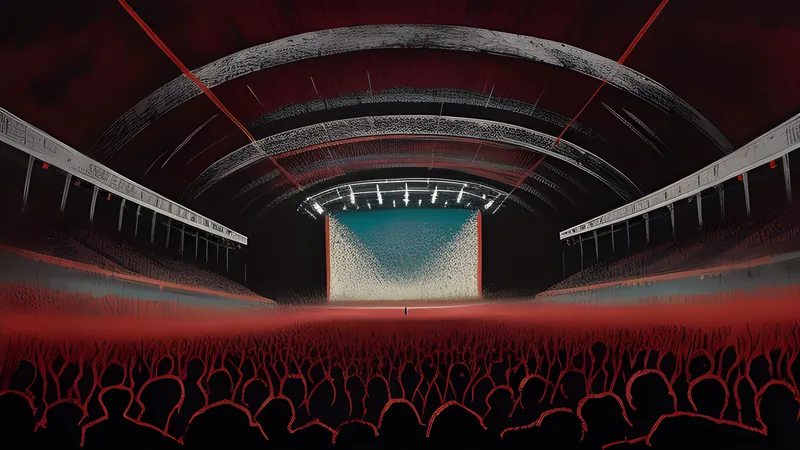
That demand shapes the crowd completely. A Tool audience is famously undemonstrative during the songs, standing rapt, watching Carey’s hands and following the visuals, saving its noise for the gaps. The Royal Arena floor on that April night behaved like a planetarium audience — heads tilted up at Jones’s projections, a stillness that would be unthinkable at almost any other metal show. This is the exact inverse of the ritual I spent a whole piece trying to explain in What the Mosh Pit Is Actually For, where the body does the understanding and the crowd becomes a single churning organism. At Tool, the understanding happens behind the eyes, and the crowd becomes a single held breath. Both are forms of total attention; they just point in opposite directions.
The phone thing, and why it matters
Tool famously ask audiences to keep their phones away for most of the show, relenting only near the end when the band invites everyone to film the finale. It is one of the more quietly radical decisions a big touring act can make, and at the Royal Arena it worked. Where most arena shows are now watched through a field of glowing rectangles — a phenomenon I find genuinely dispiriting and have grumbled about more than once — the Tool floor was dark and attentive, faces lit only by the stage, everyone actually there. The visuals Jones spends so much effort designing land far harder when the room isn’t competing with itself to document them. For two hours, a modern crowd was persuaded to simply watch, and the show was immeasurably better for it.
The reward for that attention is Carey’s drumming, which is the beating heart of any Tool concert. There is a passage, night to night, where the other three step back and Carey takes an extended solo — a display of independent-limb coordination and polyrhythmic control that reduces a room full of musicians to open-mouthed disbelief. It is the closest a rock show comes to watching a chess grandmaster and a decathlete at the same time, and it earns the awed silence Tool’s crowds give it. When the band locks back in around him, the release is enormous precisely because the tension was built so patiently.
The art is half the band
It would be a mistake to treat Tool as purely a musicians’ band, all technique and no vision, because the visual dimension is woven into everything they do. Adam Jones came out of the Hollywood special-effects world before the band, and that background shows in every frame the group puts on a screen — the unsettling stop-motion figures, the surreal anatomical imagery, the slow morphing geometry that fills the space behind the players. At the Royal Arena the screens were enormous and the projections precisely synced to the shifting metres, so that the geometry on the wall seemed to be counting the same impossible time the drums were. The band deliberately keep the stage lighting low and Maynard in shadow so that your eye is drawn upward and outward, into the imagery, rather than to a conventional rock-star focal point. It is a total sensory design, and it explains why the phones-away request matters so much: the show is engineered to be experienced whole, in the dark, with your full attention, and a field of glowing screens would sabotage the very thing the band spent years building. Few acts at this scale think this hard about how a room should actually feel from the floor, and fewer still trust the audience to meet them there.
Difficulty as a form of respect
I have a lot of time for Tool, and it comes down to this: they treat their audience as intelligent. In a live-music economy that increasingly assumes the crowd wants everything easy, instant and phone-ready, Tool build hour-long songs in shifting metres, hide their frontman in shadow, dim the arithmetic behind hypnotic visuals, and ask the room to rise to it. And the room does. That is a form of respect, and it is vanishingly rare at this scale. The band could write simpler songs and sell just as many tickets. They have decided instead that the reward for a decade of waiting should be music that actually repays study, and they stage it in a way that insists you pay attention.
That insistence needs a room that can support it, and the Royal Arena is one of the better ones for it — a modern indoor hall with the acoustic control to let a band this dynamic move from a whisper to a wall of sound without the whole thing turning to mud. Tool’s dynamics are extreme, the quiet passages genuinely quiet, and a room with poor sound would flatten them into nothing. The Royal Arena held the detail, which is the whole game with a band whose quietest moments matter as much as their loudest.
The Copenhagen appetite for the difficult
It says something good about Copenhagen that a band this demanding fills a room this size here. The city returned the compliment two years later, when Tool headlined Copenhell out on the harbour in 2024 — the same uncompromising, cerebral, phones-down proposition transplanted to a festival field where the crowd would normally be at its most physical. That a Danish festival built for the loud and the visceral would put a band of shifting-metre epics at the top of the bill tells you the audience here has genuine range, an appetite for the difficult alongside the brutal.
You leave a Tool show altered in a way that is hard to describe — recalibrated rather than wrung out the way a mosh leaves you, your sense of rhythm slightly rearranged, still hearing shifting metres in the traffic on the way home. The Fear Inoculum tour that reached the Royal Arena in April 2022 was the culmination of thirteen years of waiting, and it repaid every day of it with a show that asked more of its audience than almost anything else in mainstream rock and trusted them to deliver. Ten thousand people put their phones down and held their breath, and for once the arena was quiet enough to hear a band actually think.
Related Content