Tivoli's Fredagsrock: Free Rock in the Pleasure Garden
Loud Danish rock on the Plænen lawn, inside a 19th-century amusement garden
Contents
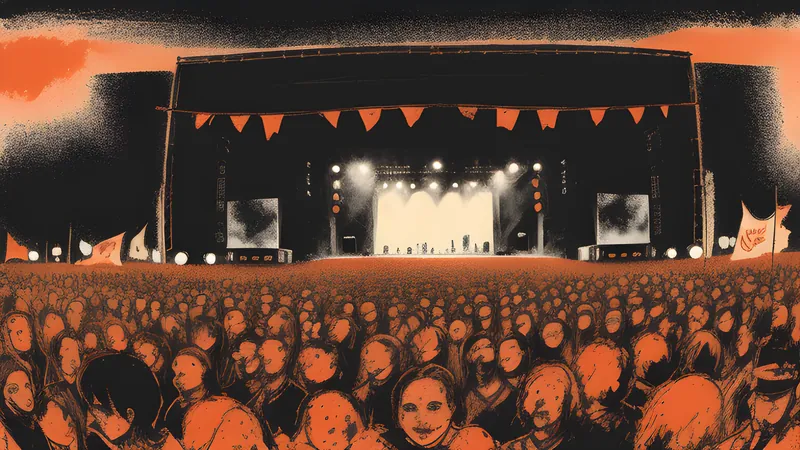
There is a specific Copenhagen absurdity you only understand once you’re standing in the middle of it: a band playing genuinely loud rock while, thirty metres over the drummer’s head, a wooden rollercoaster from 1914 clatters round its circuit and a small child on a merry-go-round waves at nobody in particular. The pagodas are lit up like a Victorian idea of the Orient. Somewhere a brass band in fancy dress is packing away. And on the big lawn in the middle of it all, a crowd of several thousand people who paid nothing extra to be here are waiting for a Danish rock band to walk on. This is Fredagsrock — Friday rock — and it is one of the strangest, most quietly brilliant things in the city’s live-music calendar. I want to explain why it works, because on paper it absolutely should not.
What Fredagsrock actually is
Start with the plain mechanics, because they’re half the magic. Fredagsrock is a series of Friday-evening open-air concerts held through Tivoli Gardens’ summer season, on the Plænen — literally “the lawn”, the big open-air stage and grass expanse near the middle of the garden. The concerts run most Fridays across the summer opening, one act a week, and they are included with normal admission to Tivoli. You don’t buy a gig ticket. You buy your way into the garden the way any tourist or family or courting couple does, and then, if it’s a Friday, there happens to be a band.
That “included with admission” detail is the whole personality of the thing. It means the audience is never a pure gig audience. Half the people on that lawn came for the concert and planned their week around it; the other half wandered over from the carousels because they heard a soundcheck and thought, why not. You get families with buggies, teenagers on a cheap date, tourists who have no idea who’s playing and don’t care, season-pass regulars who treat it like a weekly ritual, and — depending on the booking — a hard core of actual fans who’ve staked out the front rail since the garden opened at lunchtime. It is the least tribal rock crowd you will ever stand in. For a scene that loves its subcultural walls, that’s disorienting and, once you surrender to it, kind of wonderful.
The bookings lean Danish and lean big. Over the years the Plænen has hosted the top tier of Danish rock and pop — the household names, the acts that fill Royal Arena on their own tours — plus a steady rotation of international visitors. Danish institutions like D-A-D have played the lawn; Volbeat, the biggest rock export the country has produced, have done it too. The point isn’t any single gig — it’s that a band who could sell out a proper arena will, on a given Friday, play for free to a garden full of pram-pushers and pensioners. There’s a civic generosity to that which I’ve never quite seen replicated anywhere else.
The garden it lives in
To get why the setting is so surreal, you have to reckon with Tivoli itself. It opened in 1843, which makes it one of the oldest operating amusement parks on earth and, more to the point, a genuine 19th-century pleasure garden — the kind of institution that predates recorded music, cinema, and most of what we think of as entertainment. The founder, Georg Carstensen, reportedly talked King Christian VIII into the lease with a line to the effect that when the people amuse themselves, they don’t think about politics. Whether he actually said it or not, it’s the perfect origin myth for the place: a manufactured Arcadia dropped into the centre of the capital, designed to keep the citizenry pleasantly distracted.
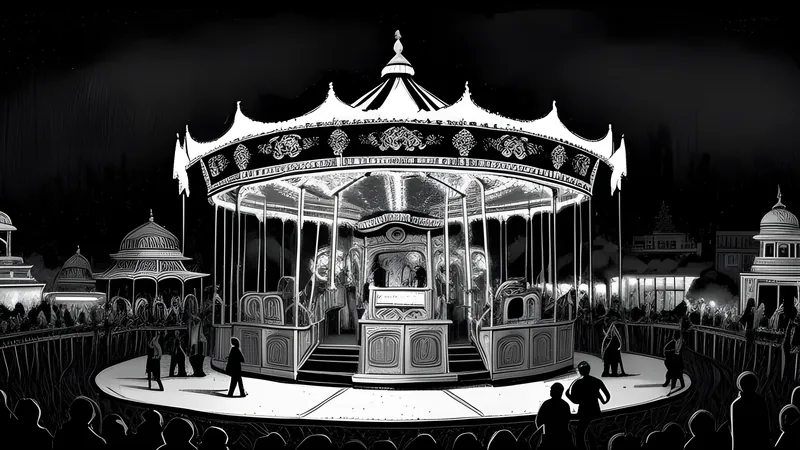
And it stayed there. Tivoli sits in the absolute middle of Copenhagen, wedged between the main railway station and the city hall square, a walled fantasy garden with real-estate value that would make a property developer weep. Inside the walls it’s all Moorish pavilions, a boating lake made from a remnant of the old city fortifications, flowerbeds obsessively replanted through the seasons, and thousands of incandescent lamps that flick on at dusk. The Rutschebanen — the wooden mountain coaster with a brakeman still riding each train — dates from 1914 and is one of the oldest working rollercoasters anywhere. Walt Disney is part of the standard Tivoli sales pitch; he visited, loved it, and carried the mood home to California. You can believe that story or not, but you can feel why it’s told.
So when you put a rock band on the Plænen, you are staging loud, modern, faintly rebellious music inside a monument to gentle Victorian leisure. The tension is the appeal. There’s something genuinely funny about a metal-adjacent Danish band grinding through a heavy set while the Ferris wheel turns serenely behind them and the smell of candyfloss drifts across the pit. The garden doesn’t bend to accommodate the music. The music has to fit itself into the garden, and that constraint shapes everything about the experience.
The constraints — and why they matter
This is where I have to be honest about Fredagsrock as a venue, because it is not, by any club-going standard, an ideal place to see a band. It’s a lawn in a family garden, and that comes with rules.
First: the curfew. Tivoli is a residential-adjacent, tightly regulated garden in the middle of a city, and the concerts start and finish early by rock standards — think an evening slot that wraps up while a normal gig would only be hitting its second encore. No marathon two-hour sets, no endless build. Bands come out, hit hard, and get off. It enforces a discipline that, frankly, does a lot of them good.
Second: there is no real pit, and no real barrier culture. The Plænen is grass and open air with the stage at one end, and while a keen front section will always form, this is not a room built for a wall of death. Security, sightlines, and the sheer breadth of the crowd — kids on shoulders, buggies parked at the back — mean the physical intensity gets capped. If you want a proper churning floor and a crowd that moves as one animal, you go to a club or you go to a festival field; you do not go to a Victorian flower garden. For that kind of night I’d point you at somewhere like VEGA, the best-sounding room in the country, or the free-and-feral sprawl of Distortion out in the streets of Nørrebro and Vesterbro. Fredagsrock is a different proposition entirely.
Third: the sound. Open-air on a lawn ringed by ornamental buildings and ride machinery is never going to give you the sealed, engineered clarity of a purpose-built hall. The PA has to throw across a wide, shallow, open space, competing with the ambient churn of a working amusement park. On a good night with a good engineer it’s perfectly respectable and the low end carries beautifully across the grass. On a bad night the wind takes the top off it and you’re aware, always, of the coaster.
None of these are complaints, exactly. They’re the terms of the deal. You trade the intensity of a club for something a club can never offer: the sheer, ridiculous spectacle of the surroundings, and a ticket price of zero above the gate.
The crowd, and why the mix is the point
I keep coming back to that crowd, because it’s the thing that makes Fredagsrock more than a free gig. Stand near the back on a warm August Friday and you can watch three generations of Copenhagen experiencing the same band completely differently. Down the front, the fans who came for this and only this. Mid-lawn, the couples and the mates who fancied a cheap night out and will drift to the bar between songs. At the edges, the families treating the whole thing as ambient soundtrack to a garden stroll, the toddlers oblivious, the grandparents nodding along to a chorus they half-recognise from the radio thirty years ago.
For a band, that’s a brutal and brilliant test. You cannot coast on tribal loyalty, because most of the lawn isn’t your tribe. You have to actually win a mixed, distracted, family-inflected crowd from a standing start, in a shortened set, over the noise of a funfair. The bands that thrive on the Plænen are the ones with real songs and real presence — the ones who can make a pensioner and a metalhead nod at the same time. It flatters no one and it exposes the thin acts fast. I’ve a lot of respect for a room that does that, even when the room is technically a garden.
There’s a democratic streak in it too, and I don’t mean that as a soft compliment. A kid whose family could never justify an arena ticket can, for the price of a summer garden visit that Danes make anyway, stand thirty metres from a band who normally play to ten thousand people. That’s a real cultural on-ramp. A decent chunk of the Copenhagen live-music faithful will, if you ask them, trace some early spark back to a Fredagsrock night they half-stumbled into as a teenager. The garden has been quietly recruiting rock fans for decades and charging them nothing for the privilege.
How to actually do it
If you’re going to try it, a few honest tips from someone who’s stood on that lawn more times than he can count. Get there early — the Plænen fills, and for a big booking the front third can be committed hours ahead, so if you care about seeing faces rather than a screen, commit your afternoon to it. Bring cash-loaded patience for the bars, because a garden full of thousands means queues, and Tivoli pricing is Tivoli pricing; it’s a walled garden with a captive market and it knows it.
Go in with the right expectations. This is not a night for a bruising, sweat-soaked club experience. It’s a night for standing on grass under the lights of a 180-year-old pleasure garden while a genuinely good band plays for free and a rollercoaster screams past behind them. Let the strangeness be the point. Some of my fondest, least “serious” music memories in this city are Fredagsrock nights. The sound was rarely perfect and the crowd was never wild, and it didn’t matter, because there is nowhere else on earth where you can watch a proper rock band and then walk fifty metres and ride a wooden coaster from 1914 with your ears still ringing.
That’s the whole trick of the place. Tivoli has spent nearly two centuries perfecting the art of the pleasant distraction, and Fredagsrock is that art applied to rock and roll — loud music smuggled into an Arcadia, handed out free with the flowers and the fairy lights. It shouldn’t work. It works completely.
Related Content