Tinderbox: Odense's Big Summer Bet
How Denmark's third city built a polished forest festival and gatecrashed the summer calendar
Contents
For most of the last century, Odense had a specific and slightly frustrating identity in the Danish imagination: the birthplace of Hans Christian Andersen, a pleasant provincial capital on the island of Funen, the third city that everyone drove through on the motorway between Copenhagen and Jutland without stopping. A fine place. A quiet place. Not, historically, a place you associated with forty thousand people losing it in front of a festival main stage. Then in 2015 a festival called Tinderbox planted a flag in a city forest and dared the rest of the country to keep ignoring Odense. The dare mostly worked.
A festival named for a fairy tale, built like a machine
The name is a tell. Fyrtøjet — The Tinder-Box — is one of Andersen’s stories, a nod to the city’s most famous son, and choosing it signalled from day one that this festival intended to belong to Odense specifically rather than to be a generic event that happened to land there. That local rooting is the smart part of the Tinderbox project, and it is worth taking seriously before the scepticism starts.
But the festival itself was built like a machine, and that is the other tell. Tinderbox arrived in 2015 fully formed — big production, international headliners, professional site design, the whole apparatus of a modern pop festival assembled and switched on. It did not have the scrappy river-valley childhood that its sister festival up in Aarhus went through. It was launched by the same promotion world, aimed at the same broad pop-and-rock audience, and engineered from the first edition to be a major player. Where Northside grew up over years, Tinderbox was born an adult. That gives it polish and costs it a certain romance, and both of those things are true at once.
The forest is the whole point
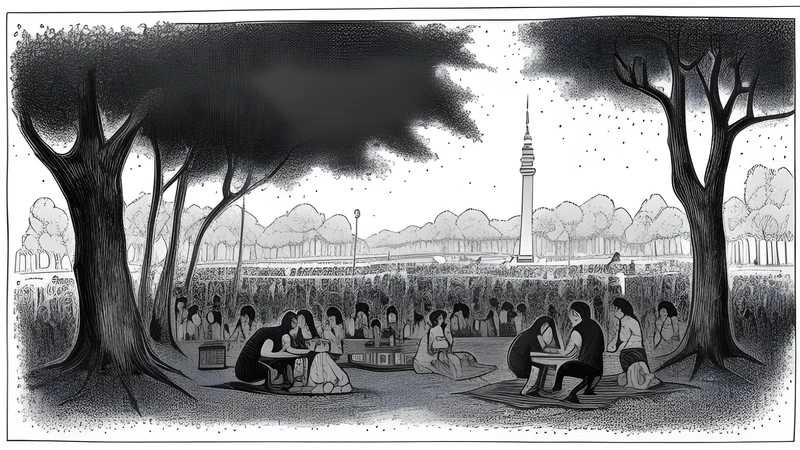
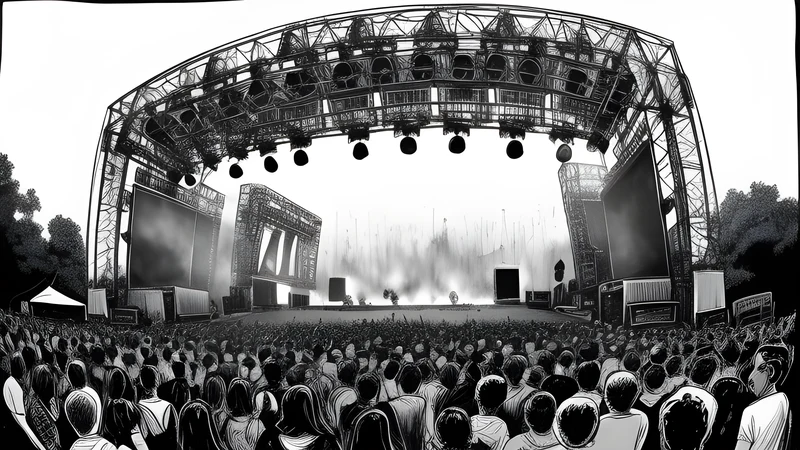
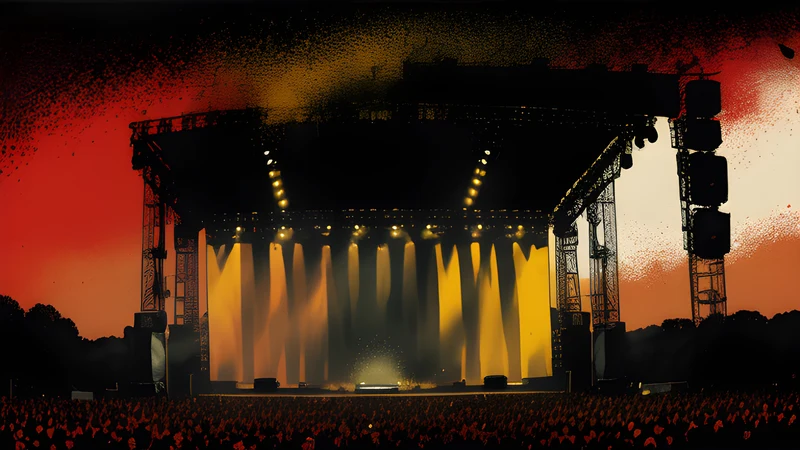
The site is the best thing about Tinderbox, and it is genuinely lovely. The festival takes place in Tusindårsskoven — the Thousand-Year Wood — a large green recreational area on the edge of Odense. A festival in a forest is a different animal from a festival in a field: the trees break the site into rooms, they throw shade in the murderous flat light of a Danish June afternoon, and they give the whole thing an intimacy that an open field cannot buy. When the sun drops and the stage lights come up through the canopy, it is a properly beautiful place to watch a band.
Denmark has a small tradition of forest festivals — Smukfest up in Skanderborg is the grand old master of the form — and Tinderbox slotted itself into that lineage while staying its own thing: younger, poppier, more corporate, more of a city-adjacent day festival than a woodland pilgrimage. The forest setting is doing a lot of the emotional work that a scrappier festival would get from history, and it does it well. On a warm evening under the trees, with the golden hour turning everyone gold, Tinderbox is hard to dislike.
What a big pop festival actually is
Let me be honest about what Tinderbox books, because the honesty is the review. This is a mainstream festival with a mainstream lineup, and it is very good at being one. The headliners are the internationally bankable pop and rock names, the sort of act that fills a main stage across a whole audience rather than thrilling a genre tribe. The mid-card carries the Danish acts, the current chart-adjacent names, the reliable crowd-pleasers. If your taste runs to the loud and the obscure, Tinderbox is not your festival, and it has never pretended to be.
What it is, is a superbly organised, handsomely produced, genuinely enjoyable pop festival with excellent food, a beautiful site, and the smooth professionalism that comes from being built by people who do this for a living. The Danish festival scene sets a high bar for catering and comfort, and Tinderbox clears it. The sound is good, the site flows, the toilets are civilised, and the whole thing runs like the well-funded operation it is. For a large slice of the audience — young families, students, the pop-loving mainstream of Funen and beyond — that is exactly the festival they want, and it would be snobbery to pretend otherwise.
The scepticism, such as it is, is the same scepticism that applies to every commercial city festival. When an event is engineered from launch to be a major pop festival owned by a large promotion group, the booking is driven by ticket sales rather than by anyone’s idea of adventure. That describes the business model plainly, and it carries no insult; Tinderbox does the model about as well as it can be done. Set it beside the non-profit intensity of Roskilde, where the surplus is given away and the booking genuinely gambles, and Tinderbox reads as the confident commercial cousin — polished, pleasant, and playing a completely different game.
The Odense argument
The reason Tinderbox matters beyond its own gates is what it does for Odense, and here the story is genuinely positive. A city that spends decades being the place people drive past has a real motive to build something that makes them stop, and a big summer festival is one of the most effective ways to do it. Tinderbox put Odense on the national festival calendar, drew the music tourists onto Funen, and gave the city a marquee event to build a summer identity around. That is civic value, and it is the honest justification for a festival that a critic might otherwise dismiss as merely commercial.
It also sits on top of a real Odense music scene rather than floating above an empty city. The town has its year-round venues doing the unglamorous work of keeping live music alive the other fifty-one weeks — rooms like Posten that book the touring acts and develop the local ones long after the festival flags come down. Tinderbox is the summer peak of that ecosystem, the three days when the spotlight swings to Odense, and a festival that connects to its city’s year-round scene is earning its place rather than parachuting in. The healthiest festivals are the ones with roots, and Tinderbox has managed to grow some despite being built as a machine.
The logistics of a forest
A forest is beautiful and a forest is a problem, and running a festival in one means solving the problem well enough that the beauty survives contact with forty thousand people. Tusindårsskoven is a protected recreational area, which imposes real constraints — you cannot simply bulldoze paths and pour concrete for a weekend — and the festival has to build a temporary city inside a living wood and then remove it without leaving a scar. That discipline shows in the site design, which threads stages, bars and food between the trees rather than flattening a clearing and dropping a generic festival footprint into it.
The practical experience follows from the setting. Odense is a compact city with a good cycling culture and a decent transport spine, so a large share of the audience arrives the civilised Danish way — by bike, by bus, by a short hop from home — rather than pitching a tent in a mud field. That gives Tinderbox the same quality-of-life advantage that the city festivals trade on: sleep in a real bed, shower like a human, walk in fresh each afternoon. It is a gentler proposition than the camping epics, and for a big slice of the audience the gentleness is the entire appeal. The trade is a festival that peaks each night and empties each evening rather than one that becomes a temporary world you live inside for four days. Different animals, different pleasures.
Reading the bill
Line Tinderbox’s posters up year on year and the pattern is consistent in a way that tells you the festival knows exactly what it is. The apex is reserved for the international pop and rock names with genuine cross-audience pull; the upper-middle carries the current Danish chart presence and the reliable touring acts; the lower reaches give a little room to the newer names, though rarely to the genuinely strange. It is a bill built to reassure rather than to surprise, and it reassures very effectively. You buy a Tinderbox ticket knowing broadly what you are going to get, and you get it, delivered with polish.
That predictability is the honest dividing line between the commercial festivals and the risk-takers. A programmer booking for a non-profit with a charitable mandate can afford a gamble that loses money if it also advances the culture; a programmer booking a machine engineered to sell out has to weigh every slot against the till. Neither is wrong. But it means the character of a festival like Tinderbox lives in its production, its site and its atmosphere rather than in the daring of its lineup, and a critic who goes looking for daring on the poster is looking in the wrong place. Look at the trees instead.
The bet, and whether it paid off
Tinderbox was a wager: that Denmark’s third city could support a major festival, that a forest on the edge of Odense could pull the crowds and the headliners away from the established events, that Funen deserved to be on the map. Ten years on, the wager looks won. The festival is an established fixture of the Danish summer, the site is one of the prettiest in the country, and Odense has the marquee event it wanted.
Tinderbox never set out to be a festival for the loud and the strange. It is a polished, corporate, beautifully sited pop festival that does exactly what it says on the poster, and it does it with real competence. Go for the forest, the golden evenings, the excellent food, and the pleasure of a well-run big festival in a city that deserves the attention. Do not go looking for the wager, the edge, or the risk — those live at other festivals, in other fields. Odense placed a safe bet, played it professionally, and cashed it in. For a city tired of being driven past, that is a perfectly good story to be able to tell.
Related Content