The Wall of Death: A Short History of Pop's Daftest, Best Ritual
How a fairground sideshow name ended up describing 20,000 strangers charging each other on cue
Contents
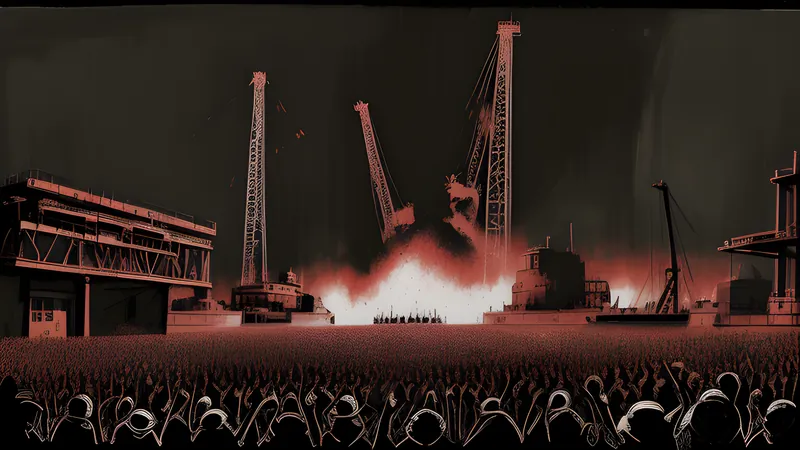
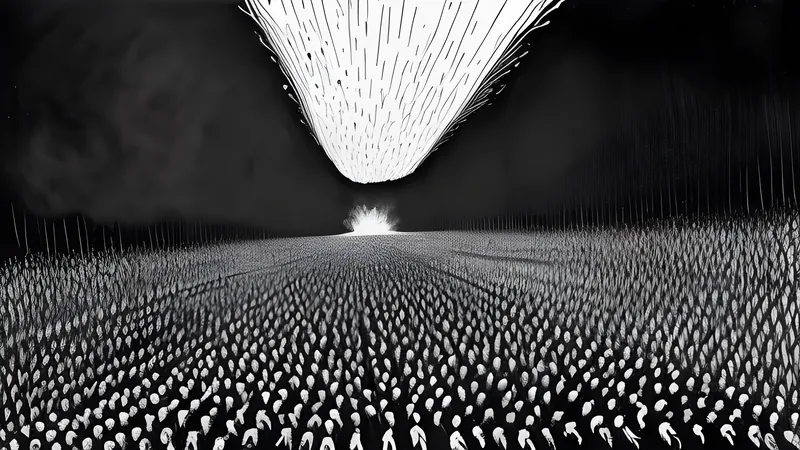
Picture the field from above. A band vamps on one riff, the singer walks to the lip of the stage, and a seam opens down the middle of ten thousand people like someone unzipped the crowd. Two walls form, forty feet apart, staring each other down across a strip of bare, trampled grass. There is a countdown. And then, on a cue nobody voted on and everybody understood, both halves sprint at each other and collide. Bodies bounce. Nobody dies. Everybody laughs. Thirty seconds later the field has healed over as if nothing happened, and the song lurches into its next section like a bus finding gear.
That is the wall of death, the most theatrical, most obviously mad piece of choreography in loud music, and one of the very few crowd rituals with a genuine origin story worth telling. It has a borrowed name, a debated inventor, a rough birthday, and a physics all its own. Take it seriously for a minute and it stops looking like meatheads running into each other and starts looking like one of the more sophisticated social contracts you’ll ever watch a stranger honour.
The name is stolen goods
Before the mosh ritual there was a real wall of death, and it had actual walls. From the early 1900s, American fairgrounds ran a sideshow built from a silo-shaped wooden cylinder, twenty to thirty-odd feet across, planked like a barrel stood on end. A motorcyclist would drop in at the bottom, spiral up, and then ride flat out around the vertical inside face, held to the wall by nothing but speed and centrifugal force, engine screaming, spectators peering down over the rim while a man defied gravity at head height beneath them.
The lineage runs straight out of American board-track motordrome racing. The first carnival motordrome turned up at Coney Island around 1911, portable versions started touring the following year, and by roughly 1915 the genuinely vertical-walled machines had earned the grim, brilliant marketing name: the Wall of Death. By the 1930s there were more than a hundred of these things touring the States and the fairgrounds of Europe. A handful still tour Britain today under names like Messham’s and the Ken Fox Troupe, riders on ancient Indian Scouts trading their lives against friction for the price of a ticket.
So when a hardcore singer in the 1990s pointed at two halves of a crowd and called it a wall of death, he was reaching for a phrase already loaded with a century of daredevil menace. The borrowing is almost too good. The original was one lunatic riding a circular wall. The music version is the crowd itself becoming two walls and then abolishing the space between them. Same theatre of controlled danger, same wink at mortality, no motorcycles.
Who actually started it
Here the record gets honest and slightly disappointing, in the way real history usually is. Nobody sat down and invented the wall of death. It emerged, as most crowd behaviour does, out of American hardcore punk in the early 1980s, where the pit was already an inventive place and kids were forever finding new ways to hurl themselves around a room.
The person most often credited with dragging it into the modern era is Lou Koller of the New York hardcore band Sick of It All, and to his credit he refuses the crown. “We didn’t invent it, but we’re the ones who brought it back,” is roughly how he tells it. His account is specific and plausible: around 1996, playing a festival in England and needing to stand out on a bill full of bigger names, the band revived a move they remembered from years earlier, split the crowd, and set them running. It landed. Word travelled the way it always does among touring bands who spend their afternoons watching each other’s sets from the side of the stage.
By Koller’s telling, that is precisely how it spread. Musicians from the era’s rising heavyweights, Slipknot and Sepultura and Mudvayne among them, clocked the wall from the wings, understood immediately what it did to a field, and started calling their own within days. Metal, always happy to adopt a good idea from hardcore and then wear it louder, took the ritual and ran, quite literally. Within a few years the wall of death had migrated from sweaty club floors to the main stages of European festivals, where the sheer headcount turned a neat trick into an aerial spectacle.
Lamb of God and Exodus became so associated with it that plenty of fans assume one of them dreamed it up. They didn’t, and Lamb of God’s Randy Blythe has been careful to credit the punk originators. A later generation of metalcore bands, Knocked Loose and Asking Alexandria and their peers, now treat the wall as standard-issue crowd equipment, a thing you call as reliably as you’d call for hands in the air.
How you call one from the stage
The wall of death is one of the only mosh manoeuvres that cannot happen by accident. A circle pit can open itself. A crowd-surf just requires a willing idiot and enough raised hands. But a wall needs an author, and that author is the person with the microphone.
The mechanics of calling it are pure theatre and every frontman does a version of the same bit. First the instruction, usually mid-song over a held riff or a breakdown that can be stretched: split down the middle, back up, make room. There’s often a bit of pantomime shepherding, the singer physically waving each half backwards with both arms like a man parking two lorries at once. The band drops into a holding pattern, a churning single chord or a drum groove that can idle indefinitely while the field sorts itself out. Then comes the countdown, or the promise of one particular beat, the drop, the chorus, the moment everyone is told to wait for. The tension in that pause is the whole point. Two crowds crouched and grinning at each other across an empty gap is genuinely funny and genuinely charged, a starting line with no starter’s pistol except the music.
And then the band hits the part, and the two walls fold into one. Good bands understand that the wait is the joke and the collision is only the punchline, so they milk the pause and let it get absurd before they pull the trigger. A well-called wall of death is a comedy of anticipation with a payoff you feel in your ribs.
Why it bonds instead of breaking you
Watch one for the first time and the obvious question is: how is nobody carried out on a stretcher? Two crowds sprinting into each other at a dead run should, by any sensible reading, produce a casualty list. It reliably doesn’t, and the reason is the same social physics that governs the mosh pit: the violence is a costume, and everyone in it has agreed to the same unwritten rules.
The first rule is that the run is theatre and everyone decelerates at contact. Nobody actually leads with a shoulder aiming to hurt. You charge, you brace, you meet the wave, and the energy dissipates sideways through hundreds of bodies rather than concentrating into one poor soul’s sternum. The second rule is the oldest law of the pit: if someone goes down, the world stops. Hands come out, the fallen get hauled up before the next surge, and the person who trampled a stranger on purpose becomes the most hated man in the field for the rest of the day. The third is a self-selection rule. The wall opens a visible gap, which means anyone who wants no part of it simply doesn’t stand in it. The ritual advertises itself in advance and lets you opt out with your feet.
Put those together and you get a machine for manufacturing intimacy out of apparent aggression. You run at a wall of strangers, you brace against them, they catch you, you catch them, nobody is hurt, and for thirty seconds you have shared a controlled brush with chaos and come out the other side laughing with people whose names you’ll never know. That is a startlingly efficient way to make a field of individuals feel like one organism. The danger is real enough to matter and managed enough to survive, which is the exact recipe every good ritual has always used.
The big ones, and the honest caveat
Scale changes the thing entirely. At a club, a wall of death is a gag between friends. At a festival main stage it becomes topography. The most storied examples belong to the huge European gatherings, the Hellfest crowd in France around 2014 and Wacken in Germany a few years earlier among the ones fans still argue about, walls so wide that the two halves couldn’t see their own far edges and the collision rolled across the field like weather. There’s a reason the wall of death became festival folklore precisely at places like Wacken, where the raw headcount turns a stage instruction into an aerial event you could photograph from a drone.
I’ll hold a hard line here, because it matters: I’m not going to sell you a specific broken leg or a named casualty to spice up the drama. Those stories circulate constantly and most of them are folklore, embroidered in the retelling. What the public record actually supports is milder and more interesting anyway, that these enormous walls happen routinely and resolve without carnage, which is the genuinely remarkable fact. Some artists and some festivals do decline to call them, on straightforward safety grounds, and that caution is fair. A wall on wet ground, or in a crowd too tightly packed to open a real gap, is a worse idea than a wall on a dry field with room to breathe.
Joyous or just macho?
Here’s my actual opinion, since a scene piece should have one. The wall of death is at its best when it’s silly and everyone’s in on the silliness, the pause, the pantomime, the daft countdown, the collective decision to run at each other for a laugh. Called that way, it’s the most joyful thing in heavy music, a mass in-joke performed by twenty thousand people.
It curdles when the theatre drops out and the posturing takes over, when it becomes a test of hardness rather than a shared bit, when someone treats the run as licence to actually hurt a smaller stranger. That version is rare, and the crowd usually polices it faster than any security guard could, but it exists, and pretending it doesn’t would be dishonest. The measure of a good wall is whether the people picking each other up outnumber the people trying to prove something. At a healthy show, in a healthy pit at a place like Copenhell, they always do.
That’s the daft genius of it. A ritual named after a machine built to nearly kill motorcyclists, revived by punks, perfected by metal, and it turns out to be one of the gentlest things a huge crowd does to itself. You run at the wall. The wall catches you. Then you go and find your friends, out of breath, grinning like an idiot, already a little bit in love with everyone you just crashed into.
Related Content