The Support Slot: Playing to a Room That Didn't Come for You
The half-empty room, the twenty-five-minute set, and the art of stealing a crowd that isn't yours
Contents
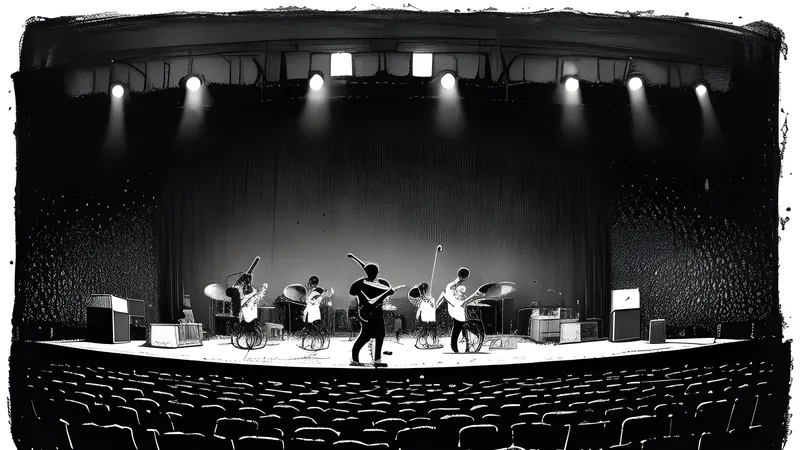
Doors open at seven and I am already inside, because I am always already inside. This is the thing people don’t understand about me: I do not turn up for the headliner. I turn up for the band nobody has come to see — four people carrying their own amps up the load-in ramp two hours earlier, tuning in a dressing room the size of a broom cupboard, walking out at half past seven to a floor that is one-fifth full and mostly staring at the bar. Twenty-five minutes later they walk off, and maybe eleven people clapped like they meant it. That is the support slot. It is the hardest gig in live music and it is also, when it works, the most electric thing you will see all night.
I have a soft spot for openers that borders on the religious. Partly it’s that I grew up going to Loppen and Stengade, small Copenhagen rooms where the “support” and the “headliner” are separated by about forty people and one rung on a ladder, so the whole hierarchy always looked a bit arbitrary to me. And partly it’s that the openers are where the future actually lives. Every band you love was once the band being ignored at half past seven. Metallica opened for Raven in 1983. Slipknot opened for Coal Chamber. Every arena act carrying a private jet started out loading a transit van and playing to the sound engineer and a bloke checking his phone. So I get there early. It costs me nothing and it has bought me some of the best twenty-five minutes of my life.
Twenty-five minutes and a cold room
The mechanics of a support slot are brutal in a way that isn’t obvious until you’ve watched a few hundred of them. You get a short set — twenty to thirty minutes for a small tour, maybe forty if you’re a strong second-on-the-bill. You get a fraction of the production: usually your own backline crammed in front of the headliner’s gear, a rushed line-check instead of a soundcheck, whatever lights the venue can be bothered to throw at you. And you get a room that is cold in every sense — half-empty, under-lit, full of people who are physically present but emotionally in the queue for a drink, waiting for the band whose shirt they’re already wearing.
The sound is where it really bites. The headliner soundchecks properly in the afternoon; the opener often gets a “line check” — a quick confirmation that each microphone and DI is passing signal — and nothing more. So the first three songs of a support set are frequently the band and the engineer finding the mix in public, live, in front of the smallest and most sceptical audience of the night. You can hear it happening. The kick drum is too loud, the vocal is buried, the guitarist is playing air because their monitor has nothing in it. Good openers have learned to front-load their set with the songs that survive a bad mix and save the delicate stuff for later, once the desk has settled. It’s a craft nobody trains you for and everybody has to learn on the job, in the worst conditions the touring week offers.
And then there’s the psychology of the cold room. A headliner walks out to a crowd that is already vibrating, already forgiving, ready to love them before a note is played. An opener walks out to indifference. The room isn’t hostile — hostility would at least be attention — it’s just absent, chatting, filming nothing, drifting. Your job in the first ninety seconds is to convert a room full of people who came for someone else into a room that is, for twenty-five minutes, yours. That is the whole game, and most nights most bands lose it. When one wins, you never forget it.
The economics: buy-on, pay-to-play, and the van that eats money
Here is the part that ruins the romance. A lot of support slots are not offered, they’re bought.
The polite industry term is “buy-on” (in the US, “pay-to-play”). On a decent-sized tour, the opening slot has a market value, and the band or their label pays the headliner’s organisation — sometimes a few thousand, sometimes a genuinely eye-watering five-figure sum for a major arena run — for the privilege of playing to that crowd every night. The money is framed as a contribution to production costs, or “tour support,” which is technically true and morally slippery. The bigger the tour, the more the slot costs, because the exposure is worth more. A young band with an ambitious manager and a label willing to gamble will pay handsomely to open for the right headliner, on the theory that thirty nights in front of ten thousand people each is the cheapest marketing money can buy. Sometimes it is. Often it’s a hole the band never climbs out of.
Even without a buy-on, the maths of opening is grim. Support fees are small — for club tours, often a flat couple of hundred a night, sometimes nothing but “the exposure” and a case of beer on the rider. Out of that comes the van, the diesel, the ferries, the crew you can’t afford so you become your own crew, and the food. This is precisely why the whole backstage economy documented in the rider matters so much: for an opener, the guarantee doesn’t cover the trip, and the shirts sold at the back of the room are frequently the only thing standing between the tour and bankruptcy. I’ve watched openers finish their twenty-five minutes and sprint to the merch stand still dripping with sweat, because those forty minutes after the set — while the headliner’s crew changes over the stage — are the most commercially important part of their entire night.
Set against that, the buy-on model looks less like extortion and more like a casino, and the house — the headliner, the promoter — always takes its cut. That cut is the theme of touring economics generally, and it’s the reason the load-in crew and the openers are the two groups doing the most work for the smallest slice.
Stealing the crowd
Now the good part. When an opener actually wins the room, it is one of the purest things in live music, precisely because it’s so unlikely. The headliner has every advantage — the crowd, the production, the goodwill. The opener has twenty-five minutes and nothing to lose, and that second thing turns out to be a weapon.
There’s a real craft to it. You come out at pace — no slow-burn intro, no four-minute atmospheric build, because you haven’t earned the patience yet. You play the fast one first. You talk to the room like you can see it, not like you’re reciting between songs. The best openers I’ve seen are almost aggressively generous — they throw everything at the front rows, they refuse to be ignored, they make eye contact with the bored bloke at the bar until he stops being bored. You build your short set the way a headliner builds a long one, except compressed to the point of violence: no dip, no filler, no ballad you’re precious about. Every one of those twenty-five minutes has to earn the next. It’s the same logic as building a headline set’s arc, run at four times the speed and with none of the safety net.
I’ve seen it land. I’ve seen a room that arrived indifferent leave a support set genuinely rattled, turning to each other going who was that, pulling out phones to find the band’s name. That’s the win. You don’t convert everyone — you convert the forty people down the front who’ll go home and stream the record and buy a ticket next time the band comes through on their own headline run. Forty converts a night, thirty nights, and suddenly a band has a following. That’s how it’s always worked. That’s how every band you love climbed out of the half-empty room.
The dark version is real too: the openers who get the crowd so worked up that the headliner walks out to an audience that’s already peaked, and there’s an old, cruel tradition of headliners kneecapping supports who get too good — cutting their set, turning down their vocals in the mix, denying them lights. It happens. A support band that’s genuinely stealing the show is a threat, and not every headliner is secure enough to enjoy the competition. The generous ones — the ones who remember being second on the bill — hand-pick openers they believe in and then let them win, because a hot support makes the whole night better and reflects well on the band that chose them.
The openers who ate the headliner
The history of live music is littered with support acts who outgrew the band above them, sometimes on the very same tour. Jimi Hendrix opening for the Monkees in 1967 is the famous absurdity — the most incendiary guitarist alive playing to shrieking teenyboppers who wanted the TV band, a mismatch so total he quit the run after a handful of dates. Prince opened for the Rolling Stones in 1981 and got bottled off by a crowd that wasn’t ready for him; a few years later he was one of the biggest artists on earth. Nirvana supported bands nobody remembers. In the metal world, the touring food chain reshuffles constantly — this year’s special guest is next year’s headliner, and the band that gave them the slot is quietly hoping the favour gets returned when positions reverse.
That reshuffle is the whole point. The support slot is a proving ground with real stakes, and the hierarchy it enforces — headliner, special guest, main support, opener, “local support” who plays to the empty room while doors are still open — is one of the few genuine meritocracies left in an industry that’s mostly rigged. You can buy your way onto the bill. You cannot buy the forty converts. Those you have to win, twenty-five minutes at a time, in a cold room, in front of people who came for somebody else.
So I’ll keep getting there for doors. The band at half past seven doesn’t know I’m out there yet, one of eleven people paying attention. But if they’re any good, by the third song there’ll be twenty of us, then forty, and by the time the lights come up I’ll be the one at the merch table buying the shirt off the drummer, telling them they were better than the band everyone came to see. Half the time I’ll even be right.
Related Content