The Reserved-Seating Creep at Rock Shows
How the standing floor, live music's oldest democratic space, is quietly being sold off in numbered chairs
Contents
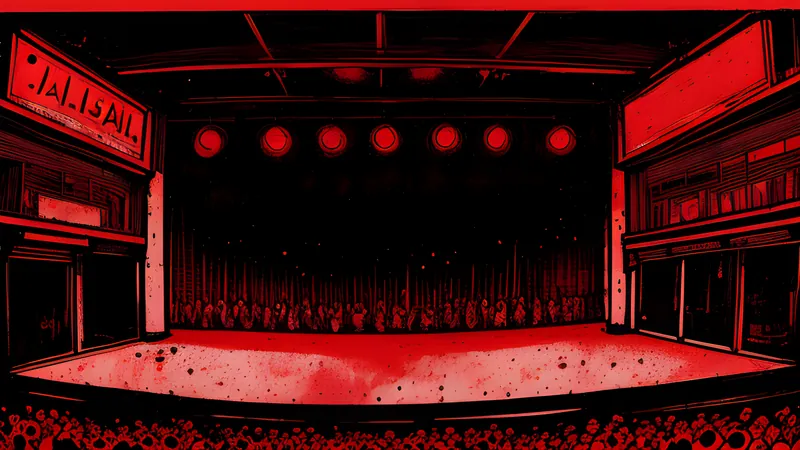
For most of rock and metal’s history, the floor of a venue was the one part of the ticket price that came with no promises attached. General admission meant a flat, open space, first come, first held, and whatever position you ended up in was earned by turning up early and being willing to stand in it for hours. That floor is where the mosh pit lives, where the crowd surges toward the barrier during the opener, where a few hundred strangers negotiate personal space by pure physical consensus. Increasingly, a chunk of that floor is not general admission any more. It is numbered, seated, and sold at a separate, higher price than the ticket standing eighteen inches away from it.
What “reserved floor” actually means
The mechanism is straightforward. A promoter or venue partitions part or all of what used to be an open standing area into fixed sections — sometimes literal chairs bolted or clipped into rows, sometimes just taped-off pods holding a fixed number of standing patrons — and sells each numbered spot as its own ticket tier, at a price above the plain general-admission rate. The furthest end of this spectrum is the “golden circle” or premium standing pen immediately in front of the barrier, sold separately and often at several times the price of the ticket for the identical physical spot a decade earlier, when that same barrier-front position belonged to whoever queued longest.
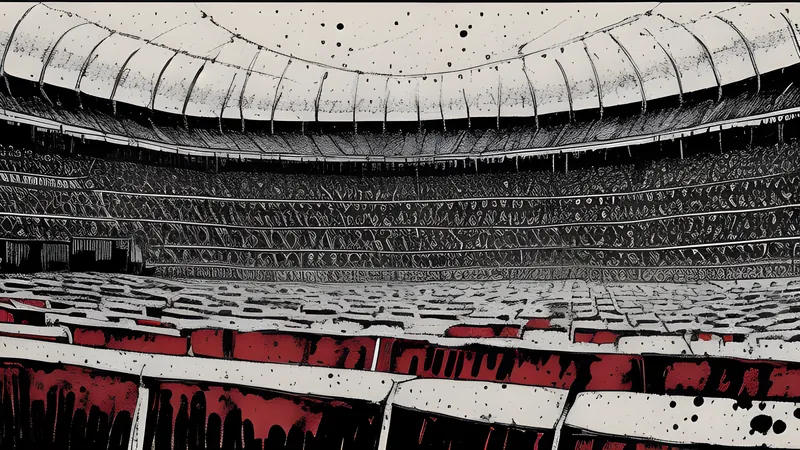
Arenas built this into their infrastructure well before rock shows adopted it wholesale. Basketball and hockey venues have run retractable seating on the floor for corporate and premium ticket buyers for decades, because a sports franchise’s core revenue model depends on repeatable, guaranteed premium inventory rather than a first-come floor. As those same buildings became the default touring venue for arena-scale rock and pop acts, the seating infrastructure came with the building, and promoters increasingly chose to use it rather than retract it fully, because a numbered seat priced at a premium is a more predictable, more securitisable revenue line than an undifferentiated general-admission floor ever was.
The economics behind the creep
Reserved seating solves a real problem for promoters and ticketing platforms: general admission is genuinely hard to monetise beyond its flat face value, because every ticket in the tier is, on paper, identical. Reserved and tiered floor seating lets a promoter sell the same square footage of floor at several different price points simultaneously, capturing far more of what economists call the willingness-to-pay gap between a fan who would pay almost anything to stand at the barrier and one who is happy fifteen rows back. Dynamic and tiered pricing tools that major ticketing platforms have rolled out over the last decade — pricing that shifts with demand the way an airline seat does — work far more cleanly against a grid of numbered seats than against an undifferentiated crowd of standing ticket-holders, which gives promoters a direct financial incentive to seat as much of the floor as the venue and the act will tolerate.
There is also a straightforward crowd-management case made in the venue’s favour: a seated or pod-based floor is easier to evacuate in an emergency, easier to police for capacity limits, and generates far fewer of the crush incidents that have periodically forced festivals and arenas to review general-admission floor safety. Nobody in the industry disputes that seated crowds are, mechanically, safer to manage at scale. The argument is over whether that genuine safety case is doing all the work, or whether it has become a convenient justification layered on top of what is, underneath, mostly a pricing strategy.
The bands who refuse it
Not every act has gone along with the trend, and the acts that have publicly resisted it tend to be the ones whose whole identity is built on the standing floor’s culture rather than its convenience. Foo Fighters and Metallica have both been widely reported, across years of tour press, as acts that specifically request full general-admission floors on their own headline shows rather than accept a venue’s default seated configuration, on the stated grounds that a rock show’s energy depends on people standing, moving and singing rather than sitting in rows facing forward like a theatre audience. That preference has a direct cost: a full GA floor typically holds more bodies at a lower average ticket price than the same square footage sold as tiered reserved seating would, meaning bands that insist on it are, in effect, choosing crowd experience over some available revenue.
That trade-off is exactly why the reserved-seating creep keeps advancing anywhere a band, agent, or promoter does not actively push back on it. Left to their own commercial logic, venues and ticketing platforms default toward whichever configuration extracts more total revenue from the same floor space, and reserved seating almost always wins that calculation on paper. It takes an artist with enough leverage, and enough of an actual stake in preserving the standing-floor culture, to override the default.
Where it plays out on home turf
Copenhagen’s own room mix makes the contrast easy to see without travelling anywhere. VEGA’s main hall runs a standing general-admission floor for its rock and metal bookings almost without exception, in keeping with the venue’s identity as a mid-size room built for people who came to move rather than sit. Royal Arena, the city’s newest large indoor venue and the default booking for stadium-adjacent rock and pop tours, is built from the ground up with retractable seating banks that can convert much of the floor into rows of numbered seats depending on the act and the promoter’s chosen configuration for that specific show — the same building, hosting two different tours a month apart, can present a full standing floor for one and a heavily seated one for the other, purely as a commercial decision made before tickets go on sale. Watching which configuration a given tour chooses, in the same room, is a fairly reliable read on how much leverage that particular act has, and how much it has chosen to spend that leverage on preserving a standing crowd instead of a bigger settlement figure.
A short history of how the floor got sold
Standing floors were never a deliberate policy decision so much as the absence of one: early rock venues were repurposed halls, cinemas, and clubs where removing or never installing fixed seating was simply cheaper and more practical for a genre whose audience wanted to move. Arenas built later, from the 1970s onward, for a broader mix of sports, family entertainment and touring concerts, came with permanent or retractable seating already engineered into the building because a basketball franchise’s forty-plus home games a year could not function on temporary standing risers the way an occasional touring rock show could. What changed from roughly the 2000s onward was the software, while the buildings stayed put: as ticketing moved online and dynamic pricing tools matured, promoters gained the ability to price a floor by the square foot and the row in a way that would have been an administrative nightmare for a box office selling paper tickets by hand a generation earlier. The technical capability arrived well before most fans noticed the culture shifting underneath them, and by the time the reserved-floor pattern was visible enough to complain about, it was already the default configuration in most large venues rather than the exception.
What it changes about the room
The physical change is not subtle once you have stood in both configurations. A genuine standing GA floor behaves like a fluid: crowds surge, compress, and redistribute themselves continuously through a set, energy visibly moving through the room in waves that a seated crowd simply cannot replicate, because chairs and taped lane markers fix everyone’s position for the night. The mosh pit needs that fluidity to exist at all — it is, mechanically, a self-organising pocket of open space that a genuinely open floor allows to form, move, and dissolve on its own, something a floor broken into numbered pods makes structurally difficult even where it is not explicitly banned.
The social contract changes too. A GA floor’s implicit deal — you earned your position by queuing, and everyone around you did the same — gets replaced by a straightforwardly transactional one: you paid more, so you stand closer. Both are forms of allocation, and neither is inherently more fair than the other, but they produce different rooms, different crowds, and different relationships between the people in them. A queue rewards patience and enthusiasm regardless of income. A price tier rewards whoever can pay, full stop.
The direction of travel
None of this is likely to reverse on its own, because the financial logic pushing it only strengthens as ticketing technology gets better at extracting the last available pound or krone from a floor space. What keeps a fully open standing floor alive at any given show is almost entirely artist preference, backed by enough commercial leverage to make the request stick over a promoter’s own numbers. That makes the standing GA floor, at this point, less a default feature of a rock show than a deliberate choice a smaller and smaller number of acts are still willing to make — one more entry on the growing list of things that used to just be how a rock show worked, and now have to be actively defended to survive at all, in an industry increasingly optimised for extracting maximum revenue from the same square footage.
Related Content