The Merch Table: Where Bands Actually Make Their Money
Streaming gutted the record, the venue takes a cut of the shirt, and the queue at the back of the room is the whole business
Contents
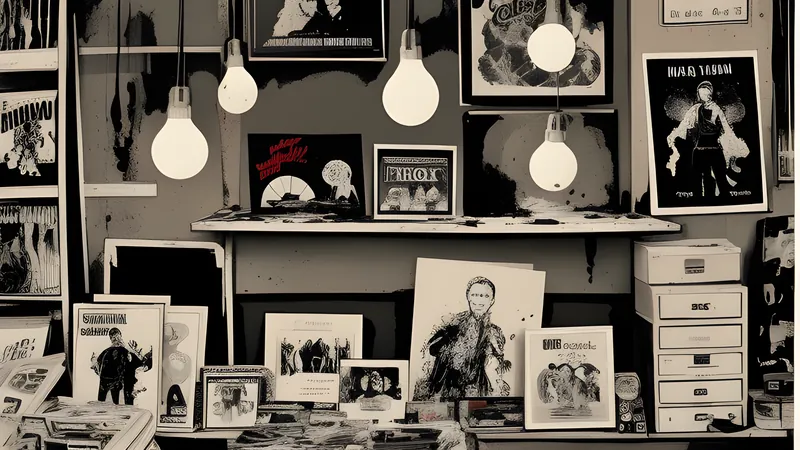
The most important square metre in any venue is a folding table at the back, under the worst lighting in the building, stacked with T-shirts in size runs from small to a hopeful XXXL, with a card reader gaffer-taped to a shoebox and a person behind it who has been on their feet since load-in and will be there long after the last chord. That table is where the tour actually makes its money. Everything on the stage — the lights, the pyro, the ninety minutes of transcendence — is, in cold commercial terms, an advert for the table. I mean that literally. For most touring bands below the arena tier, the gig is the loss-leader and the shirt is the product.
This is one of those facts that changes how you watch a show once you know it. I’ve stood at the back of Loppen and Pumpehuset and watched the queue at the merch stand grow longer than the queue at the bar, and understood that I was watching the band’s payslip being written in real time, one forty-quid hoodie at a time. So let’s talk about the table — how it got so important, who takes a cut of it, and why the two minutes you spend buying a shirt off the drummer is one of the few honest transactions left in the whole rotten economy of live music.
How the record stopped paying
To understand why the merch table matters, you have to understand what died to make it matter. For most of the twentieth century, the money in music was in recordings — you toured to sell the album, and the album paid. That model is gone, and streaming killed it.
The numbers are genuinely bleak and they’re not secret. The major streaming platforms pay rights-holders somewhere in the region of three to five tenths of a US cent per stream — call it $0.003 to $0.005 — and that payment is split across the labels, publishers, songwriters and performers before the artist sees anything. Spotify has said publicly that it pays out roughly seventy per cent of its revenue to rights-holders; the catch is that “rights-holders” mostly means labels and publishers, and the artist’s slice of that is set by their contract, which for legacy deals can be brutally small. The practical upshot, quoted so often it’s become a grim standard, is that a track needs somewhere around a quarter of a million streams to earn what a single decent shift on a merch table brings in. A band can have millions of streams, a genuine profile, a room full of people singing along — and clear almost nothing from the recordings that made those people show up.
So the logic inverted. The record is now the advert; the tour is the business; and within the tour, merch is the highest-margin thing a band sells. A ticket’s money is sliced up before the band sees it — the promoter, the venue, the agent, the crew, the production, the support’s buy-on, the diesel. A £30 T-shirt that cost the band £6 to print is, by comparison, close to pure oxygen. It’s the same money-moved-into-the-room logic that fills out the backstage rider: once the recording stops paying, everything the band physically controls at the venue — the hospitality, the shirt, the vinyl — carries a weight it never used to.
The notorious cut
Now for the part that makes touring musicians grind their teeth: the venue merch cut.
Here’s how it works. Many venues — especially the mid-size and large ones, and the big chains most of all — take a percentage of everything sold at the merch table inside their building. Not a flat fee for the table space. A cut of the gross. The figure varies, and bands don’t love talking specifics on the record, but the numbers that come up again and again in interviews and in the campaigns musicians have run about it sit anywhere from a mortifying 20 per cent up to 25, 30, even 35 per cent at some rooms. The venue’s justification is that they provide the space, the security, sometimes a seller and a card system. The band’s view is that they printed the shirt, designed it, hauled it across three countries, and are now handing a third of the margin to a building that already took a cut of the ticket.
This became a proper fight in the last few years. In the UK, the Featured Artists Coalition ran a campaign called “100% Venues” that publicly listed the grassroots venues which had agreed to take zero merch commission from touring artists — and got a lot of the small independent rooms to sign up, on the argument that at club level the merch cut is the difference between a tour breaking even and a band quietly going under. The bigger corporate venues have been slower and quieter about it. Some negotiate the cut down for bands that push; many still take their slice, especially from acts without the leverage to argue. It is, depending on where you stand, either a fair charge for infrastructure or a straightforward tax on the one revenue stream the band actually controls. Having watched a lot of merch people count out a night’s takings, I know which way the musicians see it.
The venue cut is exactly why you’ll sometimes see a band selling merch from a van in the car park, or directing you to their webshop from the stage — a legal, cheerful little rebellion to keep the sale outside the building’s percentage. It’s the same instinct that runs through every part of touring’s cost structure, the one I keep coming back to whenever I write about the invisible labour of the load-in: everybody upstream of the band takes their slice first, and the band lives on what’s left.
The person behind the table
The merch seller is one of the great unsung jobs in live music. On a small tour it’s a member of the band, or a mate travelling for gig-money and a floor to sleep on; on a bigger one it’s a dedicated “merch person” who is part accountant, part market trader, part bouncer, part therapist. Their day is longer than the band’s — they’re setting up the stall while the crew is still rigging, and they’re counting stock and reconciling card takings against cash long after the encore, working out exactly how many mediums sold so the reorder is right for the next city.
It’s genuinely skilled work. A good merch person reads the room and prices and lays out the table accordingly — the hero design at eye level, the size runs sorted so the queue moves, the vinyl and the cheaper items (the patch, the pin, the ten-quid thing a skint teenager can afford) positioned to catch the impulse buy. They manage the crush during the twenty-minute window after the set when eighty per cent of the night’s sales happen. They handle the drunk bloke who wants to haggle, the kid who’s four quid short and gets the patch anyway, the collector after the tour-exclusive variant. And they carry the float and the takings, which on a good night in a big room is a genuinely serious amount of cash to be responsible for at one in the morning in a strange city.
The window matters more than anything. The commercial heart of the night lives in the forty minutes around the show — doors and the post-set rush, when the room is full and warm and freshly converted. This is why openers sprint to the table sweating, why the smart merch person never leaves the stall unattended during changeover, and why “the queue” is the single most important sentence in the touring accountant’s report. A long merch queue is a band that’s going to make rent. A short one is a band doing the maths on the ferry home.
The margins, the print run, and the shirt itself
Let’s do the actual numbers, because they’re more interesting than the mythology. A blank quality T-shirt bought at trade volume costs a band a few pounds; screen-printing it — the real, thick, multi-colour front-and-back print that a metal shirt demands — adds a few more, with the price per unit dropping sharply the bigger the run. Call it £5–8 all-in to land a good shirt in the box, more for a heavyweight or an all-over print, less if you cut corners on the blank (and the crowd can always tell). Sell it for £25–35 and even after the venue’s cut you’re clearing a healthy chunk per unit. Vinyl is a different animal — higher cost, higher price, beloved of the collector, and a merch-table staple precisely because streaming made the physical record a keepsake rather than a delivery method. Nobody buys a record to hear the music any more. They buy it to hold the thing, to have the object from the night, and bands price it accordingly — which is exactly why the deluxe reissue and the full-album anniversary tour sell a slab of coloured vinyl at the door: the record became a souvenir, and souvenirs have merch-table margins.
The risk is the print run. Merch is a gamble made weeks in advance — the band or their merch company fronts the cash to print hundreds or thousands of units, guesses the size curve, guesses the demand, and eats whatever doesn’t sell. Print too few of the good design and you’re sold out by the third city with money left on the table. Print too many and you’re driving unsold XXLs around Europe as expensive ballast, discounting them at the last show to recover the print cost. The size curve alone is a dark art — everyone wants the medium and large, nobody plans for enough, and the smalls and the XXXLs are the last survivors of every run.
And then there’s the human bit, which is the reason I actually love the table. Buying a shirt at a gig is one of the last direct transactions in music. No algorithm, no platform, no rights-holder taking seven-eighths before the artist sees a cent. You hand over cash or tap a card and the money goes — minus the venue’s grubby cut — to the people who made the thing you just watched. Sometimes it’s the drummer taking your money, still in a damp shirt, saying thanks like they mean it, because they do. On a night when the streaming payout for the song you’re humming is a fraction of a penny, the forty quid you put across that folding table is, in a very real sense, the whole industry working the way it’s supposed to. Buy the shirt. It’s the most honest applause there is.
Related Content