The Greying Front Row: Metal's Ageing Faithful
Silver beards in the pit, heritage acts on their last laps, and the quiet question of who inherits all this noise
Contents
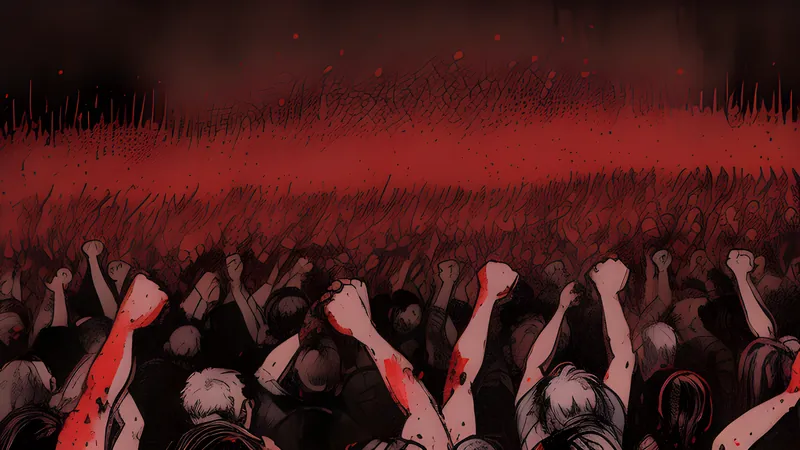
There’s a man I keep seeing at the barrier. Not the same man — a type of man. Grey ponytail, faded tour shirt from a run that finished before the kid next to him was born, forearms like a docker, and a look on his face during the first riff that is closer to prayer than pleasure. He is somewhere north of fifty and he is going to be down the front all night, and after the set he’ll show you the ticket stub from the first time he saw this band, in a year when I was still learning to walk. The front rows of metal are going grey, and if you spend enough time at the barrier you start to notice it as a whole climate — a slow, collective greying you feel across the entire field. It’s one of the most touching things in live music, and it comes with a worry attached that nobody in the scene much likes to say out loud.
I want to be careful here, because this is a subject people get wrong in two opposite and equally lazy ways. One says metal is dying, greying, finished, a nostalgia act for old men. The other says nothing’s changed, everything’s fine, look at all these kids. Both are wrong, and the truth in between is more interesting than either. So let’s look at the actual greying front row — why it’s real, why metal in particular holds its people for life, and whether there’s anyone coming up behind to inherit the barrier when the grey ponytails finally can’t make the stairs.
The demographic fact
Start with what’s visibly, measurably true. The headliners are old. The bands topping the bills at Copenhell and Wacken and Download in the 2020s are, to a striking degree, the same bands that were topping them in the 1990s, or earlier — Iron Maiden formed in 1975, Metallica in 1981, Judas Priest in 1969, and Black Sabbath, who invented most of this, took their genuinely final bow at Villa Park in Birmingham in July 2025, the surviving originals in their seventies. The touring economy runs on heritage acts because heritage acts sell, and the audience that grew up with them has aged in lockstep. Go to a stadium metal show and the median punter is not a teenager. They’re forty-five, fifty, with disposable income, a mortgage, and a genuinely encyclopaedic knowledge of the back catalogue.
You can see it in the ticket prices, which are the clearest demographic tell of all. A big metal tour now prices like the middle-aged professional it’s aimed at — main-tier tickets pushing three figures, VIP packages north of that, “early entry and a laminate” tiers designed to extract more from people who can, at this stage of life, afford it. That pricing is only sustainable because the core audience has money now. The seventeen-year-old me who queued at Roskilde in 2003 with a tenner and a sleeping bag could not have paid what his fiftysomething self can. The industry followed the money, and the money got older.
And you feel it in the room. The mid-tempo bangers land harder than the frantic stuff, because a crowd in its fifties would rather sway and roar than sprint. The bar does better business than it used to. The seated tiers fill up. None of this is decline — it’s the same faithful crowd, twenty-five years on, doing what a body in its fifties does. But it is, unmistakably, a greying room, and pretending otherwise is a kind of denial.
Why metal keeps its people for life
Here’s the genuinely interesting bit, and the thing that separates metal from most other genres: it doesn’t lose its fans. Pop is a conveyor belt — you love it fiercely at fourteen and you’ve moved on by twenty-five. Metal fans are lifers. The teenager who discovers Maiden at fifteen is, with unusual reliability, still there at fifty-five, still buying the shirt, still down the front. What is it about this music that installs itself so permanently?
Some of it is identity. Metal isn’t a playlist you dip into, it’s a thing you are — an affiliation you announce with the shirt, the patch, the logo you can barely read (there’s a reason the metal logo is illegible on purpose — it’s a membership card for the initiated). Genres that function as identity keep their members the way a football club does. You don’t stop supporting your team at thirty because your taste “matured.” You’re in it for life, and the crowd is your extended, sweaty, once-a-year family.
Some of it is the intensity of the imprint. The music you love hardest between fourteen and twenty-two wires itself into you at a neurological level — that’s true of everyone, but metal’s fans tend to have found it during exactly that window, and found it as refuge, the loud thing that made the difficult years bearable. That kind of attachment doesn’t fade. It becomes load-bearing. The bloke at the barrier isn’t reliving his youth so much as returning to the thing that got him through it.
And some of it is that the ritual rewards the return. Live metal is communal in a way recorded metal isn’t — the same faces year after year at the same festival, the same friendships resumed in the same field, the crowd itself an institution you belong to. That’s why the full-album anniversary tour works so devastatingly well on this crowd: it’s a promise to play the record that made you, in full, the way it was, and a fifty-year-old will pay a lot to stand in a room and be nineteen again for the length of a side of vinyl. Which shades, at the far end, into something more haunted — the reunion tour as séance, the crowd gathering to summon a version of the band, and of themselves, that’s technically gone.
Bodies that still mosh at 55
Let me defend the greying crowd against the sneer, because the sneer is lazy and the reality is magnificent. The idea that a metal audience in its fifties is a docile, seated, sway-along crowd is nonsense, and anyone who’s actually been at the barrier for a heritage act knows it. These people still move.
There is a specific, glorious sight at Wacken or Copenhell of a circle pit opening up and being run, at least in part, by men and women who are demonstrably grandparents — grey-bearded, brace-kneed, absolutely committed. The physics have changed; the intent hasn’t. The old-guard pit is slower and, weirdly, gentler and more governed than a young one — there’s a code, a duty of care, the instant reach-down to haul up anyone who falls, precisely because these people have thirty years of pit etiquette in the muscle memory. They’ve learned the difference between a pit and a fight. They pace themselves. They’ve got a knee brace under the combats and a plan to be functional at work on Monday. But they go in. I’ve watched a man who must have been sixty crowd-surf to the barrier at a Saxon show with the serene face of someone doing exactly what he was put on earth to do, and I would not have stood in his way for money.
It’s not without cost, and that’s part of the tenderness of it. You see the careful ones now — the ear defenders (the loud crowd learned about tinnitus the hard way, and the younger heads are smarter about it), the folding stool at the back of the field, the mate who does the pit while his friend minds the bags because his hip won’t take it any more. You see the gaps too. The faces that were there every year and then, one year, aren’t. A metal festival is one of the few places where you feel the whole span of a life at once — the teenagers up front for their first one, the lifers at the barrier, and the memory of the ones who’ve stopped coming. It’s a joyful thing with grief folded into it, and I find it almost unbearably moving.
The succession question
Which leaves the worry. When the grey ponytails can’t make the barrier any more, and the heritage headliners take their genuinely final bows — Sabbath done, Maiden and Metallica and Priest on laps that everyone quietly suspects are among the last — who fills the field? Is there a generation coming up behind, or is metal a demographic bulge slowly ageing towards the exit?
Here’s where the pessimists overplay their hand, because the evidence says the kids are coming — just not always to the same bands, or in the same shape. A generation found metal through the machine that raised it: the algorithm, the game soundtrack, the film needle-drop that sent a whole cohort back to a decades-old song and put it at number one again. Younger, heavier scenes are genuinely thriving — the metalcore and deathcore and nu-metal-revival acts filling mid-size rooms with crowds whose median age is closer to twenty than fifty, the Knotfest and Sick New World crowds, the sludge and doom underground that I love precisely because it keeps turning up in rooms like Loppen full of twenty-somethings discovering it for the first time. The barrier for a Lorna Shore or a Sleep Token show does not look like the barrier for Saxon, and that’s the point: succession is happening, it’s just not tidy, and it doesn’t ask the old guard’s permission.
What’s genuinely uncertain is whether the heritage-headliner economy survives the handover. The new bands are real and the young crowds are real, but it’s an open question whether any of them will ever be big enough to headline a Wacken to eighty thousand people, in a fragmented streaming culture with no more monoculture to mint gods the way the eighties did. It’s the flip side of the complaint that every festival now feels the same — the headliner carousel spins the same ageing names round because the machine hasn’t grown a new giant to swap in. The pyramid might flatten. The stadium tier might not be replaced so much as dissolved into a hundred healthy mid-size scenes. That wouldn’t be metal dying. It’d be metal doing what it’s always done — going underground, staying loud, keeping its people for life — just without the giant on top.
So I’m not worried about the music. I’m a little worried about the man at the barrier, and about being him, one day, with a knee brace and a ticket stub from a band that’s long since taken its final bow. But I look at the field and I see teenagers down the front for their first one, faces lit the way mine was in 2003, and I think: the barrier will be fine. It’ll just have different people leaning on it, playing something the grey ponytails would probably call a racket. Which is, of course, exactly what their parents said about Sabbath.
Related Content