The Gävle Goat: Sweden's Giant Straw Goat and Its Yearly Arson Saga
A thirteen-metre Yule goat, a small Swedish city, and six decades of fire
Contents
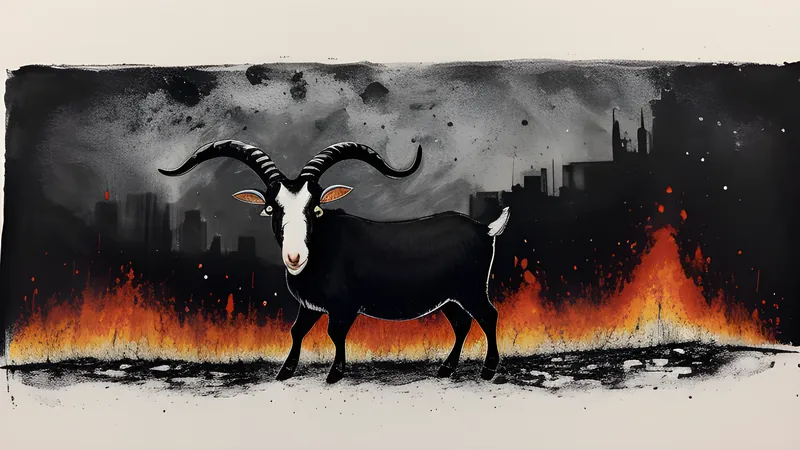
Every December a Swedish city builds a thirteen-metre goat out of straw, plants it in the main square, and then more or less holds its breath to see whether the thing survives to New Year. Most years it does not. The Gävle Goat is the strangest running gag in Scandinavia, a monument that exists partly to be admired and mostly, it seems, to be set on fire, and it has been playing out this way since 1966.
I have never stood in front of the Gävle Goat in flames, and I want to be honest about that up front, because half the internet writes about this thing as though they were there with a marshmallow on a stick. I have watched the webcam like everyone else, refreshing on a dark December evening from a Copenhagen sofa, waiting to see whether the straw beast in central Sweden would make it through another night. It is compelling television precisely because nothing is scripted and the ending is never guaranteed.
A goat, an advertising man, and one very flammable idea
The Yule goat — julbock — is old Swedish folklore, a straw figure with pre-Christian roots that once went door to door and eventually settled into a Christmas ornament you hang on the tree. In 1966 an advertising consultant named Stig Gavlén had the kind of idea that either dies in a meeting or becomes immortal: build the little tree ornament at enormous scale and drop it in Slottstorget, the castle square in Gävle, to draw shoppers to the southern end of the city.
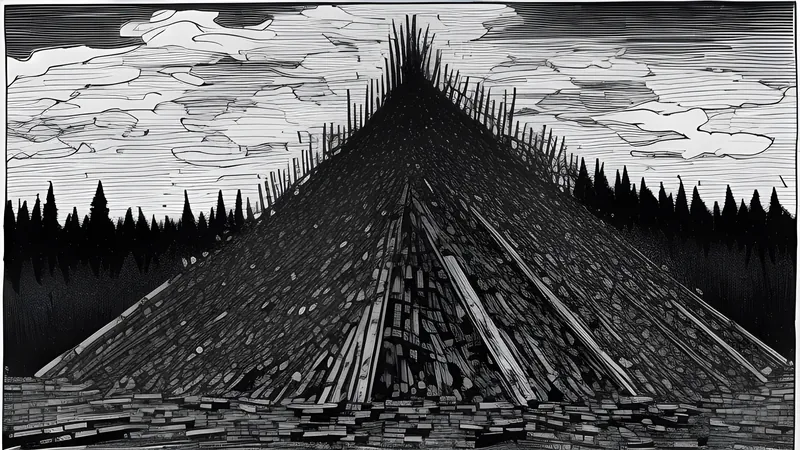
On 1 December 1966 the first goat went up. It stood roughly thirteen metres tall, seven metres long, and weighed around three tonnes of straw over a timber-and-steel skeleton. It was a genuine civic spectacle, a giant folk figure looming over the square, and it worked exactly as intended right up until New Year’s Eve, when somebody burned it to the ground. The culprit was caught and convicted of vandalism, and a tradition nobody asked for was born in the same breath as the one that was planned.
Two organisations have built goats over the years — the Southern Merchants and the local Natural Science Club — and the rivalry, the record-keeping, the sheer bloody-minded persistence of rebuilding a structure that keeps getting torched is the real story here. As of December 2025, by the city’s own tally, something like 43 of the 60 goats have been destroyed or damaged. Fire is the usual method. It is not the only one.
The catalogue of destruction
What lifts the Gävle Goat from local curiosity to international folklore is the inventiveness of its assailants, and the fact that the city keeps such a careful ledger of its own defeats. A few episodes have entered the canon.
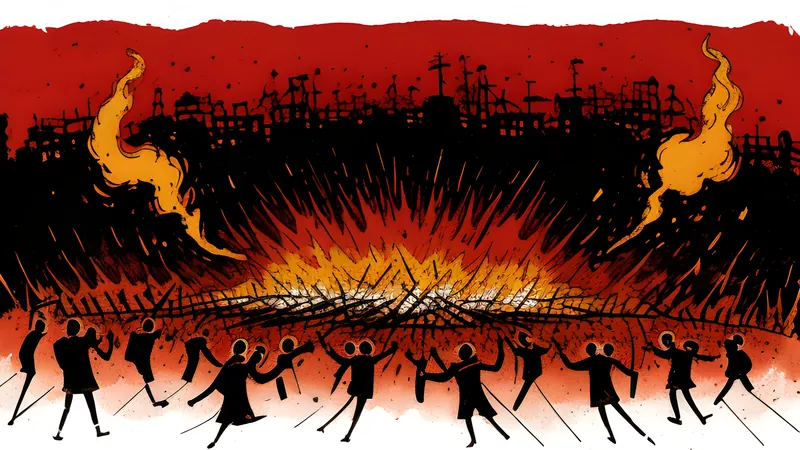
In 1970 the goat lasted about six hours before two very drunk teenagers put it to the torch. That set the tone: some goats do not survive their first night. Over the decades attackers have used fire, obviously, but also cars — one goat was rammed — and at least one was kicked to pieces. Fire remains the signature.
The single most-quoted incident is from 2001, when a 51-year-old visitor from Cleveland, Ohio, burned the goat down and then told a Swedish court, apparently in earnest, that he believed he was taking part in a perfectly legal goat-burning tradition. He spent time in jail, was ordered to pay a large sum in damages, and the court confiscated his cigarette lighter on the reasoning that he clearly could not be trusted with it. It is the kind of detail you could not invent, and unlike a lot of festival folklore, it is genuinely documented in the court record.
In 2005 a group dressed as Santa Claus and gingerbread men reportedly fired flaming arrows into the goat, an image so absurdly festive it later turned up on a Swedish “most wanted” television segment. In 2010 the goat survived, despite a reported scheme to bribe a guard and airlift the thing away by helicopter to Stockholm — a plot that reads like a Christmas heist film and, mercifully for the goat, never got off the ground.
Not every year ends in ashes. Extra guards, fireproofing treatments, webcams, fencing and a fire station within sight of the square have all helped the goat survive more often in recent years. The organisers have learned. So, presumably, have the arsonists.
The record-keeping is half the charm. The city and the goat’s builders maintain a running ledger of every construction and every demise — the date it went up, the date and manner it came down, whether a culprit was caught. It reads like the match reports of a very slow, very flammable sport, and it gives the whole saga the feel of an ongoing contest between the people who build the goat and the people who cannot leave it alone. Some years the goat is a triumphant survivor photographed against the January snow. Some years the entry is a single grim line about how quickly it burned. Either way, it goes in the book.
Why does a whole city keep rebuilding a bonfire waiting to happen?
Here is the thing I find genuinely interesting, and it is the reason this qualifies as folk spectacle rather than mere vandalism. Gävle could stop. The goat costs money, it draws crime, and it has become an annual security headache for a mid-sized Swedish city. And yet every year the straw goes back up. The city leaned into the joke instead of away from it: there is an official goat, an official webcam, English-language social media accounts that have historically bantered with the world about the goat’s chances, and betting markets that have offered odds on whether it burns.
That is the move that turns a nuisance into a tradition. Once you decide the goat is supposed to be under threat, the annual drama becomes the point. Will it make it to Christmas? To New Year? The suspense is civic entertainment, and the goat’s vulnerability is the whole engine. A goat that always survived would be a statue nobody talked about. A goat that might burn any night is appointment viewing.
I want to be clear about one thing, because it matters: burning the goat is arson, it is a crime, people have been jailed and fined for it, and the appeal of the spectacle is watching whether the goat survives rather than cheering the people who torch it. The Gävle Goat is beloved as a survivor. The city roots for the straw, not the flame.
The Nordic instinct for the magnificently pointless
There is a very particular Nordic sensibility at work in the Gävle Goat, and once you have spent time at northern festivals and small-town oddities you start to recognise it everywhere. It is the same deadpan commitment to an absurd idea that gives Finland the Wife Carrying World Championships in Sonkajärvi and the gloriously silly Mobile Phone Throwing World Championships. You take something small and daft, you do it with total seriousness, you keep records and hand out prizes, and thirty years later it is a fixture that draws television crews.
The Gävle Goat sits at the darker, funnier end of that spectrum. It is a folk figure and a running dare at the same time, a straw monument built by people who know full well it might be gone by morning and put it up anyway. That combination of earnest tradition and low-level chaos is deeply Scandinavian, and it is the same energy that runs through half the Nordic spectacles worth writing about — the impulse to build something big and beautiful and slightly ridiculous, plant it in the town square, and see what the winter does to it.
For all the arson headlines, the Gävle Goat is at heart a very old Swedish Christmas figure blown up to the size of a house. The julbock has been part of Nordic midwinter for centuries; Gävle just made theirs impossible to miss and, as it turned out, impossible to leave alone. The fires are the folklore now. Every December the straw goes up, the webcam flicks on, and a small Swedish city invites the world to watch whether its goat can make it to Christmas one more time.
Standing in the square in your head
You do not have to travel to Gävle to feel the pull of it, though I would happily make the trip on a cold December weekend to stand in Slottstorget with a coffee and look up at three tonnes of straw wondering how many nights it has left. The goat is a spectator sport that happens to be a sculpture, and it belongs in the same mental drawer as the great deadpan oddities of the north — the bog-standard weirdness that the Nordics do better than anyone.
If the Gävle Goat teaches you anything, it is that a spectacle does not need a stage, a lineup or a ticket. It needs a good idea, a stubborn community willing to repeat it every single year, and just enough jeopardy to make you check the webcam. The straw goes up. The city holds its breath. And somewhere in the dark, every December, the whole of Sweden waits to find out whether the goat lives.
If the appetite for magnificently pointless northern competition has you now, the same impulse runs through the Air Guitar World Championships up in Oulu — another Finnish idea that took something absurd, played it dead straight, and turned it into a fixture the whole world tunes in for.
Related Content