The Encore Ritual: The Fake Exit Everyone Agrees to Believe
How a real curtain call hardened into a scripted disappearance nobody is fooled by
Contents
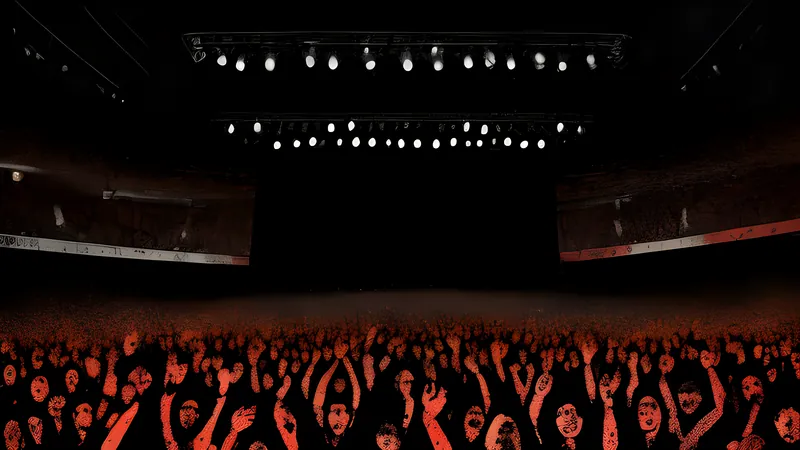
The band finishes the song, lifts their instruments off, waves, and walks into the wings. The house lights stay down. You know what this is. Everyone in the room knows what this is. And yet a few thousand people immediately start stamping and chanting and holding phones aloft as if the outcome were in doubt, as if the guitarist has genuinely gone home to bed and might, with enough love, be coaxed back. Ninety seconds later he strolls back on, picks up the same guitar, and plays the two songs that were always going to be played. Nobody is surprised. Everybody cheers. It is one of the strangest agreed lies in public life, and we perform it several times a week without blinking.
I have stood in that gap — the dark minute between the fake exit and the inevitable return — at VEGA, at Royal Arena, on a Copenhell hillside with ten thousand other people all pretending, and every time I think the same thing: we are not being tricked here. We are collaborating. The encore is a piece of theatre both sides know is theatre, and the interesting question is not whether it is fake. Of course it is fake. The interesting question is why a fake we can all see through is one of the most reliable emotional peaks in live music.
When the recall was real
The word gives the game away. Encore is French for “again”, and the thing it names was originally an actual demand — a genuinely spontaneous refusal to let the performance end. In eighteenth- and nineteenth-century opera houses the audience would shout encore or, in Italy, bis (“twice”), and mean it: play that aria again, right now, we are not finished with it. Singers really did repeat numbers on the spot because the room insisted. It got so disruptive that opera managements periodically tried to ban the practice outright, because a crowd demanding a beloved showpiece twice could wreck the pacing of a whole evening and exhaust a singer three acts early.
So the original encore was a real transaction. The audience had power, the performer responded to it, and the “again” was literally again — the same piece, delivered a second time because the demand was too loud to ignore. There was nothing scripted about it. You could not plan to be recalled; you either moved the room or you did not.
That is the ancestor of the thing we do now, and it is worth holding onto, because almost everything about it has since inverted. The demand became a formality. The spontaneity became a schedule. The “again” stopped meaning a repeat and started meaning a reserve of songs held back on purpose. Somewhere between the opera house and the rock arena, a real event turned into a ritual re-enactment of that event — a bit like how a handshake was once a genuine check for a concealed weapon and is now just a thing hands do.
The exit that everybody plans
Here is the part that ought to puncture the illusion completely, and somehow never does. The encore is on the setlist. It is written down. If you have ever seen the crumpled A4 sheets taped to the monitor wedges and the drum riser — and thousands of them get photographed and posted online after every tour — you will have noticed that most of them have a line drawn near the bottom, and under that line the letters ENC, and under that the two or three songs the band fully intends to play after their dramatic departure. The whole website setlist.fm exists partly because these documents are so consistent that fans can predict, city by city, exactly which songs will arrive after the “spontaneous” return.
The crew know. The lighting operator knows — that is the entire tell I will come back to. The merch staff know. The band absolutely knows; they have walked off to towel down, take a swig of water, and let the tension build for a pre-agreed number of seconds. The only people theoretically kept in the dark are the audience, and the audience knows too. We have all seen a hundred encores. We are not naive. We are choosing to inhabit the fiction because the fiction does something for us.
What it does is manufacture a second climax. A show has a shape, and the problem with a straightforwardly great final song is that it just ends — the last chord rings out and you are suddenly a person in a coat thinking about the night bus. The fake exit interrupts that deflation. It creates a small artificial crisis — is that it? was that the end? — and hands the crowd a job to do about it: chant, stamp, refuse. The band returns as if summoned, and the return is experienced as a small victory the audience won, even though the audience won nothing and the band was always coming back. It is a designed peak wearing the costume of a spontaneous one. This is not far from why the crowd sings the guitar solo — the room wants a part to play, a moment where it stops receiving the show and starts co-authoring it, and the encore hands it exactly that: a cue, a chant, and the flattering sense that its noise changed the outcome.
The lights-stay-down contract
The genius of the ritual is that it has a built-in signalling system so both parties can coordinate the lie without ever speaking. The signal is the house lights.
When the band walks off and the house lights stay down, the room is telling you: this is an encore, stay where you are, hold the tension, we are coming back. When the house lights come up — the big white wash across the whole venue — that is the honest full stop. Show over. Go home. Nobody has to announce it; the lighting desk announces it for everybody, and it is one of the most universally understood non-verbal codes in live music. I have watched entire arenas read that cue instantly and correctly: lights down, everyone digs in and chants; lights up, everyone turns for the exit mid-cheer. The house-lights code is the mechanism that lets a scripted event feel responsive. It keeps the fiction watertight without a single word being spoken, which is a genuinely elegant piece of stagecraft when you stop to look at it.
Which is exactly why the cruellest thing a headliner can do is bring the lights up early. If you have ever had a band you love simply end — last song, no walk-off, house lights snapping on over the final cymbal wash — you will know the specific small betrayal of it, the way the room’s chant dies in its throat because the venue has already told everyone the truth. Some bands do this deliberately to make a point about the ritual, and it lands as a point precisely because we are all so conditioned to the other version.
The honest one and the padded one
Once you accept the encore as theatre, you can start grading the theatre, and there is a real difference between the honest encore and the padded one.
The honest version is short and generous. The band walks off, comes back inside a minute, plays one properly enormous song — the anthem everyone came for, held in reserve so the set does not peak too early — and means it. The pause was a breath and a swig of water, the return is a gift, and the single closing song hits harder for having been made to wait. That is the ritual working: a small, efficient piece of stagecraft that leaves the room higher than a flat finish would have.
The padded version is where it curdles. This is the band that walks off, keeps you waiting a theatrical two or three minutes, ambles back on, and then plays four songs — a mid-tempo album cut, a cover, a bit of noodling, and only then the anthem. At that point the “encore” is not a coda, it is just the last quarter of the set with an interruption bolted into the middle of it, and the walk-off starts to feel less like generosity than like a contractual obligation being paced out. The tension the exit is supposed to create leaks away, because everyone can feel there is too much runway left for this to be a real ending. The best bands understand that the reserve only works if it is small. Hold back one devastating song and the fake exit is worth it. Hold back a quarter of the show and you have just taught the audience that your “again” was never in doubt, which spoils the one thing the ritual exists to protect.
This is a sequencing decision as much as a stagecraft one, and it belongs to the same craft I got into with the setlist as strategy: the encore songs are chosen and placed with total deliberation, held out of the main body precisely so the walk-off has something to walk back to. A band that understands its own set treats the encore as the last move in a designed arc, not as a dumping ground for the songs that did not fit.
Why we keep agreeing to believe
So why does a scene full of forensic, cynical, setlist-memorising obsessives keep performing a piece of theatre it can see straight through?
Because the pretending is the point. The encore is one of the few moments in modern spectacle where the audience gets a scripted opportunity to act on the show rather than merely absorb it, and the fact that the script is transparent does not spoil it any more than knowing the ending spoils a favourite film. We chant because chanting is the participatory ritual attached to the return, and the doubt about whether the band will reappear barely enters into it; rituals do not require belief to work — a great deal of what makes a crowd a crowd is the willingness to do a thing together on cue. The mutual pretend is a form of consent: the band says make me come back, the room says we will, and both sides fulfil their half of a bargain that was signed before the doors opened. It is the same reason ten thousand strangers will hurl themselves at each other in a churn that looks like violence and is actually a kind of trust — the deep pleasure of a live show is agreeing, en masse, to inhabit a shared fiction, which is a thread that runs through everything from the pit to the chant to what the mosh pit is actually for.
The next time a band walks off and the house lights stay down, watch yourself do it. Watch your own hands go up, your own voice join the stamp, while some cooler part of your brain notes that the setlist taped to the riser already has ENC written on it in marker. Both things are true at once, and holding both is the whole trick. The exit is fake. The feeling is real. We agreed to that trade a long time ago, somewhere between a Milanese opera house shouting bis and a harbour full of Danes in the dark, and it remains one of the best deals live music has ever offered.
Related Content