Tavastia: Helsinki's Legendary Rock Club
Fifty-odd years of Finnish noise in a stubborn old house off Urho Kekkosen katu
Contents
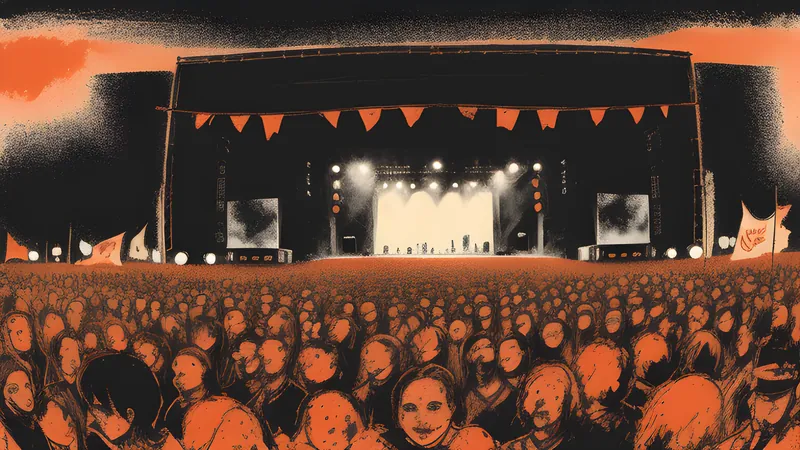
Tavastia has been putting rock bands on the same Helsinki stage since 1970, which makes it one of the oldest rock clubs in continuous use anywhere in Europe. That is the sort of statistic that gets thrown around venue websites and usually means very little, because most old clubs have been gutted, rebranded, moved sideways and hollowed out until only the name survives. Tavastia is the rare exception where the number actually describes the place. Walk in off the street in central Helsinki, a stone’s throw from the main railway station, and you are standing in a room that helped invent the idea of Finnish rock and roll and then kept doing the job for half a century without ever quite becoming a museum of itself.
The building is older than the club. It went up in 1931 as Hämäläisten talo — the House of the Tavastians — a home for the student and regional association of Häme, the old inland province the club takes its name from. A house built for a provincial society is a very Finnish origin for a rock institution: sober, civic, faintly bureaucratic, the last place you would expect to end up soaked in beer and feedback. But through the 1960s the hall started leaning towards music, and in 1970 it was christened Tavastia klubi and pointed itself squarely at rock. It never looked back.
The room, and what half a century did to it
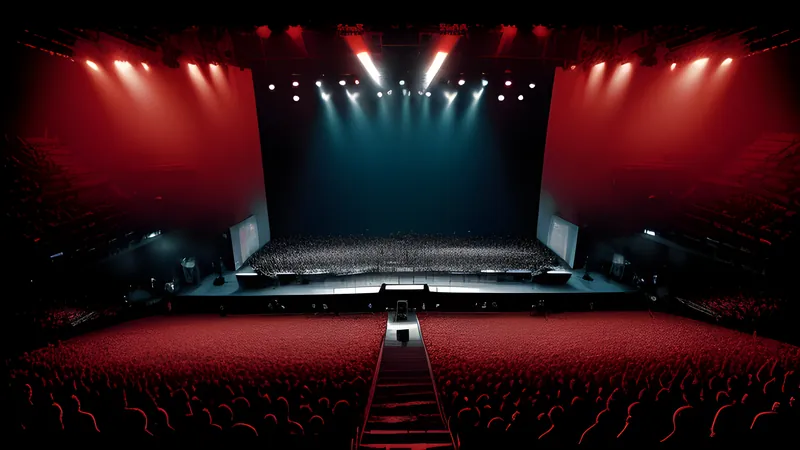
The main hall holds around seven hundred, and the shape of it is the whole point. It is a proper club — wider than it is deep, a low balcony wrapping the sides and back, the stage set at a height that means you can actually see a band from the floor without being crushed against the barrier. Seven hundred is a beautifully judged number for loud music. It is big enough to feel like an event and small enough that the room never turns into a distant television. From most of the floor the band are human-sized and close, and from the balcony you get the whole picture — the stage, the pit, the heave of the crowd — laid out below you like a diagram of a good night.
The sound is the sound of a room that has been doing this for fifty years and has had every mistake beaten out of it. Finnish crews take their PA seriously, and Tavastia had a full technical refit in recent years that dragged the rig into the modern era without gutting the character of the space. The result is a club that can take genuine volume — Finland runs to heavy music, and the room is built to carry it — while keeping enough clarity that you can tell a good band from a loud one. That distinction matters more than people admit. Plenty of storied old rooms flatter volume and punish detail. Tavastia does the harder thing and lets both through.
If you want the ideal spot, the balcony corners nearest the stage are the connoisseur’s pick: elevated, angled, close enough to read the setlist taped to the monitor, far enough from the front that you keep your ribs. Down on the floor, a third of the way back and slightly off centre is the usual sweet spot for sound and survival. The front is the front — hot, loud, physical — and on a big Finnish metal night it is a full-contact decision. Sort that out with yourself before the lights drop.
The bands the building made
The reason Tavastia earns the word “legendary” without cringing is the roll-call of acts that came up through it. In the 1970s the club was the launchpad for the first wave of Finnish rock that mattered — Hurriganes, the raw rock-and-roll trio that became a national institution; the prog outfit Wigwam; the singer-guitarist Dave Lindholm, still a revered figure in Finnish music; the satirical rockers Sleepy Sleepers. Foreign acts came through too when Helsinki was still an unusual stop on any touring map: Tom Waits played here, John Lee Hooker played here, Dr. Feelgood brought their pub-rock ferocity to the room. For a club at the far northern edge of the touring circuit, that was a serious statement of intent.
The 1980s cemented it. Hanoi Rocks — the glammed-up, doomed, hugely influential Helsinki band that a generation of bigger acts would later cite as an inspiration — rose out of this scene, and Tavastia was their kind of room. By then the club’s reputation was fixed: if you were a Finnish band with any ambition, Tavastia was the rung you had to reach and then the rung you had to hold. That has never really changed. The Finnish acts that went on to conquer bigger rooms and other countries — the goth-rock exporters, the symphonic-metal giants, the melodic-death crews that made Finland a metal superpower out of all proportion to its population — nearly all passed through this stage on the way up.
There is a smaller sibling worth knowing about. Next door, run by the same operation, is Semifinal, a little club that functions as the farm system — the room where the newest and rawest bands play their first proper Helsinki shows before they are ready for the main hall. It is a genuinely lovely piece of ecosystem design: come up in Semifinal, graduate to Tavastia, and if the world goes your way you leave for the arenas. The whole ladder is on one site. As someone who spends his life first through the door for the opening act, I find that arrangement close to perfect.
The crowd and the character
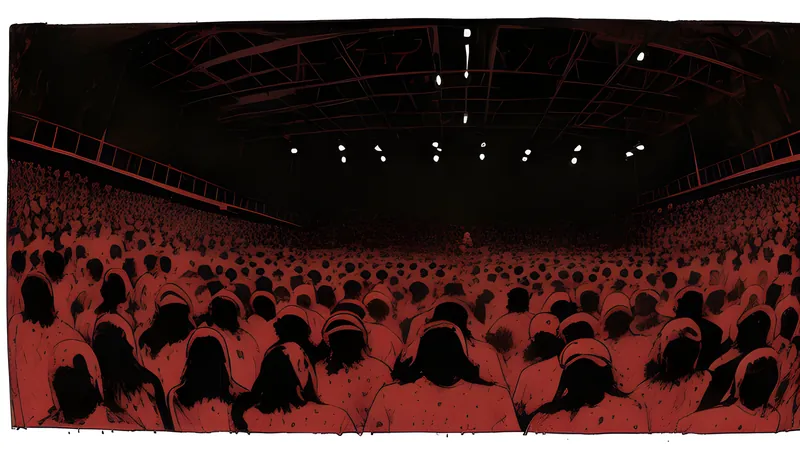
Finnish crowds have a reputation abroad for being reserved, and there is truth in it right up until the band they came for hits the stage, at which point the reserve evaporates and you remember that this is a country that produces more metal bands per head than anywhere on earth for a reason. A Tavastia crowd is knowledgeable, unpretentious and deeply committed. Nobody is here to be photographed. The lighting is honest and the beer is expensive — this is the Nordics, and you will pay Helsinki prices without enjoying it — and people come for the single reason that they want to hear the band play loud in a room that was built to make bands sound good.
There is an easy, worn-in warmth to the place. It is a club that has hosted everyone’s first great gig and everyone’s favourite band and everyone’s misspent youth, and that history sits in the walls in a way you can feel. It never tips into preciousness. The staff have seen it all, the sound crew know exactly what the room wants, and the whole operation runs with the quiet competence of an institution that stopped needing to prove anything decades ago.
Getting there, and where it sits
Location is one of Tavastia’s quiet advantages. It is dead central — a short walk from Helsinki’s main railway station, which is itself the hub of the whole region’s trains and metro, so wherever you are staying you can reach it and, more importantly, get home from it after the encore. Helsinki is a compact, walkable, sensible city, and the club sits right in the thick of it, surrounded by bars and late food for the aftermath.
For a Copenhagen punter, Helsinki is a short hop across the Baltic, and Tavastia is the obvious anchor for a night in the Finnish capital the way certain rooms anchor other Nordic cities. If you are building a mental map of the region’s great mid-size clubs, Tavastia belongs in the same sentence as Stockholm’s Debaser and Oslo’s Rockefeller — the trio of storied rooms that hold up the northern circuit. And if you want to understand why a scattering of small, cold, sparsely populated countries punch so far above their weight in loud music, the Finnish end of that story runs straight through this hall — a companion piece to the Danish metal-export tale playing out one sea away.
The verdict
Tavastia is the platonic ideal of the storied mid-size rock club: seven hundred capacity, a stage you can see, a rig that carries weight without turning to mud, a balcony built for watching, and fifty-odd years of national music history soaked into the brick. It has the two things that almost never survive together — genuine heritage and genuine present-tense relevance. Bands still break here. Kids still see their first great show here. The room still does the job it was pointed at in 1970.
Come for a Finnish band on home turf, get there early for whoever is opening, take a turn on the balcony corner for the view and drop to the floor for the headliner. You will leave understanding something about how a small northern country built one of the loudest music cultures on the planet, and you will have had a superb night in one of the best-run rooms in Europe doing it. Half a century in, Tavastia is still the house the Tavastians built, still standing, still loud.
Related Content