Summer Breeze: Germany's Well-Oiled Metal Machine
How a medieval Bavarian town became one of Europe's most efficient metal festivals
Contents
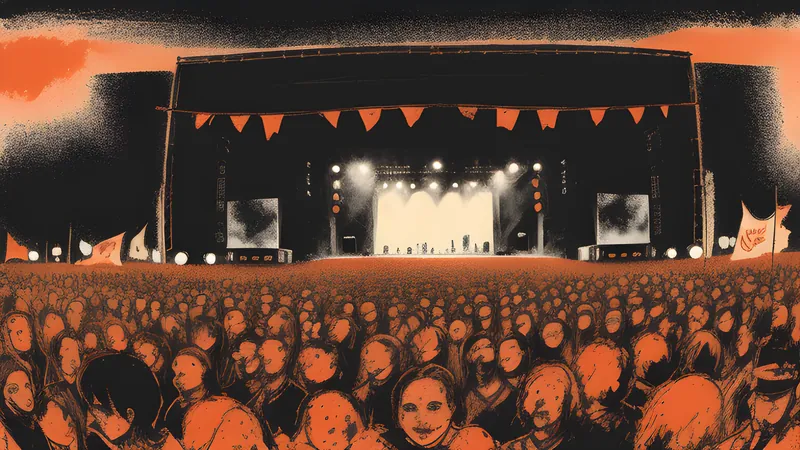
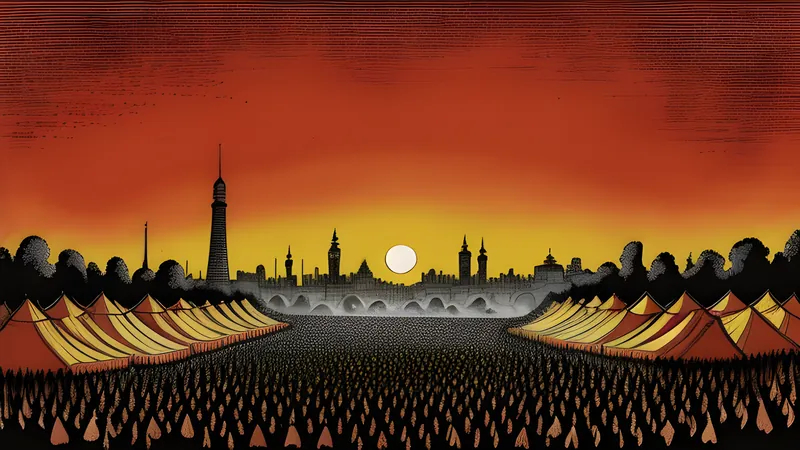
Dinkelsbühl is one of those absurdly preserved medieval towns that Bavaria specialises in — a walled Franconian gem on the Romantic Road, all timbered gables and stone gates and coach parties photographing the market square. It is the kind of place that exists in a permanent postcard. And every August, in the fields just outside those medieval walls, forty thousand metalheads assemble for Summer Breeze Open Air, one of the most quietly efficient large festivals in European metal. The contrast is glorious, and the efficiency is the whole story.
I have never been to Summer Breeze — August is when I am usually at Wacken or over in the Czech Republic, and Germany already takes a large bite of my festival year. But Summer Breeze has a reputation that travels, and the reputation is specific: it is the festival German metalheads name when they want to talk about a big event that simply works. This is a read from the record — where it came from, why the site suits it, and what it means to build a festival’s entire identity around competence.
From Abtsgmünd to the Romantic Road
Summer Breeze began in 1997, founded by the promoter Achim Ostertag as a small German metal festival in the town of Abtsgmünd in Baden-Württemberg. It grew, as these things do when they are run well, and it outgrew its original home. In 2007 it relocated to Dinkelsbühl in Bavaria, taking over a large site outside the medieval town, and that move gave it the room to become the mid-sized giant it is now.
The founding matters because Summer Breeze grew organically, over decades, under consistent stewardship. It was not assembled by a corporate events division; it was built by people who ran a festival every year and got better at it, and that accumulated craft is exactly what you feel on the ground. By the time of its 20th anniversary in 2017 it had added a major new main stage and settled into a five-stage layout, and it now draws around 40,000 attendees a year — big enough to book the genre’s serious names, small enough to stay coherent.
Over its history Summer Breeze has hosted close to a thousand bands and made a real point of giving slots to lesser-known and emerging acts alongside the headliners. That breadth of booking, from the underground up to the marquee names, is part of why it keeps its crowd loyal. People trust the programming because it has been consistent for a quarter of a century.
Efficiency as a brand
Here is the thing every German metalhead tells you about Summer Breeze: it runs like clockwork. The queues move. The infrastructure holds. The site is well drained, well signposted, well stewarded, and the whole operation has the unglamorous competence that Germans bring to logistics and that festival-goers from less organised countries find almost moving. When you have spent a weekend wading through a badly run festival’s chaos, a well-run one feels like a gift.
That competence has become the festival’s actual identity. Summer Breeze does not sell itself on being the biggest or the most extreme or the most storied; it sells itself on being the one that treats you like an adult and gets the basics right. That is a genuinely valuable proposition in a crowded market. Germany already has Wacken, the enormous and world-famous behemoth that turns a tiny village into the metal capital of the planet. Summer Breeze carved out a different niche — smaller, tighter, more manageable, the well-oiled machine rather than the sprawling legend.
Compared to the boot-swallowing mud of Download or the vast four-day sprawl of the biggest events, Summer Breeze offers a festival at a human scale, run with a precision that lets you actually enjoy it. That is not a boring virtue. Anyone who has stood in a two-hour queue for a single beer while a badly organised festival collapses around them understands exactly how valuable it is.
The site, and the town
The setting is part of the appeal, and it is a very German kind of appeal. You have the harsh, loud, black-clad festival unfolding in the fields, and a few minutes away you have Dinkelsbühl’s perfectly preserved medieval old town, with its walls and towers and tidy squares. Festival-goers wander into the town for the contrast, and the town — like so many of these festival hosts — has learned to accommodate its annual invasion of metalheads with a mixture of bemusement and commercial gratitude.
That coexistence of the ancient town and the modern festival is a recurring pattern across European metal, and it is one of the loveliest things about the whole circuit. Hellfest does it with a Loire wine town; Wacken does it with a farming hamlet; Summer Breeze does it with a Romantic Road tourist jewel. Each one is a small conservative community that hosts, once a year, a gathering that looks like the opposite of everything it stands for, and each one has quietly worked out how much that gathering is worth.
The Bavarian site itself is flat, open farmland with the five stages spread across it, big enough to hold 40,000 people without feeling either cramped or lost. The scale is deliberate. Summer Breeze could probably grow bigger, and has chosen not to chase Wacken’s numbers, because the size it is now is the size at which it can guarantee the smoothness that is its brand.
The five stages and the emerging bands
The five-stage layout is part of what makes Summer Breeze work at its chosen size. Enough stages to keep the music running continuously and give a wide spread of the genre a platform, few enough that you can actually navigate the whole thing without a map and a strategy session. The addition of the big main stage for the 20th anniversary in 2017 gave the headliners the scale they needed while the smaller stages kept doing the unglamorous, important work of platforming bands nobody has heard of yet.
That commitment to the emerging act is a real thread through Summer Breeze’s history. Across nearly three decades it has put close to a thousand bands on its stages, and a large share of those have been the lesser-known and up-and-coming rather than the established names. A festival that reliably gives afternoon slots to bands on their way up is doing quiet, essential work for the health of the whole scene — the same work I admire in Bloodstock’s New Blood pipeline, done in a different national key. The headliners sell the tickets; the undercard keeps the genre alive.
German metal culture runs deep and broad, and Summer Breeze is one of its load-bearing institutions. The country produced Scorpions, Accept, Kreator, Sodom, Rammstein and a whole thrash tradition that shaped the global sound, and it sustains a live circuit dense enough to support multiple huge festivals in a single summer. That a mid-sized event like Summer Breeze can pull 40,000 people every August, year after year, in a market that also feeds the Wacken behemoth, tells you how much appetite there is. Germany does not have one metal festival; it has an ecosystem, and Summer Breeze occupies the well-run, human-scale niche within it.
Why the well-oiled machine matters
From Copenhagen, Summer Breeze reads as the professional’s festival — the one you recommend to someone who wants a big, serious German metal weekend without the overwhelming scale and chaos of the very largest events. It occupies a smart position: heavy enough to satisfy, large enough to book the names, small enough to run properly.
I spend a lot of my writing complaining about corporate sameness and why every festival now feels the same, and it is worth being honest that competence is a partial answer to that complaint. When the lineups all blur together, the thing that distinguishes a festival is how it treats you — whether it respects your time, your money and your body over three days. Summer Breeze built its whole reputation on getting that right, and a quarter-century of loyal German metalheads suggests it is a strategy that works.
One of these Augusts, when Wacken is not eating the calendar, I will take the train down to Franconia, photograph the medieval walls like every other tourist, and then walk out into the fields to watch the well-oiled machine do its thing. From everything I hear, it will be the most relaxing large festival I have ever attended — and after enough summers of festival chaos, relaxing sounds like exactly the right kind of heavy.
The deeper point is that a festival’s identity does not have to come from spectacle or scale or a legendary disaster in its past. Summer Breeze built a quarter-century of loyalty on the least glamorous virtue in the industry — getting the boring things right, every year, without fuss — and turned that into a brand people cross the country for. In a market obsessed with bigger stages and taller pyrotechnics, there is something quietly radical about a festival whose main promise is that it will simply work. The Germans understood that a long time ago, and Dinkelsbühl fills up every August because of it.
Related Content