Summer Breeze: Dinkelsbühl's Loud Week
How a medieval Bavarian town of eleven thousand hands its airfield to forty thousand metalheads every August
Contents
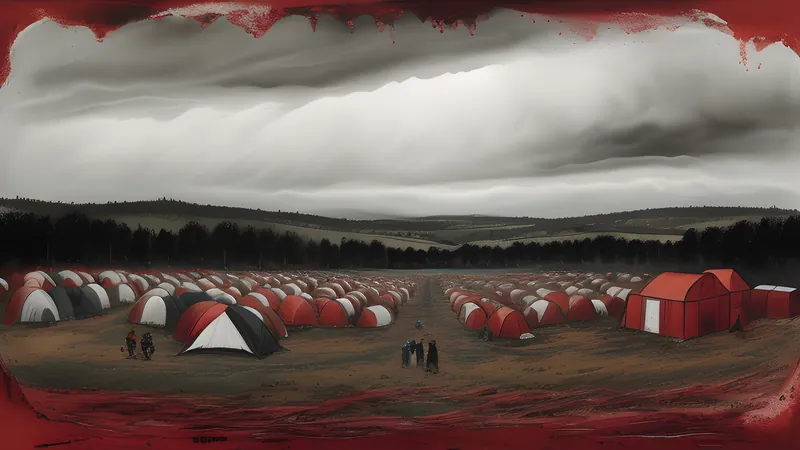
There is a specific kind of German festival that only makes sense once you understand where it happens. Summer Breeze Open Air runs on the flat farmland and old airfield just outside Dinkelsbühl, a walled Franconian town of roughly eleven thousand people whose medieval centre survived the Second World War almost entirely intact. Every August a crowd four times the size of the resident population arrives, sets up canvas cities in the fields, and spends the better part of a week being extremely loud. The contrast is the whole point, and the town has learned to lean into it rather than flee.
From Copenhagen this is the awkward middle distance: too far for a weekend hop, too close to justify a flight when the trains through Hamburg and Nuremberg get you there overnight. I have watched Summer Breeze from the outside for years, tracking its lineups against my own attended calendar — Wacken in the north, Party.San out east, the extreme-underground field — and it occupies a distinct slot in the German summer that neither of those quite covers. Wacken is the mythology and the sheer size; Party.San is the extreme-underground purist’s field. Summer Breeze sits between them and covers more ground than either.
From a car park to an airfield
The festival started in 1997 as a one-day affair in Abtsgmünd, a few hundred people watching regional bands in Baden-Württemberg. It grew the way these things grow when someone competent is running the booking: another day added, a bigger site needed, then a move. The relocation to Dinkelsbühl in 2007 gave it the space it needed, and the airfield-and-farmland layout has defined it since. The organiser, a Bavarian outfit that treats the event as a year-round job rather than a summer hobby, kept expanding the footprint until Summer Breeze settled into the roughly 40,000-capacity bracket that puts it among the largest German metal gatherings behind Wacken and the Rock am Ring / Rock im Park pairing.
That growth curve matters because it explains the festival’s character. This is a metalhead-built event that scaled without ever fully corporatising its soul. The genre spread stays broad — melodic death, thrash, power metal, a healthy chunk of black and doom, the occasional hardcore or industrial curveball — while the programming instinct stays recognisably German: thorough, a little conservative, deeply respectful of the veteran acts and generous to the mid-tier bands that a British or Dutch festival might bury on a side stage at noon. A band that has grafted for fifteen years and earned a following will get a proper afternoon slot here and a crowd that knows the material.
By the mid-2010s Summer Breeze had settled into a Wednesday-to-Saturday rhythm, with the site opening early in the week for the campers who treat the festival as a full holiday. Tickets in the good years sell out well ahead, which for a 40,000-cap event is a real signal — it means the loyalty runs deeper than the poster, that people commit before the headliners are even announced. Very few festivals in Europe can bank on that. It is the clearest measure of a healthy event.
The stages and the shape of a day
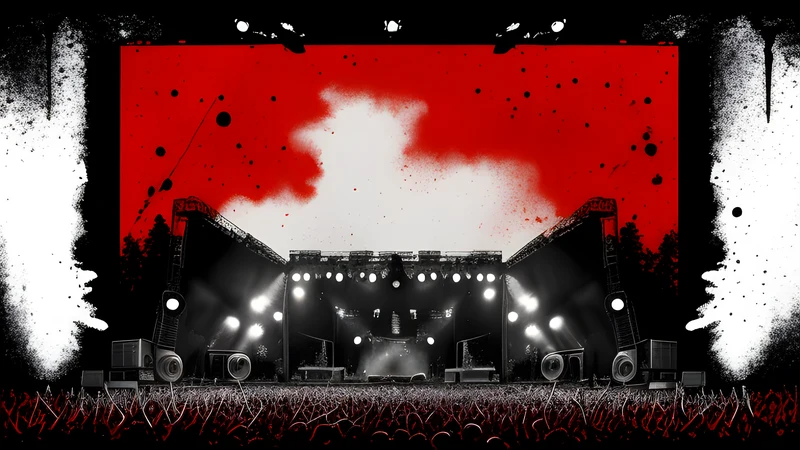
The site runs on a main-stage-plus-satellites model. The Main Stage and Party Stage anchor the big open field and alternate so there is rarely a dead moment; the T-Stage and the smaller tented rooms carry the extreme and underground programming, which is where the festival earns its credibility with the people who care about lineups down to the eighth name on the poster. A Summer Breeze day tends to start slow and civilised, build through the afternoon, and then hit the pattern every large open-air festival shares — the sun drops, the field fills, and the headliner plays to a genuinely enormous crowd under lights that have to compete with a Bavarian sky that stays pale until quite late in August.
What stands out on the record is the consistency of the booking. Summer Breeze rarely lands the single planet-sized headliner that Wacken can wave around, and it does not try to. It builds bills that run three and four deep with bands people actually travel for — the Amon Amarths and Arch Enemies and In Flames of the world up top, then a middle tier stacked with acts that would headline smaller festivals. If you like the Gothenburg melodic-death lineage and the German thrash tradition, the Summer Breeze poster reads like a well-kept diary of everything those scenes have produced. Over the years the festival has hosted essentially every significant European metal act at one edition or another, and its melodic-death programming in particular has been close to definitive.
The flip side of that breadth is that Summer Breeze can feel less peaked than a festival built around one colossal reunion or farewell. There is no single Iron-Maiden-closes-a-world-tour moment stamped on its history the way Wacken has collected them. What you get instead is depth — a bill where the fourth band down is one you would happily pay to see headline elsewhere, and where the schedule clashes genuinely hurt because everything on offer at that hour is worth seeing.
That identity is worth defending. A festival that lives or dies on landing the one impossible reunion is hostage to a booking market it cannot control; a festival built on depth just needs to keep its ear to the ground and its relationships warm. Summer Breeze has done exactly that for a quarter of a century, and the reward is a poster you can trust before you have read a single name on it. When German metal writes its own history, this field near Dinkelsbühl is one of the places that history keeps happening. Bands break through here, veterans get their victory laps here, and the melodic-death and folk-metal scenes in particular treat a Summer Breeze slot as a rung on the ladder worth climbing for.
The Wackinger Village
Here is the detail that separates Summer Breeze from every other big German metal festival, and the thing people who have been always mention first: the Wackinger Village. Tucked into the site is a full medieval market — folk and pagan-metal stages, a mead hall, craftspeople hammering leather and metal, food cooked over open fire, the whole apparatus of a Franconian historical fair transplanted into a festival. It is easy to be cynical about this until you remember where you are standing. Dinkelsbühl is one of the best-preserved medieval towns in Germany, a stop on the Romantische Straße tourist route, and the Wackinger Village is the festival holding a mirror up to its own host. The walled old town and the festival mead hall are running the same trick from two directions.
The pagan and folk-metal programming that clusters around the village gives Summer Breeze a texture the pure-metal festivals lack. It draws a slightly different crowd for those hours — face paint, horns, a lot of people who came as much for the atmosphere as the riffs — and it means the site has a quiet corner with a fire and a drinking horn when the main field gets too much. Every large festival needs a release valve. Summer Breeze built theirs out of the town’s own history, and it works better than the sterile “chill zones” that corporate events bolt on as an afterthought. The village has become a genuine draw in its own right; there are people who plan their day around it and barely touch the main stage until dark.
Camping, logistics and the field
The practical experience is German-organised, which is to say it works. The campgrounds spread across the farmland around the arena, managed with the thoroughness you would expect, and the site is walkable — no shuttle-bus marathon between your tent and the stages. Dinkelsbühl itself is a short distance away and stays open to festivalgoers, so unlike the isolated fields where you are trapped with overpriced burger vans for a week, you can walk into an actual medieval town for a proper meal and a bakery run. That access to a real town is a quiet luxury that festival veterans rate highly and newcomers underestimate.
The weather is the Bavarian August gamble — it can be a dust bowl in the heat or a mudbath after a thunderstorm, sometimes both in the same week. The airfield drains better than some of the notorious swamp-fields elsewhere in Europe, and the crowd is well drilled in the German art of enduring whatever the sky produces without complaint. Nobody who has queued at a soaked festival gate forgets it, and Summer Breeze regulars carry the right boots.
The town, the crowd, the deal
The relationship between Dinkelsbühl and its festival is the real story. Eleven thousand permanent residents; roughly forty thousand visitors; a town whose economy runs partly on being a picture-postcard medieval stop for coach tours in daylight and a metal capital for one week. The locals have made their peace with it, and by most accounts more than that — the festival is a significant chunk of the annual economy, the campgrounds are managed carefully, and the horror stories you get from festivals that resent their own crowd are largely absent. When a town of this size hands over its fields willingly, year after year, you can read the health of a festival in that alone.
The crowd itself is heavily German with a strong central-European spread — Austrians, Swiss, Czechs, a scattering of Dutch and Scandinavians who, like me, calculate the train. It is an orderly, friendly, slightly older crowd by festival standards, the kind of audience that queues properly and cleans up after itself and knows every word to bands that never charted. That orderliness earns the festival its long lease on the town. It is what allows an event this size to run on farmland next to a heritage site without becoming a siege.
Where it sits
Summer Breeze occupies a specific and valuable position in the European festival year. It lacks the sheer mythic scale of Wacken and the extreme-underground purity of the smaller east-German fields. What it offers instead is completeness: a broad, deep, well-run metal week with a medieval market bolted to its side and a genuinely charming host town twenty minutes’ walk away. For a Copenhagen punter weighing the German summer, it is the festival I would send someone to first if they wanted the full breadth of the genre without the overwhelming crush of the very biggest events.
The thing I keep coming back to is the airfield at dusk. A flat Bavarian field, a main-stage rig visible for a kilometre, forty thousand people who travelled to be exactly there, and a walled medieval town glowing on the horizon behind them. Germany does the large metal festival better than anywhere else, and Summer Breeze is the argument that you can run one big without losing the plot. The town keeps saying yes. That is the review that counts.
Related Content