Stengade: Nørrebro's Sweatbox for the Underground
The squat-born Nørrebro club that has carried Copenhagen's loud fringe since 1972
Contents
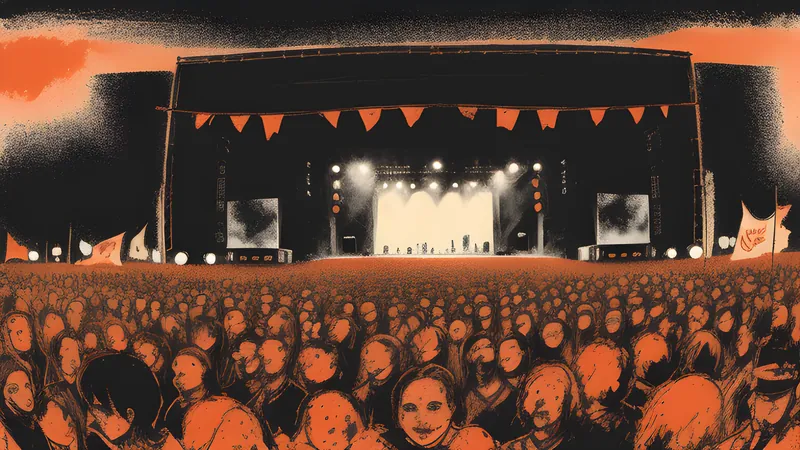
There’s a certain kind of Copenhagen night that only happens in a room too small for the band playing it, and for thirty years the reliable address for that night has been Stengade in Nørrebro. Small stage, low ceiling, raw walls that have soaked up decades of sweat and volume — this is where the city’s loud underground goes when it wants to be uncomfortable in the best possible way. Black metal, hardcore, weird jazz, whatever the polite rooms won’t book: Stengade takes it, and takes it seriously.
I’ve spent more nights than I can defend in this place, wedged against a pillar while a band five feet away tries to remove my hearing. It is one of the two or three most important small rooms in Copenhagen, and its history explains exactly why it feels the way it does.
Born in a squat, run like a cause
Stengade started in 1972, and it started as an occupation. The building on Indre Nørrebro was taken over by the Slumstormerne — the slum-stormers, the 1970s Copenhagen squatting movement — and turned into a nightclub and music venue under the address it made famous: Stengade 30. From the beginning it carried the DNA of that scene. Self-organised, politically awake, allergic to gloss, and pointed squarely at the music the establishment ignored. That founding attitude never fully washed out, and it’s the reason the place still feels like a cause rather than a business.
The address itself has a quirk that trips up anyone reading old flyers. Urban renewal on the street eventually re-registered the building’s number, so “Stengade 30” became Stengade 18 while the venue kept trading under the old name for years. If you’ve seen both numbers on gig posters and wondered whether there were two clubs, there weren’t — same building, same stubborn spirit, different digit over the door.
Across the decades it ran something like 250 shows a year across a fantastically broad remit: punk, metal, indie, hip hop, surf, electronica, dance. The unifying thread was never a genre. It was a temperature — everything at Stengade ran hot, close and a little bit dangerous.
That breadth is deliberate, and it’s the squat inheritance talking. A commercial room books what sells; Stengade books what it thinks matters, which is why on consecutive nights you might get a corpse-painted black metal act, an experimental electronic set that clears half the bar, and a free-jazz trio that would frighten a wedding. The place has always treated its programme as a statement about what deserves a stage rather than a calculation about ticket revenue. It embraces the genres the tidier venues quietly avoid — the difficult, the abrasive, the not-yet-proven — and it does so as a matter of principle. You go to Stengade partly to hear the band and partly to trust the booking: if it’s on there, someone with taste and no commercial incentive decided it was worth your evening.
The night it died, and the year it came back
The most important thing to know about Stengade is that it once closed, and that the closure tells you what the venue means to the city. In 2009 Copenhagen Municipality revoked its status as a regional venue, pulling state and municipal funding retroactively, and the blow forced Stengade 30 to shut. For a while it looked like one of the great small rooms of the Danish underground was simply gone — another casualty of the paperwork that quietly decides which culture survives.
It didn’t stay dead. On 18 September 2010 the building at Stengade 18 reopened as Spillestedet Stengade under new management and a new association, carrying the name and the mission forward. The scene had refused to let it disappear, and the reborn venue picked up exactly where the old one left off: user-driven, volunteer-heavy, booked with an ear for the difficult and the emerging. When people talk about a music city being more than its arenas, this is the sort of resurrection they mean. A room like this closing is a wound; a room like this reopening is the scene proving it still has a pulse.
What it feels like inside
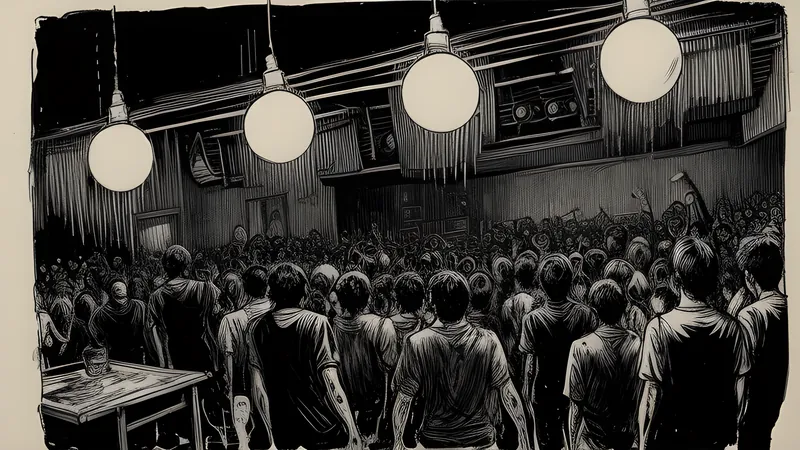
Forget comfort. Stengade is compact — capacity sits somewhere around 200 to 250 depending on how the night is laid out — and the room makes no attempt to hide its age. The walls are bare and worn, the ceiling is low, the floor has decades of ground-in history underfoot. The stage is a modest riser with almost no theatrical distance between performer and crowd, which is the whole point. There is no cheap seat because there is no seat. You stand, you’re near the band whether you planned to be or not, and on a full night the air turns to soup within three songs.
That intimacy does something to the music. A hardcore band that would look small on a big stage becomes overwhelming here, because you’re inside the blast radius. A black metal act’s low, ceremonial menace fills a room this size the way it never fills a hall — the ceiling presses the sound down onto you and there’s nowhere to retreat. Sound quality at Stengade is never going to compete with a purpose-tuned room like VEGA; what it offers instead is proximity and pressure, the same currency as Loppen over in Christiania. On the right bill that trade is worth every decibel of missing hi-fi finesse.
The pit, when it opens, opens fast and takes up most of the floor because most of the floor is within arm’s reach of the stage. This is a room that teaches you what the mosh pit is actually for whether you wanted the lesson or not. Watch out for the pillars — Stengade has the structural columns that old Copenhagen buildings always do, and a hard shove in the dark can introduce you to one.
The lighting is minimal and the production values are honest to the point of austerity. Don’t expect a light show; expect a couple of banks of red and white and a lot of shadow, which suits the music down to the ground. Black metal wants gloom, not a lighting designer’s showreel, and hardcore only needs enough illumination to see the person about to collide with you. That stripped-back staging is part of what keeps the focus where Stengade wants it — on the band, the volume and the crowd, with nothing between you and the noise. It’s the anti-arena, and after a run of big-room shows with their choreographed pyro and video walls, a night in this bare Nørrebro basement can feel like a cold shower that reminds you what live music is actually made of.
Where it sits in the Copenhagen ladder
Stengade matters most as a rung. It’s one of the rooms where a band plays its first real Copenhagen show, where a foreign act with three hundred fans in the whole country lands, where the local underground tests material that would get it thrown out of a nicer venue. Bands climb from here up through rooms like Amager Bio and beyond as they grow, and following that arc is one of the quiet pleasures of caring about a live scene. The little country that keeps producing an outsized quantity of loud music — the phenomenon I’ve written about as Denmark’s metal export — is built on rooms exactly like this, where the first fifty fans show up and decide whether there’ll ever be a next fifty.
There’s a continuity worth appreciating in all this. The building that squatters seized in 1972 is still doing, in 2022, more or less what those occupiers wanted it to do: hand a stage to music the mainstream won’t. Fifty years is an extraordinary run for a venue born out of an illegal occupation, and it has survived a forced closure and a change of management with its purpose intact. Copenhagen has slicker rooms, louder rooms, better-sounding rooms — but it has very few with this depth of continuous mission. Stand in the basement on a good night and you’re standing at the far end of a fifty-year argument about who gets to make noise in this city, and the argument is being won, one uncomfortable, overcrowded, brilliant gig at a time.
A few practical notes. It’s deep in Nørrebro, a proper neighbourhood rather than a nightlife strip, so treat it as a destination. Doors and start times run late and loose — check the night rather than assuming a headline hour. Bring cash for the bar to be safe, and bring earplugs; the room is small enough and loud enough that your ears will genuinely thank you tomorrow, and the good musician’s earplugs cut the harshness without stealing the low end. And come with the right expectation: you’re not going to Stengade for polish, sightlines or a comfortable evening. You’re going because the most interesting thirty minutes of live music in Copenhagen this week is happening in a sweatbox five feet from your face, and there’s no better place on earth to stand for it.
Related Content