Steelfest: Finland's Extreme Weekend
A black-metal festival in Hyvinkää that books the uncompromising end and never apologises for it
Contents
Some festivals cast a wide net and hope everyone finds something to love. Steelfest does the opposite. It is a Finnish open-air festival held in Hyvinkää, a town north of Helsinki, and it is dedicated with total conviction to the extreme end of metal — black, death, and the darkest fringes of the underground. There is no crossover headliner to reel in the curious, no softening of the programming to widen the tent. Steelfest books the uncompromising and trusts that the people who want the uncompromising will come. They do, from across the Nordic countries and beyond, and the result is one of Europe’s most single-minded festivals.
From Copenhagen the Nordic scene is home ground, and Finland holds a particular place in it. The Finns have a deep, strange, brilliant relationship with extreme metal — this is the country that gave the world an enormous share of its black and death metal, a place where the darkness in the music seems to answer something in the long winters and the endless summer light. Tuska in Helsinki is the country’s big broad metal festival, the one I read about but never reach because it clashes with Roskilde. Steelfest is the other Finland — the purist’s weekend, the altar to the extreme.
A festival that knows exactly what it is
Steelfest began in the early 2010s and grew into an annual fixture on the extreme-metal calendar, drawing the black and death-metal underground to Hyvinkää each spring. Its identity has been consistent from the start: this is a festival for the hard end, programmed by people who live in that world, for a crowd that came for exactly that and nothing else. That clarity of purpose is rare and valuable. A festival that tries to please everyone ends up defined by no one; a festival that commits fully to a narrow, demanding vision becomes essential to the people who share it. Steelfest is essential to the Nordic black-metal underground in precisely that way.
The Finnish extreme scene it draws on is one of the deepest in the world. Finland produced foundational black and death metal — a lineage of bands that shaped the genres internationally, from the primitive early black metal to the melodic death that would conquer the mainstream elsewhere. A festival planted in that soil has an enormous well of homegrown talent to draw from, alongside the international extreme underground, and Steelfest programmes both. For anyone who follows this end of metal, a Steelfest lineup reads as a concentrated dose of the genre’s darkest and most committed practitioners.
Why Finland makes this music
It is tempting to reach for cliché about long winters and dark souls, and the cliché is worth resisting even while there is something real underneath it. Finland’s extreme-metal richness is less about weather-mysticism than about a culture that treats heavy music as normal and takes it seriously at every level, from the school-age bands to the national broadcaster. Metal is mainstream in Finland in a way it is nowhere else — this is a country that has sent metal bands to the Eurovision Song Contest and topped its own charts with the stuff — and that mainstream acceptance paradoxically leaves room for the extreme underground to flourish underneath it, unbothered and well-supported. A scene with a healthy top layer grows a healthy bottom layer.
The result is a national talent pool that a festival like Steelfest can draw on almost indefinitely. Finland’s black and death-metal history runs deep, its underground is prolific, and new bands emerge constantly from a scene that has never stopped producing. A festival that programmes the Finnish extreme underground alongside the international names is spoiled for choice in a way promoters in smaller scenes can only envy. That depth is the quiet foundation under Steelfest — the reason it can fill a bill with the uncompromising and still have the quality to back the commitment up.
The theatre of the extreme
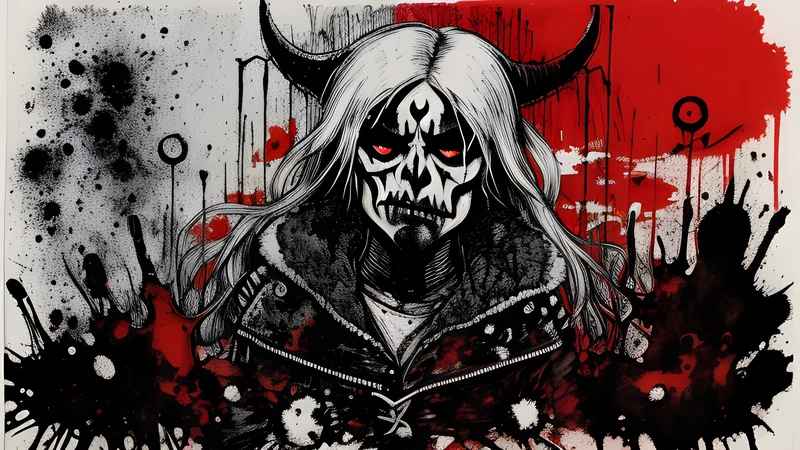
Black metal is the most theatrical corner of heavy music, and a festival dedicated to it is a festival of a particular visual and atmospheric intensity. Corpse paint, the stark black-and-white face makeup that became the genre’s visual signature, turns a Steelfest crowd and stage into something out of a ritual — a tradition with its own long and strange history stretching back to the genre’s founders. The lighting runs dark and red, the imagery is confrontational, and the whole event leans into the sense of theatre that separates black metal from the more straightforward physicality of, say, thrash or hardcore. This is music as atmosphere and ritual as much as riff and blast beat.
That theatricality is part of what makes an extreme festival compelling even when the music is punishing. There is a spectacle to it — the bands committing fully to the imagery, the crowd matching them, the shared plunge into darkness that the genre trades on. Bands like Watain built their reputations on turning a black-metal set into a full sensory ritual, and a festival stage lets that theatre reach its fullest scale. Steelfest is where the Nordic underground stages that ritual for a weekend, and the atmosphere it generates is unlike anything the broader metal festivals produce.
The bigger end of the darkness
Not everything at the extreme end is lo-fi and underground. The genre has produced acts that turned black and death metal into full-scale theatrical spectacle without diluting the intensity — Behemoth being the clearest example, a band that grew from the Polish underground into an arena-filling force while keeping the darkness intact. A festival like Steelfest sits at the meeting point of both ends: the raw, primitive underground that keeps the genre’s roots alive, and the more ambitious, production-heavy acts that prove the extreme can scale without selling out. The best extreme festivals hold that spectrum together, and the tension between the two ends is part of what makes a weekend of this music dynamic rather than monotonous.
That range matters for the experience of an actual festival day. An unrelenting wall of identical blast beats would exhaust even the devoted; a good extreme bill varies its texture — the atmospheric and the primitive, the theatrical and the raw, the fast and the crushingly slow — so the darkness has shape and movement across the day. Steelfest’s programming instinct, drawing on the full breadth of the extreme underground, gives its editions that variety. It is a festival for a demanding audience, and demanding audiences notice when a lineup is curated with a real ear rather than simply stacked with whatever is loudest.
The purist’s crowd
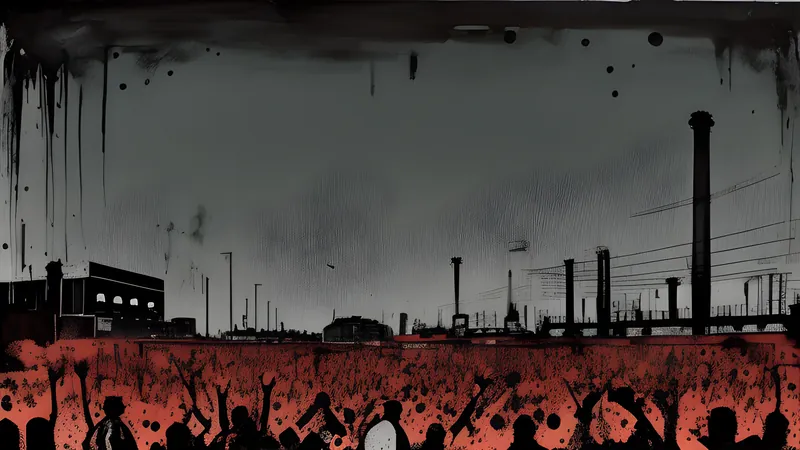
A Steelfest crowd is the extreme-metal underground distilled — a self-selected audience of people devoted to the darkest end of the genre, who travelled to Hyvinkää because there was nowhere else to see this specific concentration of bands. That devotion makes for a particular kind of atmosphere: intense, knowledgeable, and communal in the way that niche gatherings always are, where everyone present shares an obsession the wider world does not understand. The Nordic countries produce a lot of this crowd, and Steelfest pulls them together with the international underground into one field for a weekend of it.
Finland is a fitting host for that gathering. The Finnish relationship with extreme metal is famously matter-of-fact — this is a country where the darkest music is a normal part of the cultural fabric rather than a fringe provocation, where the metal scene is woven deep into national life. A black-metal festival in Finland reads as Finland doing one of the things it does exceptionally well, rather than the transgressive outlier such an event might be elsewhere. The neighbouring scenes feed in too, from the Swedish and Norwegian black-metal heartlands to the wider European underground, making Steelfest a Nordic and pan-European meeting point for a genre that has always crossed borders.
The uncompromising line, and its costs
A festival this committed to the extreme edge lives close to controversy, and it would be dishonest to write about Steelfest without acknowledging it. Booking deep into the black-metal underground means booking bands whose imagery and histories can be provocative, and Steelfest has at times drawn criticism for artists on its bills. That tension is part of the territory the whole genre occupies — black metal was born in provocation and has spent its entire existence arguing about where the line between transgressive art and genuine offence should sit. A festival that programmes the uncompromising end inherits that argument whether it wants to or not.
I will not pretend to resolve that here, and it is not my place to. What I will say is that the health of the extreme underground has always depended on venues and festivals willing to platform difficult, confrontational music, and that the same commitment which makes such a festival vital also keeps it perpetually close to the edge of controversy. Steelfest sits squarely in that difficult space, and anyone drawn to the festival should go in understanding the genre’s history and its ongoing arguments with itself. The extreme end of metal has never been comfortable, and a festival dedicated to it will never be comfortable either.
Where it sits
For a Copenhagen punter mapping the Nordic metal year, Steelfest is the extreme specialist’s weekend — the counterpart to Tuska’s broad Helsinki festival, the place you go if the darkest end of the genre is your genuine home rather than a passing curiosity. It belongs to the same family as the other committed underground festivals across Europe, the events that book what they love without hedging: Beyond the Gates in Norway and the smaller extreme fields that keep the genre’s most demanding music in front of a crowd. The Nordic countries sustain a remarkable density of these, and Steelfest is Finland’s contribution.
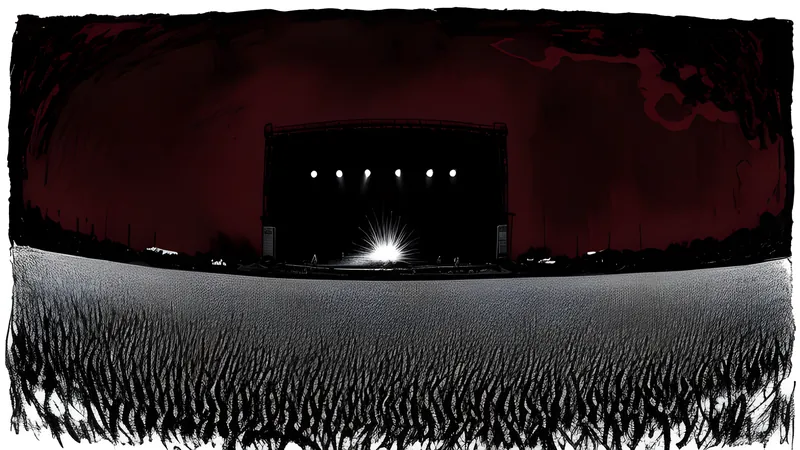
The image the festival leaves is one of total conviction: a dark stage under red light, a corpse-painted crowd, the most extreme music in the metal world roaring out into a Finnish spring evening, and not a single concession to anyone who wandered in by mistake. Steelfest is a festival with no interest in being liked by the mainstream, and that indifference is the source of its power. It is the North’s altar to the extreme, and for the people who worship there, its refusal to soften is precisely the point.
Related Content