SO36: Kreuzberg's Punk Cathedral
The Oranienstraße room where West Berlin punk was born, and where it still lives
Contents
SO36 is the club where West Berlin punk grew up, and nearly fifty years on it is still standing on the same Kreuzberg street, still self-run, still putting bands and misfits under the same low ceiling. The name is a piece of Berlin geography worn as a badge: SO stands for Süd-Ost, South-East, and 36 was the old postal code of this pocket of Kreuzberg, the district hard against the Wall in the divided city, the cheap and crowded quarter where immigrants, students, draft-dodgers, artists and squatters piled in because the rent was low and the authorities looked the other way. A club that names itself after a postcode is telling you it belongs to a place before it belongs to any band, and that is exactly right. SO36 is Kreuzberg made loud.
If you care about the roots of European punk, this is one of the handful of rooms that genuinely count — spoken of in the same breath as New York’s CBGB, and for the same reason. It is a small, unglamorous, permanently slightly-shabby hall that happened to be the right room in the right place at the moment a scene came screaming into existence. And unlike CBGB, it is still open.
The room before the music
The site has been in the entertainment trade for a very long time. There was a beer garden and pub on the ground as far back as 1861. After the First World War the building became a cinema, which survived the Second World War only to burn out in 1966. For a while a discount supermarket moved in, then gave up — the standing joke being that Kreuzberg was too poor even for a discount supermarket — and the building sat empty, which in this district in the 1970s was practically an invitation.
The invitation was taken up in the summer of 1978, when three young immigrant men leased the empty hall and opened it as a concert space. It found its identity fast, helped along by the painter Martin Kippenberger, who was involved early and helped turn the room into a magnet for the city’s alternative art and music underground. The timing was everything. West Berlin in the late 1970s was a strange, isolated island of a city — walled in, subsidised, full of young people avoiding West German military service, cheap and dark and creatively feral. Punk was detonating across the world at that exact moment, and SO36 became the place where the Berlin version happened.
Where the scene was born
The names that came up through SO36 in those years are the foundation of German alternative music. Einstürzende Neubauten — the industrial-noise pioneers who made instruments out of power tools and scrap metal — launched out of this scene. Die Ärzte, later one of the biggest rock bands in the country, cut their teeth here. Almost every punk and new-wave act of consequence in West Berlin played the room, and the international circuit soon noticed: British and American bands started routing through Berlin specifically to play SO36, the way they routed through CBGB in New York.
The Bowie connection is real and worth stating carefully, because it gets embellished. David Bowie and Iggy Pop were living in West Berlin in the late 1970s — the period that produced Bowie’s Berlin albums — and they were part of the audience in SO36’s orbit, seen at the club during those years. That is the documented fact, and it is enough: the two most famous rock exiles in the city drifting through the room where the local punks were making their racket tells you exactly how central the place had become.
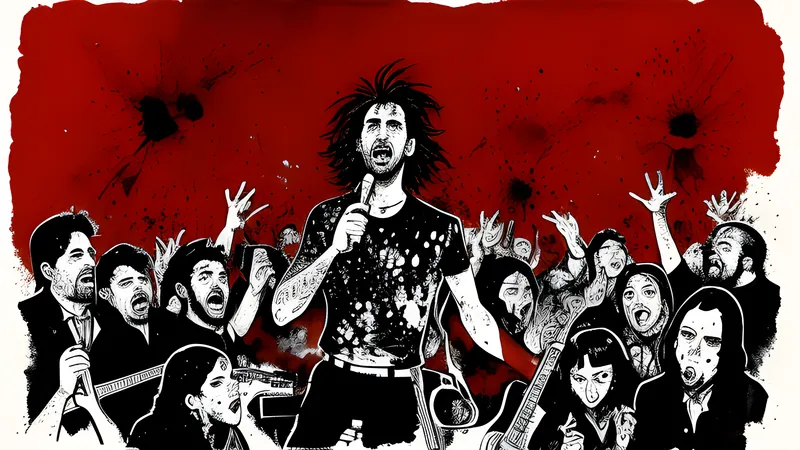
The most infamous night in the club’s history came on 10 December 1982, when the San Francisco hardcore band Dead Kennedys played their second show at the venue. The room’s capacity was around five hundred; the show had sold out in advance; the doors were rushed, and reportedly more than a thousand people forced their way in. It is remembered as one of the wildest gigs the club ever hosted, and it is the kind of night — chaotic, overcrowded, genuinely a little dangerous — that fixed SO36’s reputation as the hardest, realest punk room in the divided city.
Closure, squat energy, and survival
The story is not a smooth climb. In 1983 the authorities closed the building, declaring it structurally unsafe, and for a stretch of the 1980s the hall stood dark again. What brought it back is the part that matters most for understanding the place today: in 1990 it was renovated and reopened under a self-organising collective, Sub Opus 36 e.V., which still runs it. SO36 is not a corporate venue with a promoter’s logic. It is a community-run space in the old Kreuzberg tradition of self-management, closer in spirit to a squat than to a commercial club, and that ethos is the reason it survived the decades that killed off almost every comparable room in Europe.
A further renovation in 2003 added soundproofing and modernised the space enough to keep it legal and running nightly, without sanding off the character. The room you walk into now is still small, still flat, still dark, still unmistakably a punk hall. It has been patched and preserved rather than redeveloped, and the difference is everything.
What it is today
The programme is the proof that SO36 never became a nostalgia act. Alongside punk, hardcore and metal gigs, the club runs one of the most important queer nights in Germany: Gayhane, a monthly gay and lesbian “oriental” party founded in 1997 by the performer Fatma Souad with the resident DJ Ipek. It was the first party series of its kind in the country aimed explicitly at queer people with Muslim and Middle Eastern roots, and it grew directly out of Kreuzberg’s identity as the heart of Berlin’s large Turkish community. That a legendary punk room became a landmark of queer Turkish-German nightlife is not a contradiction — it is the same impulse, the same instinct to make space for the people the mainstream has no room for, expressed forty years apart. The postcode over the door still means what it always meant.
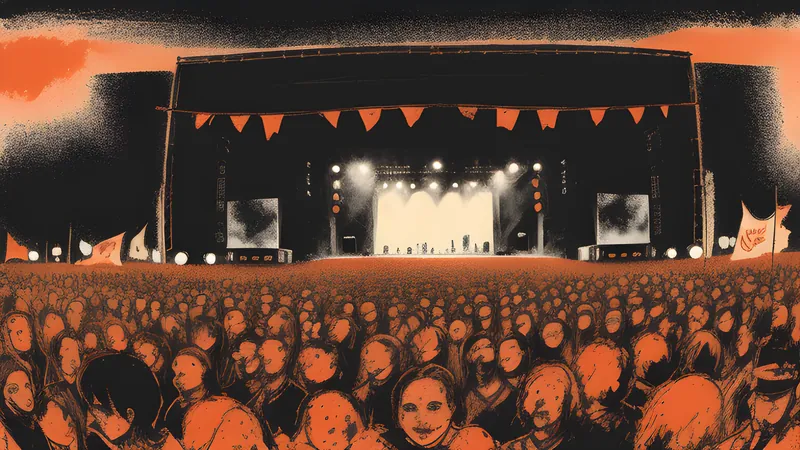
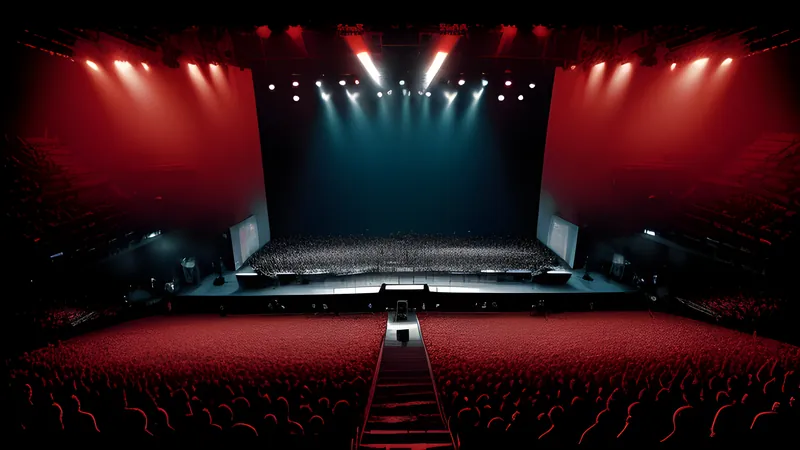
For a touring band, SO36 remains a rite of passage: a small, sweaty, low-ceilinged room with real history in the walls and a crowd that knows exactly what the place is. The sightlines are the honest arithmetic of a flat-floored club — get near the front or accept your fate behind a taller stranger — and the sound is loud and close and unfussy, which is precisely what the music it hosts demands. This is a room to see hardcore, punk and metal in, at the scale those genres were built for, with the barrier close enough to touch.
Where it sits, and why a Dane should care
Kreuzberg is easy to reach and hard to leave in the best way — the club sits on Oranienstraße, deep in one of Berlin’s densest nightlife districts, with the U-Bahn close and a thousand bars and late-night doner stands around it for the aftermath. Berlin is a short hop from Copenhagen, and SO36 is the obvious anchor for a punk-minded night in the city, the historical heart of the whole scene.
There are threads back home, too. The self-run, community-owned, squat-adjacent spirit of SO36 will feel familiar to anyone who has spent a night in the freetown rooms of Copenhagen — the club is a spiritual cousin of Loppen in Christiania, another sweatbox run on collective principles at the edge of a big city’s official life. On the German circuit, it is the capital’s counterpart to Hamburg’s rock rooms up north, Docks and Markthalle. And if you want to understand the physical language a room like this speaks — the churn down the front, the crush, the reason people willingly stand in the most uncomfortable spot in the building — the place to start is what the mosh pit is actually for.
The verdict
SO36 is one of the genuinely important rooms in the history of European punk, and the rarest kind of landmark: one that is still alive and still doing the job it was built for. It was born out of an empty supermarket in a walled-in city, it hosted the birth of German punk and industrial music, it survived closure and came back as a self-run collective, and it turned itself into a home for Berlin’s queer Turkish nightlife without ever losing the plot. Bowie drifted through it, the Dead Kennedys nearly tore it apart, and it is open tonight.
Come for a hardcore or punk show, get down the front and accept the consequences, and stand for a second in the knowledge that you are in the room where a whole scene started and refused to end. Berlin has flashier venues and bigger ones, and it has plenty of history to spare. It has exactly one punk cathedral, still run by the people who use it, and this is it.
Related Content