Smukfest: Denmark's Beautiful Festival in the Beech Woods
How a one-day gig under a tarpaulin became a forest city of 60,000
Contents
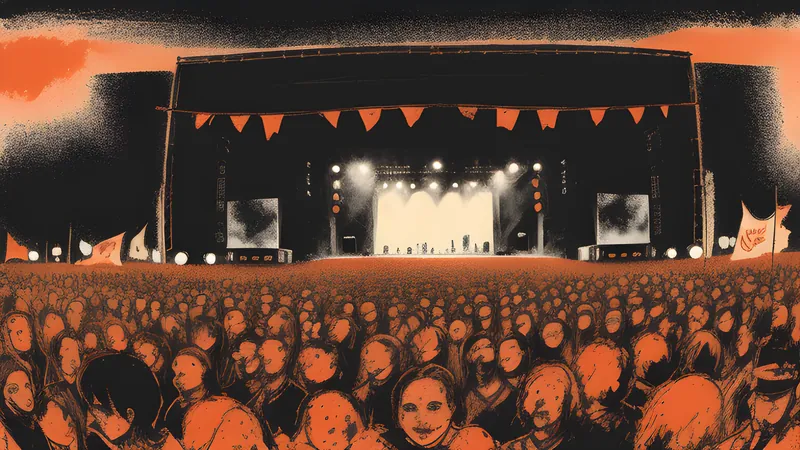
Most big festivals happen on flat, treeless ground because flat treeless ground is easy to build on. Smukfest does the opposite. Every August it stages Denmark’s second-largest festival inside a genuine beech forest above the lakeside town of Skanderborg, with a main stage set in a natural amphitheatre ringed by trees, some of them more than 200 years old. The Danish word smuk means beautiful, and the festival earned its nickname — Danmarks Smukkeste, Denmark’s most beautiful — the honest way, by being held somewhere that actually is.
Five young men and a tarpaulin
The beginning was tiny. In 1980 a handful of very young Skanderborg locals — the founding story settles on five — put on a one-day music event in the Dyrehaven woods with a tarpaulin strung up for a roof, seven bands and roughly 600 people watching. That was it: a small-town gig by enthusiasts with more passion than budget. It could easily have been a one-off.
Instead it grew, slowly and then steadily, into one of the pillars of the Danish summer. Today Smukfest draws around 60,000 people a day when August comes, a figure that includes something like 15,000 volunteers — an enormous unpaid workforce that runs the festival and is a huge part of its identity. The event sprawls across the forest for the better part of a week, with camping areas fanning out around the wooded core and a stage hierarchy from the big main bowl down to intimate clearings. It has become, after Roskilde, the second-biggest music festival in the country, and it did it without ever leaving the trees.
For a Danish festival-goer, Smukfest occupies a very particular emotional slot. Roskilde is the giant, the non-profit behemoth over on Zealand that gives all its profits away and books the biggest names on earth. Smukfest is the one over in Jutland, smaller, gentler, prouder of its setting than its lineup — the festival you go to for the place as much as the bands. The two have coexisted happily for decades as the twin poles of the Danish festival summer.
The forest is the headliner
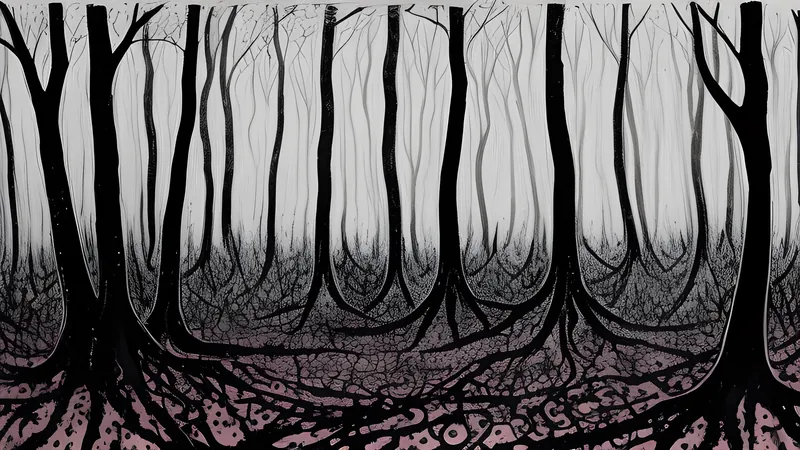
The setting is genuinely the star, and it changes everything about how the festival feels. Dyrehaven — the name means deer park — is a mature beech woodland on a slope, and the organisers have built the festival into the landscape rather than flattening it. The main stage sits at the bottom of a natural bowl, so the crowd watches from a hillside of trees, and the light in a beech forest in August is a soft, green, dappled thing that no lighting rig can imitate. Smaller stages are tucked into clearings, and the paths wind between trunks rather than running in straight lines across open mud.
That does practical things to the experience. Beech woods hold shade, which matters on a hot Danish afternoon, and they break up the sound and the sightlines so the festival never feels like one undifferentiated mass. You are always in a specific corner of a specific wood, and the festival has a geography you learn over the days — this clearing, that slope, the path down to the lake. It is a more human scale of gathering than a treeless mega-site, even at 60,000 people, because the forest itself does the work of dividing the crowd into rooms.
The trade-off is the one every forest festival lives with. Trees and tent pegs and 60,000 pairs of feet are hard on a woodland, and Smukfest has had to think seriously about protecting the old beeches it is named for — managing the ground, resting parts of the wood, treating the forest as an asset to be maintained rather than used up. It is a genuine tension, and to the festival’s credit it takes it seriously, because the day the beeches die is the day the beautiful festival stops being beautiful.
A volunteer republic
The 15,000-strong volunteer army is worth dwelling on, because it shapes the whole culture. Smukfest, like Roskilde, runs on people who give their time in exchange for a wristband and a sense of belonging, and that model produces a festival with a strong communal, slightly homespun feeling. This is not a slick corporate operation flown in and bolted together; it is a town-sized cooperative of Danes who come back year after year to run the bars, the gates, the stages and the endless logistics of feeding and watering a temporary city in a wood.
That volunteer backbone gives Smukfest a texture that distinguishes it from the international mega-festival circuit. The lineup leans Danish and Nordic, with a spine of homegrown pop, rock and singer-songwriter acts alongside the imported headliners, and the crowd is overwhelmingly Danish. It is a festival that a lot of Danes think of as theirs in a proprietary, hometown way, the soundtrack of a particular kind of Danish August: long light evenings, beech shade, a beer among the trees. As someone raised on this country’s festival summers, I can tell you the pull is real — Smukfest is woven into the Danish calendar the way midsummer is.
A week that builds its own town
The scale of what Smukfest assembles and then dismantles every year is easy to underestimate when you are standing among the trees with a beer. For roughly one week the Dyrehaven forest becomes one of the larger population centres in the region — tens of thousands of people living, eating, sleeping and dancing in a temporary settlement built from scratch and taken down again, all within a working woodland that has to survive the experience intact. That is a formidable logistical feat, and the volunteer-run model is what makes it possible at a cost that keeps the festival independent.
The camping culture is central, as it is at every big Nordic festival. People arrive days before the music starts and build their own campsite societies — the flags, the shared awnings, the pre-festival rituals of a group of friends who reconvene in the same patch of forest every August. For a lot of Danes the camp is the festival, or at least half of it: the music is the reason to gather, and the days spent living in the woods with your people are the substance. The beech forest gives that camping culture a setting that a bare field never could, with shade and shelter and the particular calm of being among old trees.
The programming reflects a festival confident in its own identity. Smukfest books across genres — Danish pop and rock, singer-songwriters, international headliners, a spread of smaller acts on the intimate forest stages — and it does not chase the heaviest or the most fashionable names to prove a point. It knows what it is: a broad, warm, mainstream-leaning Danish festival whose defining feature is its location, and it programmes to that identity rather than against it. The result is a bill designed to suit a crowd that came as much for the forest and the company as for any single band.
Where it sits in the Danish summer
Denmark punches absurdly above its weight in loud music, an export story I have traced in the little country, loud export, and its festival culture is part of that same overachievement. For a nation of under six million people to sustain Roskilde, Smukfest, Copenhell and a long tail of smaller events is genuinely remarkable, and Smukfest is a key load-bearing pillar of it. Where Copenhell is the loud, industrial, harbourside metal party and Roskilde is the sprawling non-profit giant, Smukfest is the pretty one in the woods — the festival built on setting and volunteer goodwill rather than scale or spectacle.
There is a version of the criticism that says Smukfest is safe, a comfortable mainstream Danish gathering without the edge of the heavier festivals, and there is truth in it. This is not where you go to have your listening rewired. It is where you go to spend a warm week in a beautiful old forest with tens of thousands of your countrymen, watching bands you mostly already like, under trees that were standing long before the first tarpaulin went up in 1980.
There is also something quietly radical in a festival built on setting rather than spectacle. Most festivals compete on lineup, on production, on the size of the stages and the fame of the names, and that arms race is expensive and homogenising. Smukfest opted out of it early and staked its identity on a place instead, which is why it has aged so gracefully. A great lineup lasts one summer; a 200-year-old beech forest lasts as long as the festival is willing to protect it. Betting on the trees turns out to have been the shrewdest thing the five young founders ever did, even if they were only trying to keep the rain off in 1980.
That is not a small thing to be. A festival that has kept faith with its own patch of woodland for over four decades, grown from 600 people to 60,000 without abandoning the trees that give it its name, and built the whole enterprise on volunteer hands, has earned the nickname it carries. Smukfest is beautiful. It says so on the tin, and for once the tin is telling the truth.
Related Content