Smukfest: The Forest Festival of Skanderborg
Denmark's most beautiful festival, and the volunteer machine that keeps the beech woods singing every August
Contents
There is a claim baked right into the festival’s official name, and it is a bold one: Danmarks Smukkeste Festival, Denmark’s Most Beautiful Festival. Most events would be embarrassed to make that boast on a poster. Smukfest makes it on its letterhead, has done for decades, and the maddening thing is that it has a genuine case. Held every August in the beech woods above Skanderborg, on the hills that fall down toward a lake in the middle of Jutland, this is a festival that decided its landscape was its headline act and then spent forty-odd years proving the point.
A festival that grew out of the ground
Smukfest began in 1980, which makes it one of the grand old institutions of the Danish summer, a contemporary of the era when the country’s festival culture was properly taking shape. It started small and local, a Skanderborg thing, and it grew the slow organic way — edition by edition, adding stages and campsites and years of accumulated tradition until it became one of the largest festivals in the country, pulling tens of thousands of people into a small Jutland town for a week every August.
The crucial fact about how it grew is that it grew as an association, run by and for its members, powered by an enormous volunteer workforce. This is the same civic DNA that runs through the best of Danish festival culture, the belief that a great event is something a community builds together rather than a product a company sells to it. Smukfest is, at its foundation, thousands of Skanderborg-area people and beyond who give their time to raise a temporary city in the forest and take it down again, year after year, because the festival belongs to them. That ownership is why the place feels loved in a way that a purely commercial event cannot fake.
The forest is the festival
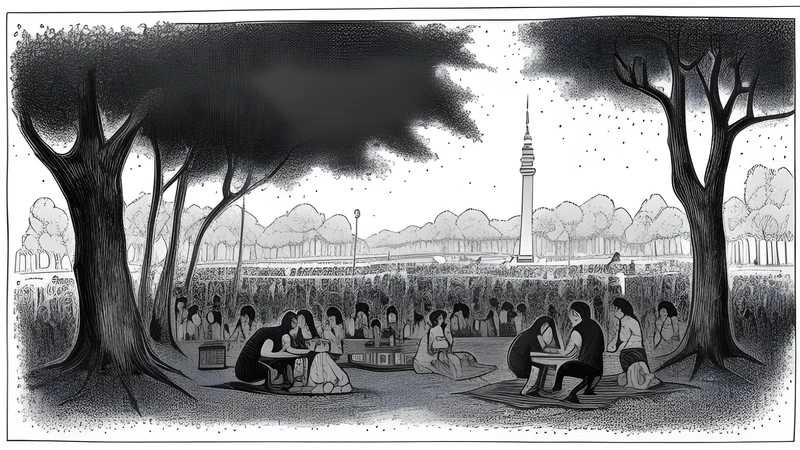
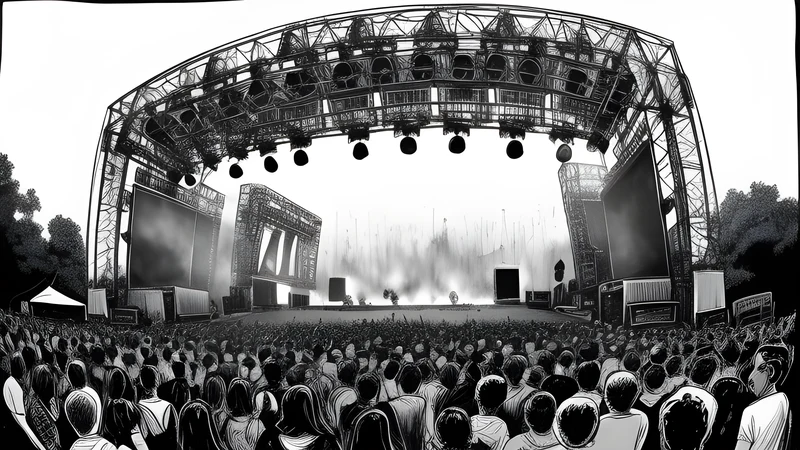
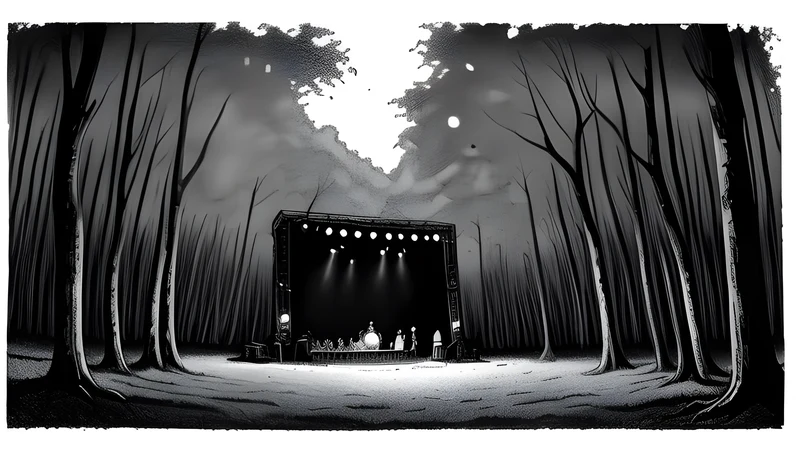
You cannot separate Smukfest from Dyrehaven, the deer park where it lives. This is old beech forest on steep ground, and the festival is threaded through it — stages in clearings, paths winding up and down the hills, the trees strung with lights so that after dark the whole wood glows. The signature is the Bøgescenen, the Beech Stage, set into a natural forest amphitheatre where the crowd stands on the slope beneath the canopy and the sound rises up through the trees. It is one of the most beautiful places to watch live music anywhere in Northern Europe, and I do not say that lightly.
The terrain matters in a way that flat-field festivals will never understand. Hills are hard work — your legs know you have been at Smukfest — but hills also break the site into a landscape you move through rather than a plain you stand on. The forest throws shade and shelter, softens the sound, and gives every stage its own character. When the August evening comes down and the fairy lights take over from the daylight, the festival stops looking like an event and starts looking like something that was always there, a woodland that happens to be full of music. Denmark has a small tradition of forest festivals — the younger, poppier Tinderbox in its Odense wood is the modern cousin — but Smukfest is the grand master of the form, and the decades of accumulated tradition are part of what you are standing in.
Broad by design, and unashamed of it
Let me be straight about the music, because it is the part a loud-music critic has to be honest about. Smukfest is a broad-church festival. The lineup runs from Danish pop and rock institutions to international headliners to the current chart names, with plenty of the comfortable mainstream that a festival this size needs to fill its main stages. If you are a black-metal purist looking for a weekend of nothing but blast beats, this is not your church, and it has never claimed to be.
What it offers instead is range and atmosphere, and it delivers both with real skill. There is heavy music at Smukfest for those who want it, tucked into the schedule alongside the pop and the singer-songwriters and the Danish legends doing their late-career victory laps. The programming philosophy is generous rather than tribal: a festival for the whole country, the whole family, the whole spread of Danish musical taste, held in a forest beautiful enough that even the acts you did not come for sound better under the trees. I respect that more than I expected to. A festival does not have to be loud to be good, and Smukfest’s willingness to be broad without being bland is a genuine achievement of curation and scale.
The catering, as at every serious Danish festival, is far better than any reasonable person expects from a field — or in this case a forest — full of tens of thousands of people. The Danish festival scene long ago decided that feeding people grey burgers was beneath it, and Smukfest holds that standard high. You eat well, you drink well, and you do it on a hillside among beech trees, which improves everything.
The atmosphere nobody can quite bottle
Every festival regular in Denmark has an opinion on the Smukfest atmosphere, and the opinions cluster around a single word: hyggelig, that untranslatable Danish quality of warm, convivial, unhurried togetherness. It is an odd thing to say about a festival with tens of thousands of people and a full rock lineup, but it fits. The forest setting, the volunteer soul, the hills that force you to slow down, the long tradition that means many of the campers have been coming for twenty years and camp in the same spot with the same friends — all of it adds up to a festival that feels gentle and rooted even at full volume.
This is the deep difference between Smukfest and the harder, more intense end of the festival spectrum. It has none of the industrial ferocity of a dedicated metal festival, and it does not want any. It is a warm, beautiful, broad, hugely well-organised celebration of Danish summer that happens to have excellent music in it, and it wears that identity with total confidence. Set it against the grand non-profit ambition of Roskilde — the other giant of the Danish summer, harder-edged, more internationally serious, a charitable machine that gives its money away — and you have the two poles of the country’s big-festival culture. Roskilde is the wager and the cause. Smukfest is the hearth. A country lucky enough to have both is doing something right.
The stages under the canopy
The Beech Stage gets the postcards, but Smukfest is a multi-stage festival and the character lives in the spread. The larger stages handle the headliners and the big crowds, set where the forest opens enough to hold tens of thousands; the smaller ones tuck into clearings and corners where a few hundred people can stand close to a band and feel the intimacy that a main stage sacrifices for scale. Moving between them is half the experience, because the walk itself is through woodland rather than across a car park, and a festival that makes the transitions beautiful has understood something most events miss.
That range of stages is what lets Smukfest be genuinely broad without feeling incoherent. The heavy and the strange get their own rooms rather than being crushed against the pop on a single main stage, so a metal act can play to the people who came for it while a Danish legend fills the amphitheatre elsewhere and neither undercuts the other. Good festival design is invisible when it works, and the Skanderborg forest hides its machinery inside the trees so completely that you forget you are standing in a logistical feat of moving, feeding and watering a small city on a hillside. The volunteers know. Everyone else just enjoys it.
The economics of a club
It is worth understanding how Smukfest actually funds itself, because the structure explains the soul. This is a festival run as a members’ club and powered by a volunteer army, which changes the maths in the same way it does for the country’s other great non-profit events. Money that a commercial festival would return to owners instead cycles back into the festival, the town and the causes the club supports, and the enormous unpaid workforce keeps the cost base low enough that the whole thing stays viable at a human ticket price.
That model is why the place feels like a community project rather than a product, and it is a fragile, precious thing that Denmark happens to be unusually good at protecting. A volunteer-run festival lives or dies on whether people keep showing up to build it, and forty-plus years of them showing up is the real headline, more than any band that has ever played the Beech Stage. When you stand on that forest slope, part of what you are feeling is decades of accumulated goodwill made physical — the bars, the paths, the stages, the lights, all of it raised by hand each August by people who could be doing something else and choose this instead. It is the same instinct that makes Roskilde give its surplus away, expressed as a hillside full of beech trees and fairy lights.
Getting there and getting it
Skanderborg sits in eastern Jutland, a short train ride from Aarhus, well connected to the rest of the country by the rail spine that runs up the peninsula. That accessibility matters for a festival this size, and it is part of why Smukfest can pull a genuinely national crowd rather than a merely local one. Go for the full week if you can, camp in the forest, do the hills, let the slow rhythm of the place take over. The festival rewards commitment — the campsite culture, the returning-family feeling, the sense of a temporary town you live inside rather than an event you visit — far more than a single-day drop-in ever captures.
And go for the beech woods above everything. The music will be good, sometimes great, occasionally exactly what you did not know you needed. But the thing you will remember, the thing that earns the boast on the letterhead, is standing on a forest slope at dusk with the lights coming up through the canopy and forty years of a small town’s collective love holding the whole thing together. Denmark’s most beautiful festival is a big claim. Stand on that hillside once and you will find yourself agreeing with it.
Related Content