Sleep: The Riff as Devotion
How three Californians turned the electric guitar riff into an act of worship
Contents
Most bands treat the riff as a building block, one component among many in the construction of a song. Sleep treated the riff as the entire cathedral. This trio from San Jose, California, took the heaviest lessons of Black Sabbath, slowed them down until time seemed to stretch, and built a body of work in which a single monumental guitar figure, repeated and worshipped and extended past the point of reason, becomes something close to a religious act. They are among the most influential heavy bands of the last thirty years, and they achieved it by doing less, slower, than almost anyone had dared.
Three men and a wall of amplifiers
Sleep formed in 1990 from the wreckage of the San Jose scene, and the classic line-up was Matt Pike on guitar, Al Cisneros on bass and vocals, and Chris Hakius on drums. What united them was total devotion to Black Sabbath, particularly the slowest, heaviest, most hypnotic corners of Sabbath’s catalogue, and an ambition to take that heaviness somewhere no one else had. Their second album, 1992’s Sleep’s Holy Mountain, is the foundational text of what later got called stoner metal and doom: enormous fuzzed-out riffs, glacial tempos, Cisneros’s incantatory vocals floating over the top like plainchant. It remains one of the most beloved heavy records of its era, and half the doom bands alive are still trying to recapture its tone.
The sound is built on worship of the amplifier. Sleep chased a guitar and bass tone so thick and warm and enormous that the riff itself became a physical presence in the room, less a sequence of notes than a slow-moving weather system. The tempos are punishingly slow, each chord left to hang and decay and bloom, so that a single riff can fill a minute of real time and feel like a devotional passage rather than a mere hook. This is metal reduced to its most elemental components and then magnified until those components become the whole point.
The album that broke the band
The legend of Sleep rests on one extraordinary, catastrophic decision. After Holy Mountain the band signed to a major label and set about making their masterpiece: a single, unbroken piece of music running for roughly an hour, one continuous riff-pilgrimage through a mythic desert, structured like a slow religious procession set to the heaviest music imaginable. It was a genuinely radical idea — a whole album consisting of one song — and the band poured everything into realising it exactly as they heard it in their heads.
The label, understandably, had no idea what to do with an hour-long single track that could never be a radio hit or a marketable single. They balked, demanded changes, and the resulting standoff broke the band apart; Sleep dissolved before the record properly reached the public. It eventually surfaced in edited and restored forms over the following years, first as Jerusalem in 1999 and later in a fuller remastered version, and its reputation grew steadily until it was recognised as a landmark. The album that destroyed the band in the nineties became, in retrospect, one of the most important heavy records ever made — a monument to artistic stubbornness, and proof that the riff really could sustain an entire hour if you believed in it hard enough.
What the members did next
The break scattered three enormously talented musicians, and each went on to shape the heavy underground in his own direction. Matt Pike formed High on Fire, a faster, more aggressive power trio that became one of the great metal bands of the 2000s in its own right, and cemented Pike as one of the most revered guitarists in heavy music. Al Cisneros formed Om, a hypnotic, minimalist, almost meditative bass-and-drums project that pushed the devotional, ritual quality of Sleep’s music to an even more spiritual extreme. The two halves of Sleep’s identity — Pike’s aggression and Cisneros’s mysticism — separated cleanly and each flourished.
That legacy places Sleep at the fountainhead of a whole ecosystem. The doom, sludge and drone continuum I mapped in sludge, doom and drone flows directly from what these three built, and the filthy monolithic tone of bands like Electric Wizard is unimaginable without Sleep’s example. When Mastodon or any of the ambitious modern heavy bands reach for the extended, riff-worshipping epic, they are drawing on a template Sleep drew first and most extreme.
The unlikely third act
The most improbable turn came decades later. Sleep reunited in 2009 with drummer Jason Roeder of Neurosis eventually taking Hakius’s place, and against every expectation the reformed band did more than trade on nostalgia. In 2018 they released The Sciences, a surprise album that arrived with no warning and turned out to be genuinely excellent — the same enormous tone, the same devotional patience, the same worship of the riff, delivered by men in middle age with nothing left to prove and total command of their craft. A band whose defining record had once ended their career came back to make new music that stood beside it.
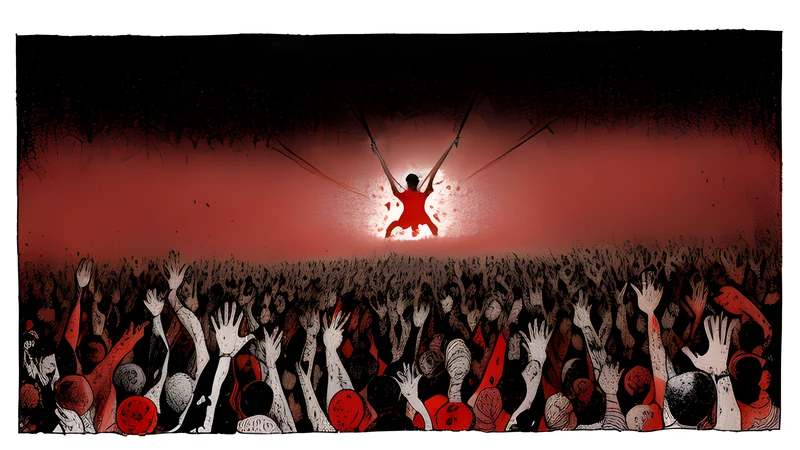
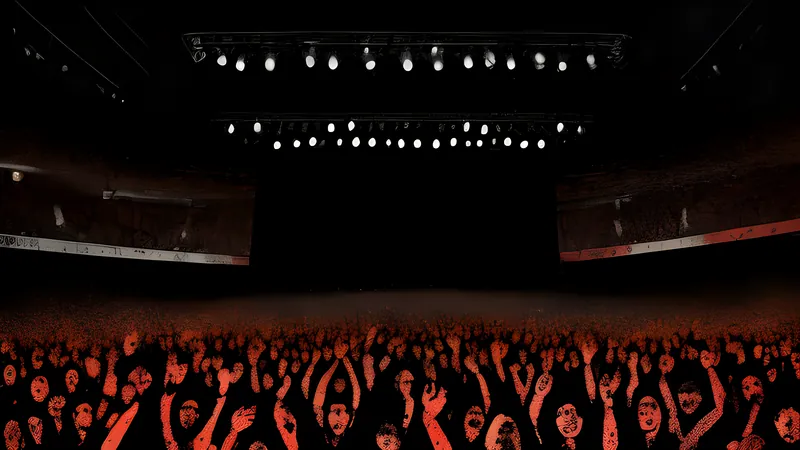
Live, the reunited Sleep became a highlight of the festival circuit for the doom faithful, the kind of act that headlines the specialist events built for exactly this music. They are made for the pilgrimage festivals — the doom-and-drone gathering at Roadburn in the Netherlands, the fuzzed-out riff weekends of Desertfest — where a crowd of true believers stands motionless before a wall of amplifiers and lets the slow riffs wash over them like a service. It is one of the strangest and most moving experiences in heavy music, thousands of people worshipping a guitar tone in near-silence between the chords.
Live appearances by the reunited Sleep remained rare enough to feel like occasions, and that scarcity only deepened the devotion. The band never became a relentless touring machine, which meant that a Sleep show carried the weight of a pilgrimage for the doom faithful who might wait years for the chance. Standing in front of that wall of amplifiers as the slow riffs unfold is a genuinely communal experience, a room full of people who have travelled to worship the same enormous sound, and it explains why a band with such a small catalogue and such a fractured history commands the loyalty it does. Some bands you follow for the songs; Sleep you follow for the sensation.
The Sabbath lineage, taken to the edge
Every heavy band owes something to Black Sabbath, but Sleep took the debt further than almost anyone, treating Sabbath’s slowest and heaviest moments as a starting point rather than a peak. Where most bands raced to play faster and more aggressively, Sleep did the opposite, distilling the hypnotic doom of records like Master of Reality and stretching it until the riffs became vast, slow-moving objects you could walk around inside. They understood that Sabbath’s real innovation was weight and space, and they built an entire aesthetic out of maximising both, chasing a heaviness measured in patience rather than speed.
That approach separated Sleep cleanly from the faster Californian desert-rock scene that was emerging around the same time. Where those bands built groovy, up-tempo, sun-baked riff-rock, Sleep went slower, heavier and more meditative, and in doing so they helped define the doom and stoner-metal template that a huge swathe of the modern underground still works within. The distinction matters: Sleep were building a monument rather than chasing a party, and the difference in tempo is really a difference in intent.
The tone is the message
For a band this influential, Sleep’s actual musical vocabulary is startlingly small, and that is the point. The genius lies in the tone and the conviction rather than in complexity. Matt Pike’s guitar sound — enormous, warm, saturated, cranked through a wall of amplifiers until the air itself seemed to thicken — is the real subject of the music, and the slow riffs exist to let that tone bloom and decay in real time. Sleep proved that a guitar sound, held with enough belief and enough volume, could carry a whole album, and they made the pursuit of the perfect heavy tone into a legitimate artistic goal in itself.
The two paths the members took afterwards clarify what Sleep contained. Matt Pike’s High on Fire pushed the aggression and speed, taking the heaviness into faster, wilder territory and earning Pike his place among the most revered guitarists in metal. Al Cisneros’s Om pursued the opposite thread, the hypnotic, ritual, near-spiritual repetition, stripping the music down to bass, drums and mantric vocals in a genuinely meditative form. Between them the two projects mapped the full range of what Sleep had been about, the crushing weight and the transcendent trance, the two faces of the riff as an object of devotion.
Why the devotion endures
Sleep’s achievement is easy to underrate because it looks so simple. Slow riffs, fat tone, few notes — anyone could play it, the sceptics say, missing that almost nobody could conceive it. The genius was in the conviction, the willingness to strip metal down to a single element and then treat that element with total seriousness, as if a riff were something sacred worth an hour of your life. That conviction is why the influence runs so deep: Sleep gave a generation of musicians permission to slow down, to simplify, to worship the riff instead of merely using it.
Thirty-five years on, the desert album that broke the band is a canonical text, the members are underground royalty, and the sound they built underpins an entire branch of heavy music. Three men from San Jose decided the riff was worth worshipping, staked everything on it, lost, and were proved right in the end. The riff as devotion turned out to be a religion with a great many converts.
Related Content