Slaktkyrkan, Stockholm: The Deconsecrated-Church Metal Venue
A former slaughterhouse hall in Stockholm's old meatpacking district, reborn as a black-box for the heavy end
Contents
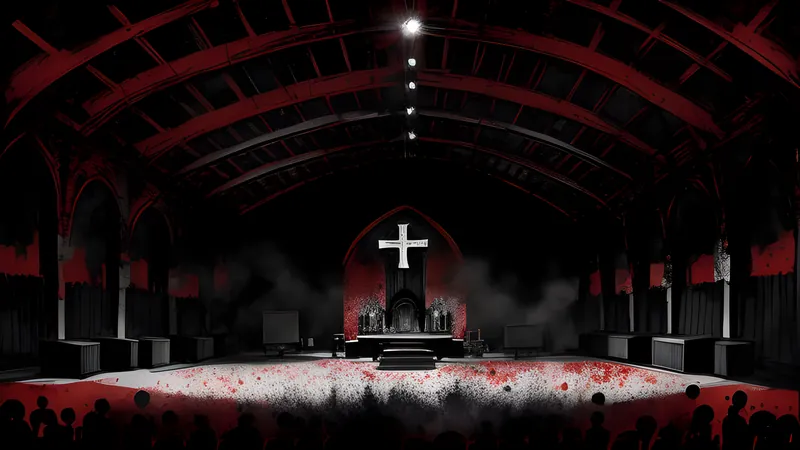
The name is the whole pitch. Slaktkyrkan means “the slaughter church”, and the venue is a former slaughterhouse building in Slakthusområdet, Stockholm’s old meatpacking district in Johanneshov, south of the water. There is no actual church involved and never was. The “church” is what the room feels like — a high, hard-walled hall with the kind of vertical volume that turns loud music into something closer to a service. Somebody looked at an old industrial space where animals were once processed, heard a band play in it, and named it after the feeling. It is one of the better venue names in the Nordics, and the room lives up to it.
Stockholm has never been short of places to see heavy music, but the city’s venue map has shifted a lot over the past decade, and Slaktkyrkan is one of the newer anchors. It reopened as a music venue in 2018 after a serious renovation of the slaughterhouse structure, and it slotted straight into the role of mid-sized room for the heavier and weirder end of the bill — the acts too big for a back-room club and too cult for an arena.
The district before the venue
You cannot understand Slaktkyrkan without understanding Slakthusområdet, the area it sits in. Stockholm built the district as a modern industrial meat-processing complex in the years around 1910, a planned quarter of slaughterhouses, cold stores and offices laid out with early-twentieth-century civic seriousness. For most of the last century this was where the city’s meat came from — a working district of butchers and refrigeration and freight, not somewhere anyone went for a night out.
That has been changing. Like a lot of European meatpacking districts — Copenhagen’s Kødbyen is the obvious parallel, and I have spent plenty of nights in that one — Slakthusområdet has been drifting from industrial use toward food, nightlife and culture, with the city planning a major redevelopment of the whole area. The old brick buildings, overbuilt and structurally generous the way early industrial architecture tends to be, turn out to suit restaurants, clubs and music rooms. Slaktkyrkan is the heavy-music entry in that transition: an old slaughter hall kept as a raw industrial shell and pointed at loud bands.
I have a documented weakness for this exact move — venues built inside buildings that were meant for something else entirely. My home city runs on the trick, and there is something about repurposed industrial and civic architecture that suits amplified music better than any purpose-built box. The hard surfaces, the big volume of air, the faint sense of trespass in dancing where the building’s original job was so grim. Slaktkyrkan has all of it, plus the best name of the lot.
The room and the sound
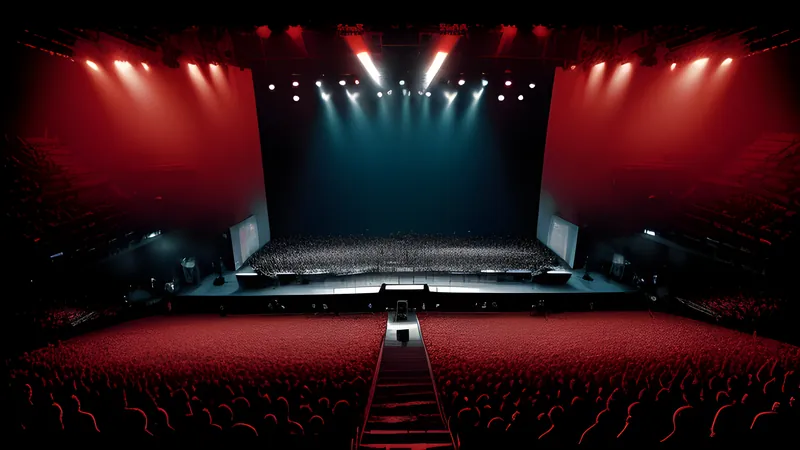
Inside, Slaktkyrkan is a black-box hall with a high ceiling and a capacity of around 750 — some nights it is quoted a little higher, up toward 800, and it holds a comfortable, well-populated feeling at around 500. That is a useful size. It is big enough to pull genuinely notable touring acts and small enough that you are never far from the stage or stranded at the back of an aircraft hangar. The floor is flat, the stage is at one end, and a long bar runs down one wall, which keeps the drinks queue moving even when the room is full — a small thing that matters more than people admit when you are trying not to miss a support band.
The sound is the selling point. The venue runs an L-Acoustics PA, which is serious kit, and the high, hard-walled volume of the old slaughter hall gives the low end room to develop without turning to soup. Heavy music needs exactly this: a room that can carry crushing volume while keeping the riffs legible, so a downtuned guitar reads as notes rather than as undifferentiated roar. The verticality helps — the sound has somewhere to go, and the “church” feeling comes precisely from that sense of the noise rising into the space above your head. Stand in the right spot and the room does half the work for the band.
It is a minimalist space by design. There is not much decoration and there does not need to be; the appeal is the raw industrial shell, the good PA and the size. This is a room built around the music and the crowd, with the fixtures kept out of the way. For metal, hardcore and the heavier touring circuit, that is the correct set of priorities.
The programming has been broad from the start, and deliberately so. Slaktkyrkan hosts electronic nights and techno, rock and metal shows, club events, the occasional niche festival, and the sort of pride and queer club nights that a big minimalist black box handles as easily as a gig. That range is part of how a venue this size survives — you cannot fill 750 capacity on cult metal alone, and the room’s neutrality means it can flip from a doom bill one night to a techno night the next without either feeling out of place. The high, hard shell does not care what genre it is amplifying; it simply carries volume well, which is the one thing every kind of loud night needs. For the metal end specifically, though, the church name and the church acoustics do something extra. A heavy band in a hall that feels like a nave, in a building that used to be a slaughterhouse, lands with a weight of atmosphere that a purpose-built box never quite manages.
Where it sits in the Stockholm map
Stockholm’s venue scene has more moving parts than an outsider expects, and Slaktkyrkan occupies a specific slot in it. The city has its bigger rooms and arenas for the acts that fill them, and it has its beloved clubs — Debaser chief among them for the indie-and-alternative end, with its own long history in the city’s nightlife. Slaktkyrkan sits in the mid-sized heavy niche: the room you check first when a cult metal or hardcore act announces a Stockholm date, because it is very often where they land.
Its rise also tracks a wider Nordic pattern. The heavy-music infrastructure of the Scandinavian capitals keeps reinventing itself in old industrial and civic buildings — Oslo runs a chunk of its scene out of a converted bathhouse, as I wrote in the piece on Rockefeller, and Norway’s flagship extreme-metal weekend Inferno is built on exactly that kind of repurposed room. Slaktkyrkan is Stockholm’s version of the instinct: take a solid old industrial building the city no longer needs for its original purpose, keep the character, add a proper PA, and let the heavy scene move in.
Sweden’s claim on heavy music makes the room matter more than its size suggests. This is the country that gave the world its melodic death metal, a deep bench of black and death metal bands, and a live scene that punches far above the population — and Stockholm needs mid-sized rooms to keep that ecosystem fed. A venue at 750 capacity is exactly the rung where a Swedish band that has outgrown the small clubs proves it can pull a real crowd before it goes for the bigger halls, and where visiting cult acts from abroad land when they want a room with atmosphere rather than a sports arena. Slaktkyrkan slotted into that gap at just the right moment, as the meatpacking district around it started drawing nightlife, and it has held the position since. The name gets it attention; the sound and the size are why bands keep coming back.
Going
Slakthusområdet is south of central Stockholm in Johanneshov, easy enough to reach on the metro and a district that is increasingly worth a wander in its own right as the food and nightlife move in around the venue. Give yourself time before doors to look at the area; the old meat-industry architecture is genuinely striking, and knowing what the buildings used to do makes the whole quarter read differently.
Inside, the black-box advice applies as it always does: for the cleanest sound, find the middle of the floor a good way back from the stage and let the room’s height carry the low end to you. Down the front you get the physical crush and the direct hit of the stacks, which is the right trade for the heaviest sets and the wrong one for anything built on dynamics and space. The long bar means you can grab a drink without a marathon queue, so there is little excuse to skip the opening act — and at a room this size, the openers are often half the reason to come.
The name will do a lot of the work of getting you through the door — “the slaughter church” is hard to resist, and Stockholm knew exactly what it was doing when it kept it. What holds you there is the thing the name promises: a high, hard, well-tuned hall where heavy music sounds the way it is supposed to, in a building that spent a century doing something far grimmer and now spends its nights doing this.
Related Content