Sankt Hans Aften: The Night Denmark Lights Bonfires on the Beach
Midsummer eve, a straw witch bound for Bloksbjerg, and a whole country singing the same 141-year-old song
Contents
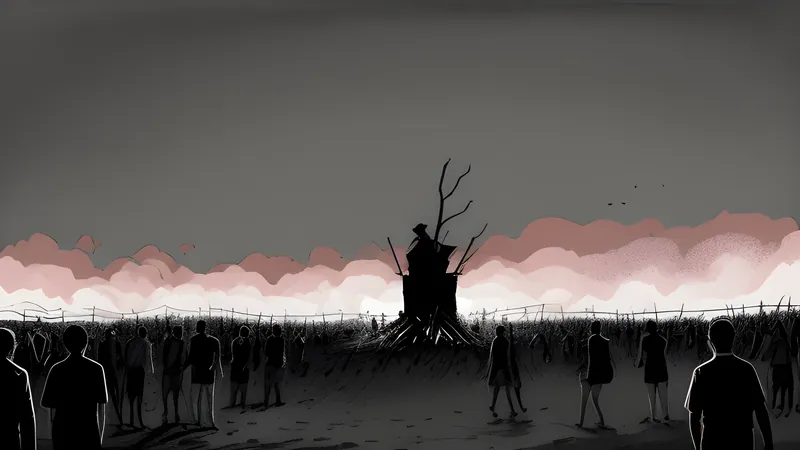
The thing about a Danish June evening is that it refuses to end. On the 23rd, at half nine, the sun is still loitering somewhere behind Sweden, the sky over the Øresund has gone the colour of a peach bruise, and the whole coastline of the country is quietly filling up with people carrying picnic blankets, thermoses of coffee, cheap sparkling wine and, in a striking number of cases, a small figure made of straw wearing a headscarf. This is Sankt Hans Aften, and if you have never seen a nation gather on its beaches to burn an effigy of a woman while singing a very pretty song about how much it loves itself, you have missed one of the odder and more beautiful things Europe does with a Tuesday.
I have stood on a good number of these beaches. It took me a while, as a foreigner, to work out that the strangeness was the point — that a country as famously sensible as Denmark keeps, at its midsummer, a ritual that is half tourist-board cosy and half genuinely medieval, and that everyone present holds both halves at once without any apparent difficulty. That double vision is the whole event. It is worth taking seriously precisely because it is so daft.
What actually happens on the 23rd
The mechanics are simple, which is part of why they have survived. Sankt Hans Aften — St John’s Eve, the evening before the feast of the birth of John the Baptist on 24 June — is fixed to the calendar rather than to the actual solstice, which falls a day or two earlier. Denmark celebrates the night of the 23rd regardless. Across the country, from the big organised gatherings on the Amager beaches and around the Copenhagen lakes down to a family group of six on a scrap of shingle in Jutland, people build a bål: a bonfire, usually of scrap timber and brush, sometimes assembled by a residents’ association weeks in advance and guarded like a municipal secret.
As dusk comes on — and in late June in Denmark, “dusk” is a long, generous, slow-motion affair that can run past eleven — the fires are lit along the water. Stand on high ground anywhere near the coast and you can count them, a dotted orange line following the shore into the distance, each one a separate crowd, each crowd doing more or less the same thing. There is beer. There is grilling. Children run feral in the half-light with the specific joy of being up hours past bedtime. And somewhere near the top of most of those fires, lashed to a broom or a stake, sits the witch.
The straw witch and the mountain she is sent to
Here is where a gentle beach barbecue tips into folklore. The effigy is a heks — a witch — built of straw and old clothes, given a headscarf and sometimes a comically hooked nose, and set at the summit of the pyre so that she goes up last and most dramatically. The idea, as every Danish parent will explain to a wide-eyed child, is that on midsummer night the witches of the land take to the air and fly to Bloksbjerg to consort with the devil.
Bloksbjerg is real, more or less. It is the Danish name for the Brocken, the highest peak of the Harz mountains in central Germany, which German folklore had long ago established as the great gathering-place of witches on Walpurgis Night. Danish tradition borrowed the destination and moved the appointment to midsummer. Burning the straw witch on the bonfire is, in the logic of the ritual, a send-off: you are packing her off to Bloksbjerg and buying your community a year’s protection from her mischief. There is often a small performance of it. In some places the effigy is rigged so that fireworks fire out of her as she catches, a launch sequence, the witch visibly departing skyward. Children cheer. It is, taken at face value, completely mad, and the madness is fully domesticated — a bit of theatre everyone knows the lines to.
It is younger than it looks
The instinct is to assume this is ancient, a pagan survival unbroken since the Iron Age. Part of it is genuinely old: midsummer fires long predate Christianity across northern Europe, lit at the turning of the year for light, for luck, for the burning-off of the season’s bad spirits, and the church did what the church usually did, which was to keep the popular fire and hang a saint’s name on it — John the Baptist, conveniently born at midsummer. That layering of pagan fire under a Christian feast is the real deep history of the night.
The witch on top, though, is a modern addition. The custom of binding a straw heks to the midsummer bonfire only becomes widespread in Denmark in the early twentieth century, around the 1920s, as a piece of self-conscious folklore — a way of dramatising, and half-remembering, the witch trials of the 1500s and 1600s. Those trials were not folklore. Denmark and Norway burned roughly a thousand people convicted of witchcraft during that period; the last execution for witchcraft in Denmark is recorded in 1693. The cheerful straw figure launching fireworks off a beach is, whether the crowd is thinking about it or not, a re-enactment of one of the ugliest chapters in the country’s history, restaged as a family evening.
That gap — between the jollity of the ritual and the horror of what it re-enacts — is not lost on everyone. There is a real and recurring unease in Denmark about the witch-burning, aired in the papers most years around this date, that a modern, gender-conscious society is teaching its children to gather on a beach and cheer while an effigy of a woman is set alight. Some communities have quietly dropped the effigy and simply light the fire. Others keep it and would defend it as harmless tradition, the meaning long since worn smooth. I have no verdict to hand down here; I only note that the argument is part of the tradition now, as much a fixture of the 23rd as the smoke. A ritual a country keeps arguing with is a live one.
The speech and the song
Two things civilise the fire. The first is the båltale, the bonfire speech. At the organised gatherings someone is invited to stand up before the fire is lit and talk — a local politician, a bishop, an author, a headteacher, occasionally someone genuinely famous — usually on the theme of community, summer, the state of the nation, whatever is on the country’s mind that June. It is Denmark’s civic religion at its most characteristic: a whole country pausing to be addressed, briefly and outdoors, by someone with something to say. Most båltaler are forgettable. A few, over the years, have made real news. The form is the point — that the fire comes with words attached, that it is a gathering with a thought in it.
The second, and the one that gets me every year, is the song. Once the flames are up, the crowd sings the Midsommervisen — “Vi elsker vort land”, we love our country — written by the poet Holger Drachmann in 1885, with a melody by Peter Erasmus Lange-Müller composed the same year. It was written for a fairy-tale play, Der var engang (Once Upon a Time), and somehow escaped the stage to become the fixed anthem of the night, sung at fires across the country for 141 years now.
I will not quote it, both out of respect for copyright and because a paraphrase is truer to what it feels like: it is a song about lighting the midsummer fires to drive out evil and asking for peace over the land and the people you love, and it is genuinely, unfairly lovely — the sort of melody that sounds like it has always existed. What lands is not the words on the page but the sound of a few hundred Danes, most of them ordinarily reserved to the point of frost, all singing the same tune into the dark with total sincerity. This is a country that does not do public emotion easily. For about ninety seconds on the 23rd of June, by a fire, it does.
Why a daft ritual is worth taking seriously
You could dismiss all of this — the straw witch, the borrowed German mountain, the patriotic sing-along, the speech nobody remembers — as harmless kitsch, a midsummer greatest-hits package for the tourist board. That would be a mistake, and not only because the tourist board genuinely does love it.
Sankt Hans works because it does several jobs at once for a country that otherwise has few outlets for them. It gives Denmark a communal fire in the year’s brightest week — a gathering that costs nothing, requires no ticket, and happens on every beach at once, which is a rarer thing than it sounds. Denmark’s louder summer gatherings, the ticketed cathedrals of noise like Copenhell, build a temporary society behind a fence and ask you to buy in; Sankt Hans does a looser, older, free version of the same communal instinct on a national scale, no gate, no wristband, just turn up to the nearest water with something to grill. And it hands the country a licensed evening of feeling — the speech, the song, the fire — in a culture that keeps its feelings on a short leash the other 364 days.
It also, quietly, keeps the country’s history in view. The straw witch is a bad memory that Denmark has chosen not to bury but to burn, every year, in front of the children, and then to argue about over coffee. That is a healthier relationship with a dark past than most nations manage.
Go, if you get the chance. Find a beach on the 23rd — the Amager side of Copenhagen is easy, but frankly any Danish shore will do — bring a blanket and something cold, and wait for the light to fail, which it will do reluctantly and beautifully somewhere near eleven. When the fires come up along the coast and a few hundred strangers start singing a song written before your grandparents were born, you will understand something about this country that no amount of hygge marketing will ever quite explain. If you are chasing the bigger, louder version of Danish summer afterwards, Roskilde opens its gates a week or so later and turns the whole thing up to a hundred thousand — but the beach and the fire came first, and they are still, for my money, the better night.
Related Content